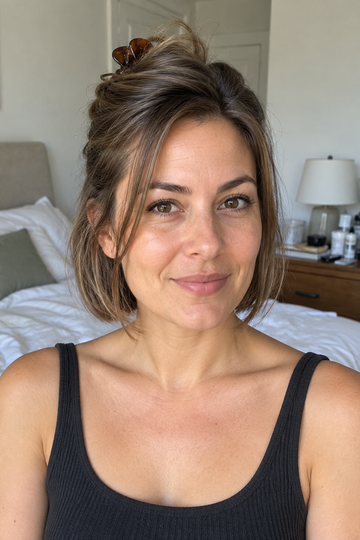
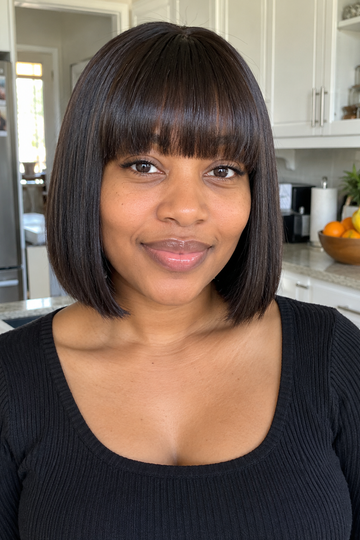
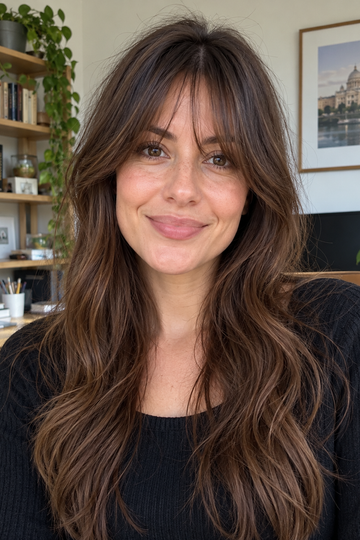
Here's what most stylists wish more people knew: heavy layering, the thing everyone asks for to "add volume," often does the opposite to fine hair. It removes the very weight that creates the illusion of density, leaving the ends stringy and the whole shape flatter than before. The cuts that actually build body on thin long hair are smarter than that. They work with blunt lines, strategic internal texture, clever framing, and volume placed exactly where flatness shows most. The goal isn't to hack away at your length. It's to make the hair you have look fuller and more intentional. These 18 cuts are the ones that genuinely deliver.
Jump to:
- Blunt Cut With a Single Length
- Long Layers Starting Below the Chin
- Collarbone Cut With Internal Layers
- Wispy Curtain Bangs
- Long Shag With Soft Layers
- Face-Framing Layers Only
- Long Bob With Body Wave
- Textured Ends on Long Hair
- Long Hair With a Deep Side Part
- Long Wolf Cut
- Blunt Cut With Curtain Bangs
- Long Hair With Crown Layers
- Long Razored Cut
- Long Hair With Heavy Bangs
- Choppy Long Layers
- Long Hair With Stacked Back Layers
- Long Feathered Cut
- Long Hair With Subtle Graduation
Blunt Cut With a Single Length

The most volumizing thing you can do to fine long hair is sometimes the least expected: keep it all one length. A blunt cut straight across the bottom concentrates every strand at the perimeter, creating a thick, solid line that makes hair look denser instantly. Skip the layers entirely. Blow-dry flipping the ends under with a round brush, and that clean weight line does all the work for you.
Long Layers Starting Below the Chin
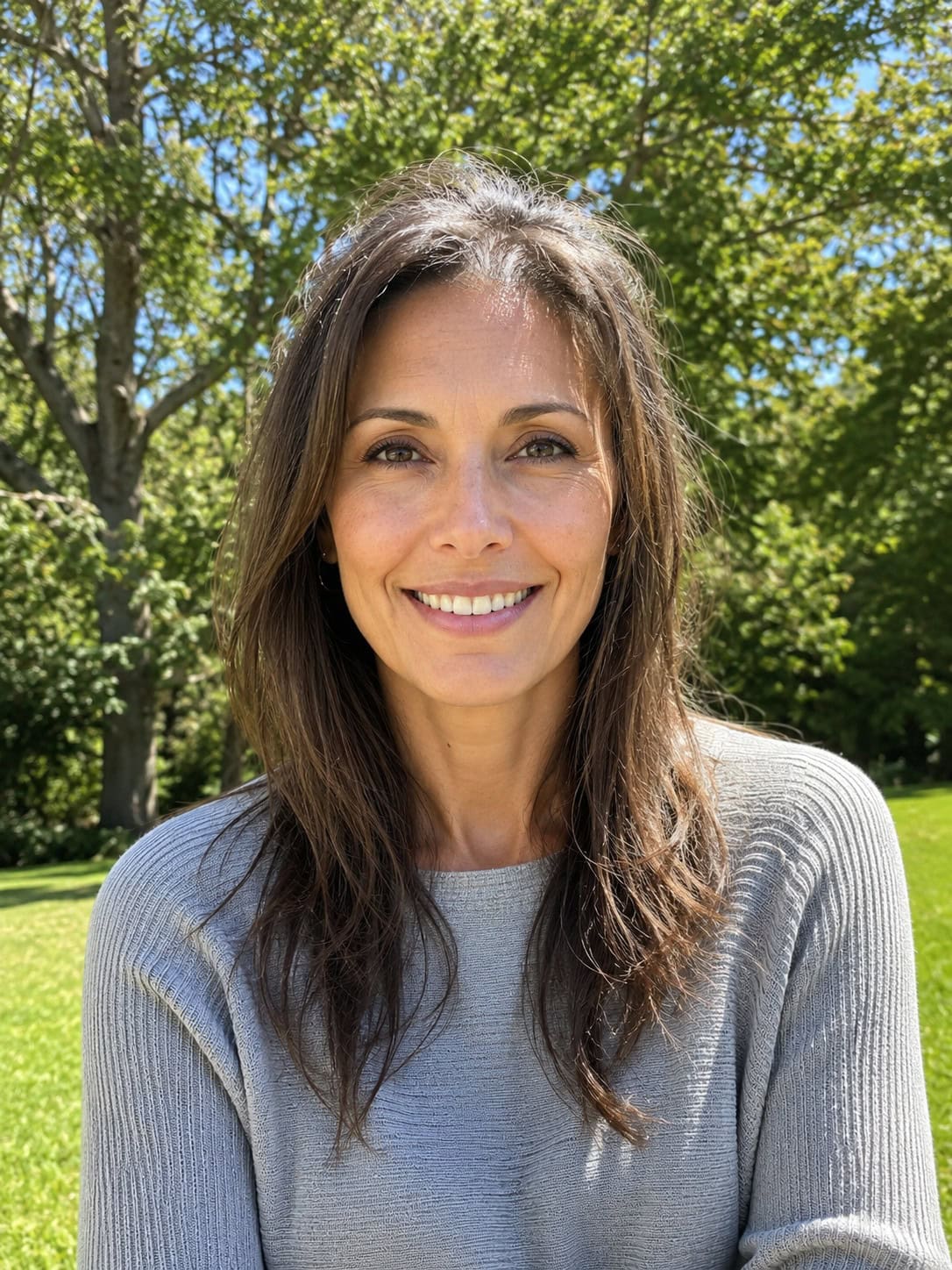
Placement is everything with layers on thin hair. Keep them long and start them no higher than below the chin, so you preserve the weight up top while adding just enough movement through the ends. Too-short layers scatter fine hair and flatten it. Ask your stylist to be conservative. A texturizing spray worked through the mid-lengths adds grip and makes the layers look fuller than they are.
Collarbone Cut With Internal Layers
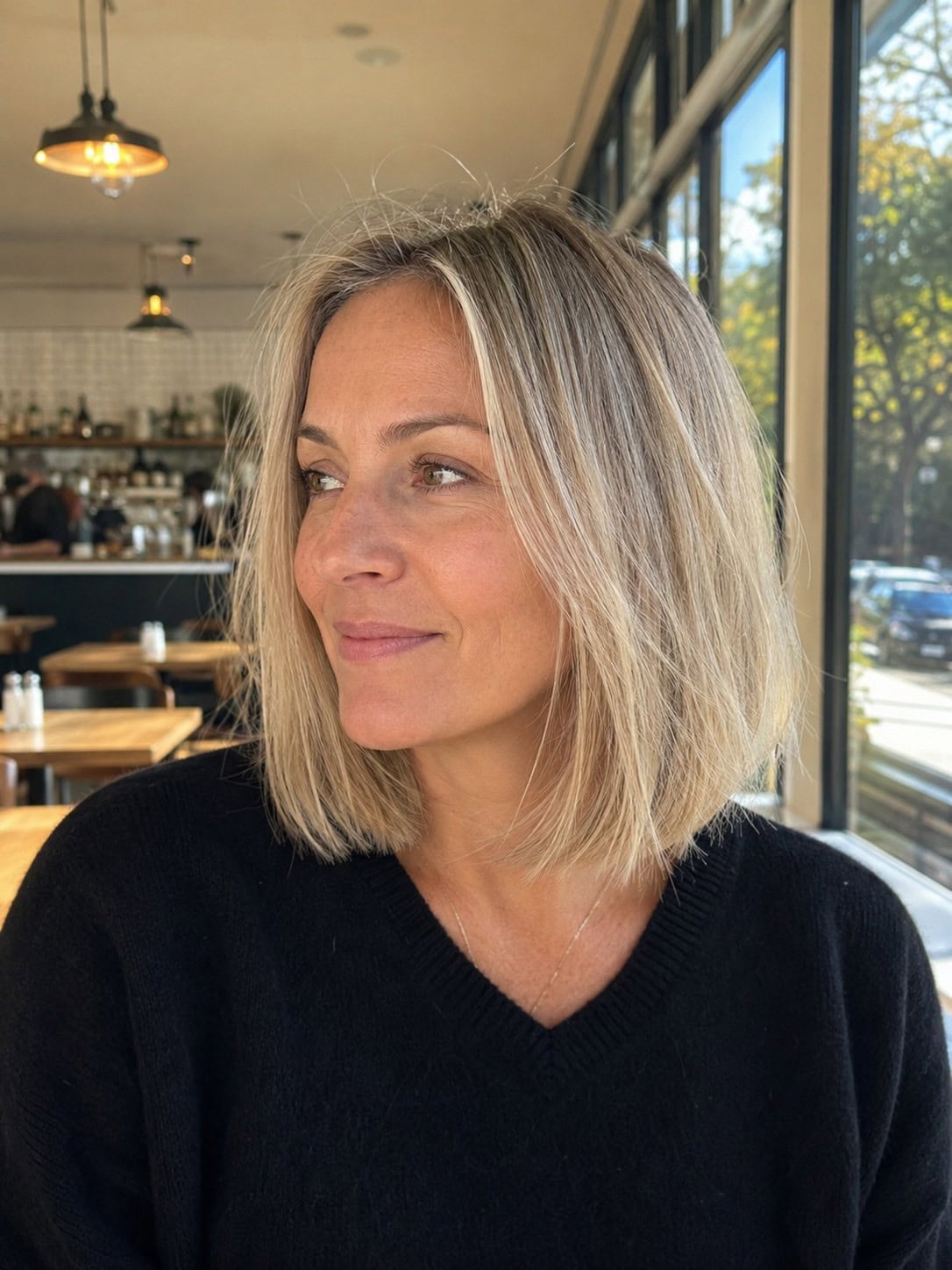
Internal layers, cut inside the hair rather than at the surface, build hidden volume without thinning the outer line. The exterior stays blunt and full while the interior gets just enough removed to create lift. This works beautifully at collarbone length, where the hair is long enough to feel substantial but short enough to hold body. Round-brush the roots upward when drying to maximize the lift those internal layers create.
Wispy Curtain Bangs
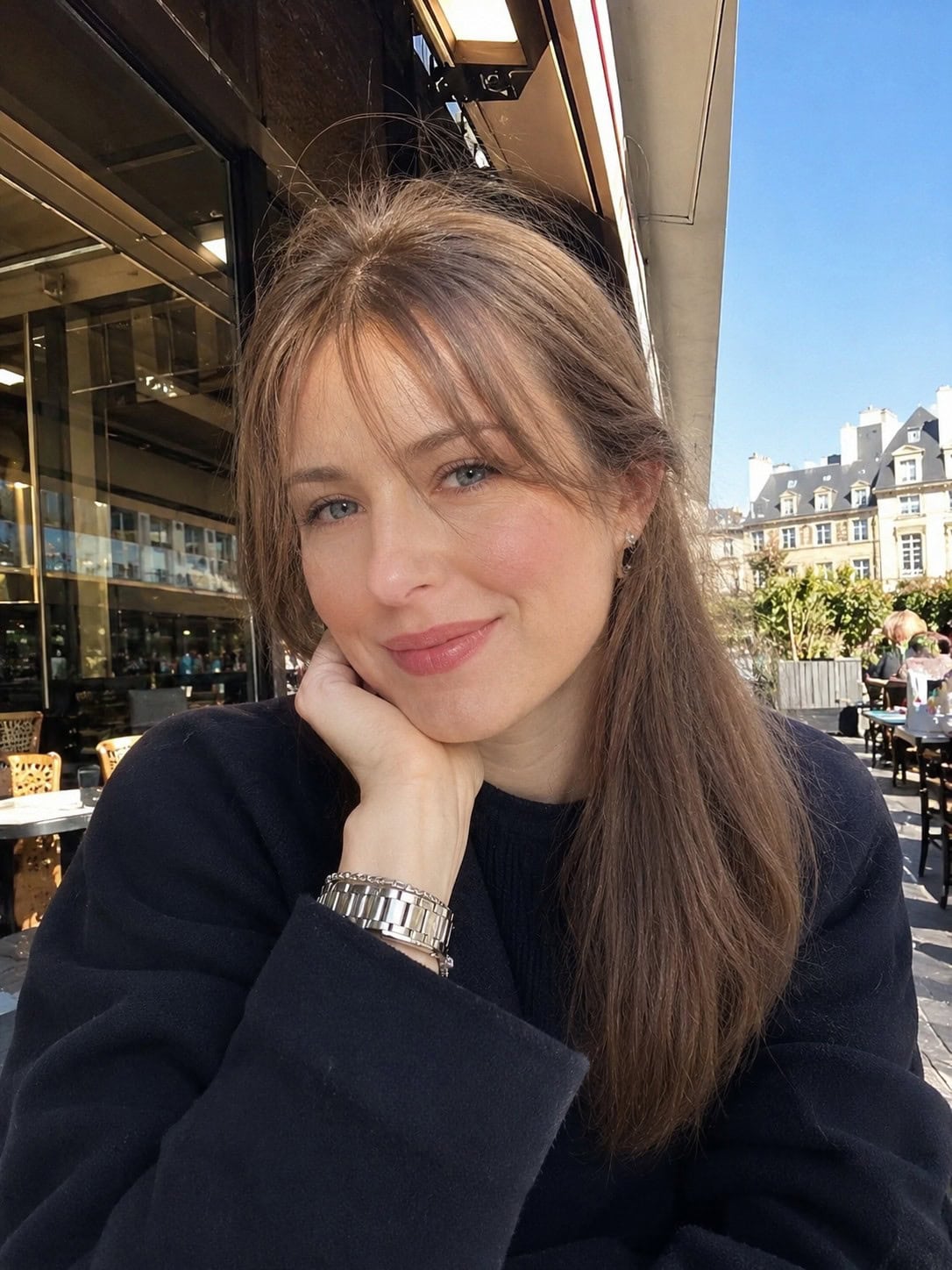
Bangs draw the eye to the front and create the impression of fullness around the face, which is exactly where thin hair tends to look sparsest. Soft, wispy curtain bangs parted in the center add this framing without the heaviness of a full fringe. Blow-dry them with a round brush, lifting at the root. The rest of your long length stays intact while the bangs do the volumizing work up front.
Long Shag With Soft Layers
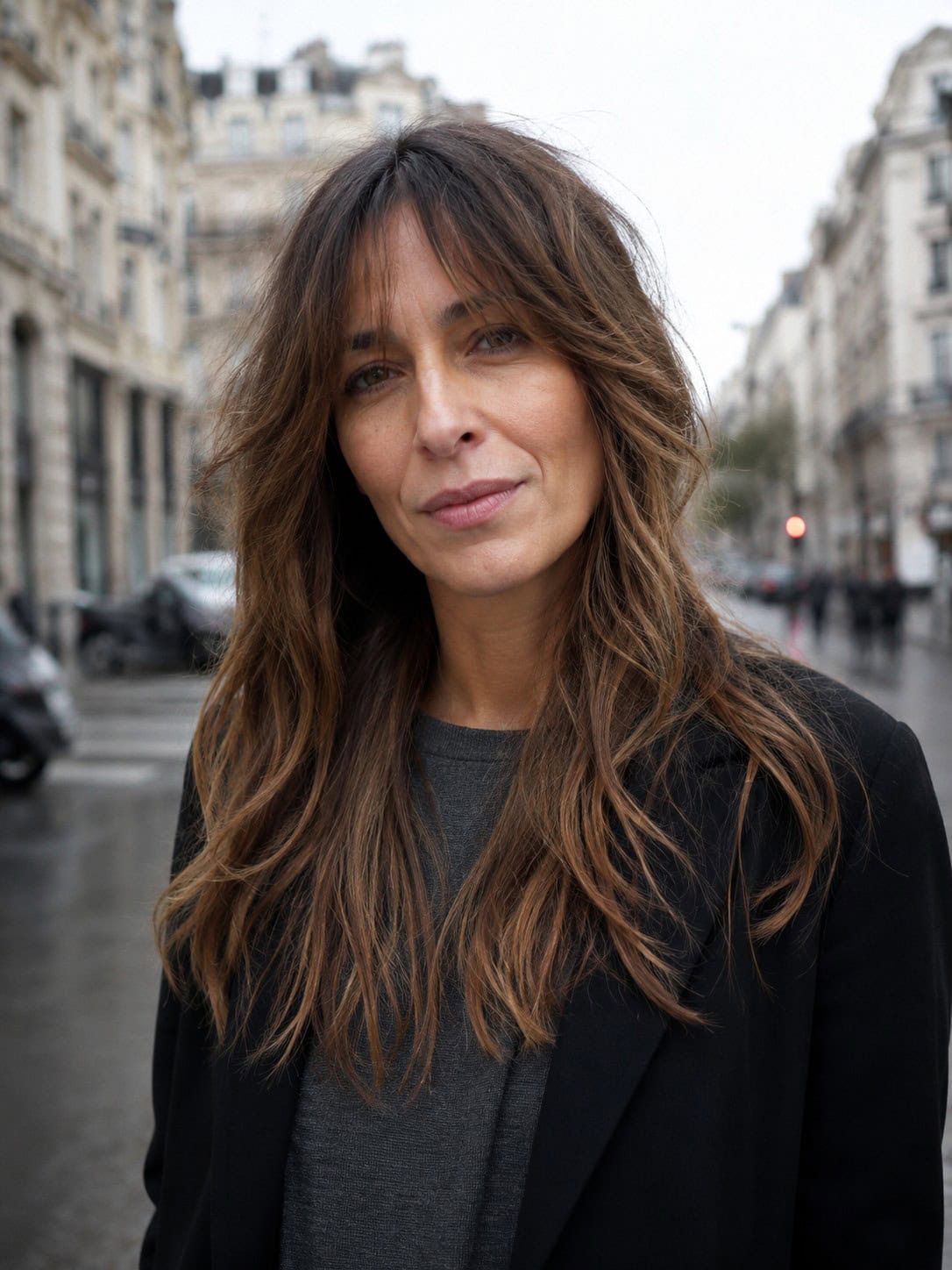
The shag gets a reputation for heavy layering, but a soft, modern version keeps things long and gentle. Scattered, feathery layers through the lengths catch the light and create texture that fine hair usually lacks. The key word is soft, request restrained layering, not aggressive thinning. Air-dry with a mousse scrunched in, and the piecey texture reads full and lived-in rather than thin and flat.
Face-Framing Layers Only
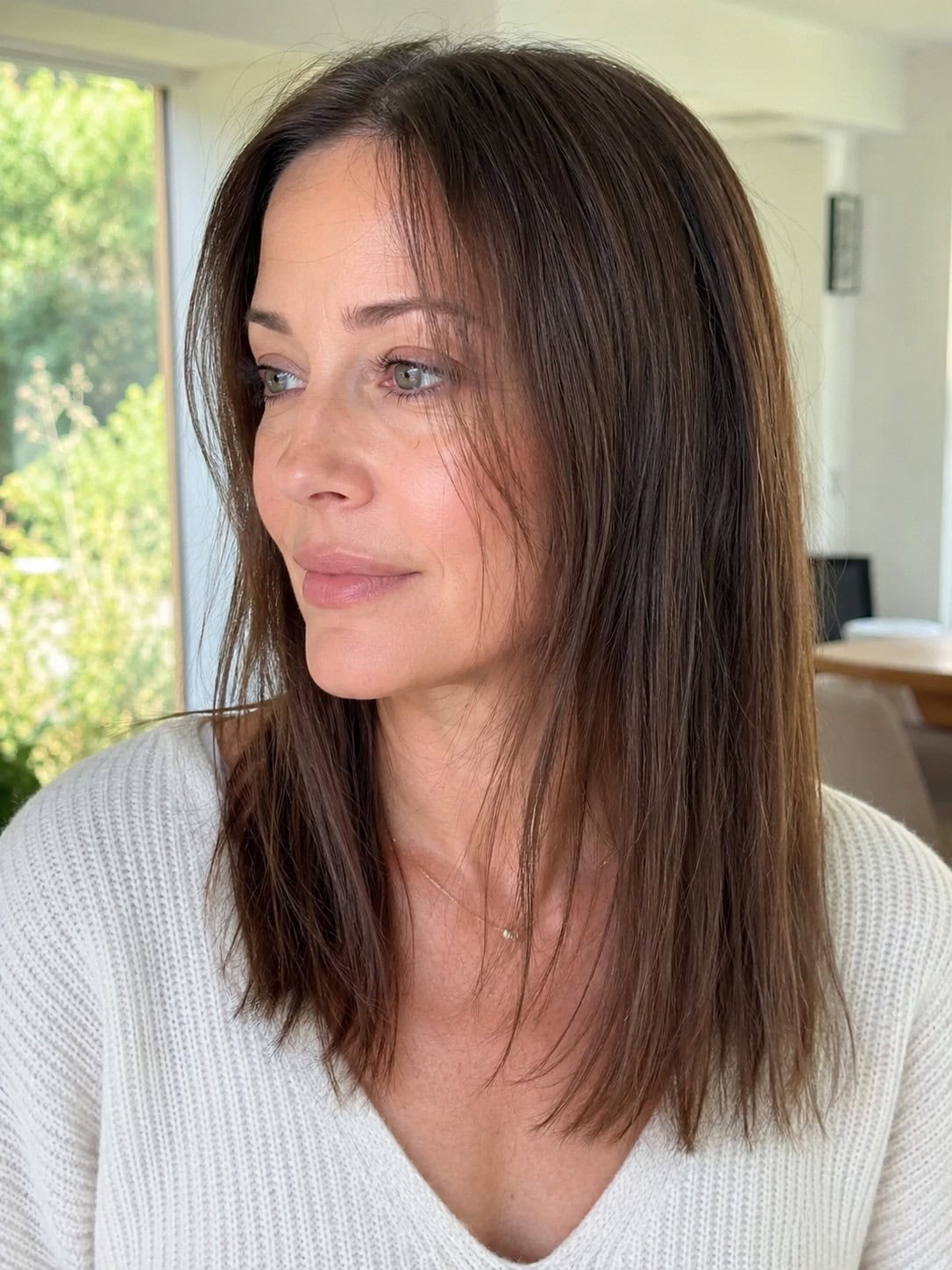
If full layering feels risky on thin hair, limit it to the face. A few framing pieces cut around the face add movement and shape exactly where it matters, while the rest of the length stays blunt and dense. This is the lowest-risk way to introduce any layering at all. Tuck the framing pieces behind one ear or sweep them forward, and style the bulk of your hair straight and full.
Long Bob With Body Wave

A long bob that hits just below the collarbone gives fine hair a fighting chance, short enough to hold body, long enough to still feel like long hair. Add a soft body wave through the lengths with a large-barrel iron, then brush it out gently. The loose wave creates the bends and volume that dead-straight fine hair can't produce on its own. Finish with a light texturizing spray.
Textured Ends on Long Hair
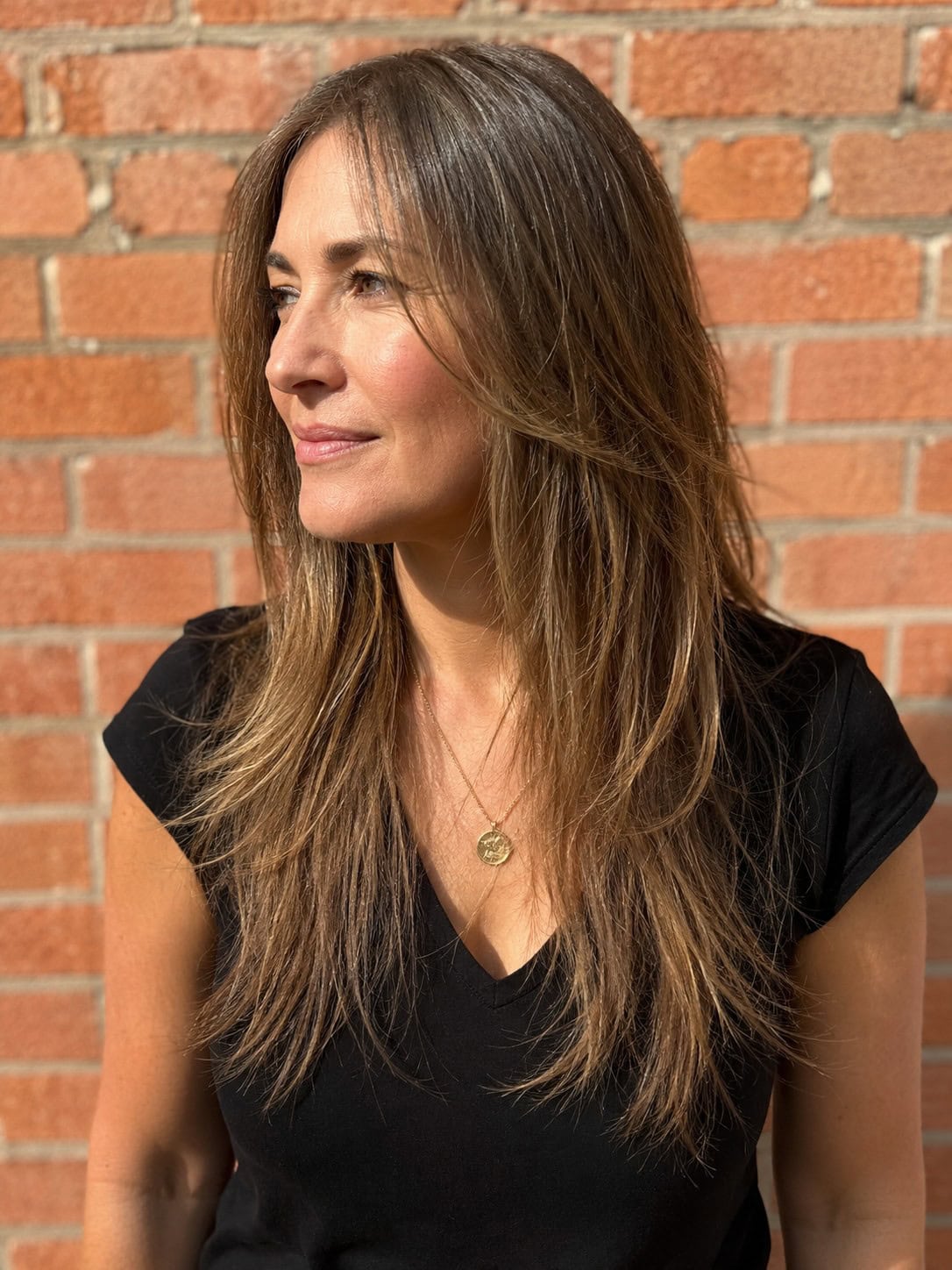
Point-cutting the ends, where the stylist cuts into them vertically rather than straight across, removes the stringy, see-through quality that long fine hair often develops at the bottom. The textured finish makes the ends look fuller and healthier. Crucially, this happens without sacrificing length. Ask specifically for point-cut or notched ends. A small amount of styling cream worked into the tips defines the texture and keeps it from frizzing.
Long Hair With a Deep Side Part
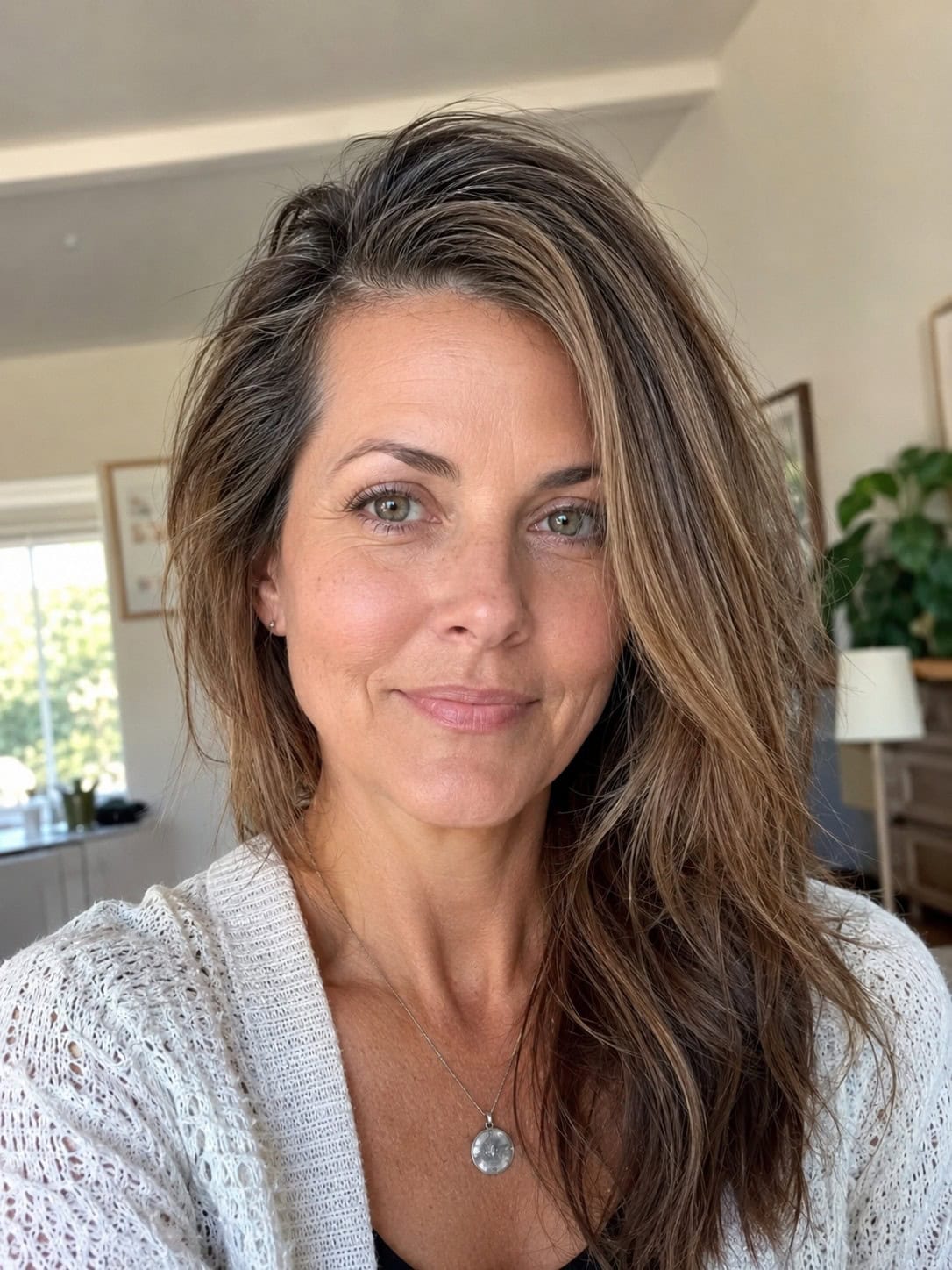
Switching from a center part to a deep side part is one of the fastest volume tricks for long fine hair, no scissors required, though it pairs well with any cut. Pushing the bulk of your hair to one side creates instant lift at the crown and a fuller silhouette. Blow-dry the heavier side lifting against the natural fall, then set with a light hairspray to hold the volume.
Long Wolf Cut
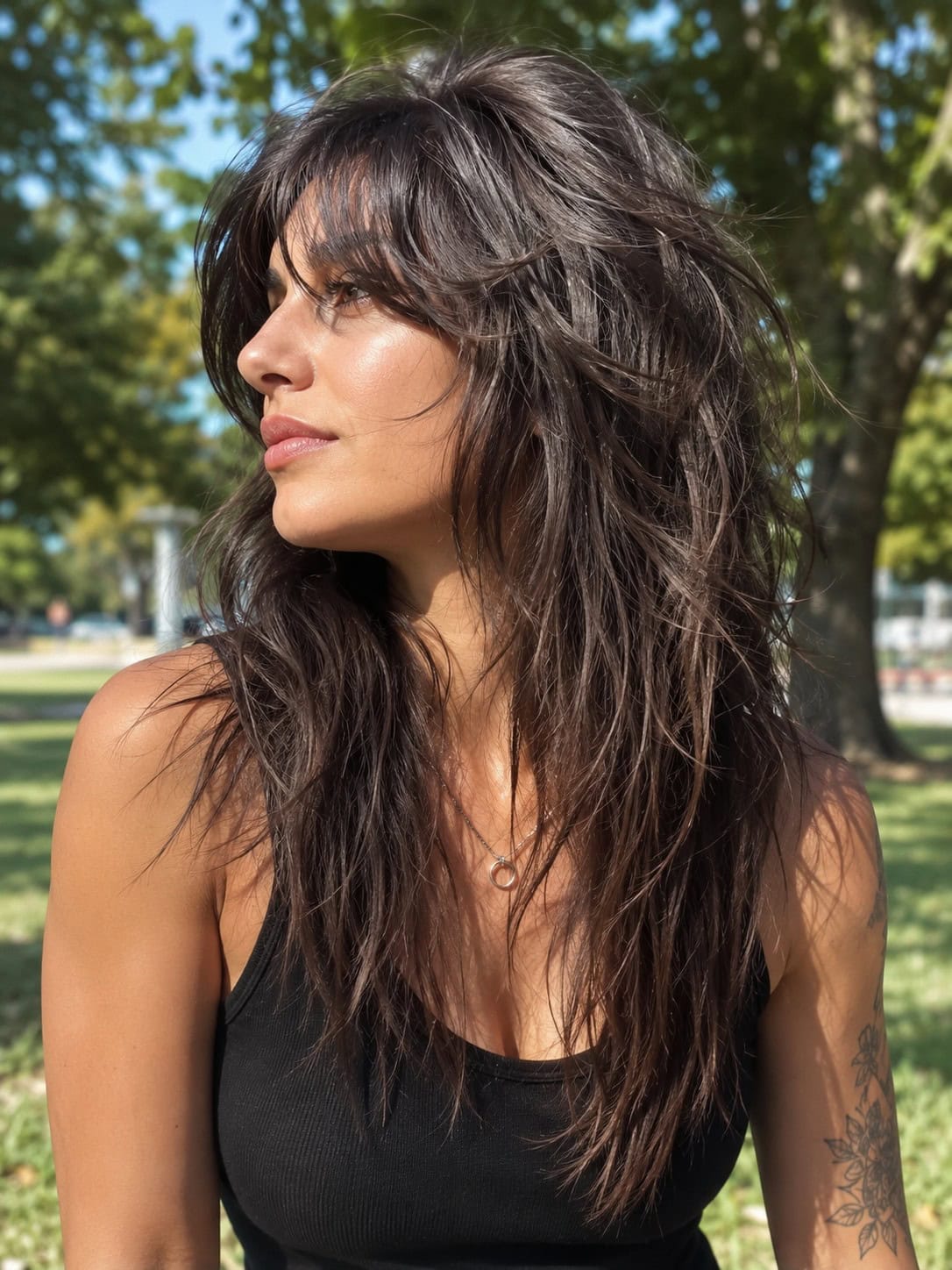
The wolf cut blends shag and mullet energy into a long, textured shape with volume concentrated up top and wispy pieces below. On fine hair, it creates the impression of much thicker hair through clever layering near the crown. Keep the lengths long to preserve the overall feel of long hair. Scrunch with a curl cream and diffuse for a tousled, voluminous finish that looks deliberately undone.
Blunt Cut With Curtain Bangs
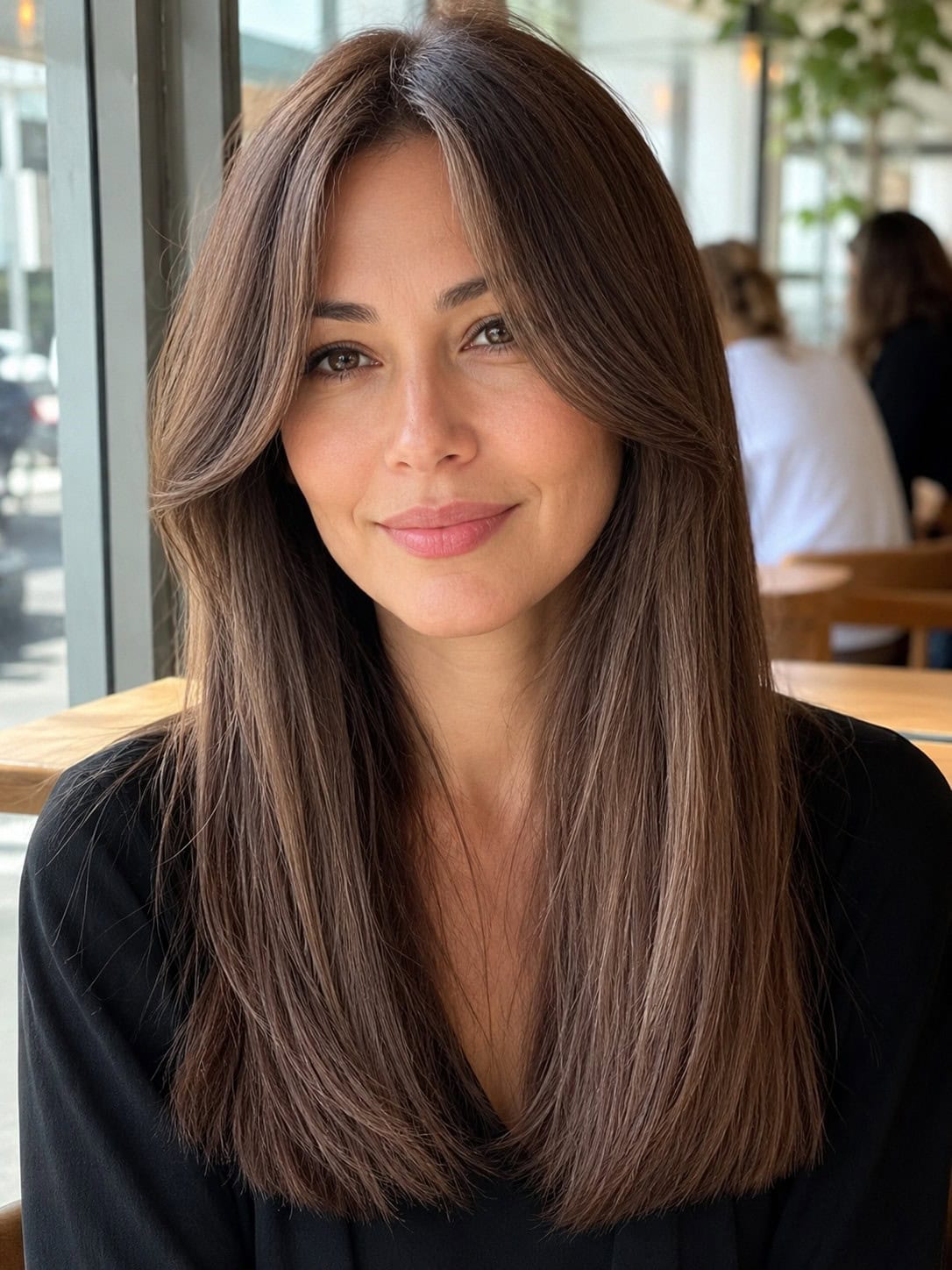
Combining two volumizing techniques multiplies the effect. A blunt, one-length cut keeps the perimeter dense and heavy, while curtain bangs add fullness and framing at the front. Together they create body at both the bottom and the face, the two spots where fine hair needs it most. Blow-dry the bangs with a round brush and let the blunt length hang straight for a clean, full result.
Long Hair With Crown Layers
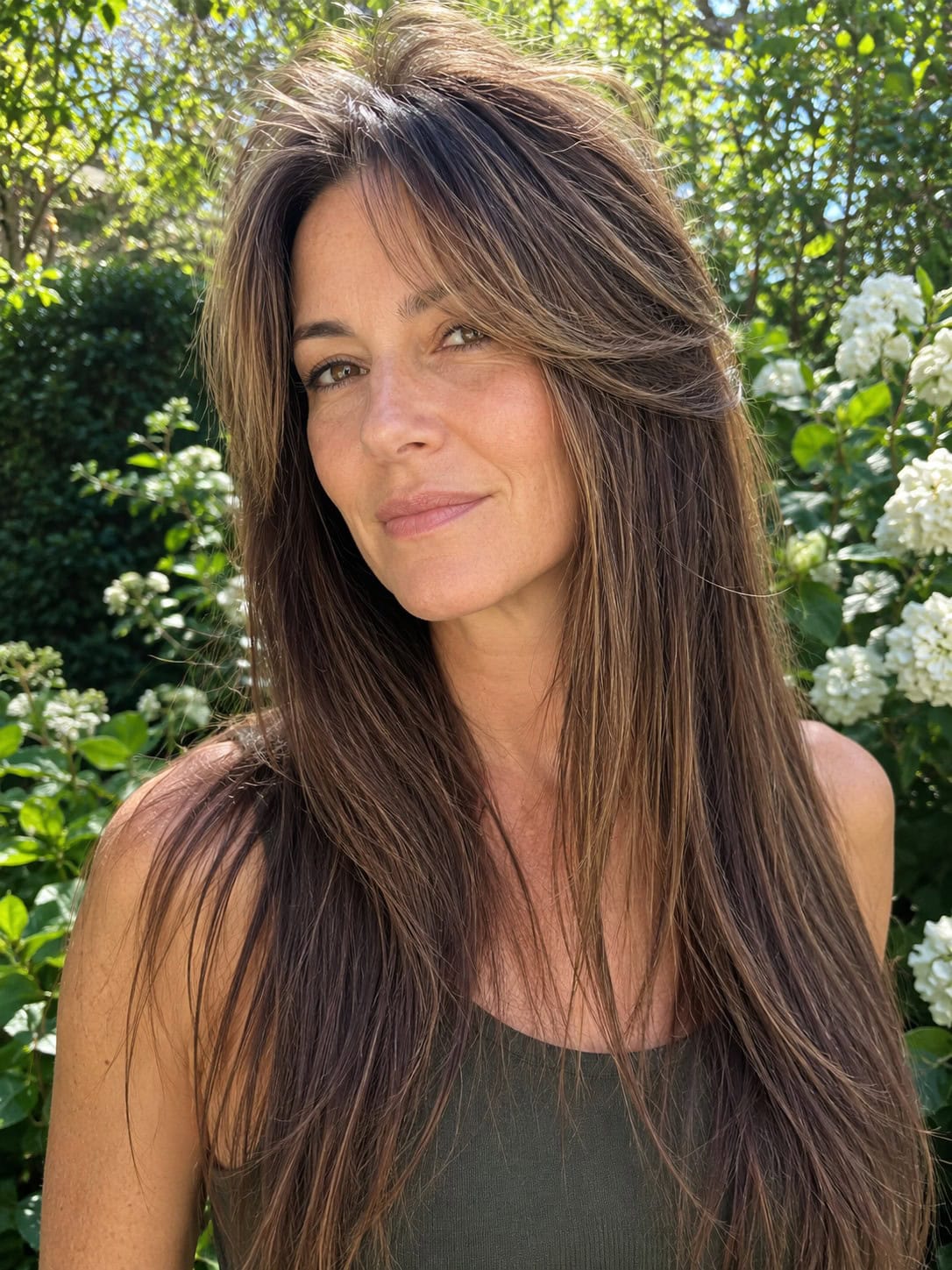
Concentrating a few short layers only at the crown lifts the hair right where flatness shows most on fine hair, at the top of the head. The rest of the length stays long and untouched. This targeted approach builds height without scattering or thinning the overall shape. Use a root-lifting spray at the crown before blow-drying upward and back, and that small section of layering creates surprising lift.
Long Razored Cut
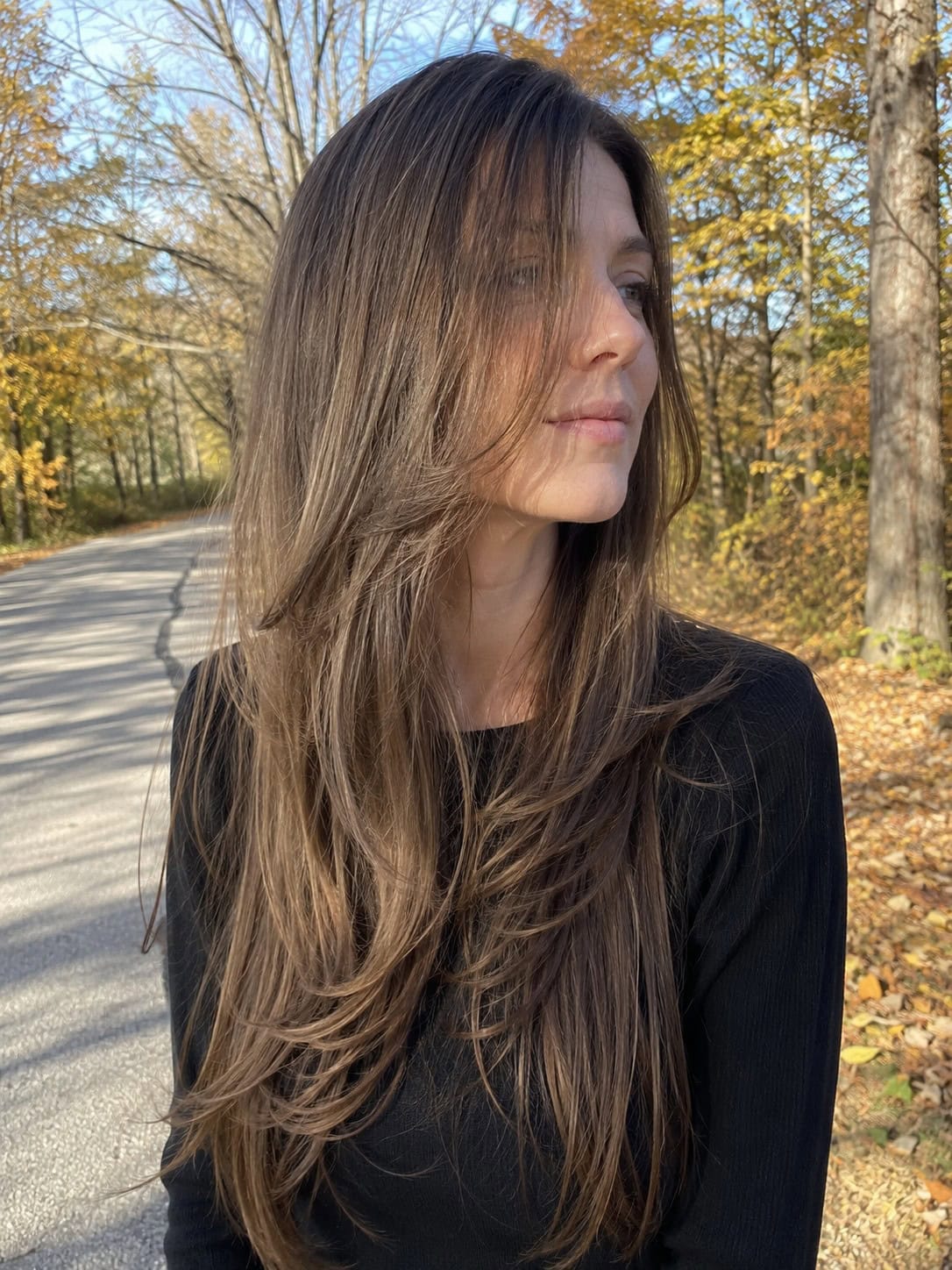
A razor cut, done carefully, creates soft, tapered ends that move and bend more than blunt-cut hair. On fine hair the effect adds an airy, textured quality that suggests more volume through movement. The caution: razoring can over-thin fragile hair, so this needs an experienced hand and a light touch. Air-dry with a leave-in conditioner and let the soft, feathered ends fall naturally for the fullest effect.
Long Hair With Heavy Bangs
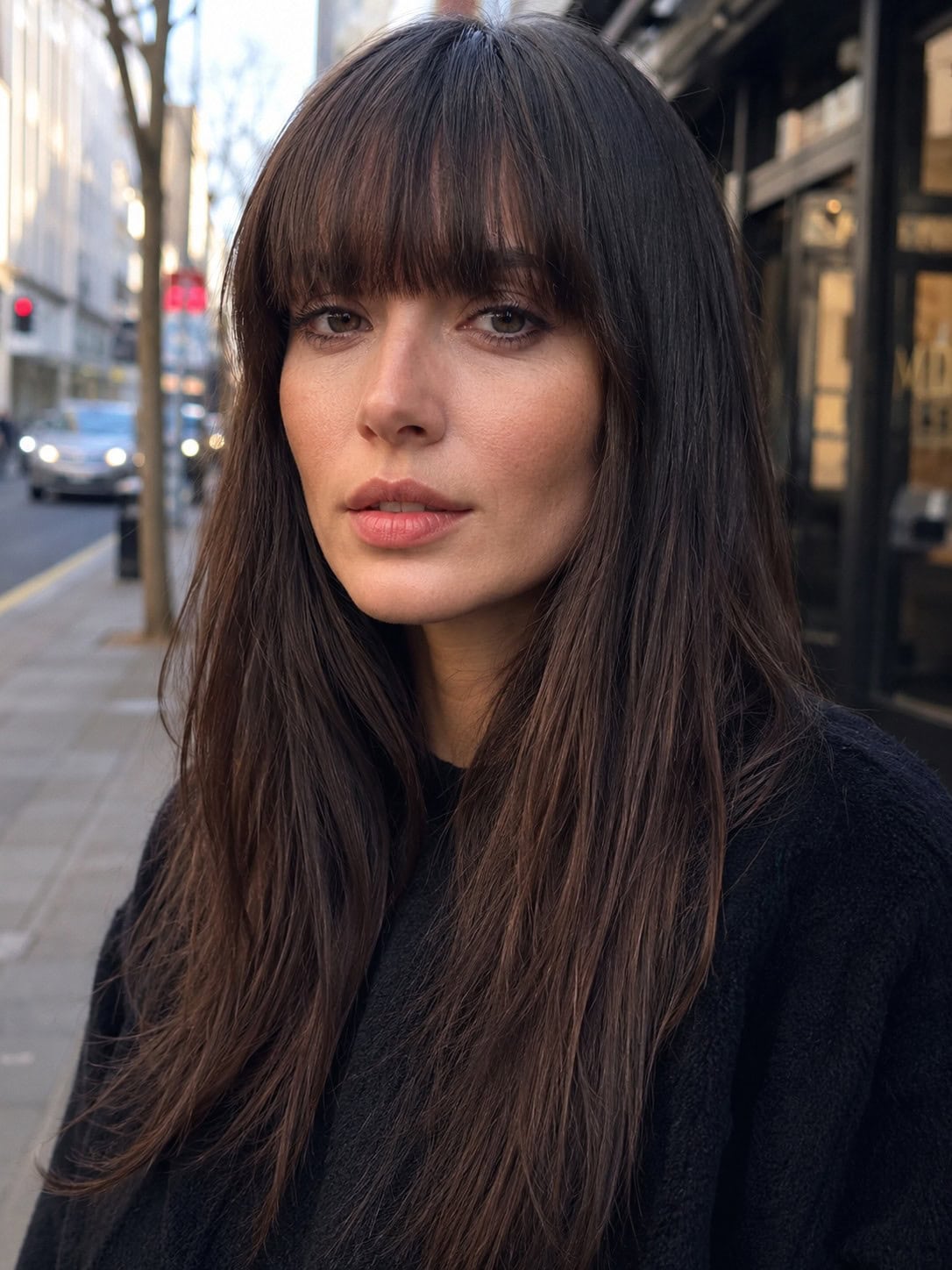
A full, heavy fringe pulls weight and density to the front, making the whole head of hair appear thicker. By bringing hair forward to form the bangs, you concentrate fine strands into one dense, blunt section. The remaining long length sits behind it. Blow-dry the fringe flat with a round brush and let the rest hang long and straight. The contrast of the heavy bangs makes everything look fuller.
Choppy Long Layers
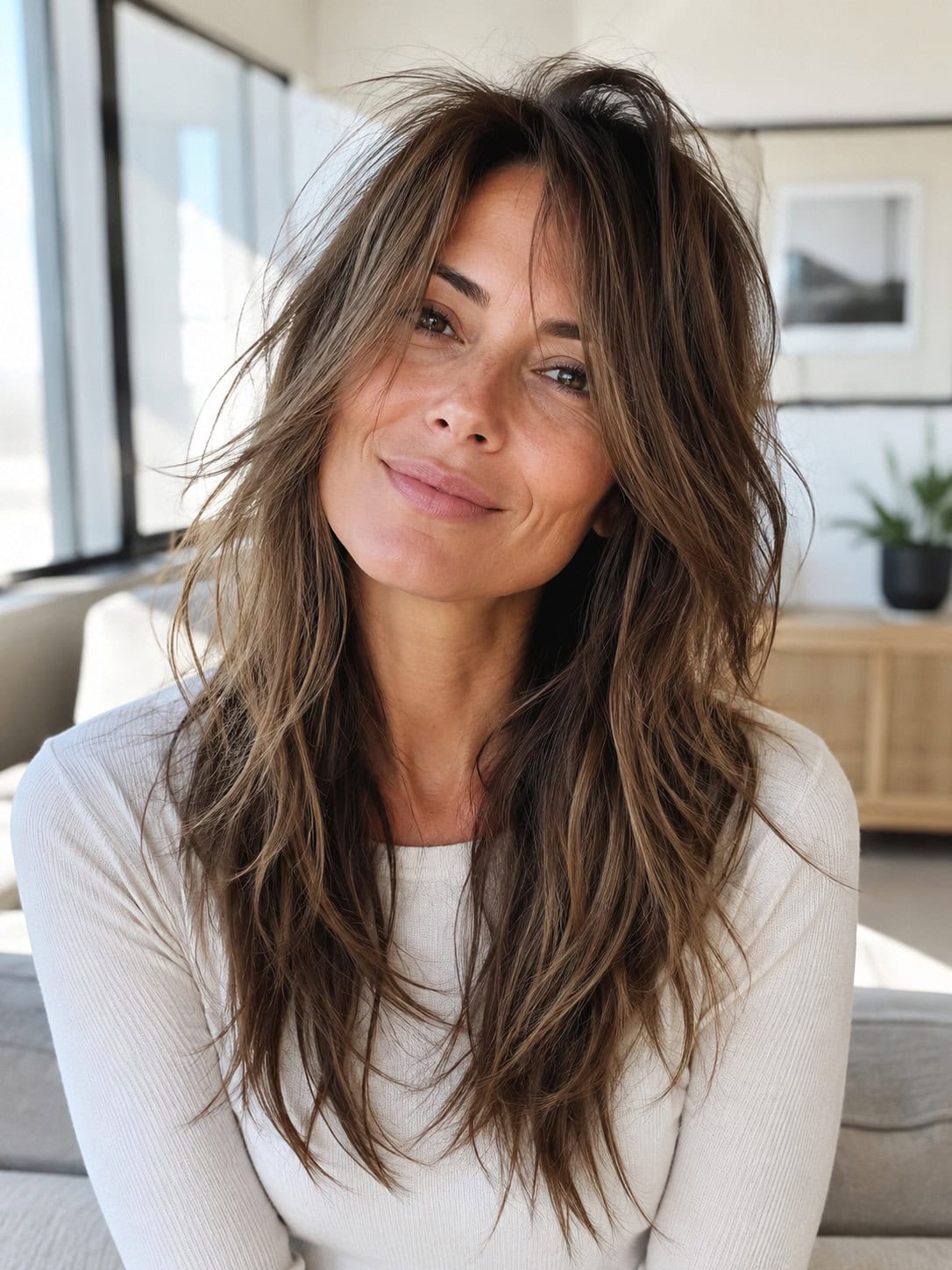
Choppy layers differ from soft layers in their deliberately uneven, piecey finish. On fine hair, this irregularity creates the appearance of more texture and density because no single flat layer dominates. Keep the layers long and ask for a choppy, textured cutting technique rather than smooth blending. Work a texturizing paste through the lengths with your fingers, separating pieces to enhance the choppy, voluminous effect throughout.
Long Hair With Stacked Back Layers
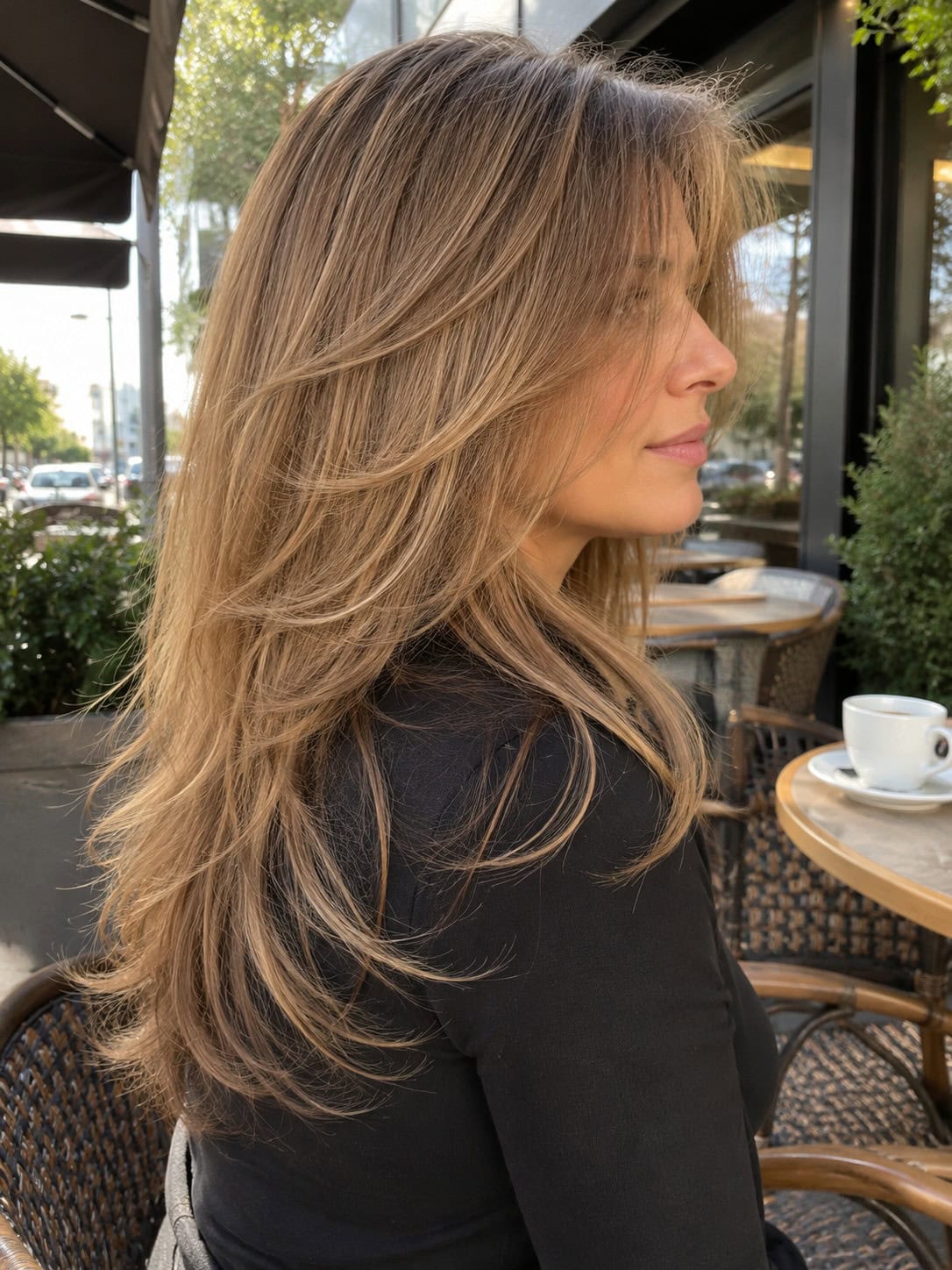
Stacking layers slightly at the back, building them up in graduated tiers, creates fullness and roundness through the back of the head where fine hair tends to fall flat. The front and sides stay long, so the overall length is preserved. This works especially well on hair worn down and straight. Blow-dry the back layers under and toward the head to build that stacked, rounded volume.
Long Feathered Cut
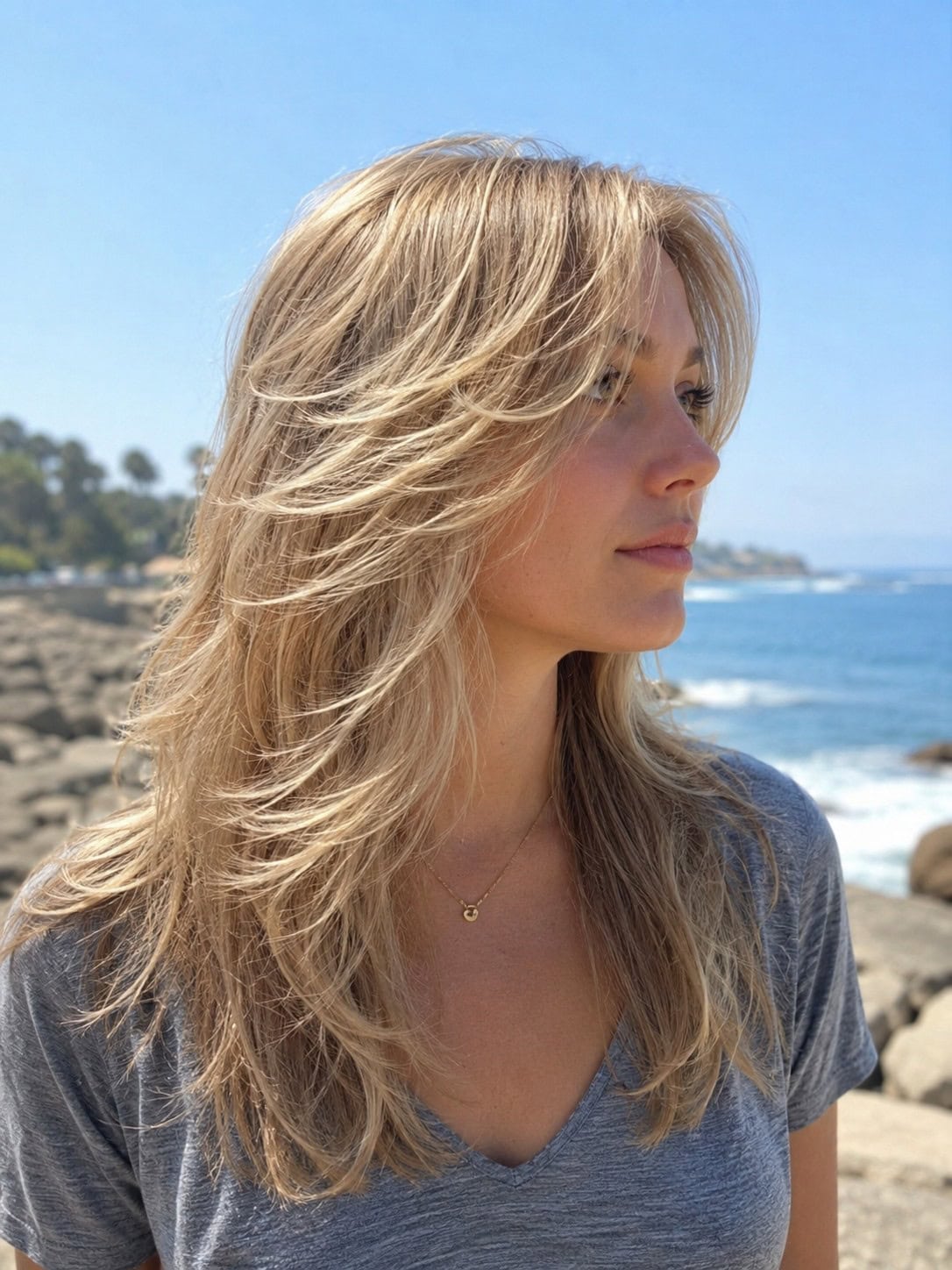
The feathered cut, a '70s revival favorite, sweeps layers back and away from the face in soft, wing-like pieces. On fine long hair, the feathering catches light and movement that flat hair lacks, suggesting volume through shape. Keep the bulk of the length long and limit the feathering to the surface layers. Blow-dry the framing pieces back with a round brush, then let everything fall into its soft, swept shape.
Long Hair With Subtle Graduation
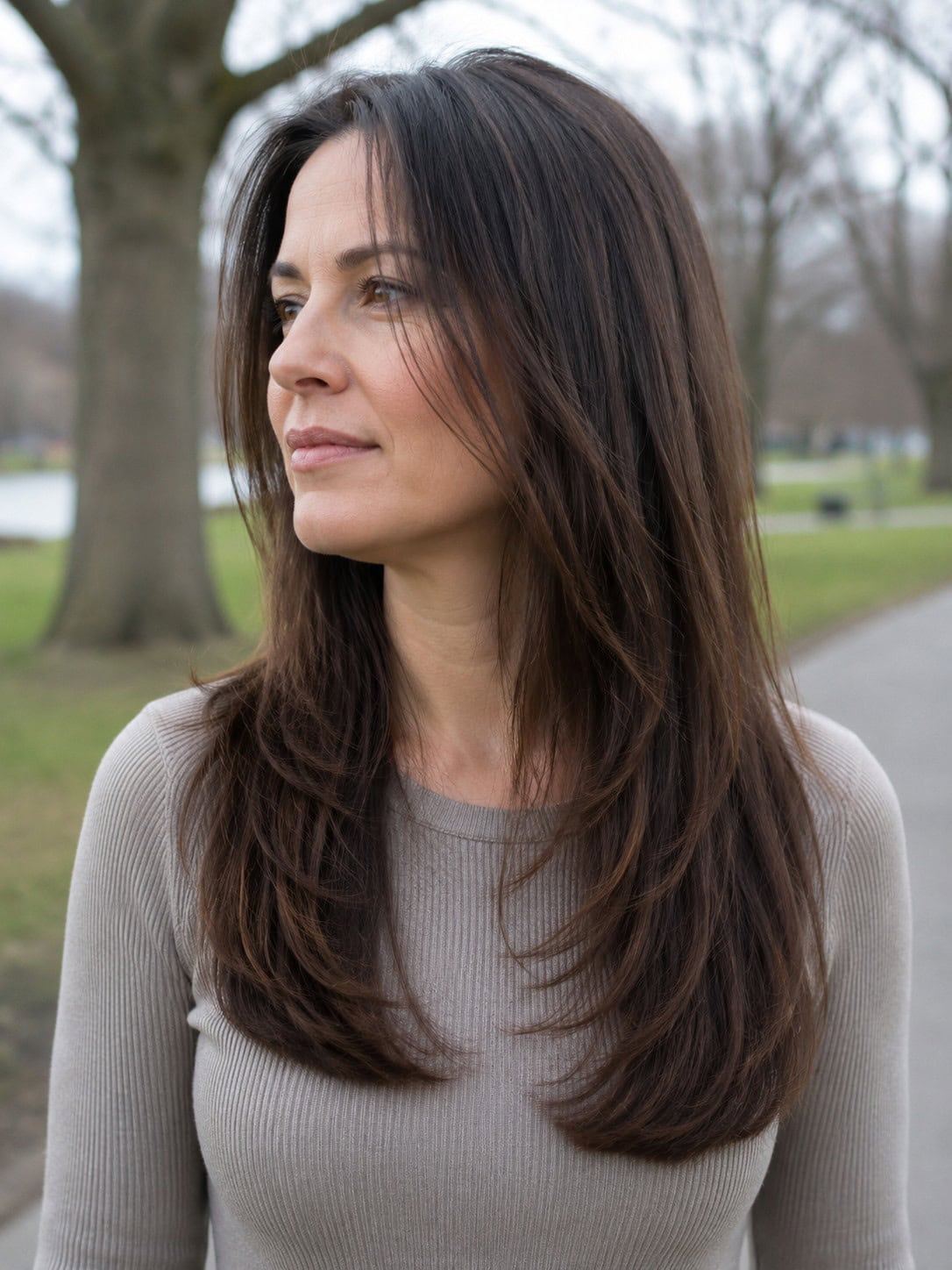
Subtle graduation means cutting the back very slightly shorter than the front, creating an angle so gentle it's barely noticeable. This builds a touch of fullness and shape at the back while keeping the front long and the overall look distinctly long-haired. It's the most conservative volumizing cut here, ideal for anyone nervous about losing length. Blow-dry with a round brush, curving the ends under to emphasize the soft, graduated body.