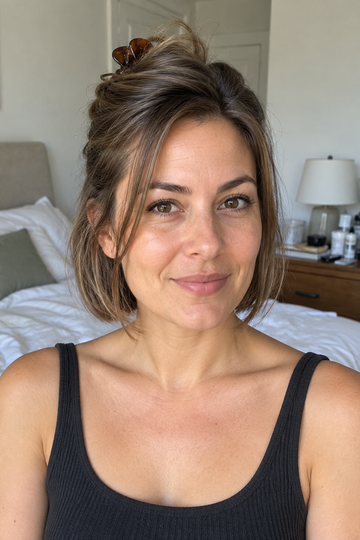
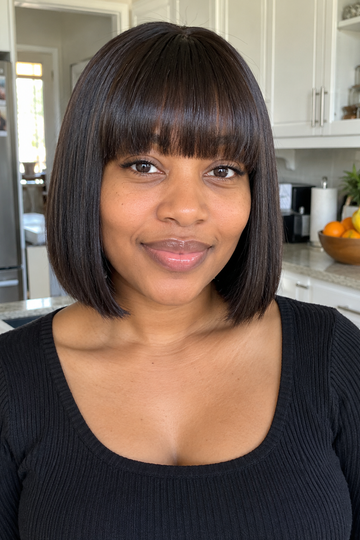
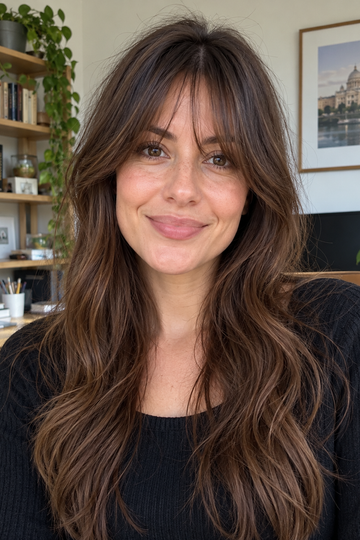
The hairstyle advice women over 40 with fine hair get most often is wrong in a specific way: stylists push "softer" cuts and "longer layers" as if the problem is harshness rather than density. The actual concern for fine hair after 40 is structural. Fine hair has fewer strands per square inch than thicker textures, and that count drops further with age, particularly along the temples and crown. The solution isn't softer cutting or more layering. The solution is blunt perimeters, minimal layering, smart styling, and color techniques that add dimensional fullness. The 18 hairstyles below address what specifically works for fine hair after 40, spanning short cuts through long lengths. Each entry calls out what makes the style suit fine hair density specifically. Pick based on length preference and styling time.
Jump to:
- Blunt Chin Bob
- Classic Pixie Cut
- Long Pixie
- Blunt Jaw Bob
- Blunt Lob (Long Bob)
- Bouncy Blowout Style
- Curtain Bangs Lob
- Wispy Bangs with Lob
- Side-Parted Style with Volume
- Inverted Bob with Stacked Volume
- Long Hair with Money Piece
- Balayage Mid-Length Cut
- Layered Pixie with Volume
- French Bob
- C-Curl Lob
- Tucked-Behind-Ears Lob
- Polished Sleek Style
- Soft Layered Cut with Face-Framing
Blunt Chin Bob
A chin-length bob with a clean one-length perimeter cut at the chin. The blunt structure creates the illusion of density along the bottom edge, which fine hair particularly needs. No layers, no thinning. Style with a smoothing serum and flat iron pass. Best executed by stylists who understand fine hair. Maintenance every five to six weeks keeps the blunt edge looking intentional. The single best cut for fine hair after 40.
Classic Pixie Cut
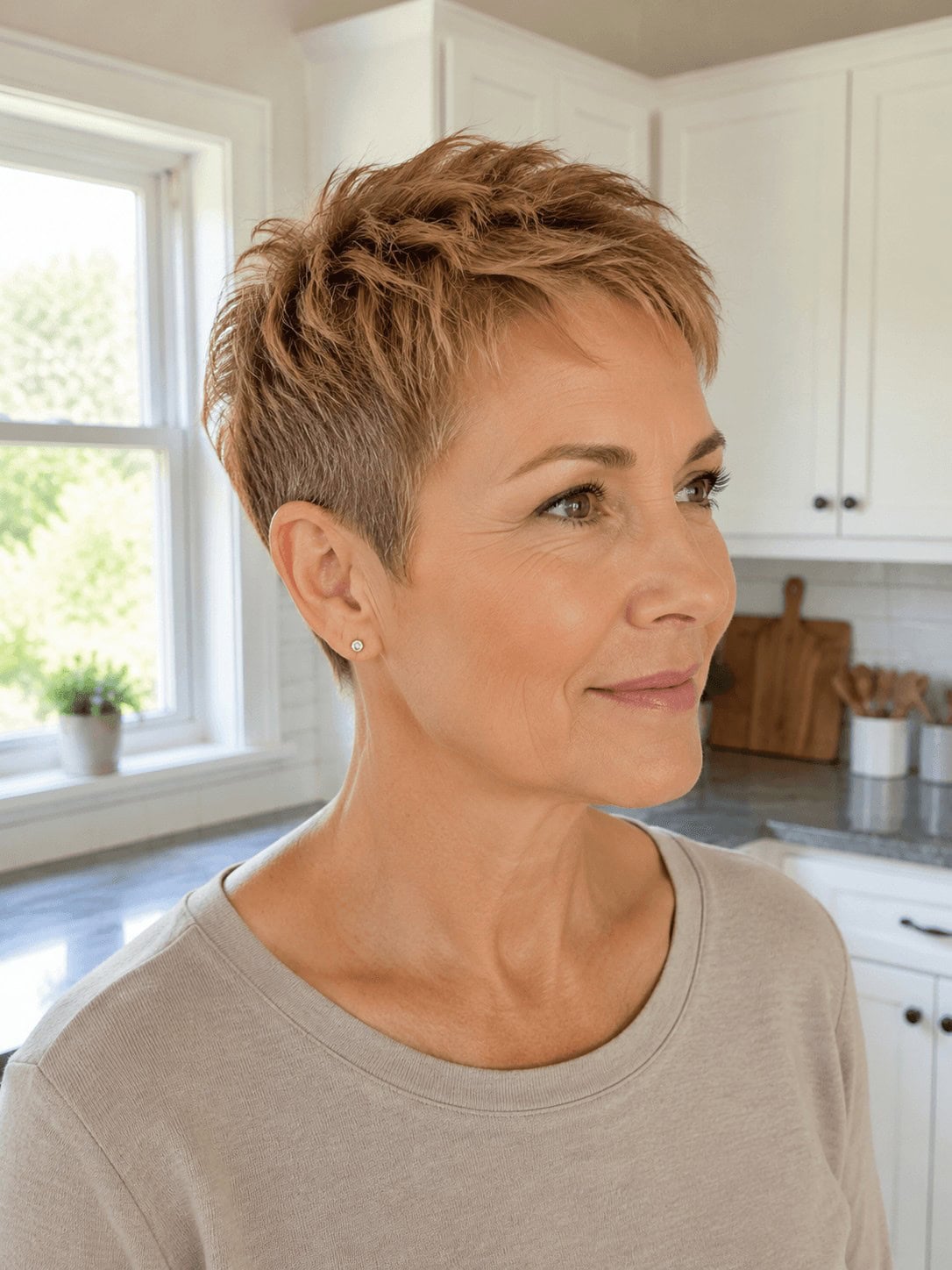
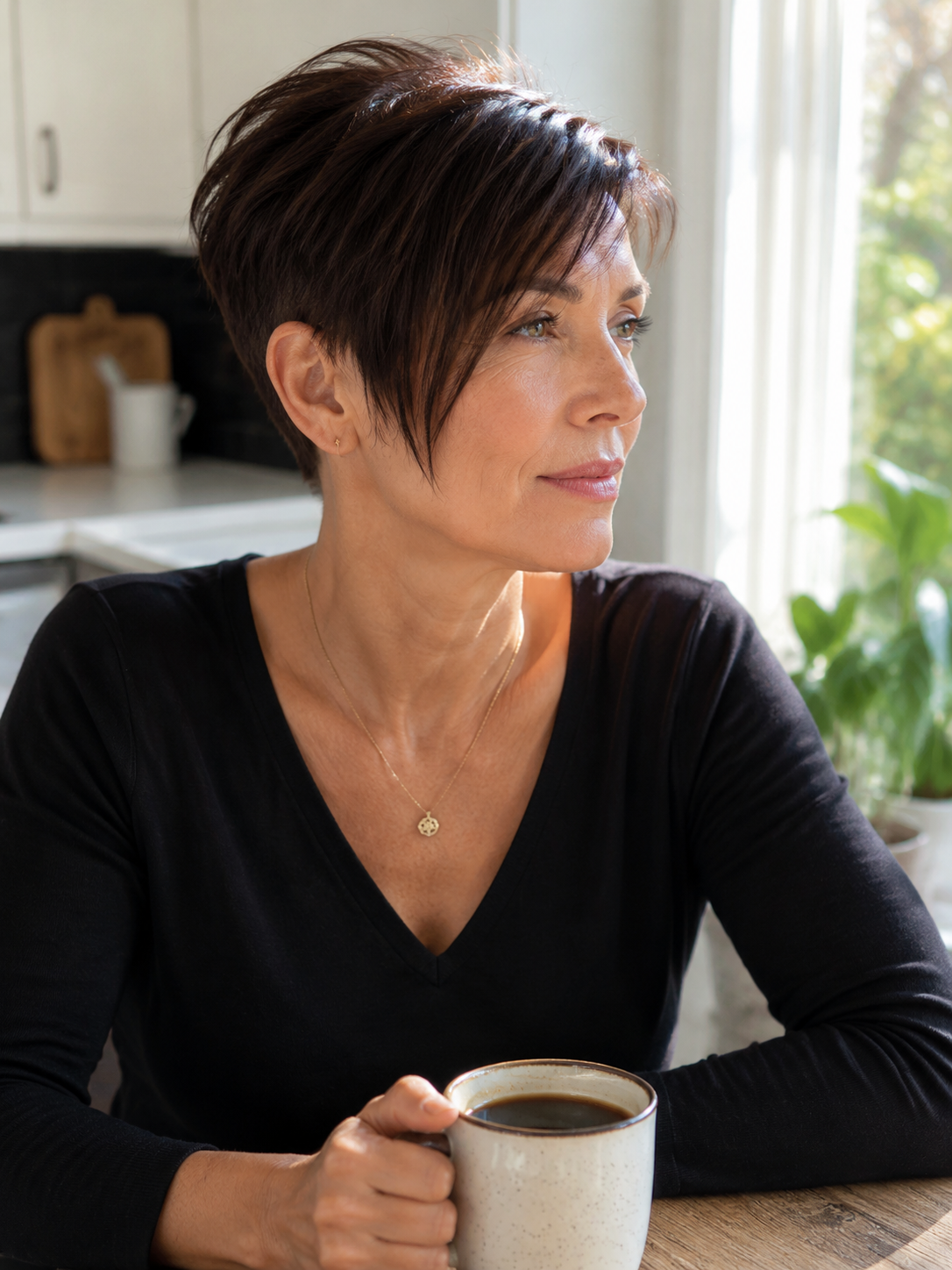
A short pixie with cropped sides and slightly longer length on top. The cut removes length where thinning shows most while concentrating remaining hair where it can build volume. The pixie works for fine hair after 40 because the shorter length reads denser than longer cuts on the same hair. Style with a small amount of styling cream worked through with fingers. Maintenance every four to five weeks.
Long Pixie
A long pixie with cropped sides and longer top section reaching the cheekbone. The longer top provides styling versatility while the cropped sides maintain pixie practicality. The combination works for fine hair after 40 because the cut shape provides visible structure that pure length wouldn't deliver. Style with a small amount of pomade worked through the top section. Best on hair where the cropped sides don't expose density loss at the temples.
Blunt Jaw Bob
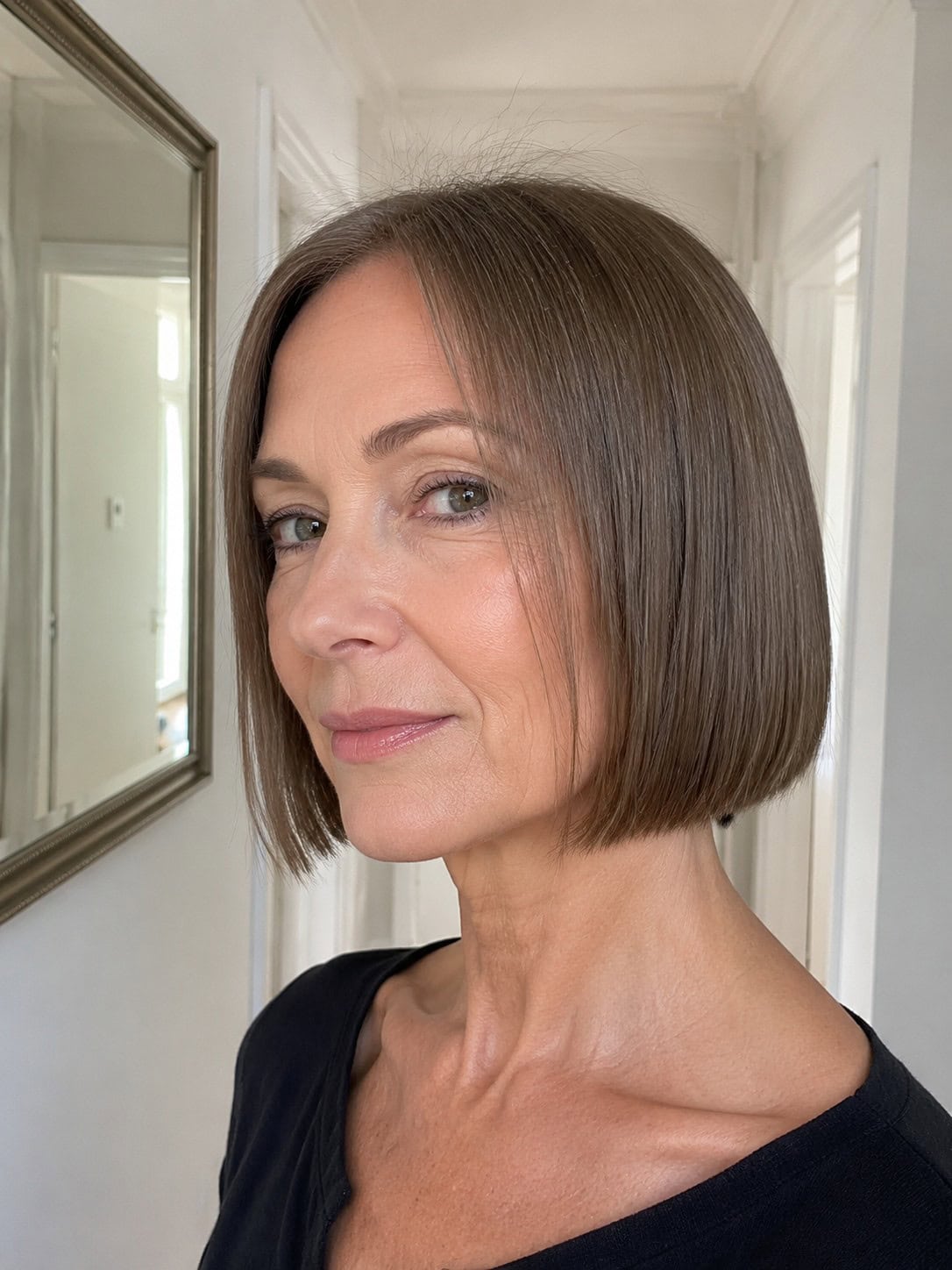
A jaw-length bob with a clean one-length perimeter at the jaw. The blunt structure provides visual density while the jaw length softens the face slightly. Style with a smoothing serum and flat iron for polish. Pairs particularly well with single-process color where the consistent tone showcases the cut clearly. The jaw length particularly suits women whose hair has lost density at the perimeter and benefits from the cut weight.
Blunt Lob (Long Bob)
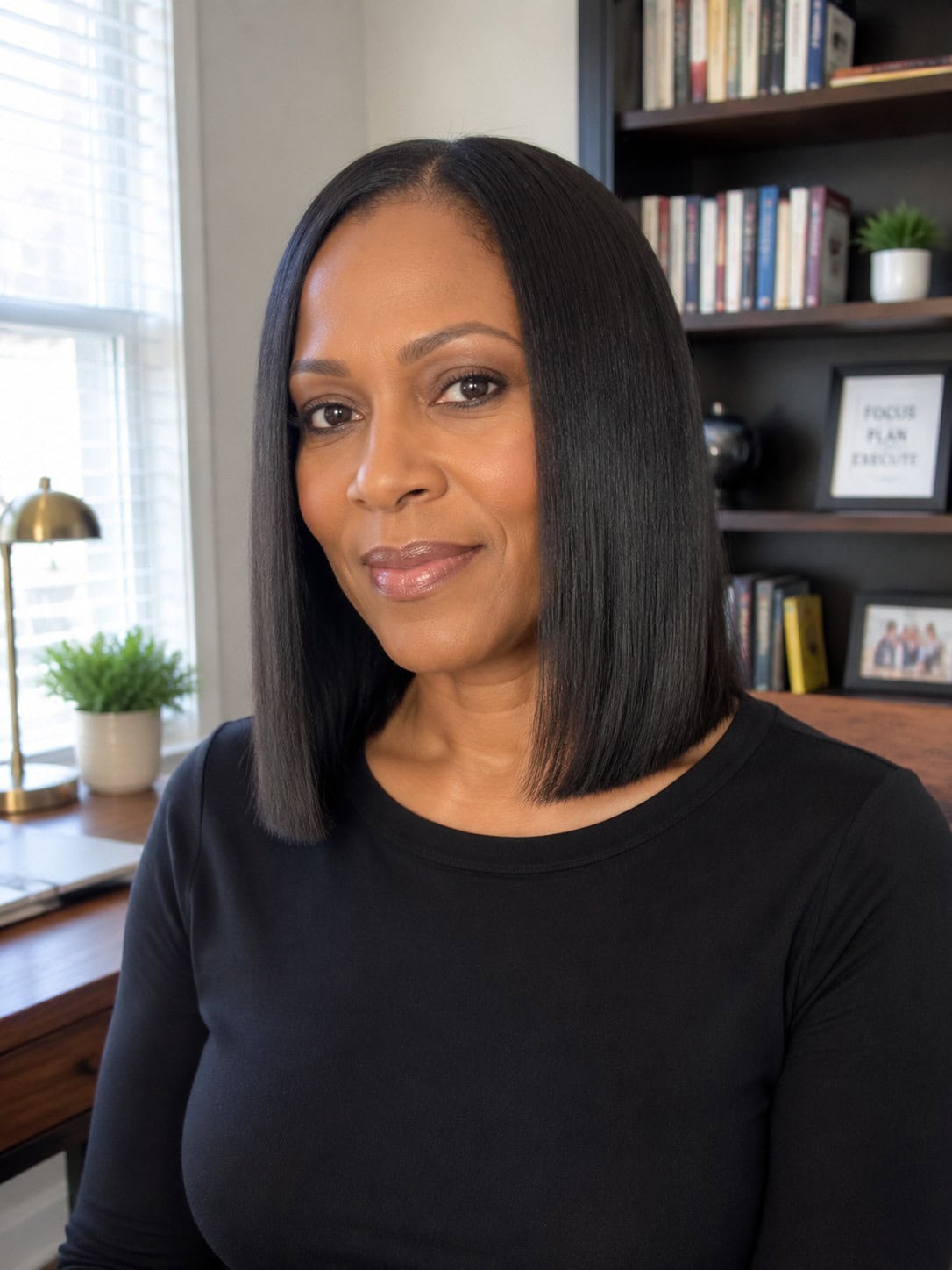
A long bob extending just past the shoulders with a clean blunt perimeter. The lob provides versatility for both polished and casual styling. The clean perimeter creates the illusion of fullness that fine hair otherwise lacks at length. Style with a smoothing serum and flat iron throughout. Maintenance every six to eight weeks. The blunt lob works particularly well for women transitioning from longer cuts who don't want to commit to shorter bobs.
Bouncy Blowout Style
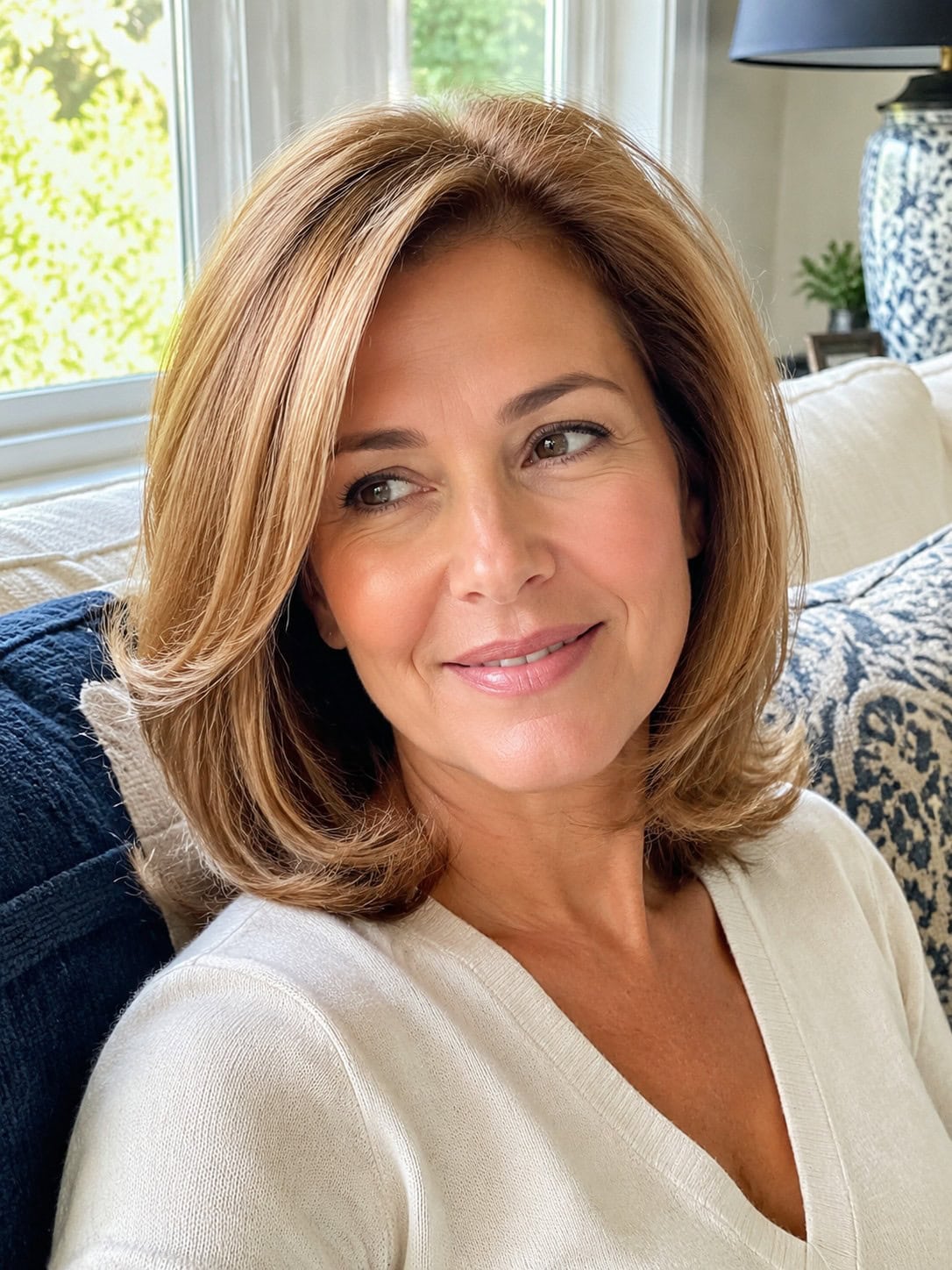
A blowout styled with significant volume at the roots and soft inward-bending ends, applied to a mid-length cut. The blowout creates the appearance of significantly fuller, healthier hair than the natural fine texture provides. Use a large round brush, rolling under at the ends and lifting at the crown. A flexible-hold spray locks the shape. The blowout lasts two to three days with proper care. Suits fine hair particularly well.
Curtain Bangs Lob
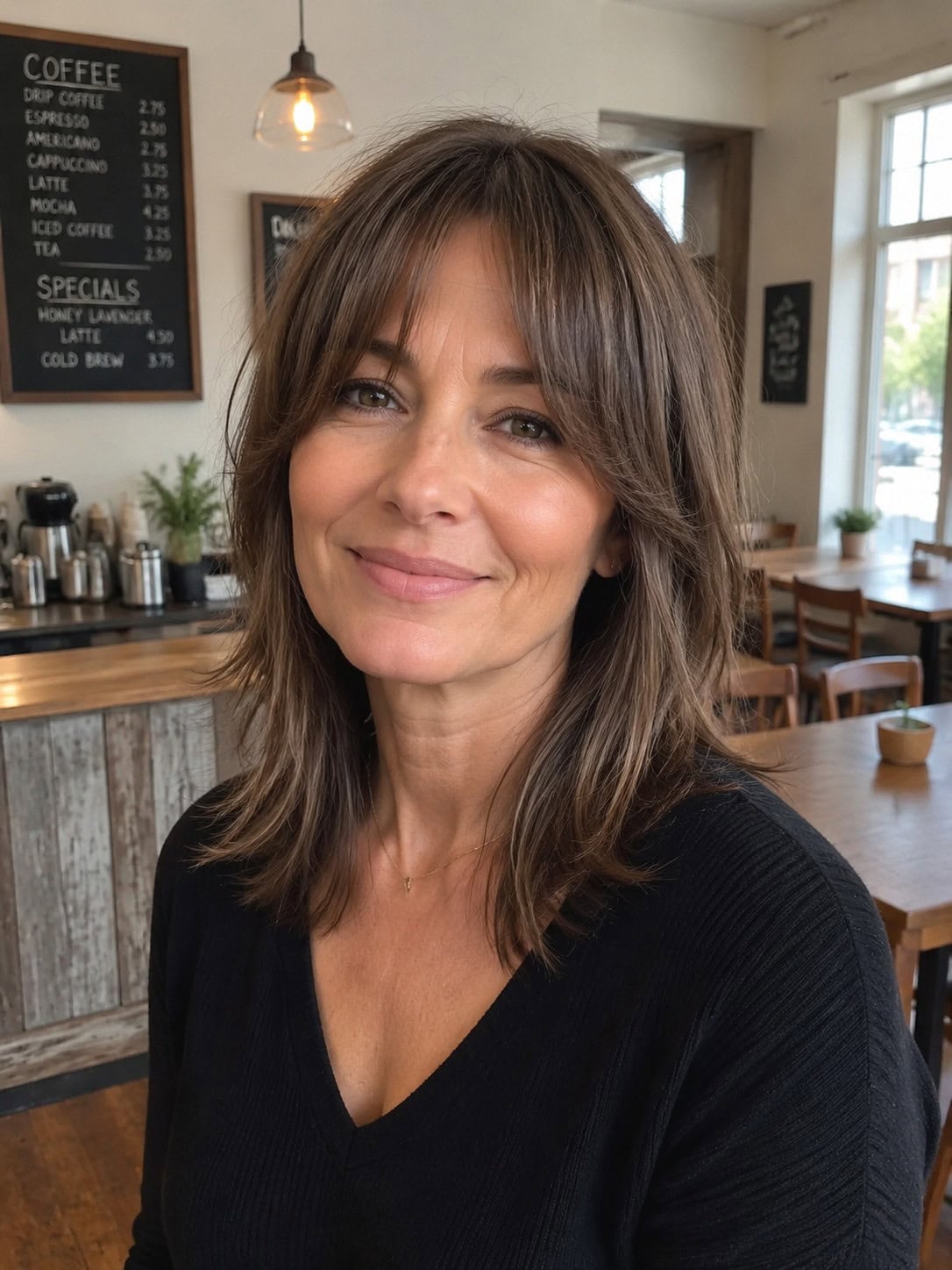
A long bob paired with curtain bangs falling from cheekbone to jaw. The curtain bangs add fullness around the face where fine hair often lacks density. Keep the bangs light and wispy rather than heavy. Style with a round brush, directing the bangs outward and back. The combination delivers face-framing detail with the visual density of the blunt lob structure underneath.
Wispy Bangs with Lob
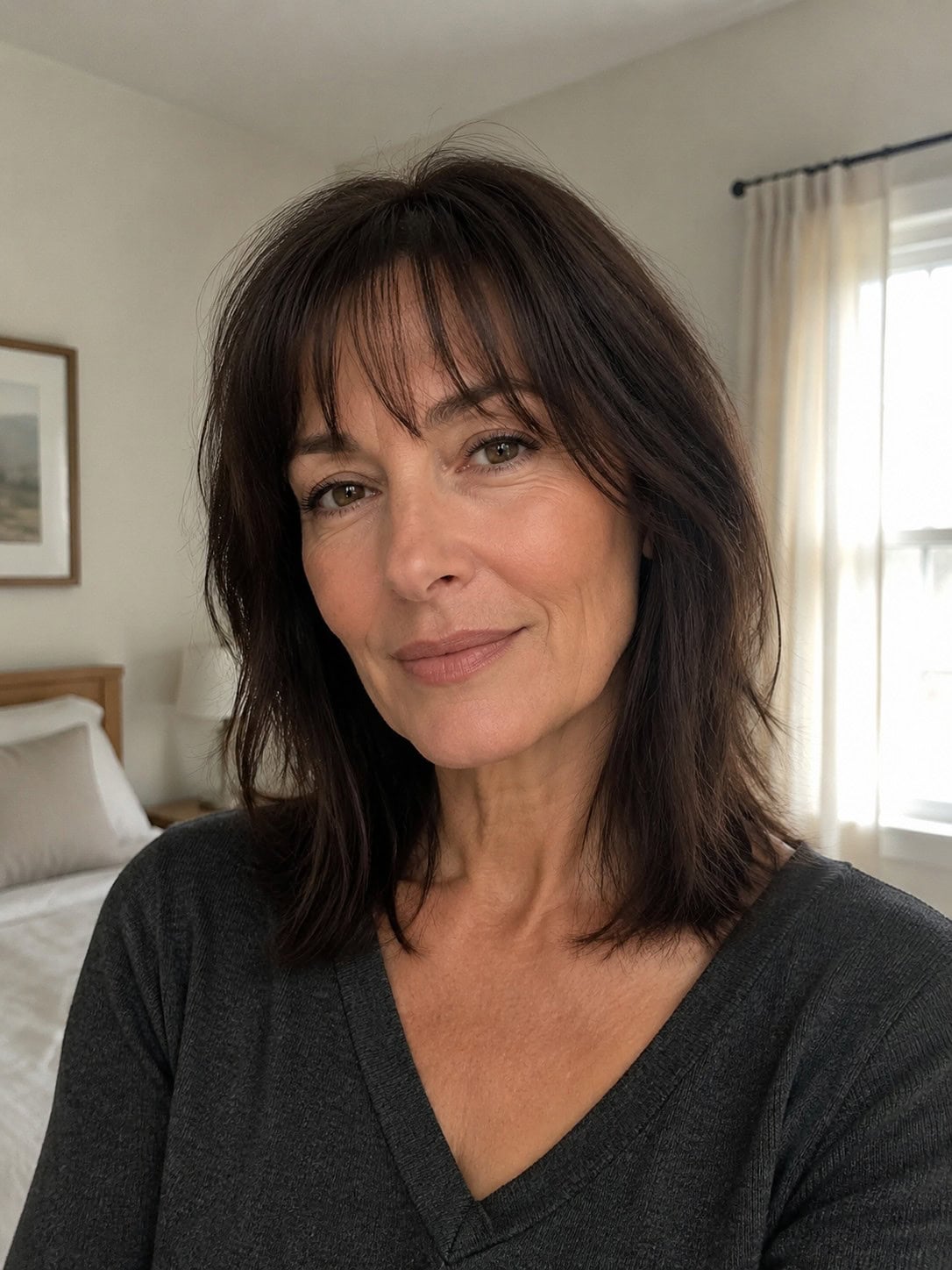
A lob paired with piecey separated wispy bangs at the brow. The wispiness suits fine hair texture rather than fighting it, while the lob structure provides perimeter density. Blow-dry the bangs with fingers and break apart with a small amount of texture cream. Refresh every five to six weeks for the bangs. The combination provides face-framing detail without the heaviness of solid bangs.
Side-Parted Style with Volume
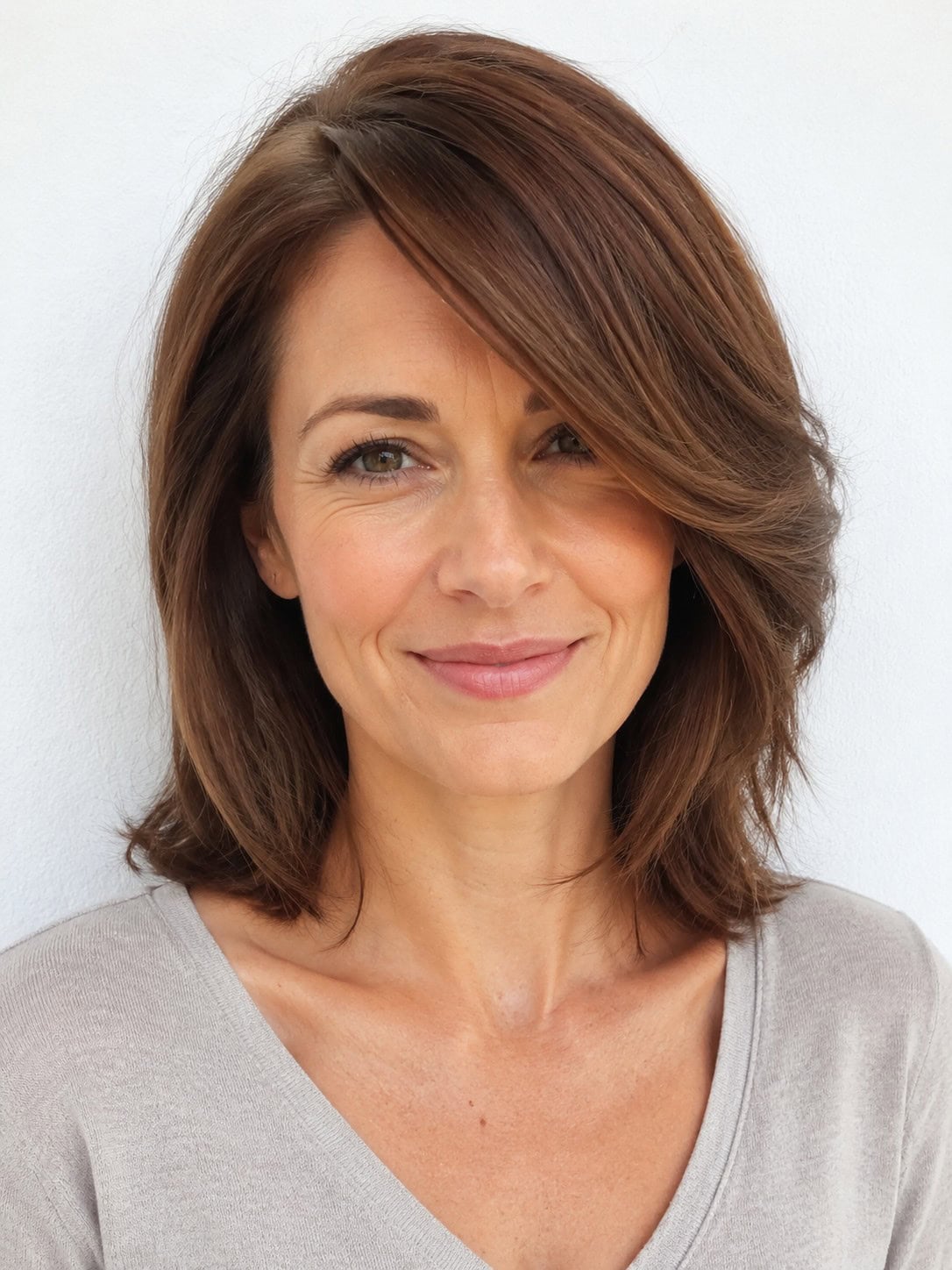
A mid-length cut styled with a deep side part that creates concentrated volume on the heavier side. The deep side part trains hair against the natural fall direction, creating root lift that fine hair otherwise lacks. Train the part on damp hair with a comb and set with mousse at the root. The side-parted styling provides maximum visual fullness through directional volume rather than relying on cut alone.
Inverted Bob with Stacked Volume
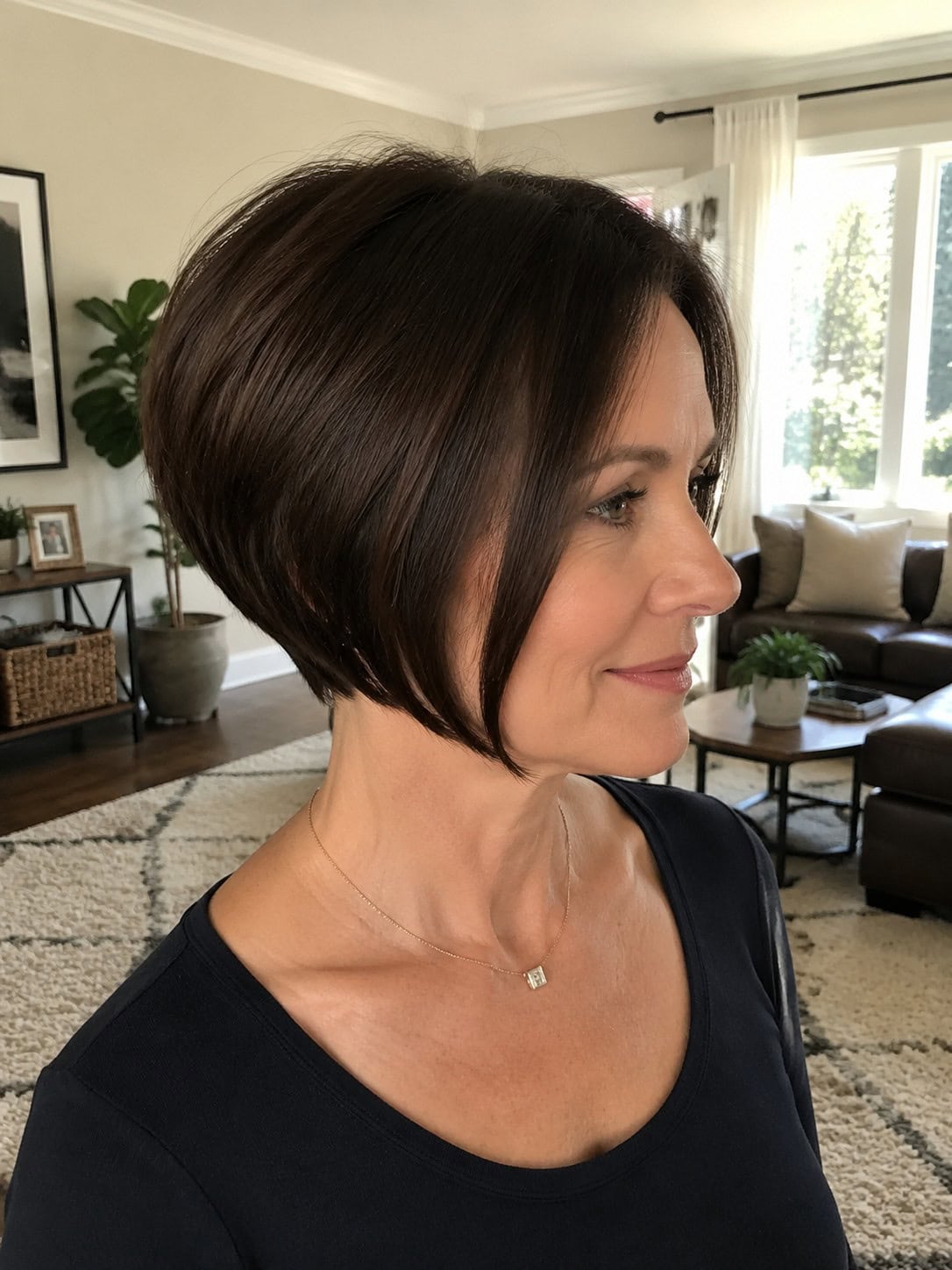
An inverted bob with stacked graduation at the back and longer front pieces. The cut shape provides volume at the back where mature hair often loses density first. Style with a round brush on the back to set the stacked shape. The graduation builds visible volume without requiring root spray every morning. Particularly suits women whose hair has thinned at the crown but retains length at the front.
Long Hair with Money Piece
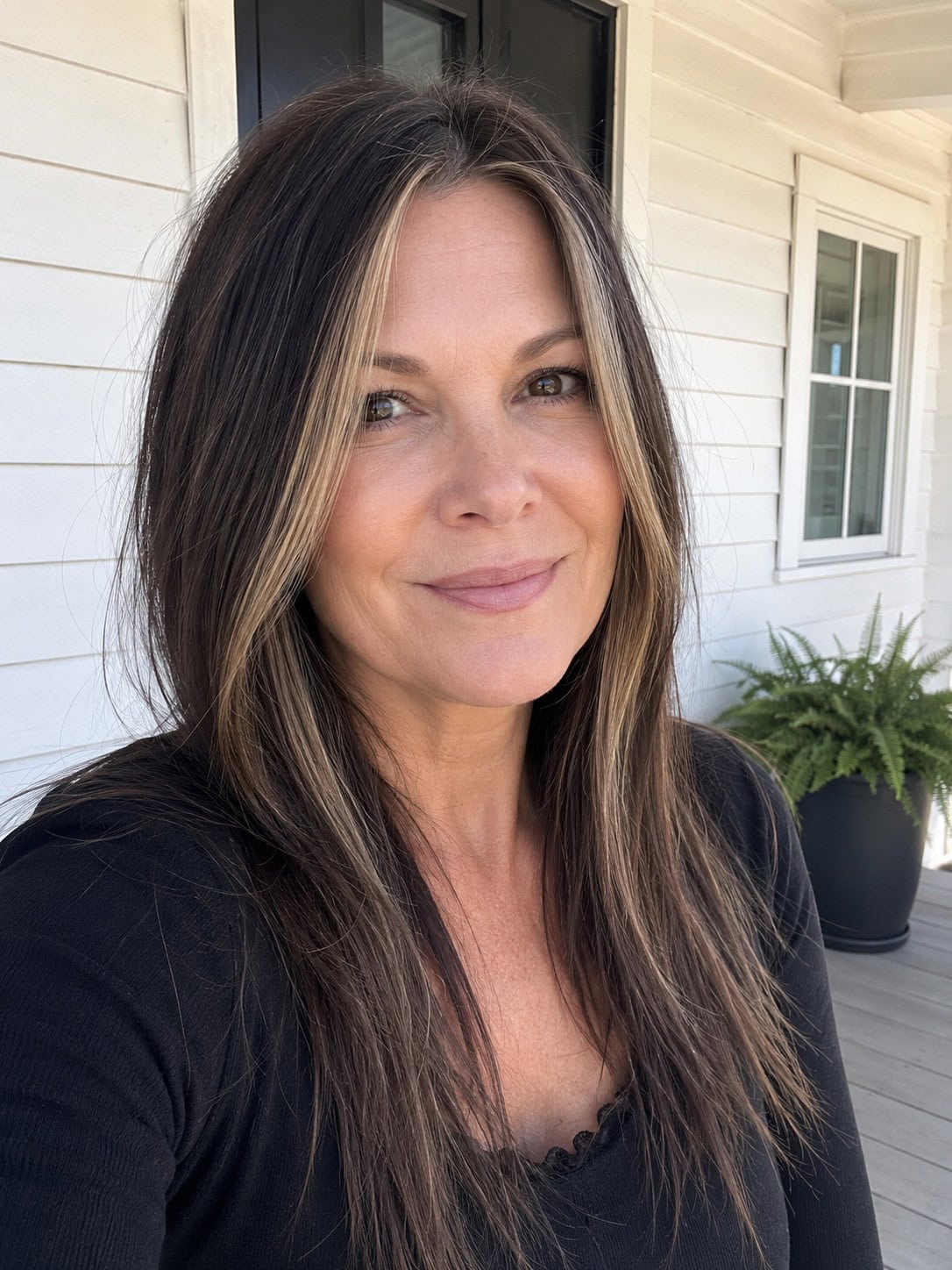
Long hair extending past the shoulders paired with money piece highlighting where lightened panels frame the face from the part to the chin. The money piece adds dimensional brightness around the face where fine hair particularly needs visual interest. Base color stays consistent through the rest of the cut. Refresh every twelve to sixteen weeks. The combination provides long length with strategic color that disguises the density loss long hair on fine textures often shows.
Balayage Mid-Length Cut
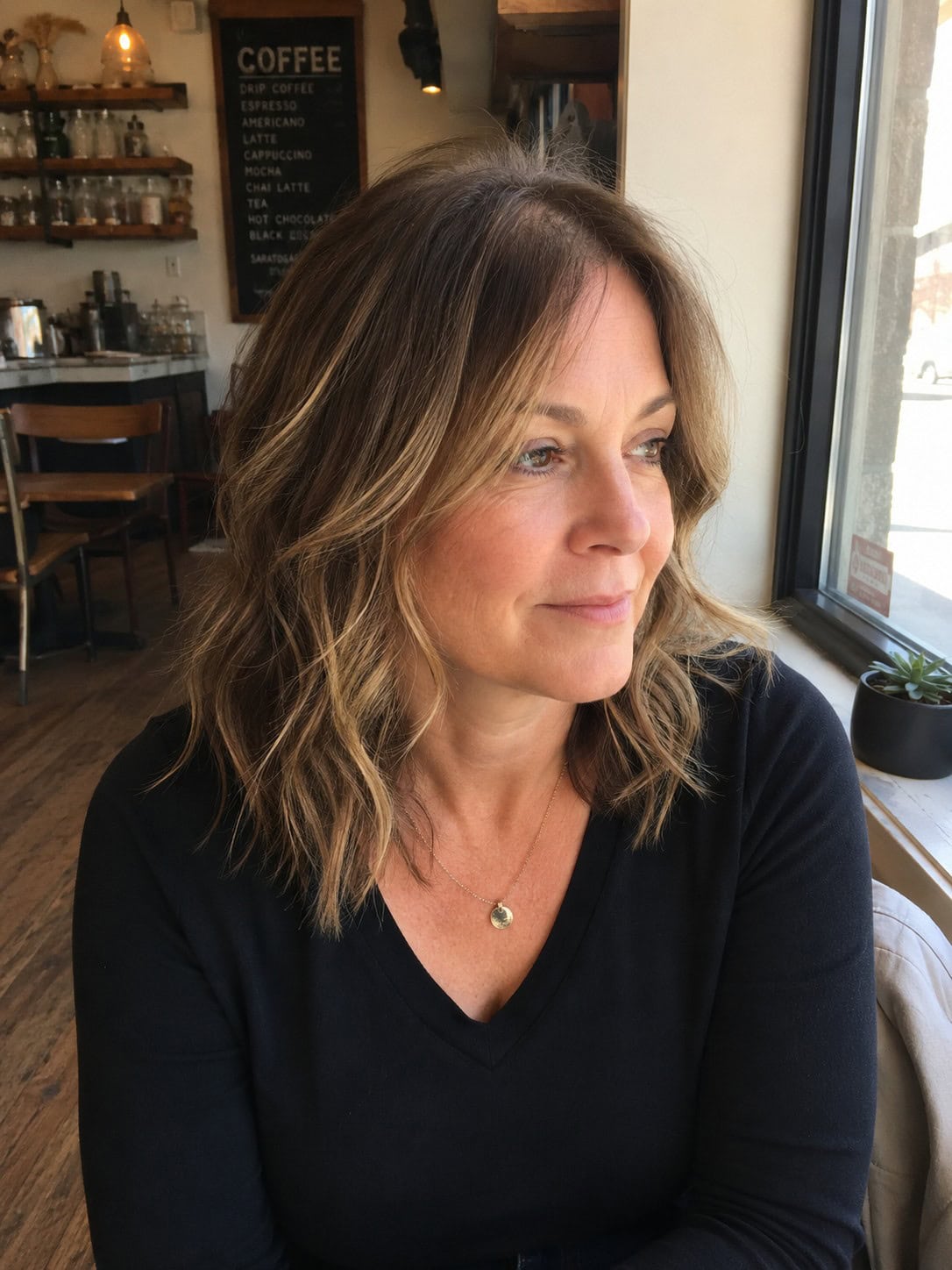
A mid-length cut at the collarbone paired with hand-painted balayage highlights. The painted dimension creates visual fullness through tonal variation on fine hair. The technique stays low-maintenance compared to traditional foiled highlights, which matters when monthly root touch-ups aren't appealing after 40. The balayage approach particularly suits women who want dimensional color without the upkeep commitment of traditional highlighting techniques.
Layered Pixie with Volume
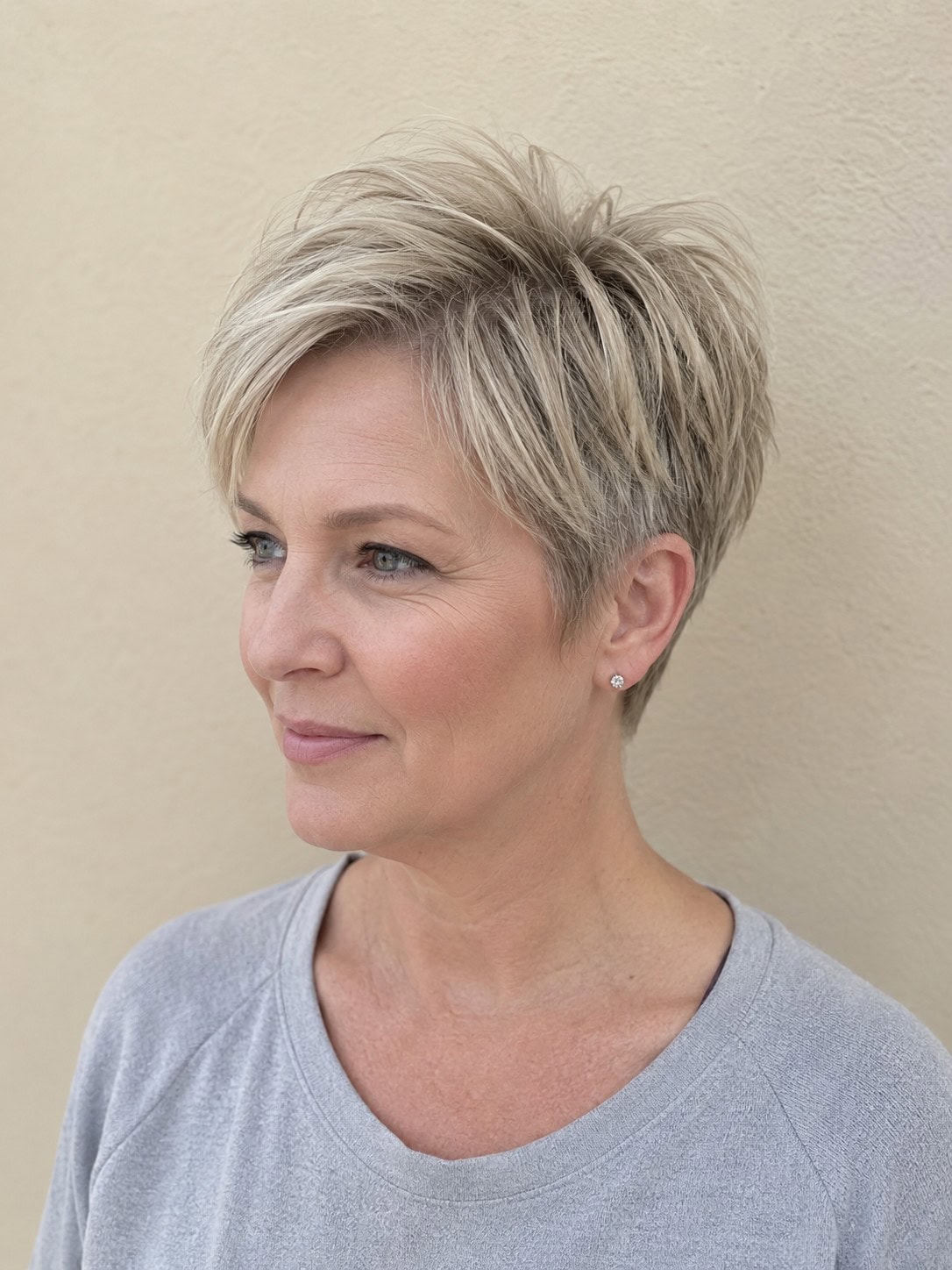
A pixie with subtle layering through the top section that creates natural volume at the crown. The cut shape provides height where fine hair after 40 often falls flattest. Style with a root-lifting product and direct the crown hair up while drying with fingers. Best on hair where the layered top section provides volume without compromising the perimeter density at the sides.
French Bob
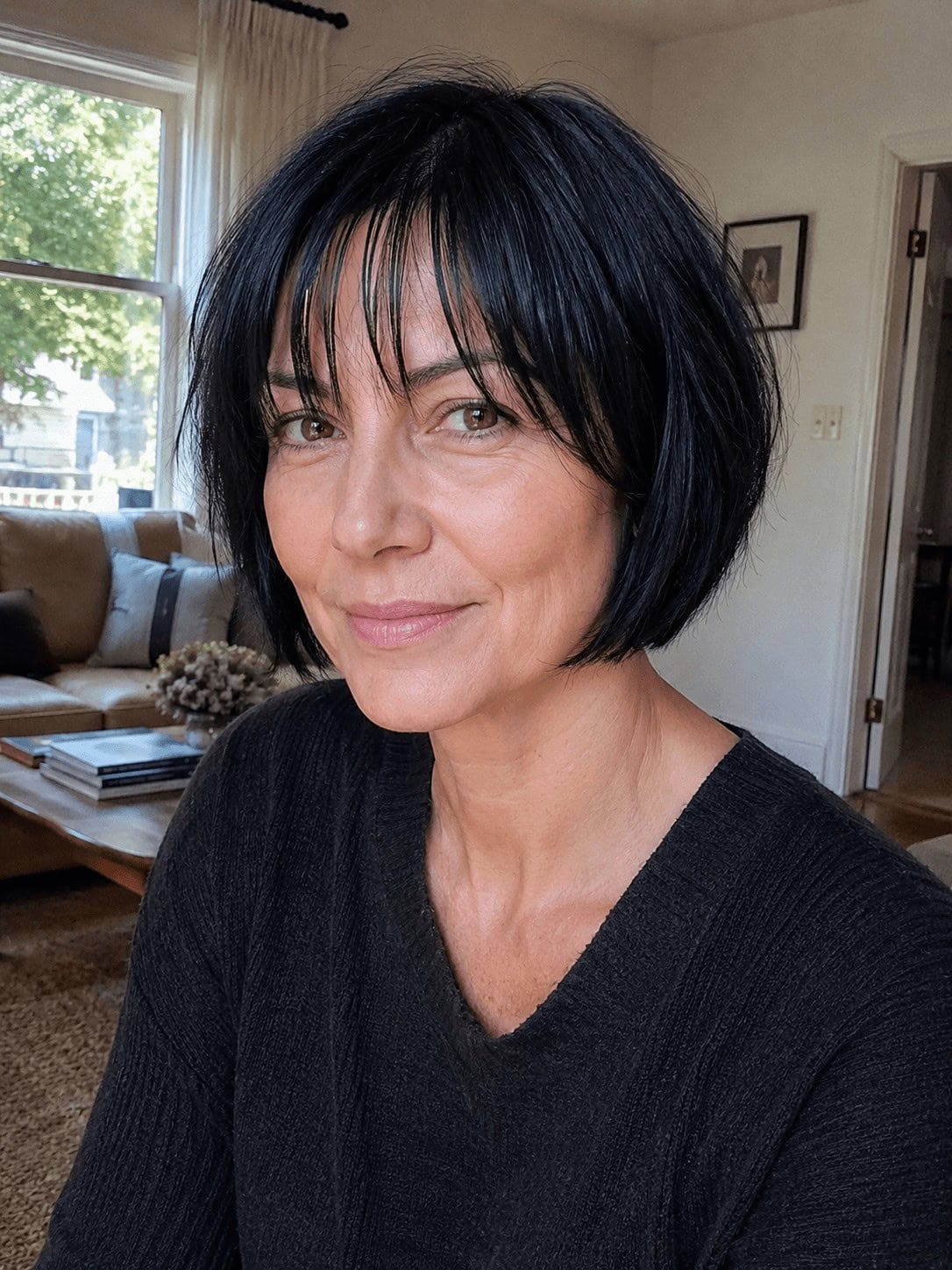
A jaw-length French bob with wispy separated bangs and lived-in styling. The French bob particularly suits fine hair after 40 because the cut shape and styling approach prioritize lived-in character over polished precision. Salt spray on damp hair, air-dry, and finger-style the bangs. The cut looks intentional even three months past your last appointment, which works for fine hair where regrowth can show density loss.
C-Curl Lob
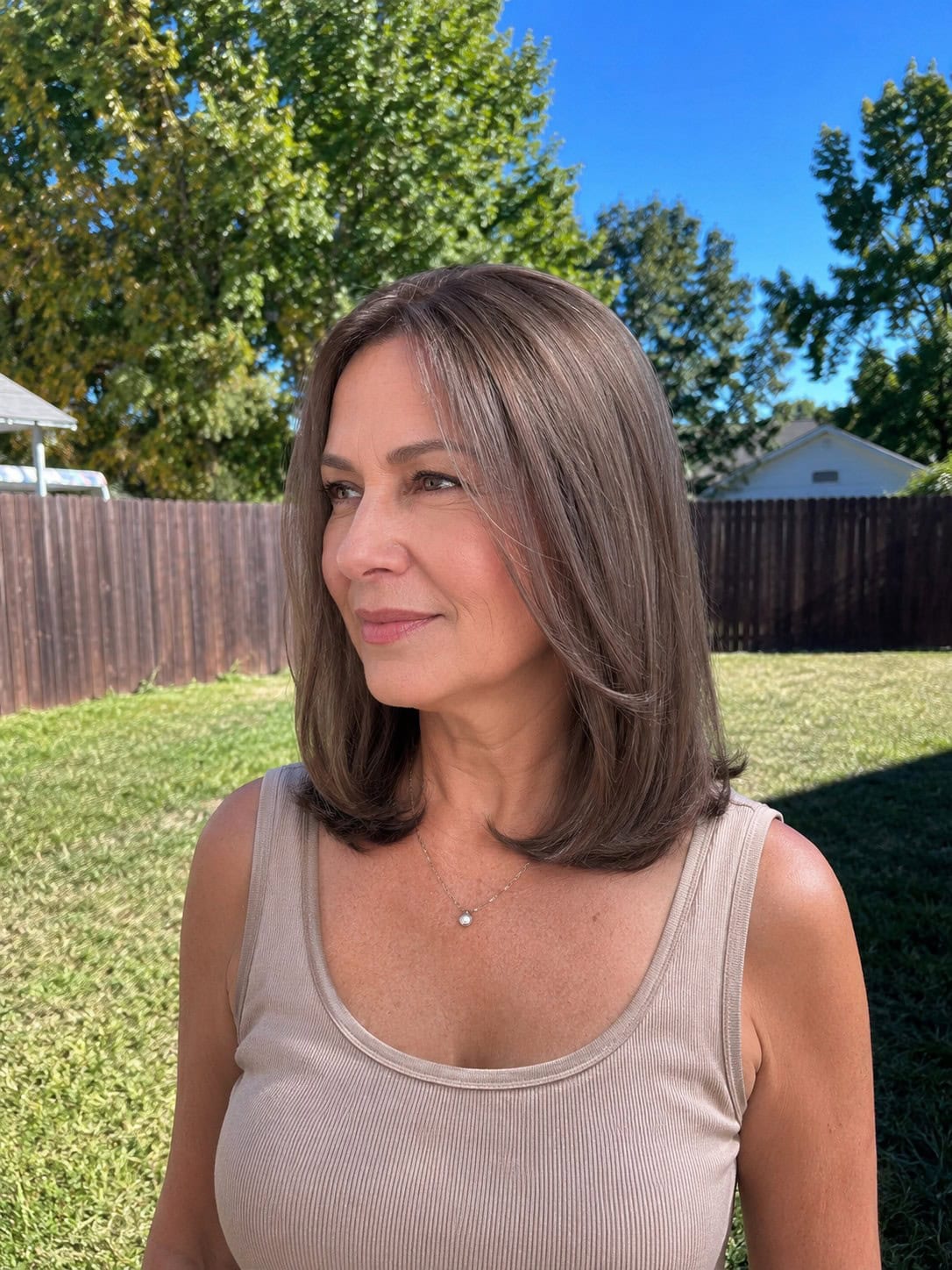
A lob with the ends styled in a C-shape bend, flipping inward in a soft curl at the perimeter. The C-curl provides polish and visual weight at the ends, which is exactly what fine hair needs to look fuller. Use a flat iron or a curling iron, rolling under at the perimeter. Pairs particularly well with hair colored in bronde, mushroom brown, or any of the cool brown shades trending right now.
Tucked-Behind-Ears Lob
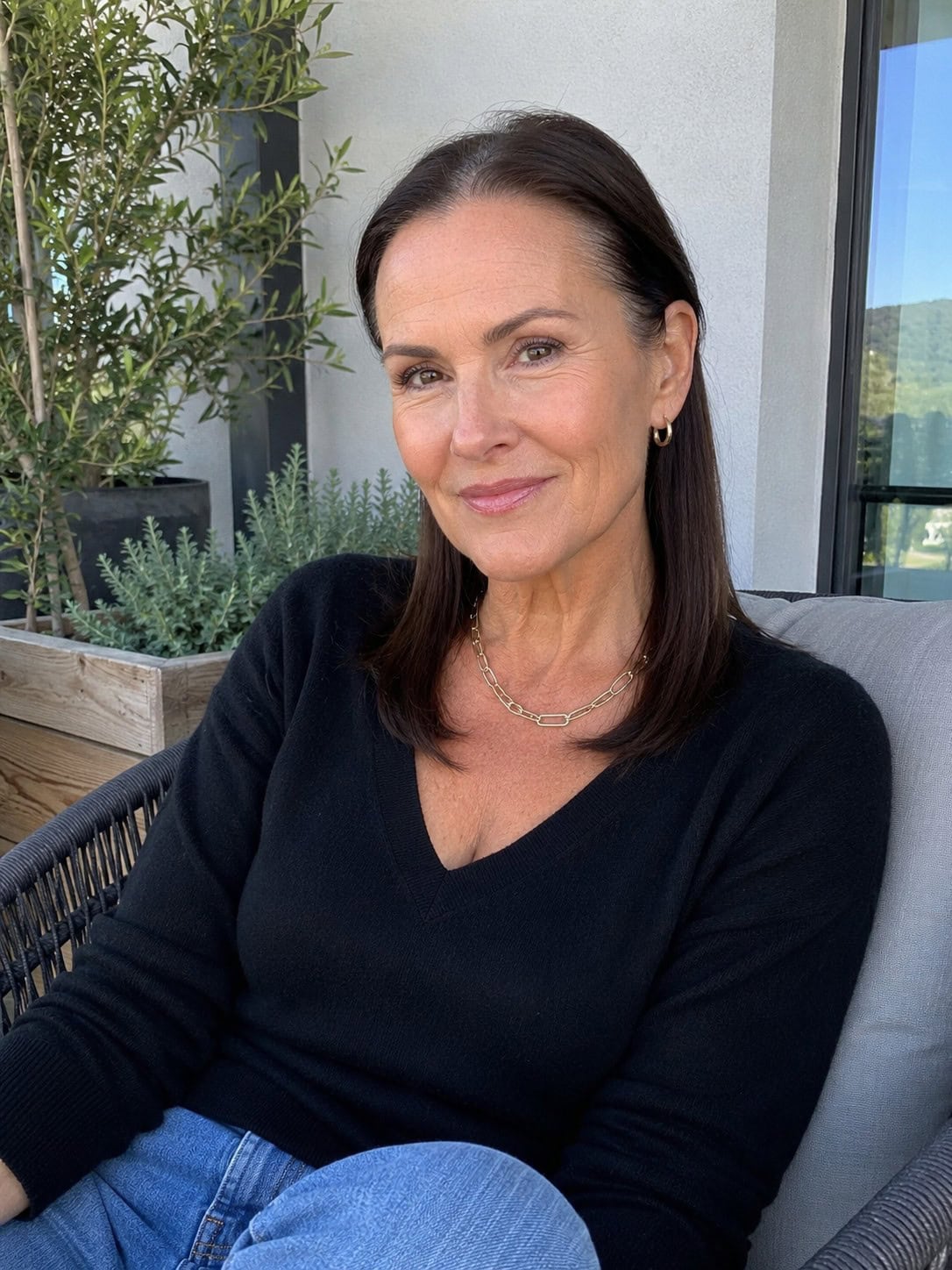
A lob styled with the front pieces tucked behind the ears, shifting visual focus to the face and creating fullness behind the ears rather than around the face. The tucking concentrates available density at the back. A small amount of pomade behind each ear keeps the tuck in place through the day. The styling provides a polished alternative to fully down styling that suits fine hair after 40.
Polished Sleek Style
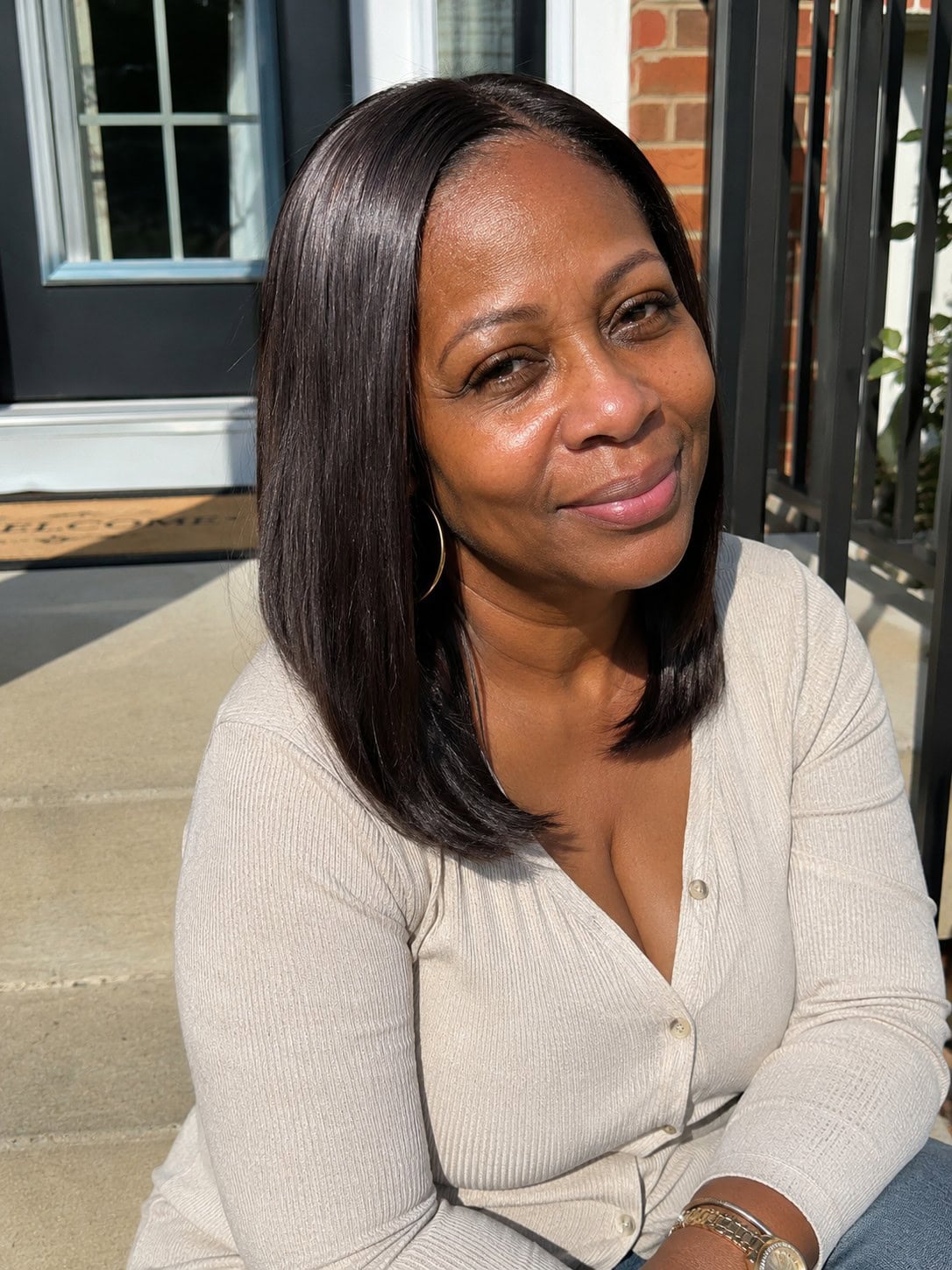
A lob or mid-length cut finished with a glossing treatment and sleek polished styling. The reflective finish makes fine hair look healthier and more substantial by maximizing the light it bounces. A glossing treatment, smoothing serum, and flat iron pass deliver the finish. Best on hair with minimal frizz potential. Pairs particularly well with single-process color in a deep, rich shade.
Soft Layered Cut with Face-Framing
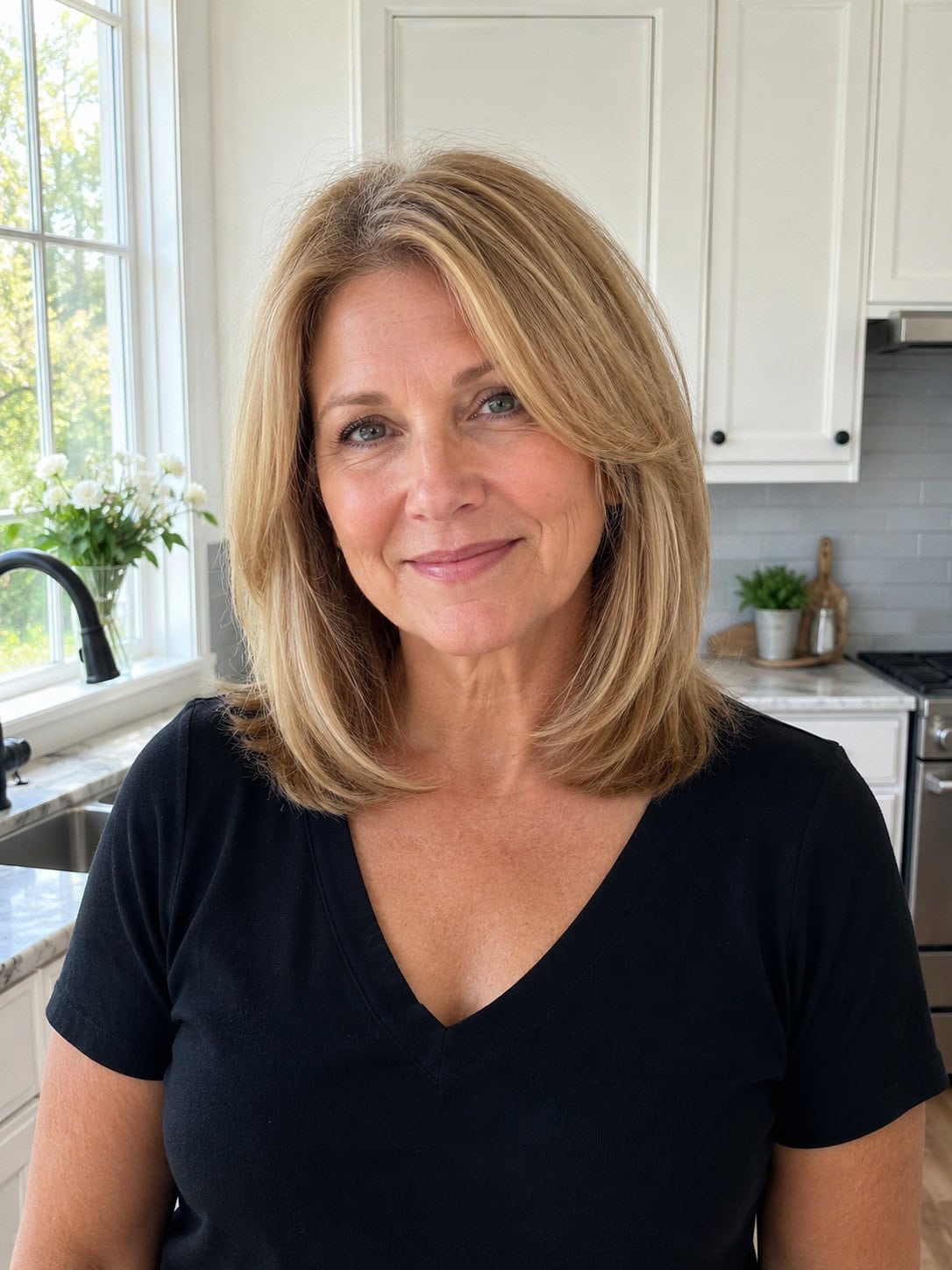
A mid-length cut with very subtle layering focused only on the longest face-framing pieces, leaving the rest of the cut largely one-length. The face-framing layers add movement without exposing scalp through the interior of the cut. The longest face-framing layer should still hit at the collarbone. Best executed by stylists experienced with fine hair, who understand how little layering it actually needs.