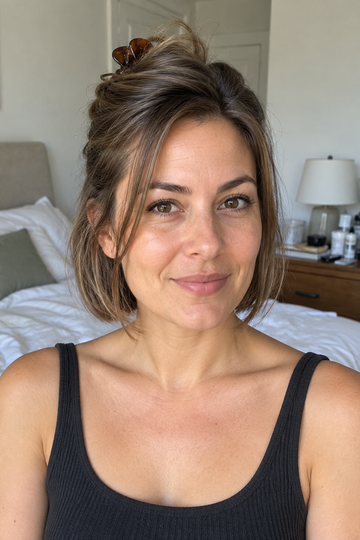
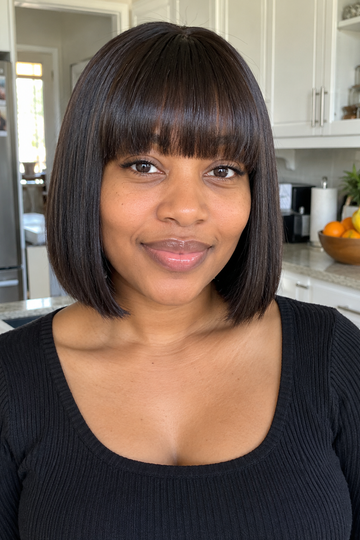
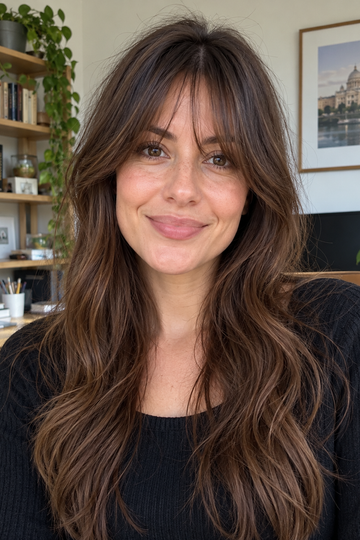
The biggest mistake with thin hair is removing weight where it shouldn't go. Heavy razored layers, choppy texturizing throughout the lengths, and aggressive thinning shears strip the density that thin hair desperately needs to keep. The cuts below work the opposite way: blunt ends to create the illusion of thicker hair, strategic layering only where it adds movement without sacrificing fullness, and shapes designed to maximize the appearance of density. A stylist who specializes in fine hair makes more difference than the cut itself.
Jump to:
- Sharp Blunt Chin-Length Bob
- French Bob With Soft Fringe
- Textured Long Pixie
- Stacked Wedge Cut
- Pixie With Side-Swept Bangs
- Inverted Bob With Tapered Back
- Short Crop With Micro Bangs
- Layered Bob With Internal Layers Only
- Crop Cut With Volume on Top
- Asymmetric Bob With One Longer Side
- Soft Shag With Choppy Layers Only at the Top
- Bixie Cut With Volume Throughout
- Lob With Internal Layers and Beach Waves
- Short Layered Pixie With Choppy Top
- Blunt Cut With Subtle Face-Framing
- Wispy Bangs With Bob
- Bob With Tucked Behind Ear Styling
- Long Pixie With Deep Side Part
- Soft Razored Pixie
- Chin Bob With Inward-Curling Ends
- Pixie With Longer Bangs
- Bob With Off-Center Part and Volume Boost
Sharp Blunt Chin-Length Bob
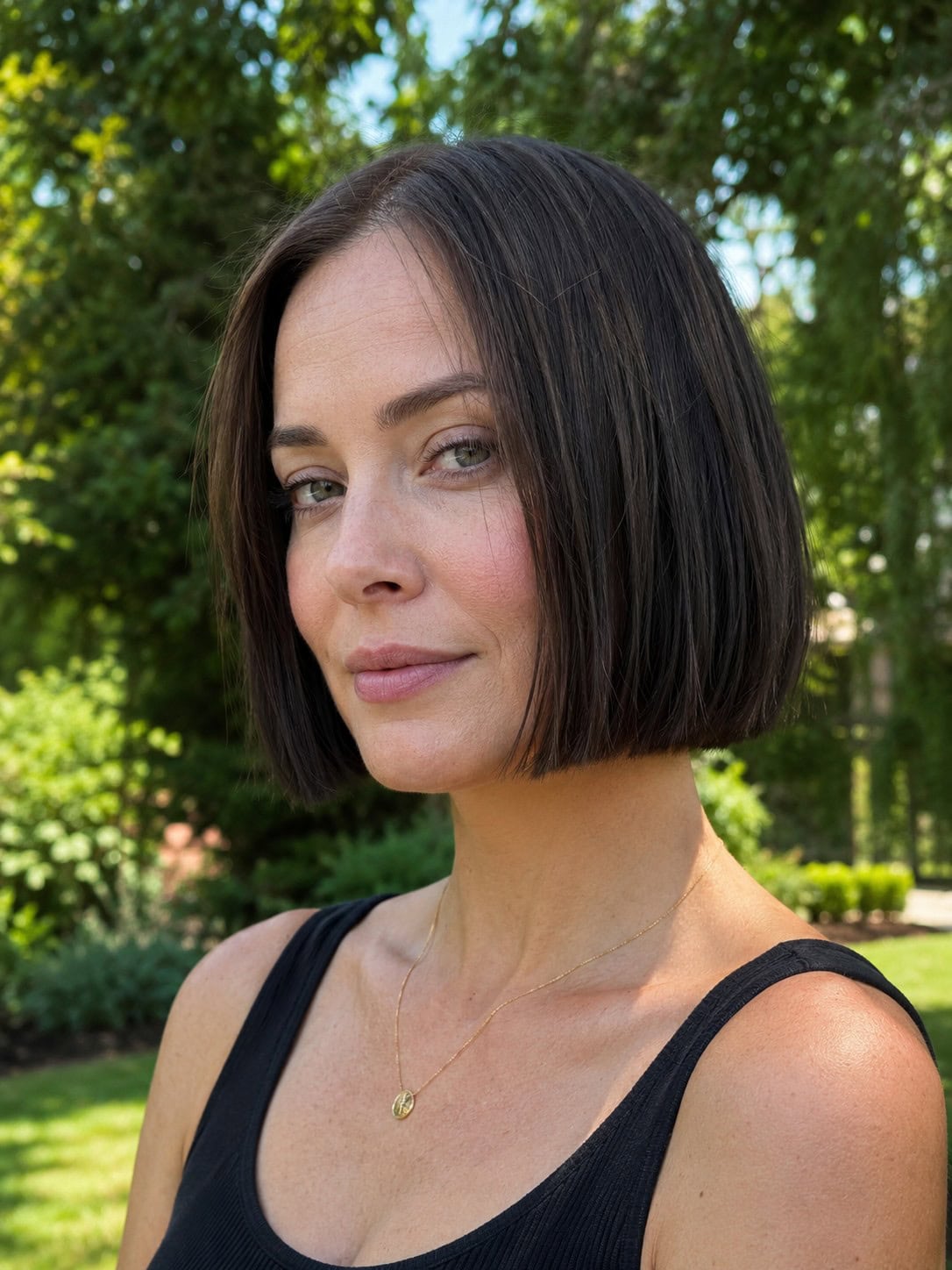
A sharp blunt bob ending right at the chin creates the strongest illusion of density for thin hair. The blunt cut leaves every strand exactly the same length at the ends, so the hair appears thicker than it actually is. Stylists avoid texturizing the bottom edge entirely, which preserves the visual weight at the perimeter. Trims every five to six weeks keep the blunt edge sharp, since growth shows immediately on this precise shape.
French Bob With Soft Fringe

The French bob ends slightly above the jawline with a soft wispy fringe across the forehead. The shorter overall length and rounded shape concentrate the visual mass of the hair into a smaller area, which makes thin hair look fuller by default. The fringe softens the face without requiring extra hair density. This cut suits anyone whose thin hair sits relatively straight. Curl can be added with a wand for daily volume.
Textured Long Pixie
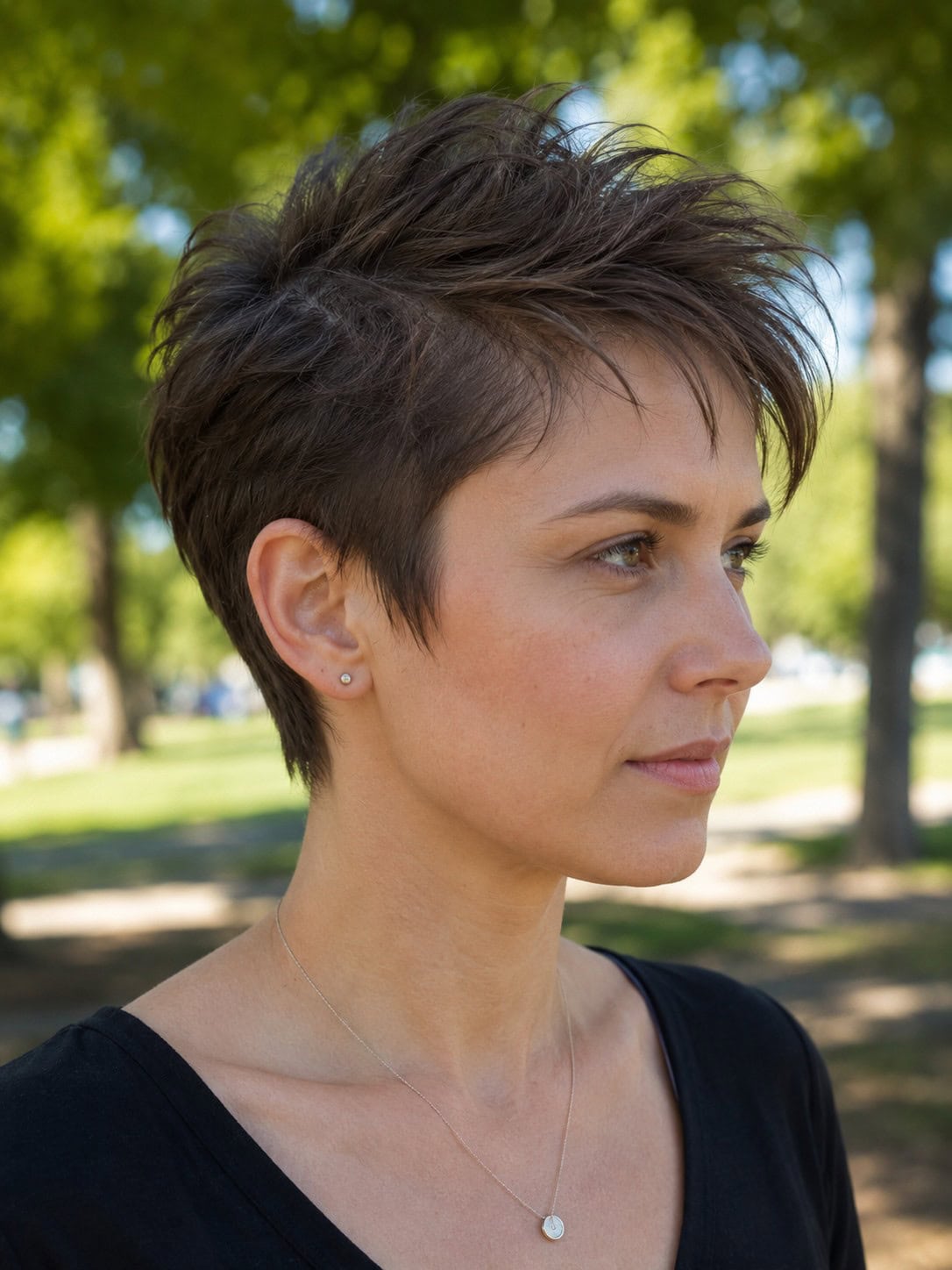
A long pixie with deliberate texturing through the top section, leaving the sides and back closer cropped, creates volume on top where thin hair often falls flat. The longer top can be styled with paste or fiber for additional lift. The shorter sides stay flat against the head, which makes the textured top appear larger by contrast. This cut suits women whose thin hair has lost volume specifically at the crown.
Stacked Wedge Cut
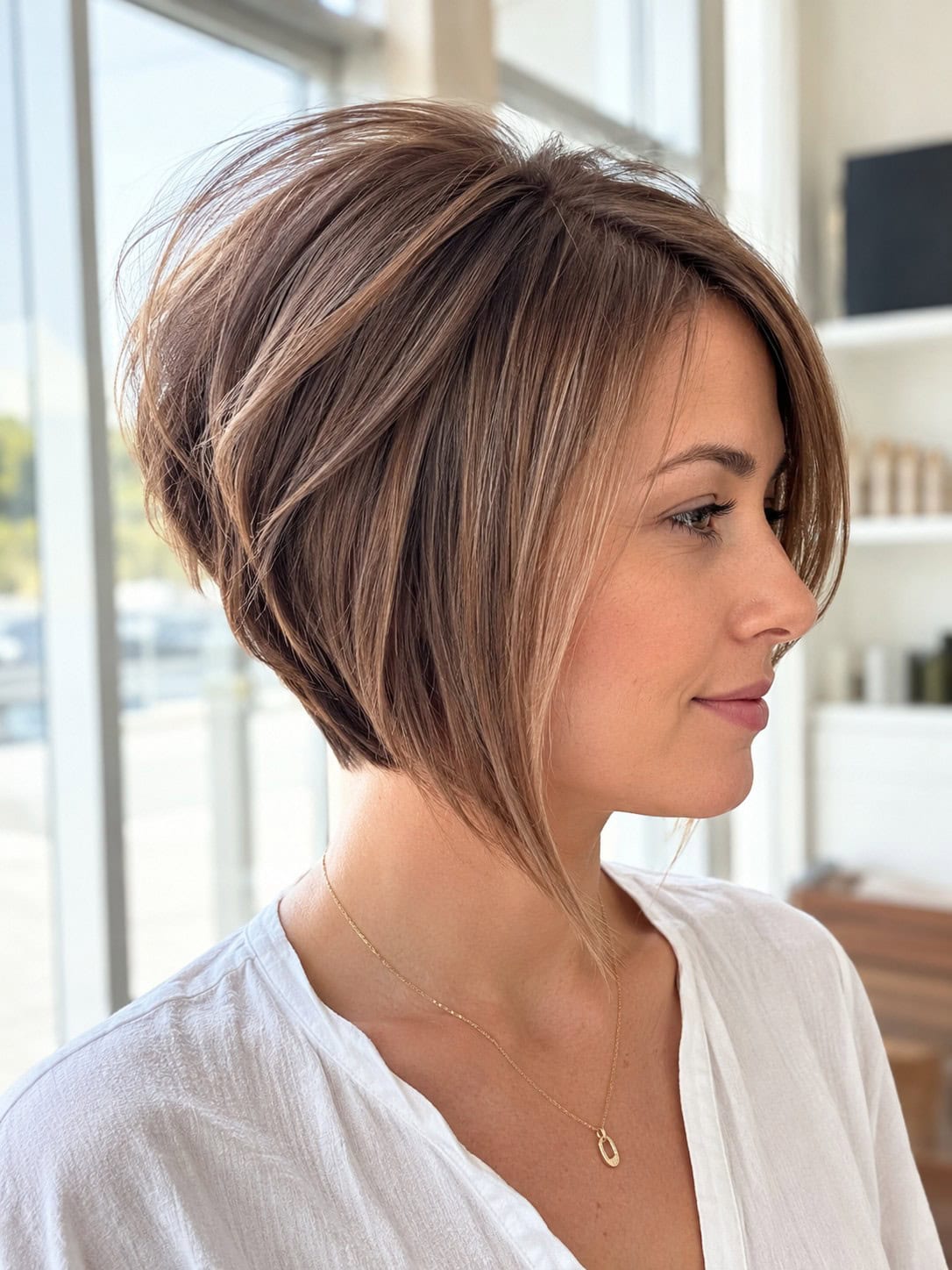
The stacked wedge cut, with short stacked layers at the back and longer angled pieces at the front, creates instant volume at the crown through the stacking technique. Thin hair gains visual fullness from the layered structure without losing the perimeter weight. The angled front pieces frame the face while the stacked back creates rounded silhouette. Trims every four weeks maintain the precise stacking lines that make the shape work.
Pixie With Side-Swept Bangs
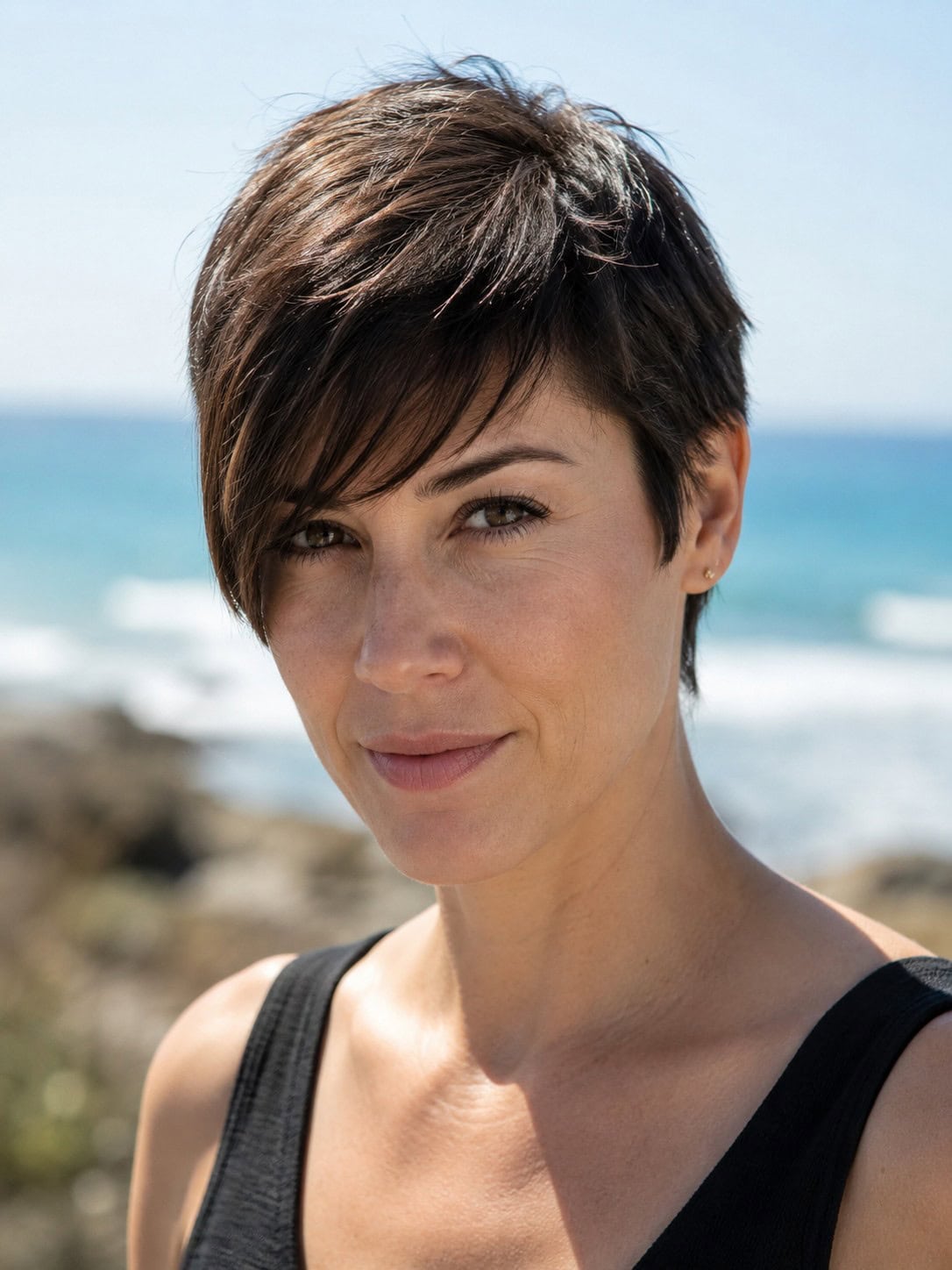
A classic pixie cut with side-swept bangs angling across the forehead frames the face while keeping the back close to the head. The side-swept fringe creates asymmetry that draws the eye away from the crown, which can help when thin hair shows scalp at the top. The bangs themselves require trimming every three to four weeks to maintain the side-swept angle. The rest of the pixie holds shape for six weeks between salon visits.
Inverted Bob With Tapered Back
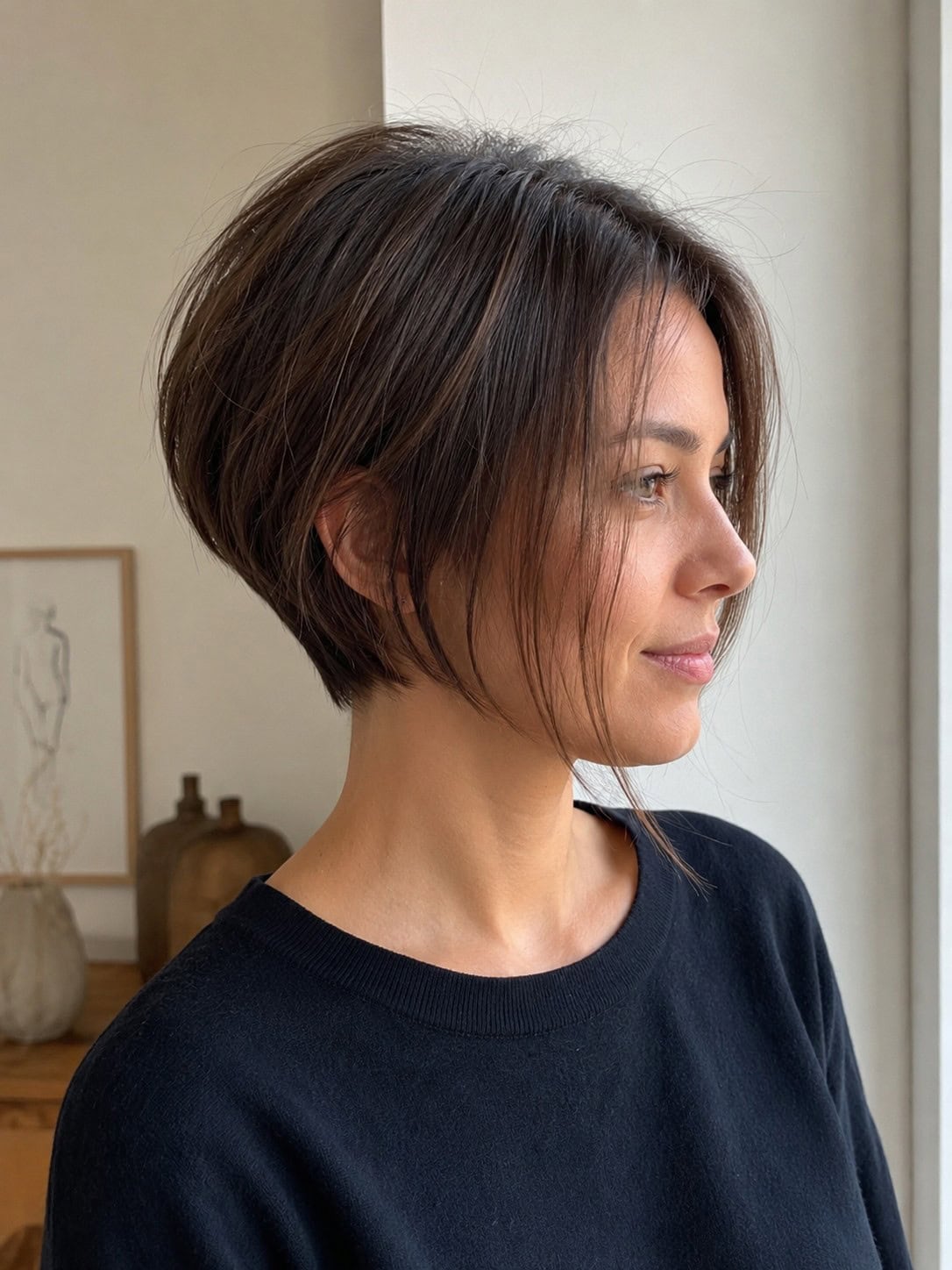
The inverted bob, slightly longer at the front than the back, with a tapered nape creates dynamic shape that thin hair benefits from. The tapered back reduces bulk that doesn't exist in thin hair anyway, while the longer front frames the face. This cut keeps the hair off the neck while maintaining facial framing. Trims every five to six weeks maintain the precise inverted line that makes the cut effective.
Short Crop With Micro Bangs
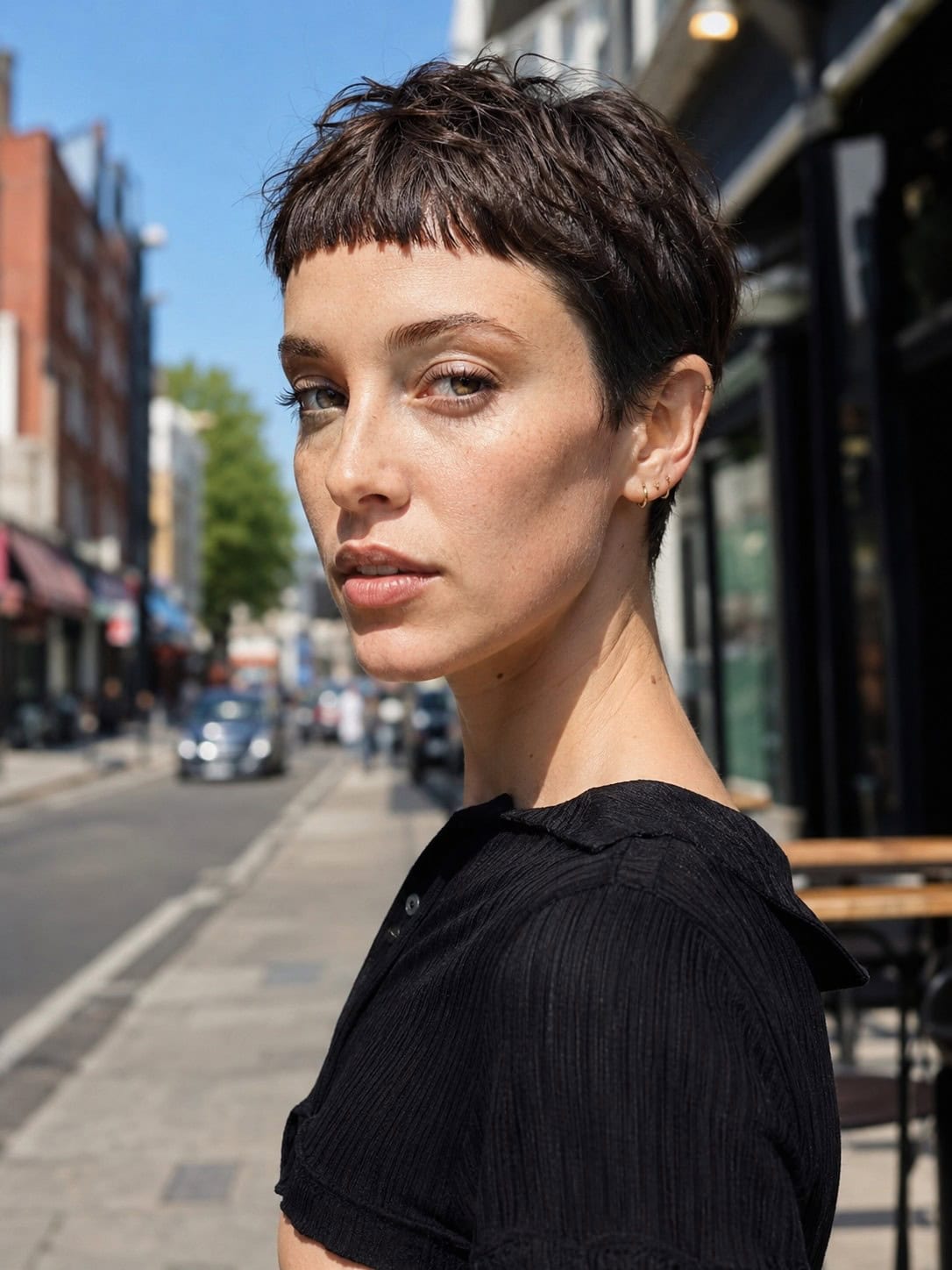
A short crop with very short micro bangs, sometimes called baby bangs, sits one to two inches above the eyebrows. The dramatic bang choice draws attention to the eyes and away from any thinning at the crown. The overall short length concentrates the hair into a small area, maximizing the density illusion. This cut suits confident styling personalities since micro bangs read as a strong statement.
Layered Bob With Internal Layers Only
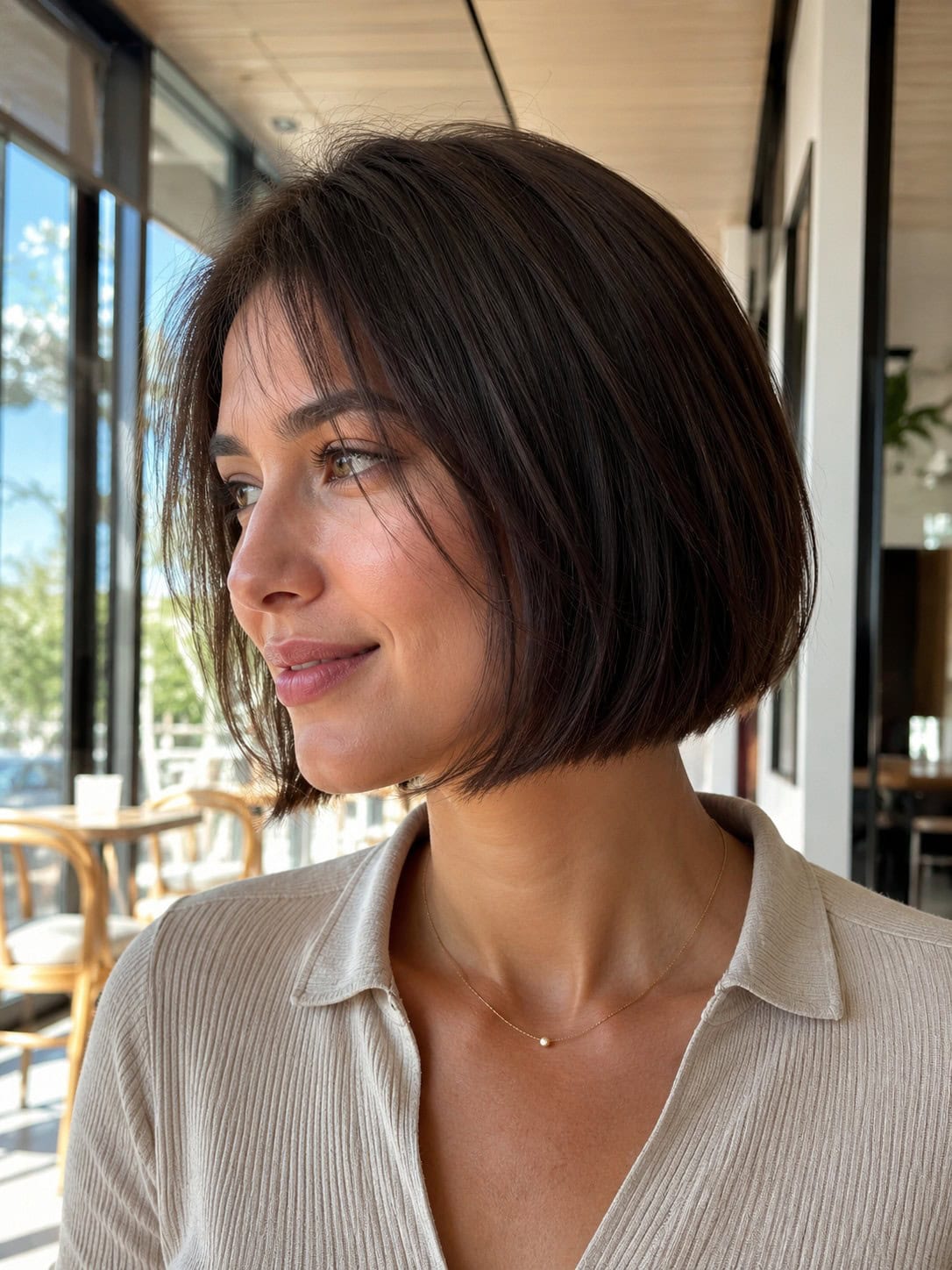
A bob with layering placed internally rather than along the ends preserves the blunt perimeter while adding movement throughout the hair. The internal layers, also called invisible layers, sit within the cut rather than on the surface, so the outer shape stays blunt and visually dense. Stylists who specialize in fine hair use this technique specifically because it adds dimension without sacrificing weight at the ends.
Crop Cut With Volume on Top
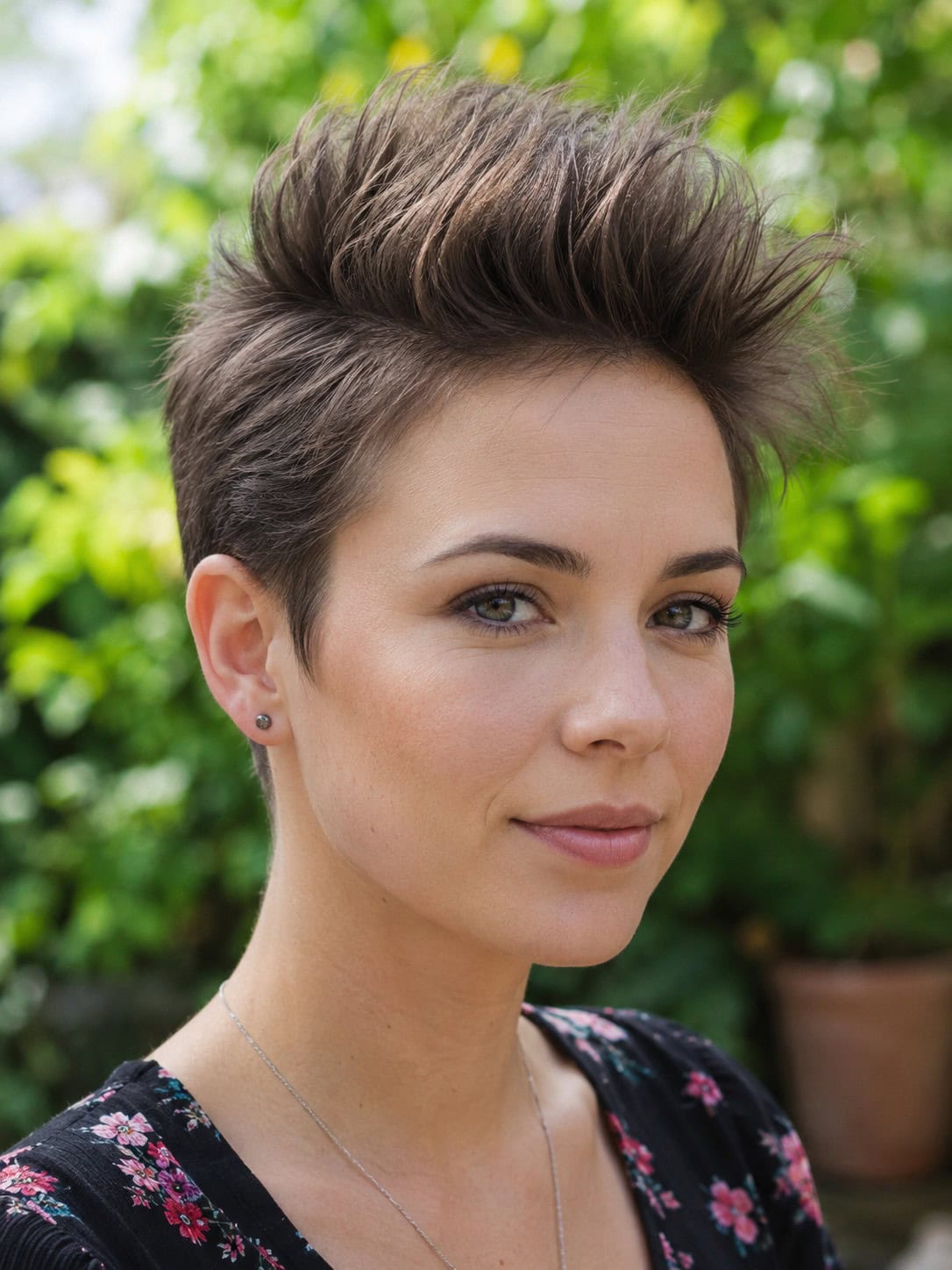
A short crop with deliberately voluminous top section creates dramatic shape from minimal hair length. The top can be styled upward with paste, mousse, or texturizing spray for height that thin hair rarely achieves naturally. The shorter sides and back stay close to the head, making the voluminous top read larger by contrast. This cut requires daily styling commitment to maintain the height, but the visual payoff is significant.
Asymmetric Bob With One Longer Side
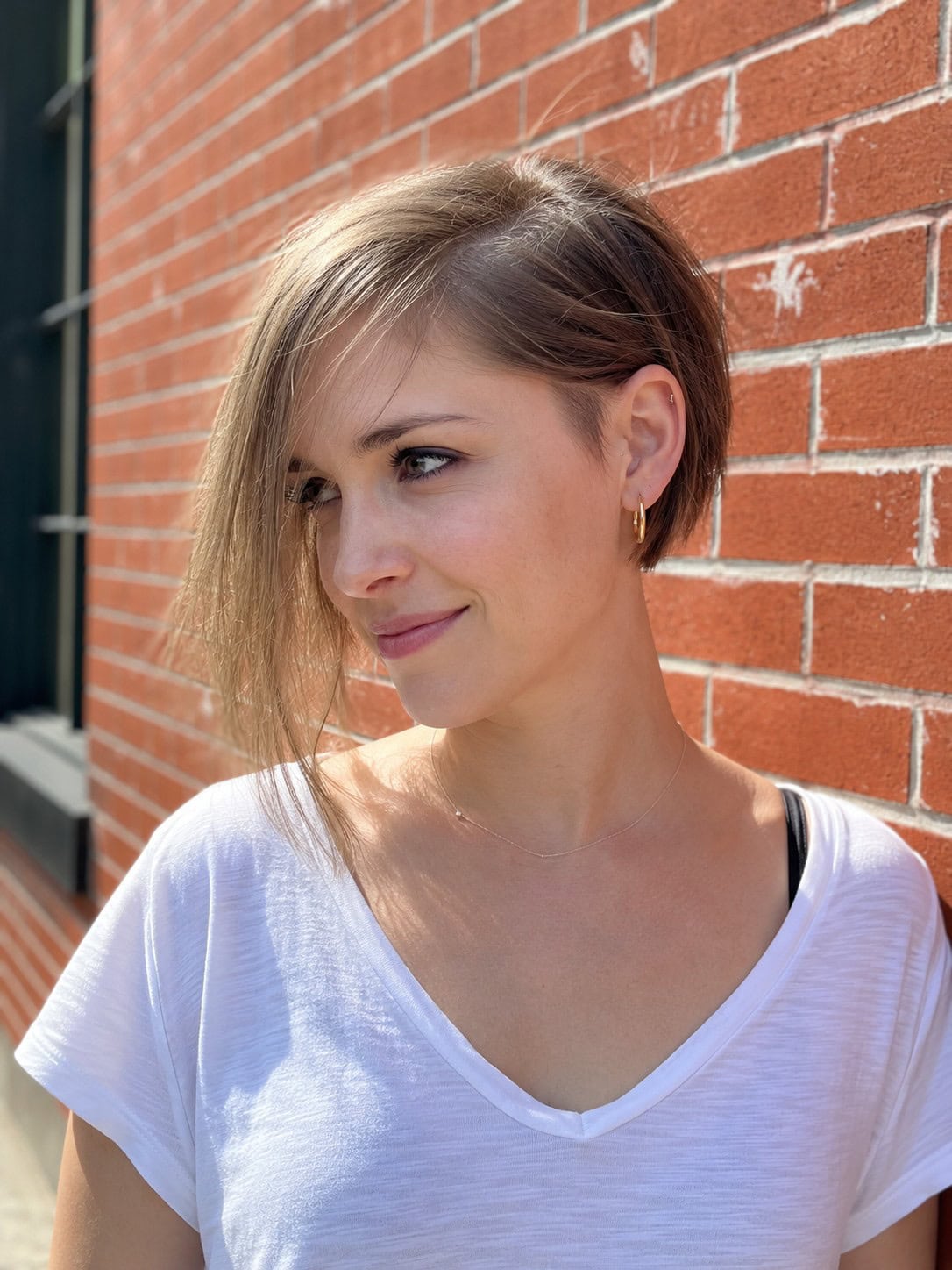
An asymmetric bob with one side falling distinctly longer than the other creates visual interest that distracts from any density concerns. The longer side can be tucked behind one ear for further asymmetry, or styled forward for face framing. Thin hair benefits from asymmetric cuts because the eye moves around the shape rather than focusing on overall density. Trims every five weeks maintain the precise asymmetric angle.
Soft Shag With Choppy Layers Only at the Top

A modified shag with choppy layers concentrated only at the top section, leaving the lengths blunt, gives thin hair the layered look without removing weight throughout. The top texture creates volume at the crown while the blunt lengths preserve density at the ends. This version of the shag works for thin hair where traditional all-over choppy shags fail because too much weight gets removed.
Bixie Cut With Volume Throughout
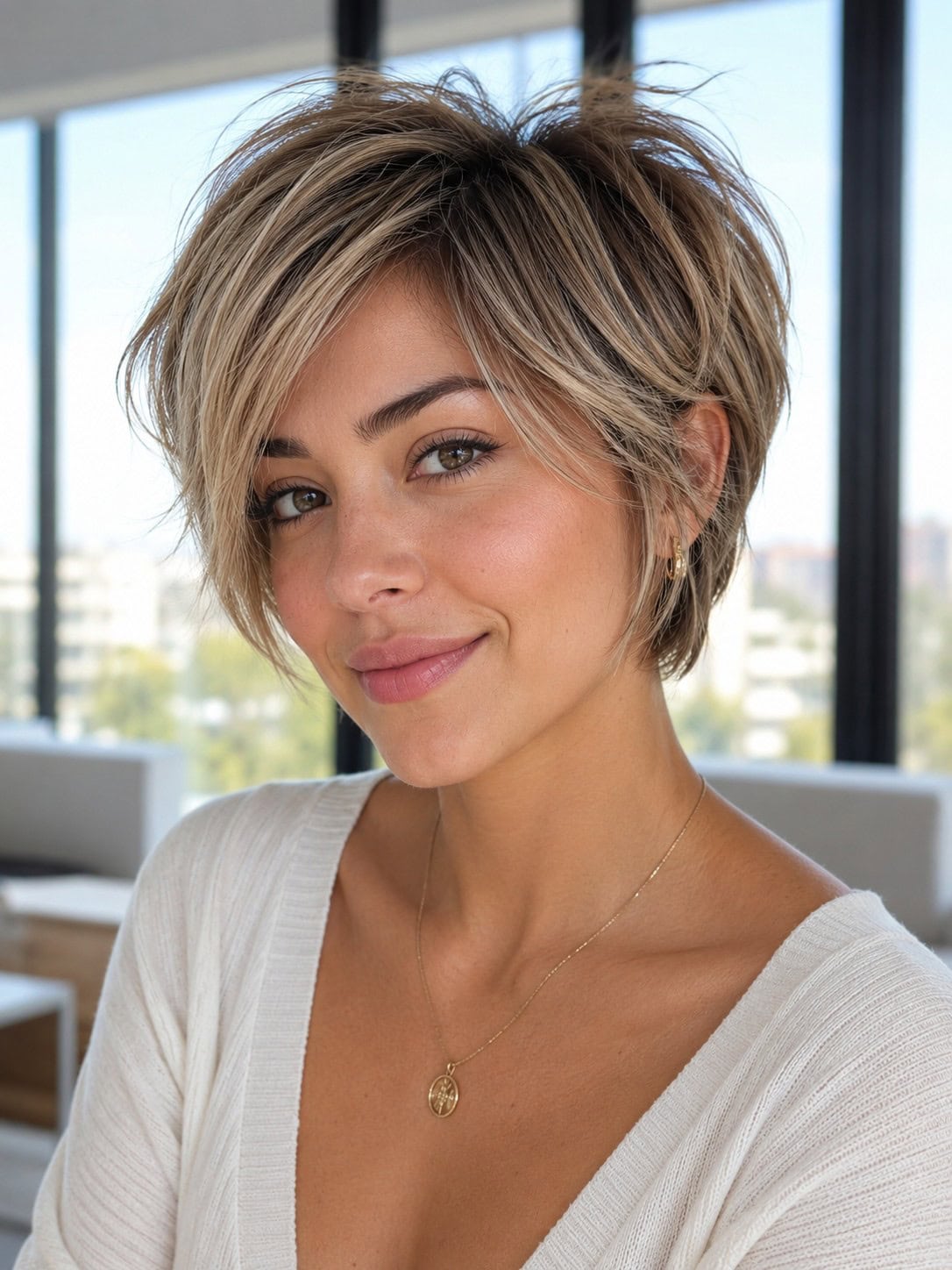
The bixie sits between bob and pixie, longer than a pixie but shorter than a bob, with deliberate volume styled throughout. Thin hair gains fullness from the cut's overall structure plus the styling that emphasizes volume across the entire length. The bixie shape itself creates more visual mass than a strict pixie while keeping the hair short enough to avoid going limp. Trims every four to five weeks maintain the shape.
Lob With Internal Layers and Beach Waves

A lob with internal layers styled into loose beach waves creates volume through the styling rather than the cut alone. The waves add texture and movement that thin straight hair lacks naturally. The internal layers give the waves something to grip, while the blunt perimeter maintains density at the ends. This combination works for women who want length without losing the fullness illusion. Daily wand or flat iron styling required.
Short Layered Pixie With Choppy Top
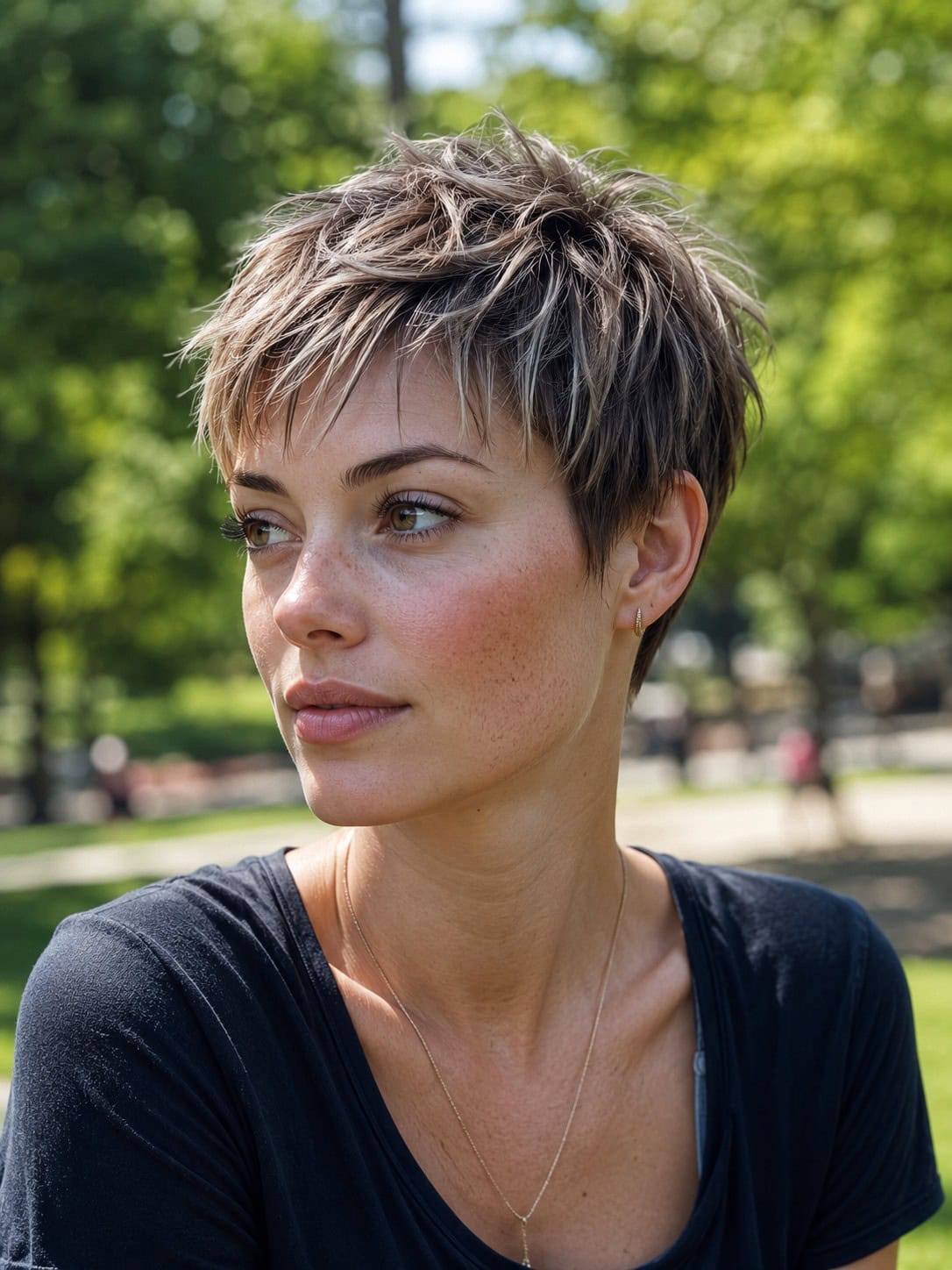
A short pixie with deliberately choppy texturing through the top section creates piecey volume rather than smooth volume. The choppy texture catches light at multiple angles, which creates the appearance of more hair than is actually present. Styling product like texture paste or fiber maintains the choppy separation. This cut suits women who prefer a more edgy modern look over polished sleek styles.
Blunt Cut With Subtle Face-Framing
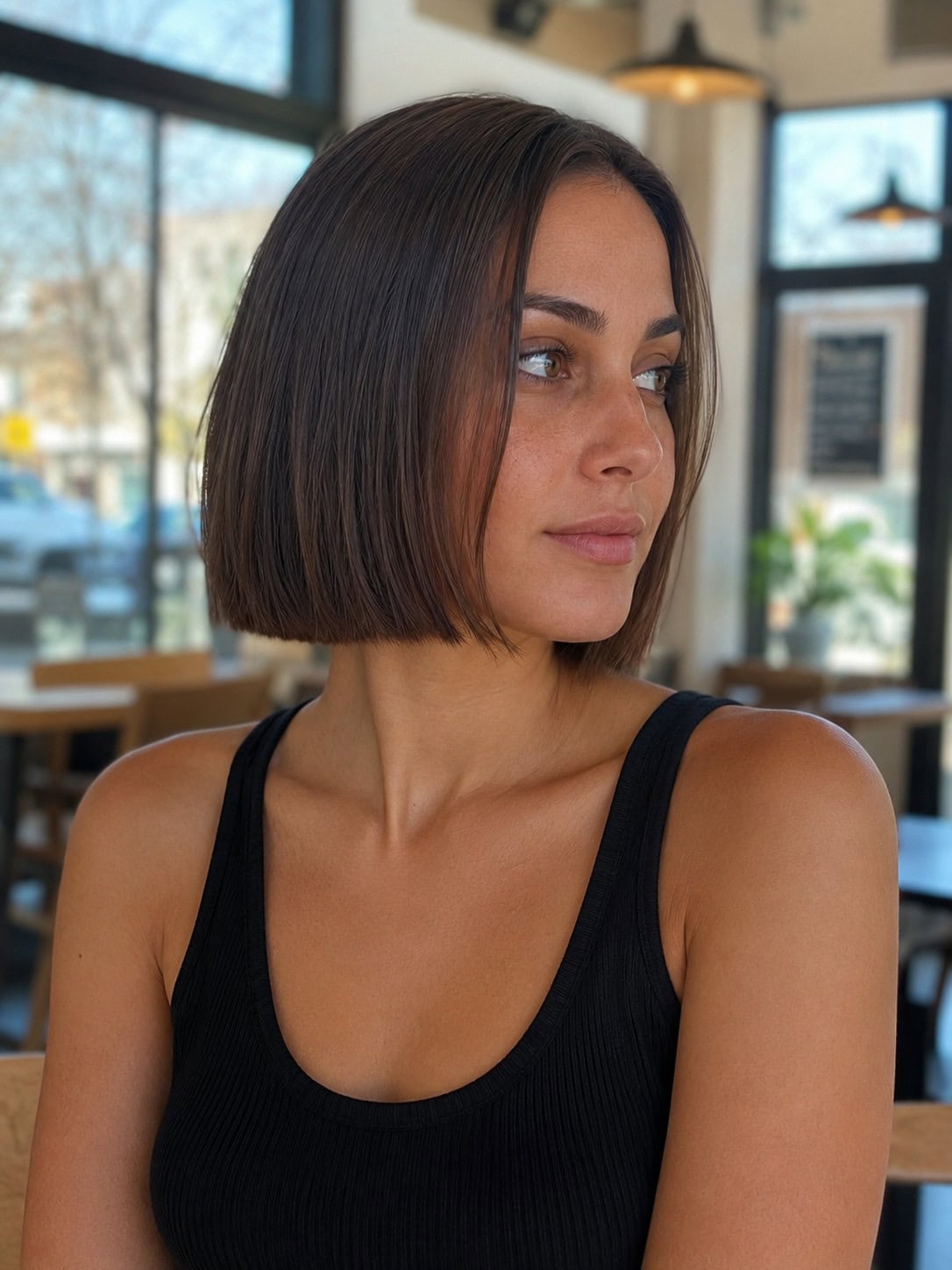
A blunt cut at chin or shoulder length with only the front two pieces face-framed and slightly shorter than the rest creates minimal layering that still adds shape. The face-framing pieces curve toward the face, drawing the eye inward. The rest of the cut stays blunt and dense at the ends. This minimalist layering approach suits thin hair perfectly because the weight loss happens only in two small sections at the front.
Wispy Bangs With Bob
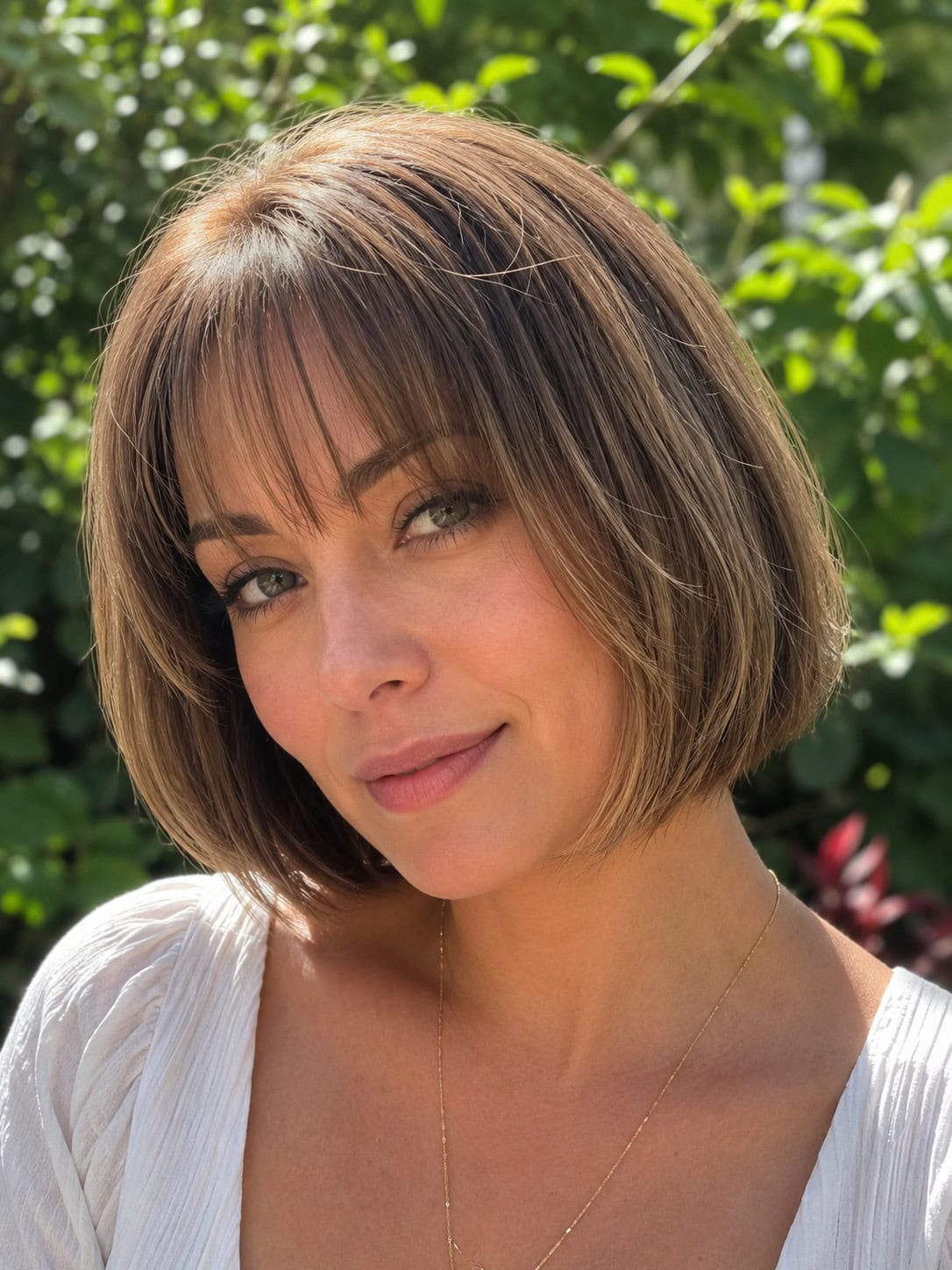
Wispy fringe bangs paired with a chin-length bob adds visual movement at the forehead while keeping the overall shape dense. The wispy quality comes from leaving the bangs softer at the ends rather than blunt, which creates an airy quality that contrasts with the dense bob. Bangs trims every three to four weeks maintain the wispy texture. The bob itself holds shape for five to six weeks.
Bob With Tucked Behind Ear Styling
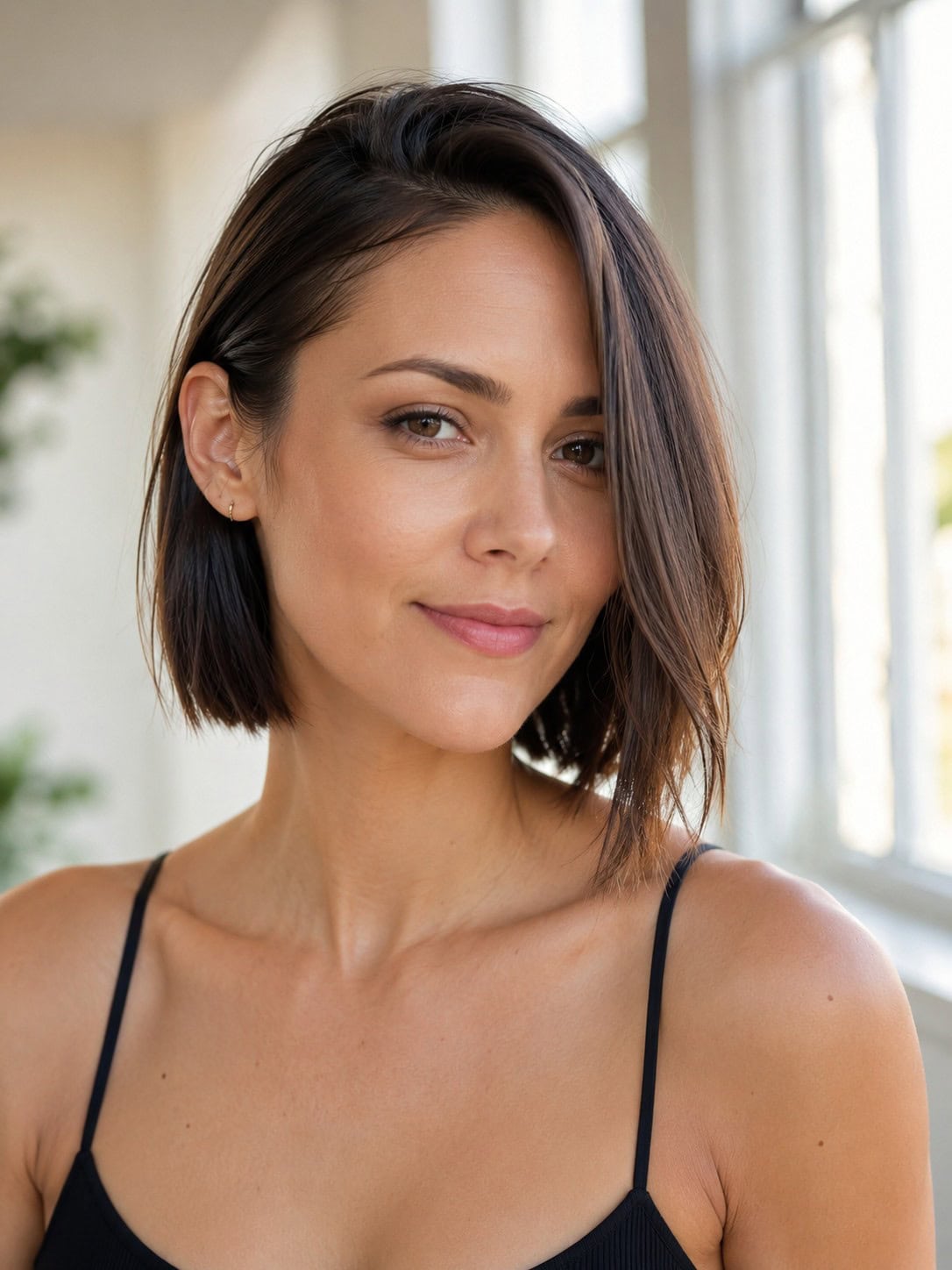
A jaw-length bob styled tucked behind one ear creates instant asymmetry and shows off jewelry or jawline. Thin hair benefits from this styling because the tucked side reveals less of the hair, while the untucked side flows freely. The styling technique works with any standard blunt bob cut. Texture spray applied at the roots before tucking adds the lift that thin hair often lacks naturally.
Long Pixie With Deep Side Part
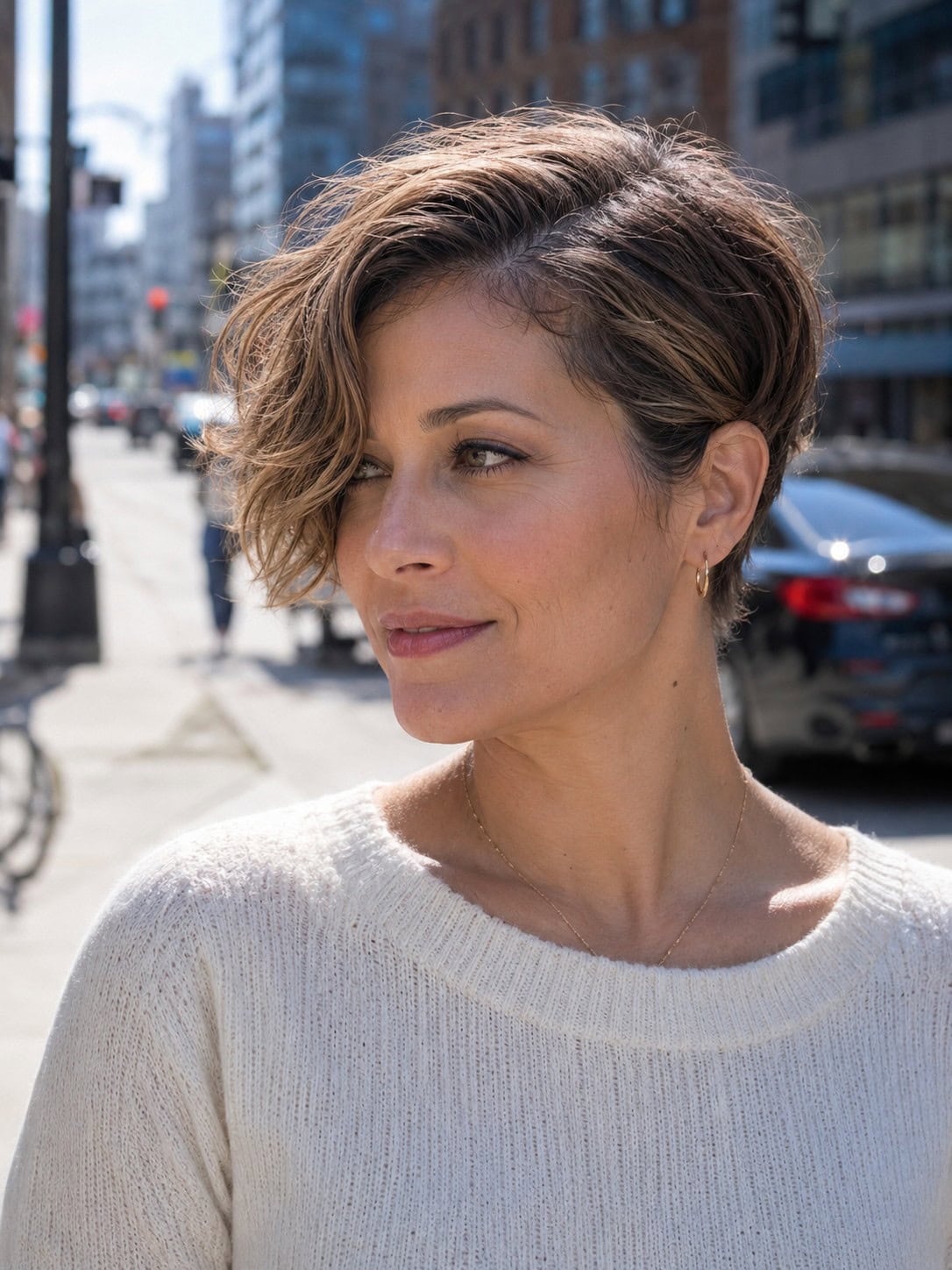
A long pixie styled with a deep side part creates volume on the heavier side while keeping the lighter side close to the head. The deep part redirects all the hair to one side of the head, which doubles the visual density on that side. Thin hair benefits because the doubled-up section appears significantly fuller than evenly parted hair. The look reads vintage Hollywood when styled with subtle waves.
Soft Razored Pixie
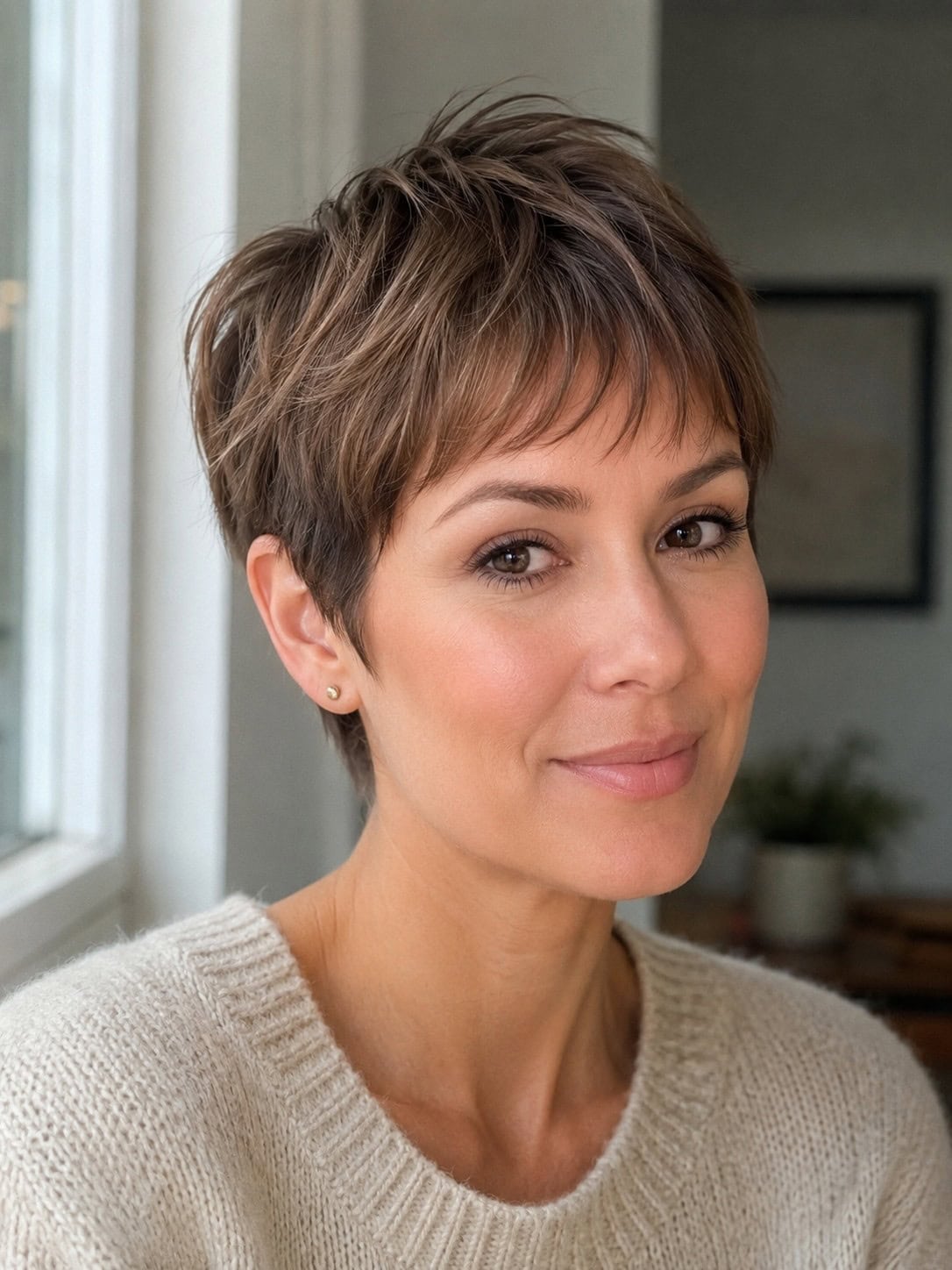
A pixie cut with razor work used carefully and minimally creates piecey texture without overly thinning the hair. Razor work is generally risky for thin hair, but in skilled hands and used only sparingly through the top section, it creates separation that thin hair benefits from. This cut absolutely requires a stylist experienced with fine hair to avoid over-thinning. Trims every four weeks maintain the controlled texture.
Chin Bob With Inward-Curling Ends
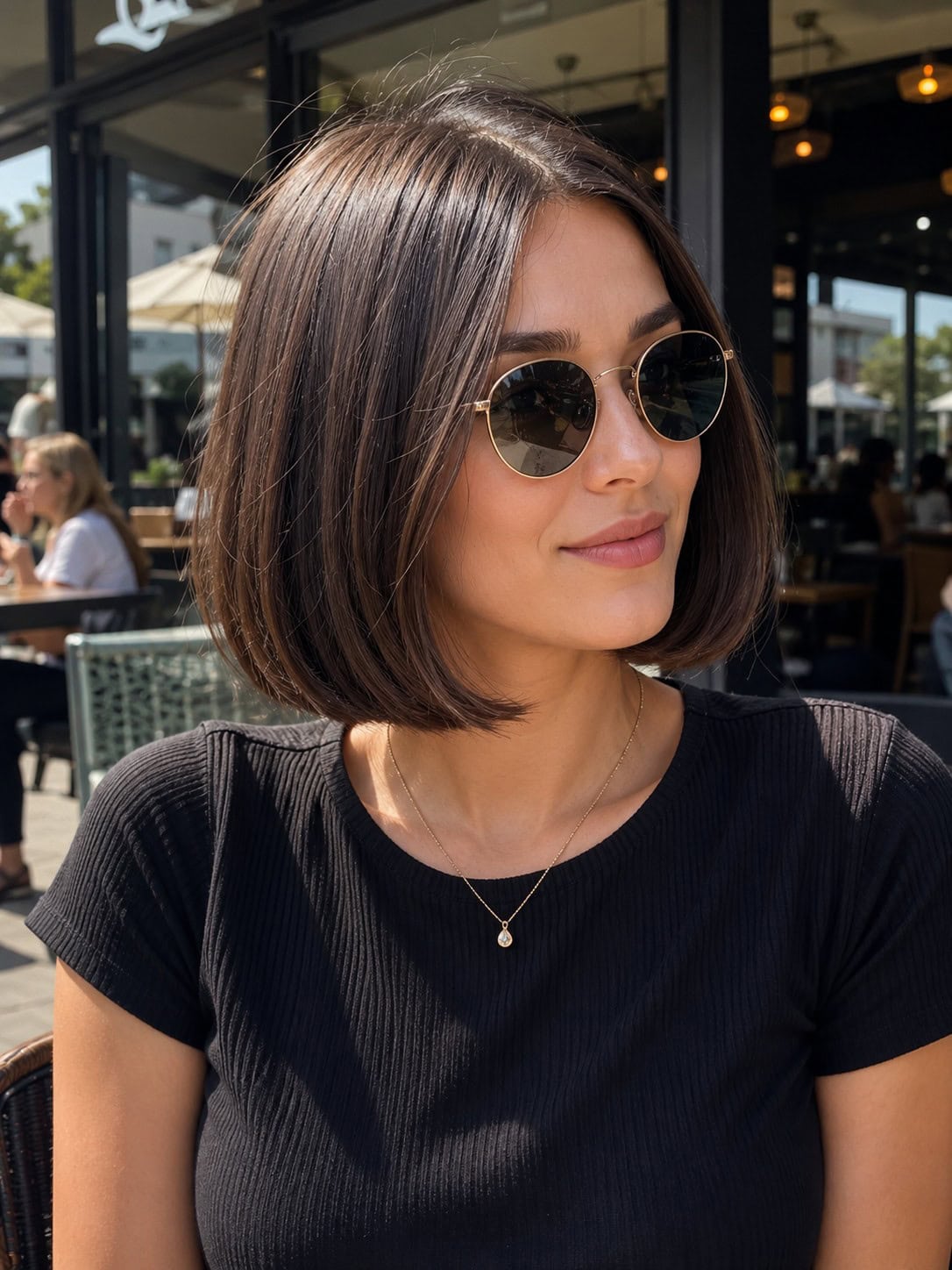
A chin-length blunt bob styled with the ends curling inward toward the chin creates the strongest possible fullness illusion. The inward curl adds visual weight where it matters most, at the perimeter of the cut. Styling requires a flat iron or one-inch curling iron, with the ends bent inward in the final styling pass. The curl holds for one full day before refreshing. This style flatters most face shapes.
Pixie With Longer Bangs
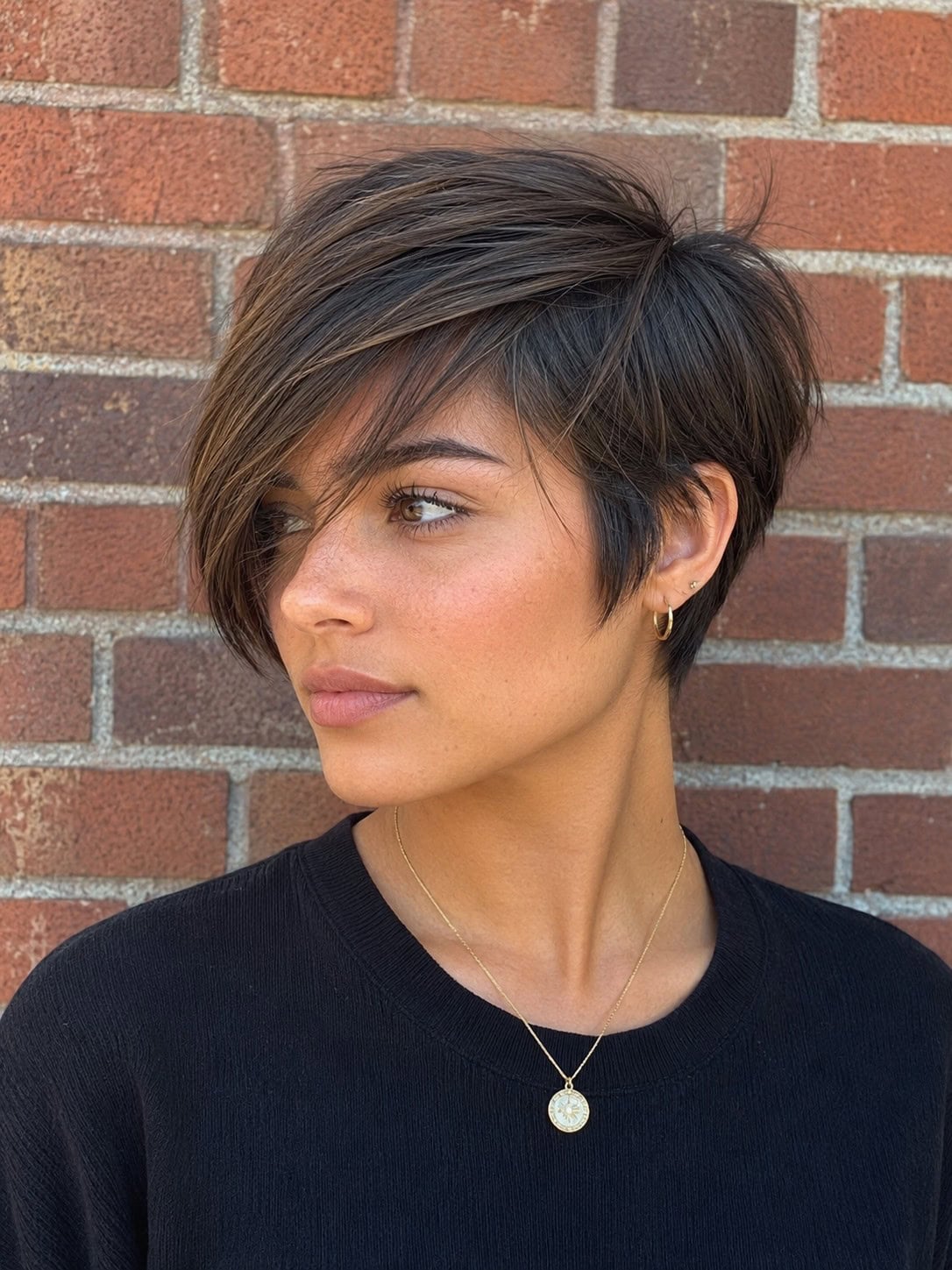
A pixie cut with deliberately longer bangs that fall past the eyebrows creates a strong frame around the eyes. The longer bangs draw attention upward, away from any density issues at the crown or sides. The bangs can be styled forward into the face or swept to one side depending on mood. Trims every four to five weeks maintain both the pixie shape and the bang length proportions.
Bob With Off-Center Part and Volume Boost

A standard chin-length bob styled with an off-center part and serious volume at the roots transforms thin hair through styling alone. The off-center part redirects more hair to one side, creating dimensional fullness. Root volume comes from blow-drying with a round brush against the natural growth pattern, then applying texture spray at the scalp. This styling approach takes ten minutes daily but transforms the appearance of thin hair significantly.