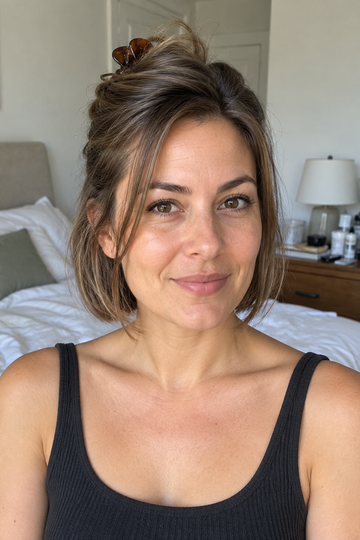
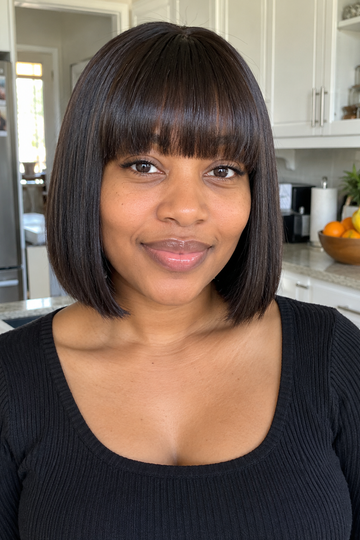
Thick hair on a short cut is a different problem than thick hair on a long cut. Length naturally distributes weight, letting density settle gracefully. Shorter cuts compress that density into a smaller area, which is what creates the dreaded pyramid shape, the wide triangle of hair that widens dramatically toward the bottom. Every cut below uses some combination of internal layering, weight removal at strategic points, undercutting, or shape engineering to prevent that pyramid effect. The right stylist for thick hair takes thirty minutes longer per cut than for thin hair, and that extra time is the whole difference.
Jump to:
- Razored French Bob With Wispy Fringe
- Stacked Inverted Bob With Internal Layers
- Textured Pixie With Heavy Undercut
- Choppy Shag With Razored Layers
- Sleek Sharp Bob With Internal Slicing
- Pixie With Long Side-Swept Top
- Curly Bob With Curl-Defining Cut
- Tapered Bixie
- Long Pixie With Heavy Top Texture
- Modern Mullet Cut for Thick Hair
- Blunt Jaw-Length Bob With Heavy Bangs
- Asymmetric Short Bob With Razored Edge
- Short Curly Pixie With Defined Crown
- Wedge Cut With Volume at the Crown
- Short Crop With Slicked-Back Top
- Choppy Pixie With Disconnected Layers
- Sliced Bob With Tucked Behind Ear Styling
- Stacked Wedge With Razored Top
- Disconnected Undercut Pixie
- Pixie With Volume on Top and Faded Sides
- Short Bob With Side Part and Soft Waves
- Cropped Pixie With Long Bangs
- French Bob With Heavy Bangs
- Asymmetric Pixie With One Longer Side
Razored French Bob With Wispy Fringe

A French bob ending above the jawline, with razor work used through the lengths to remove bulk and a wispy fringe softening the front, controls thick hair into a flattering rounded shape. The razor cutting creates piecey texture that lets the density breathe rather than sit heavy. Bond-building treatments matter after razor work since the technique stresses the cuticle. Trims every five to six weeks maintain the precise rounded shape.
Stacked Inverted Bob With Internal Layers

The stacked inverted bob, longer at the front and shorter at the back with stacked layers building height at the crown, transforms thick hair into a polished structured shape. The stacking at the back removes bulk that would otherwise create heaviness at the nape. The angled longer front frames the face cleanly. Trims every four weeks maintain the precise stacking lines, which read sharper than blended cuts.
Textured Pixie With Heavy Undercut

A pixie cut with a heavy undercut along the sides and nape removes significant bulk from thick hair while leaving longer texture on top to style. The undercut gets clipper-cut close to the scalp, while the longer top sections can be styled forward, back, or to the side depending on mood. Trims every three weeks maintain the undercut, while the top can be cut every five weeks for shape.
Choppy Shag With Razored Layers

A modern short shag with razored choppy layers throughout creates the most lived-in version of short thick hair. The razored layering thins out the density throughout the cut rather than concentrating bulk anywhere specific. Curtain bangs at the front complete the shag silhouette. Length stays chin to jaw to keep the cut firmly short. Daily texture spray maintains the choppy quality.
Sleek Sharp Bob With Internal Slicing

A sleek sharp chin-length bob with internal slicing technique used to remove bulk while preserving blunt perimeter creates polished thick hair without the helmet effect. The slicing happens within the cut rather than along the edges, so the bob still reads sharp at the outline. Daily smoothing serum keeps the slicked finish clean. This cut suits women whose thick hair is also relatively straight and behaves predictably.
Pixie With Long Side-Swept Top

A pixie cut with deliberately long top section swept to one side, with the bulk of the length sitting forward across the forehead, transforms thick hair into a polished glossy shape. The volume of the thick top creates dramatic asymmetric movement that thin hair can't replicate. Daily styling with light pomade keeps the sweep in place. Trims every four to five weeks maintain the proportions between top and sides.
Curly Bob With Curl-Defining Cut

A jaw-length curly bob cut specifically for curl pattern, with each curl considered individually during the cutting process, suits thick curly hair that has previously been cut as if it were straight. The dry-cutting technique lets the stylist see how each curl will fall before cutting it. The result respects the natural curl pattern instead of fighting it. Curl-defining cuts cost more but deliver dramatically better results.
Tapered Bixie

A bixie cut, between bob and pixie, with a strategic taper through the back and sides controls thick hair density at the perimeter while leaving texture and volume at the top. The taper removes bulk gradually rather than abruptly, which creates a smoother visual line than abrupt undercuts. This cut works for women who want short hair with movement but find pixies too short and bobs too one-dimensional. Trims every five weeks.
Long Pixie With Heavy Top Texture

A long pixie with deliberately heavy texturing through the top section, leaving the sides shorter and closer cropped, creates volume on top that thick hair carries naturally. The longer textured top can be styled forward, back, or to one side. The shorter sides stay flat against the head, which makes the textured top read larger by contrast. Texture paste or fiber maintains the piecey separation daily.
Modern Mullet Cut for Thick Hair

The modern short mullet with shorter sides and a longer choppy back section works exceptionally well for thick hair because the layered back lets the density fall in a controlled cascade rather than sitting as solid mass. The shorter sides keep the front clean while the longer back adds the signature mullet element. Curtain bangs complete the silhouette. Trims every six weeks maintain the proportions.
Blunt Jaw-Length Bob With Heavy Bangs

A jaw-length blunt bob paired with heavy blunt bangs ending right above the eyebrows creates a graphic geometric shape that thick hair carries beautifully. The shorter overall length keeps the cut firmly in short territory while the heavy bangs absorb visual weight at the front. Internal layering through the lengths removes bulk while preserving the blunt perimeter. Bangs trims every three weeks maintain the precise blunt edge.
Asymmetric Short Bob With Razored Edge

An asymmetric chin-length bob with one side falling distinctly longer, finished with razored ends rather than blunt, creates movement through the cut while controlling thick hair density. The razored edge breaks up the heavy line that thick hair would otherwise create at the perimeter. The asymmetric shape itself adds visual interest. Daily styling brings out the razored texture along the bottom edge.
Short Curly Pixie With Defined Crown

A short curly pixie with deliberate volume styled at the crown showcases thick curly hair without overwhelming the silhouette. The sides stay close to the head while the crown carries all the curl volume. Curl-enhancing products like creams and gels maintain the definition. Trims happen every five to six weeks for shape maintenance, while curly hair generally needs less frequent washing.
Wedge Cut With Volume at the Crown

The classic wedge cut, with short stacked back and longer angled front pieces, gets enhanced for thick hair through deliberate crown volume styling. The natural density of thick hair holds the wedge shape better than thin hair could. Round brushing during blow-drying lifts the crown for maximum height. The angled front pieces frame the face cleanly. Trims every four weeks maintain the precise angles.
Short Crop With Slicked-Back Top

A short crop cut with the top section deliberately longer to slick back creates an architectural shape from thick hair. The slicked-back styling uses pomade to flatten the natural density while showcasing the cut's structure. The sides stay close-cropped for clean lines. This cut reads modern and androgynous. Daily styling commitment is required to maintain the slicked finish.
Choppy Pixie With Disconnected Layers

A pixie with disconnected layers, meaning the top section sits noticeably longer than the disconnected shorter sides, creates dramatic shape from thick hair. The disconnection between the longer top and shorter sides reads bolder than gradual tapering. This cut suits women who want short hair to make a strong statement. Daily styling with texture paste defines the disconnected sections.
Sliced Bob With Tucked Behind Ear Styling

A standard chin-length bob finished with slicing technique through the lengths and styled tucked behind one ear creates instant asymmetric volume. The slicing removes bulk internally so the tucking lays flat without bulging. The untucked side flows freely with the natural density of the thick hair. This cut adapts well to multiple styling options across the week.
Stacked Wedge With Razored Top

A stacked wedge cut with razored texture through the top section combines structured stacking at the back with piecey movement at the crown. The combination handles thick hair from two directions: the stacking removes bulk at the back while the razored top breaks up density at the crown. The cut reads precise rather than soft. Trims every four weeks maintain the dual technique work.
Disconnected Undercut Pixie

A pixie with a clear disconnected undercut, where the sides drop suddenly to clipper-cut length while the top stays long enough to fully cover the disconnection when worn down, gives the wearer two looks in one. Worn down, the cut reads as a textured pixie. Pinned back, the undercut reveals itself dramatically. Trims every three weeks maintain the undercut while the top can wait five weeks.
Pixie With Volume on Top and Faded Sides

A pixie with significant top volume paired with faded sides similar to a modern barber-style fade creates one of the most architectural short hair looks. The fading removes thick hair density gradually from longer top to closest-cropped sides. The faded sides require touch-ups every two to three weeks since growth shows immediately. The top can be styled multiple ways from sleek to textured.
Short Bob With Side Part and Soft Waves

A chin-length bob with a deep side part and styled into soft waves uses styling to enhance the natural density of thick hair. The side part redirects volume to one side, creating asymmetric fullness. Soft waves achieved with a curling iron or wand add movement and texture. This combination flatters most face shapes because the asymmetry and movement balance facial features dynamically.
Cropped Pixie With Long Bangs

A cropped pixie with deliberately long bangs falling past the eyebrows creates strong framing around the eyes. The longer bangs can be styled forward into the face or swept to one side depending on mood. The short sides and back stay close to the head, balancing the longer bang section visually. Trims every four to five weeks maintain both the pixie shape and bang length proportions.
French Bob With Heavy Bangs

A French bob, ending above the jawline, finished with heavy blunt bangs creates the most graphic version of the cut. The combination of short rounded shape and bold bangs reads strong and editorial. Thick hair carries the heaviness of both elements gracefully. Bangs trims every three weeks maintain the blunt edge. The bob shape holds for five to six weeks before requiring touch-up.
Asymmetric Pixie With One Longer Side

An asymmetric pixie with one side cut distinctly longer than the other creates dramatic shape from minimal length. The longer side can be styled forward across the face or back behind the ear. The contrast between long and short sides handles thick hair density by distributing it asymmetrically. Trims every four weeks maintain the precise asymmetric angle. Daily styling brings out the contrast between sides.