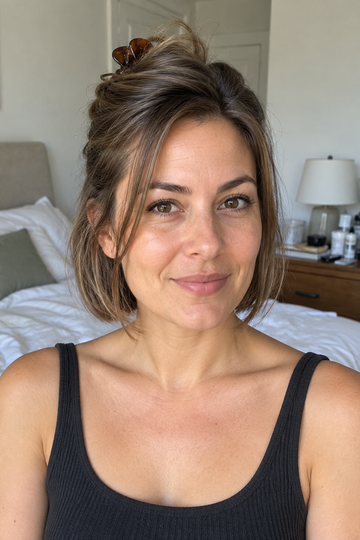
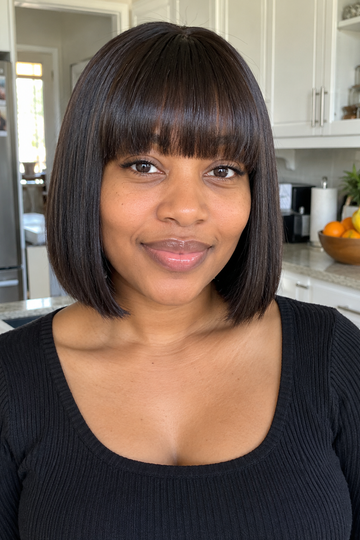
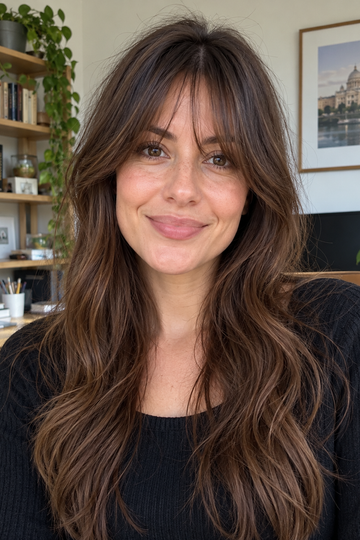
The real trick to covering gray with highlights is that you don't actually cover it. You blend it.
Once gray strands sit next to lifted lighter strands in a similar tone family, the eye stops separating them. The gray becomes part of the highlight pattern instead of standing out against dark brunette.
Stylists who specialize in this say the worst thing you can do is fight gray with all-over dark dye, because every centimeter of regrowth screams against the painted base.
Highlights buy you weeks or months between salon visits because regrowth blends in rather than announcing itself.
Jump to:
- Honey Balayage on Dark Brunette
- Ash Babylights Throughout
- Traditional Caramel Foil Highlights
- Face-Framing Money Piece Highlights
- Mushroom Highlights for Cool Tones
- Teasylights for Soft Definition
- Reverse Balayage With Cool Lowlights
- Root Smudge Combined With Highlights
- Bronde Balayage
- Partial Top-Only Highlights
- Free-Painted Hair Painting Balayage
- Dimensional Chocolate Highlights
- Pearl-Toned Cool Highlights
- Ribbon Highlights
- Toffee Balayage
- Mocha Highlights With a Darker Root
- Honey and Caramel Blend
- Babylights Finished With a Glaze
Honey Balayage on Dark Brunette
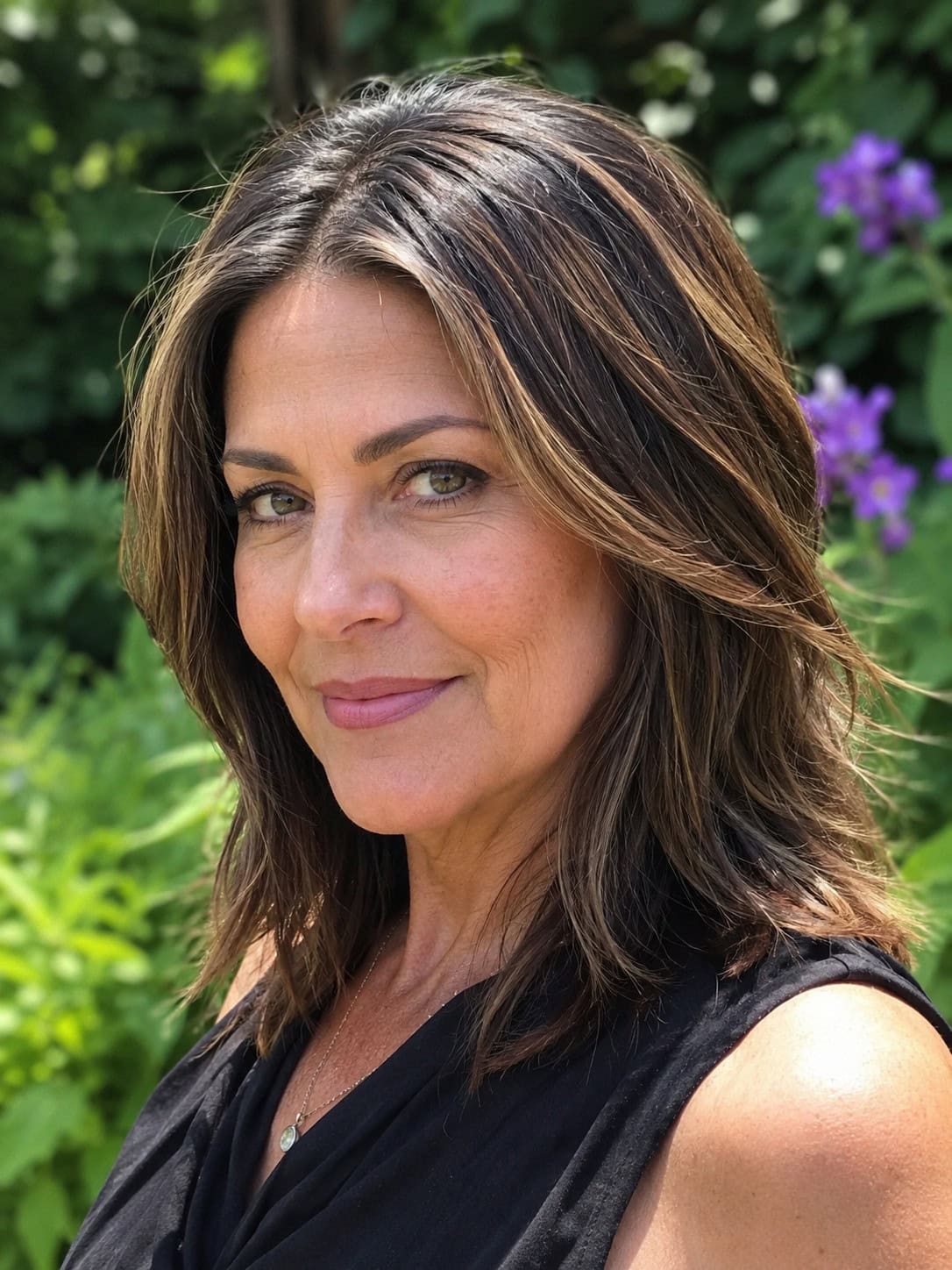
Honey balayage hand-painted through dark brunette hair blends incoming grays into a warm dimensional pattern.
The colorist places painted sections strategically where the gray clusters appear, often around the temples and crown.
Honey tones flatter most warm-skinned brunettes and pull the eye toward warmth rather than the cool gray.
Regrowth blends naturally because the painted technique avoids harsh lines at the roots.
Ash Babylights Throughout
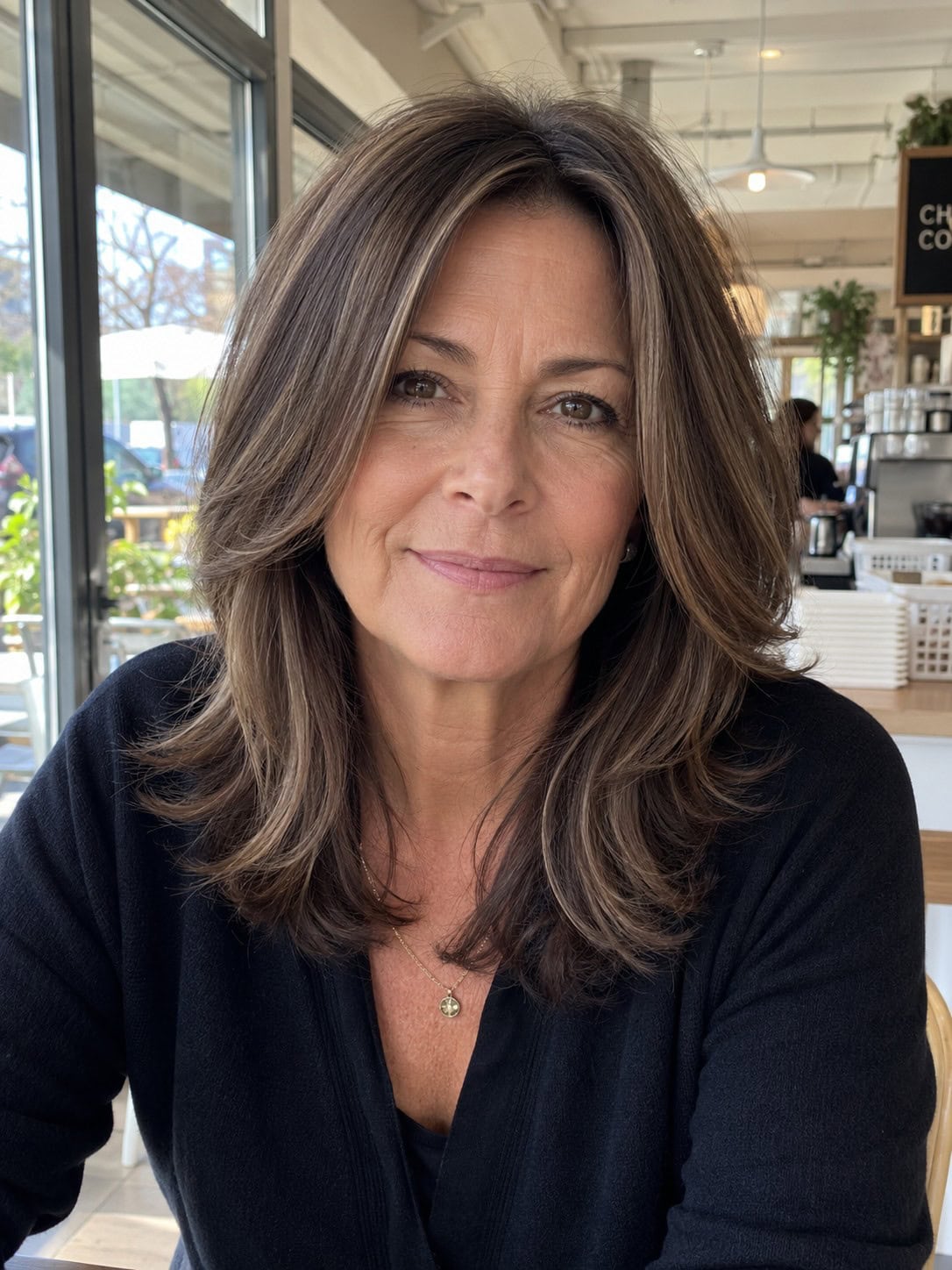
Ultra-fine ash babylights woven throughout brunette hair cool down the overall tone while blending gray strands into the pattern.
The fineness of babylight sectioning, often a fraction of standard highlight width, creates a softer overall finish.
Ash tones work especially well for cool-skinned brunettes whose gray comes in cool to start with. Touch-ups happen every eight to twelve weeks since the placement is so fine.
Traditional Caramel Foil Highlights
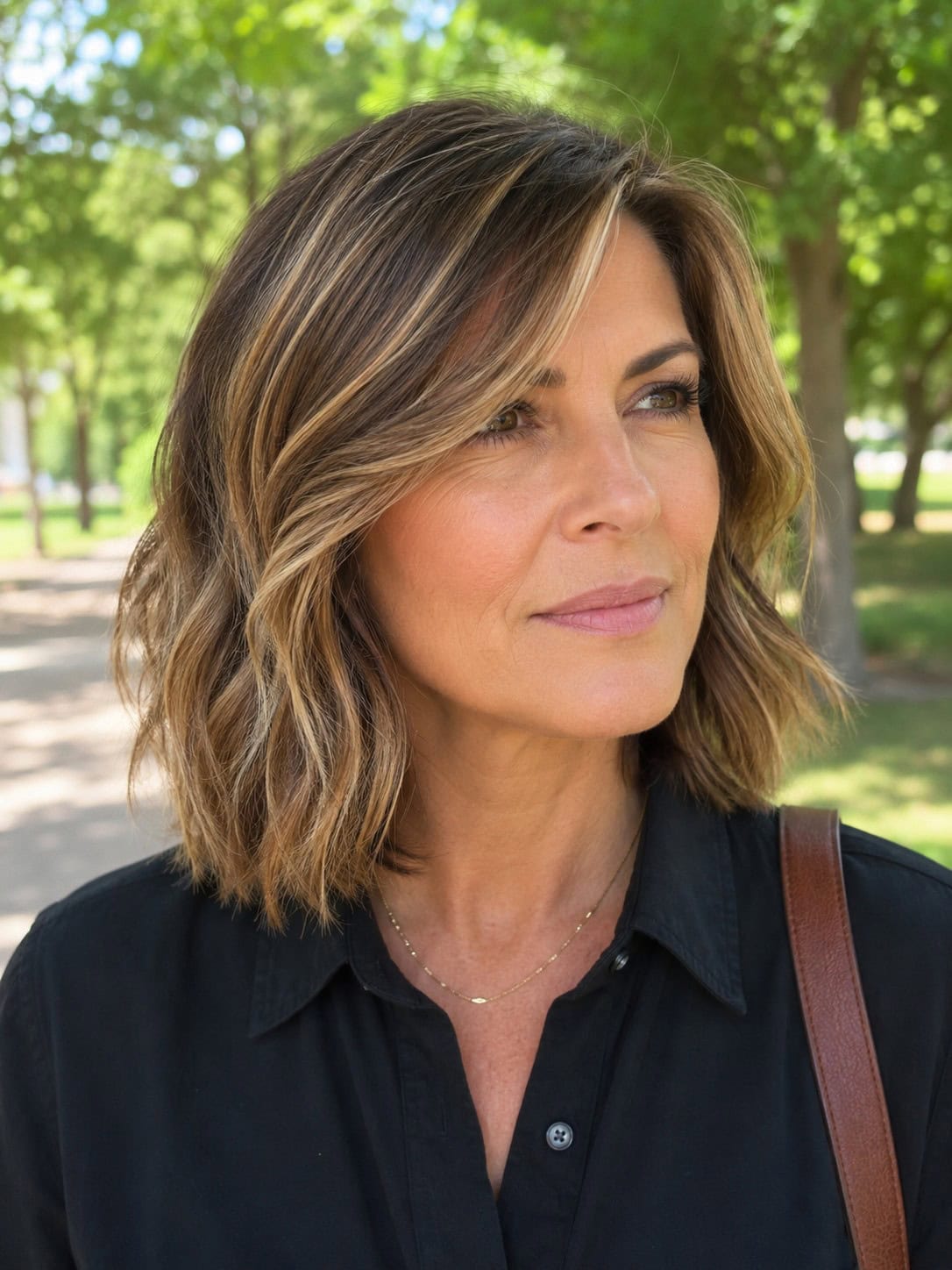
Traditional caramel foil highlights deliver a more defined, brighter result than balayage techniques.
The foils sit at the root and process under controlled heat, which lifts more cleanly than open-air balayage. Caramel tones pair beautifully with warm brunette bases, adding glow that masks gray strands by giving the eye warmer pieces to focus on.
The defined nature of foils makes regrowth visible faster, so plan for touch-ups every six to eight weeks.
Face-Framing Money Piece Highlights
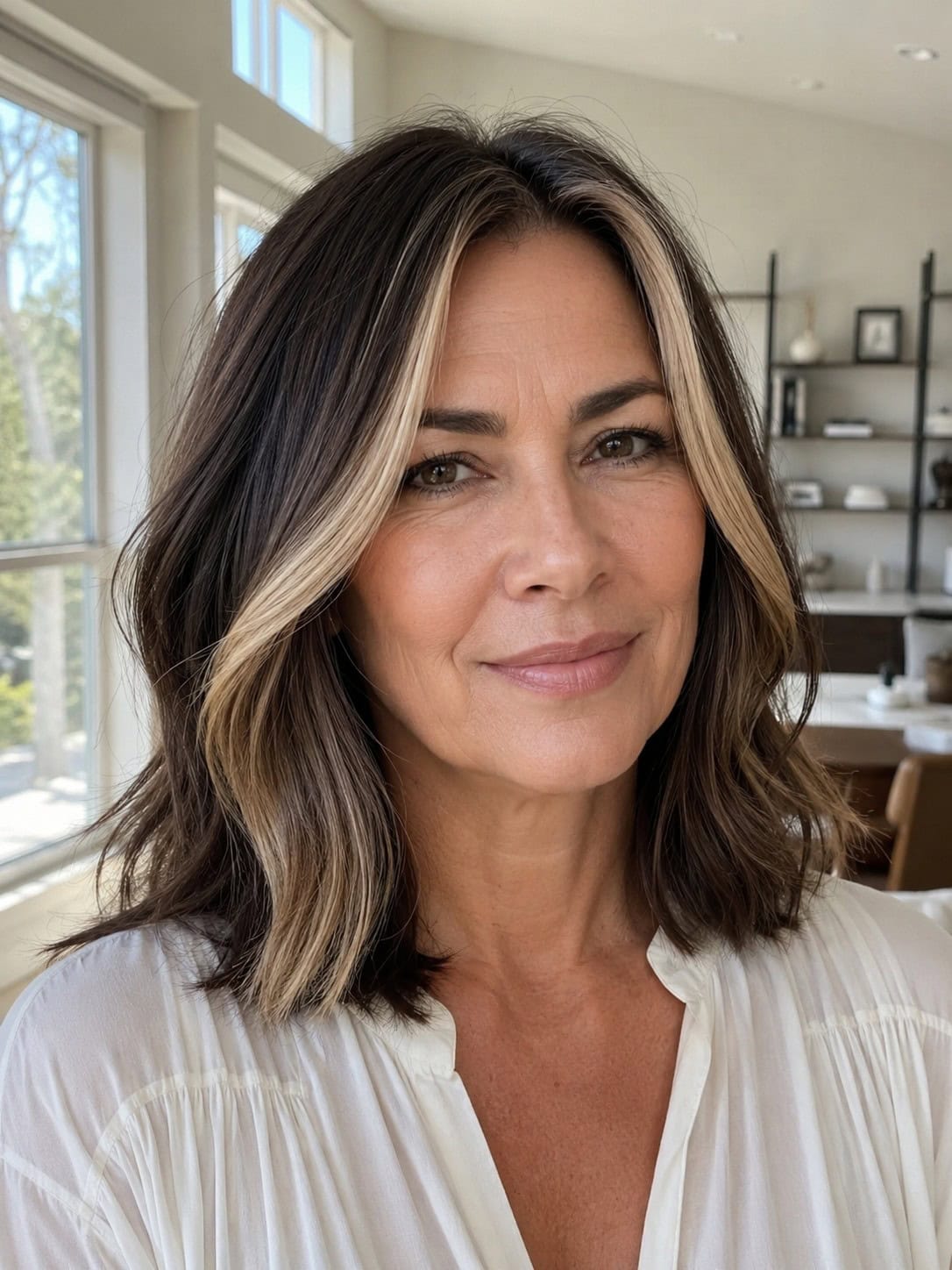
Money piece highlights concentrate two brighter pieces at the front of the face, where gray often shows up first at the temples.
Stylists place the highlights around the hairline and partway down the lengths, framing the face in lifted tone. The rest of the hair stays untouched, which keeps most of the strand health intact.
Touch-ups affect only those two front sections, reducing maintenance compared to full-head highlight services.
Mushroom Highlights for Cool Tones
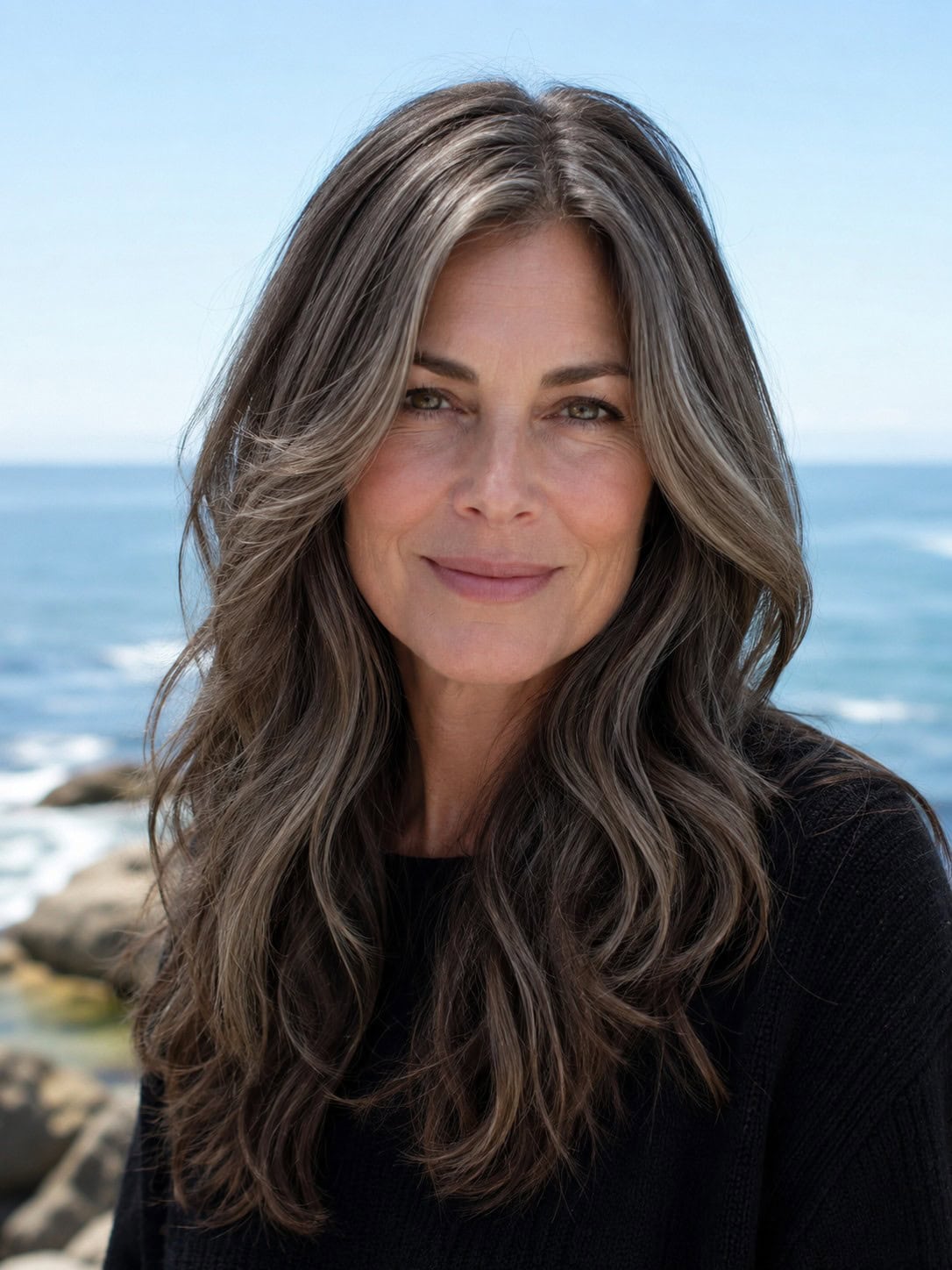
Mushroom highlights pull a cool gray-brown tone through brunette hair, which suits women whose gray has come in cool and ashy.
The mushroom shade itself sits between gray and brown, making it ideal for blending existing gray strands without obvious contrast.
Stylists usually combine balayage application with subtle toning to land the right cool-warm balance.
The shade flatters most skin tones because its undertone shifts depending on how it is toned.
Teasylights for Soft Definition
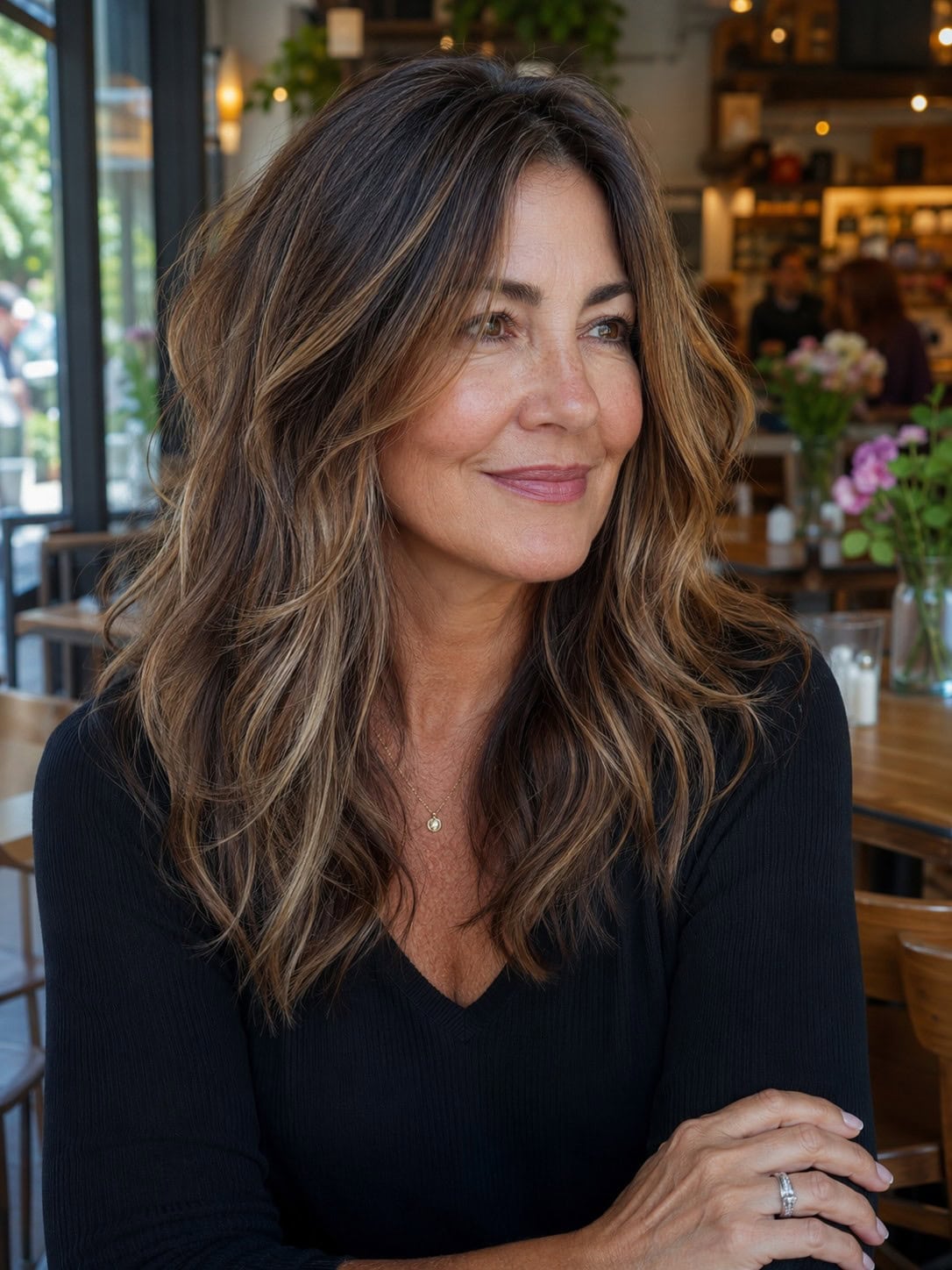
Teasylights combine foil precision with balayage softness.
The colorist teases the hair at the root before applying highlight color, which creates a soft transition zone instead of a hard demarcation line.
This technique blends gray exceptionally well because the teased section diffuses the regrowth area visually.
The finish lands brighter than pure balayage but softer than traditional foils, splitting the difference for women who want both definition and natural blending.
Reverse Balayage With Cool Lowlights

Reverse balayage works by adding darker lowlights into hair that has lifted too much over time, restoring depth while masking gray.
The cool lowlights placed strategically near the roots create dimension that hides gray strands by giving them context.
This technique suits brunettes whose previous highlights have processed past the gray-blending stage and now look too light. The cool lowlight tones balance any brassiness in the existing color.
Root Smudge Combined With Highlights
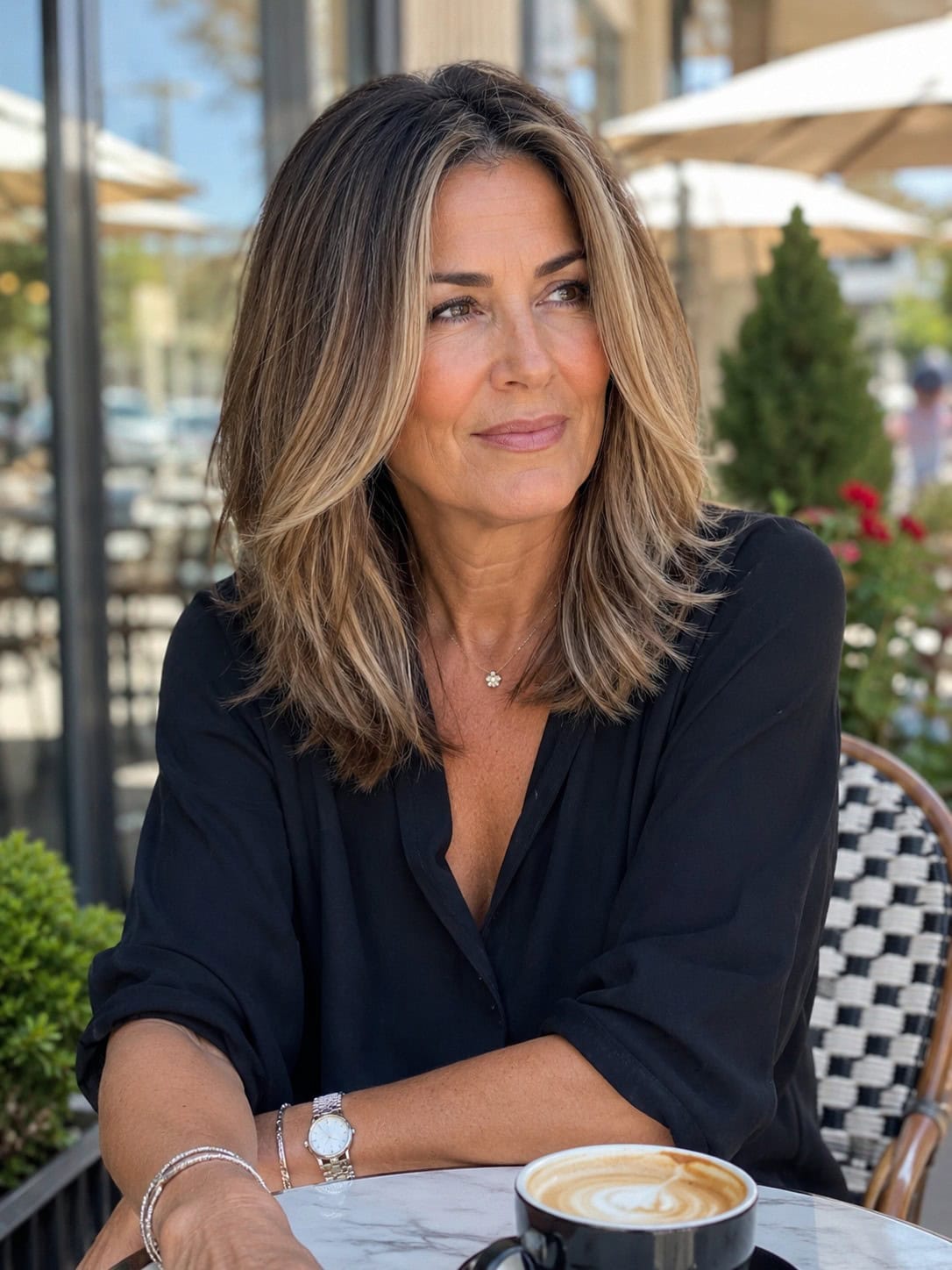
A root smudge applied at the regrowth line softens the transition between dyed brunette lengths and natural gray roots.
Combined with highlights through the lengths, this technique extends salon visits to ten or twelve weeks. The smudged root sits slightly darker than the surrounding highlights, creating intentional depth at the scalp.
As gray grows in further, it blends into the smudged area naturally rather than announcing itself with sharp regrowth.
Bronde Balayage
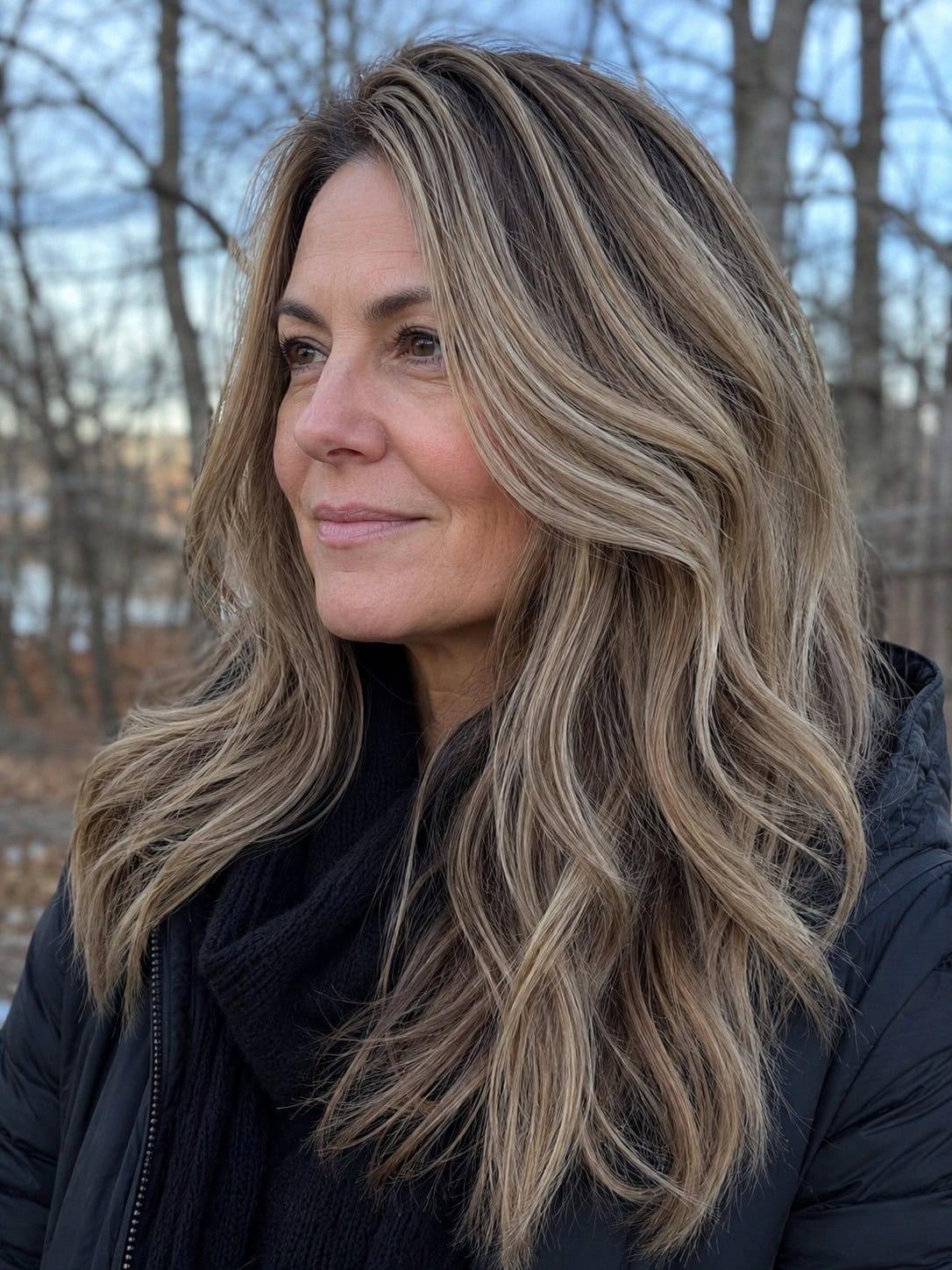
Bronde balayage lifts brunette hair into the bronde family, that brown-blonde middle ground.
The heavier overall lift gives more surface area for gray to blend into rather than stand out against. Bronde flatters most skin tones because the middle ground works across warm and cool undertones.
This technique requires multiple sessions to reach full bronde if starting from deep brunette, but the lower maintenance afterward justifies the initial investment.
Partial Top-Only Highlights
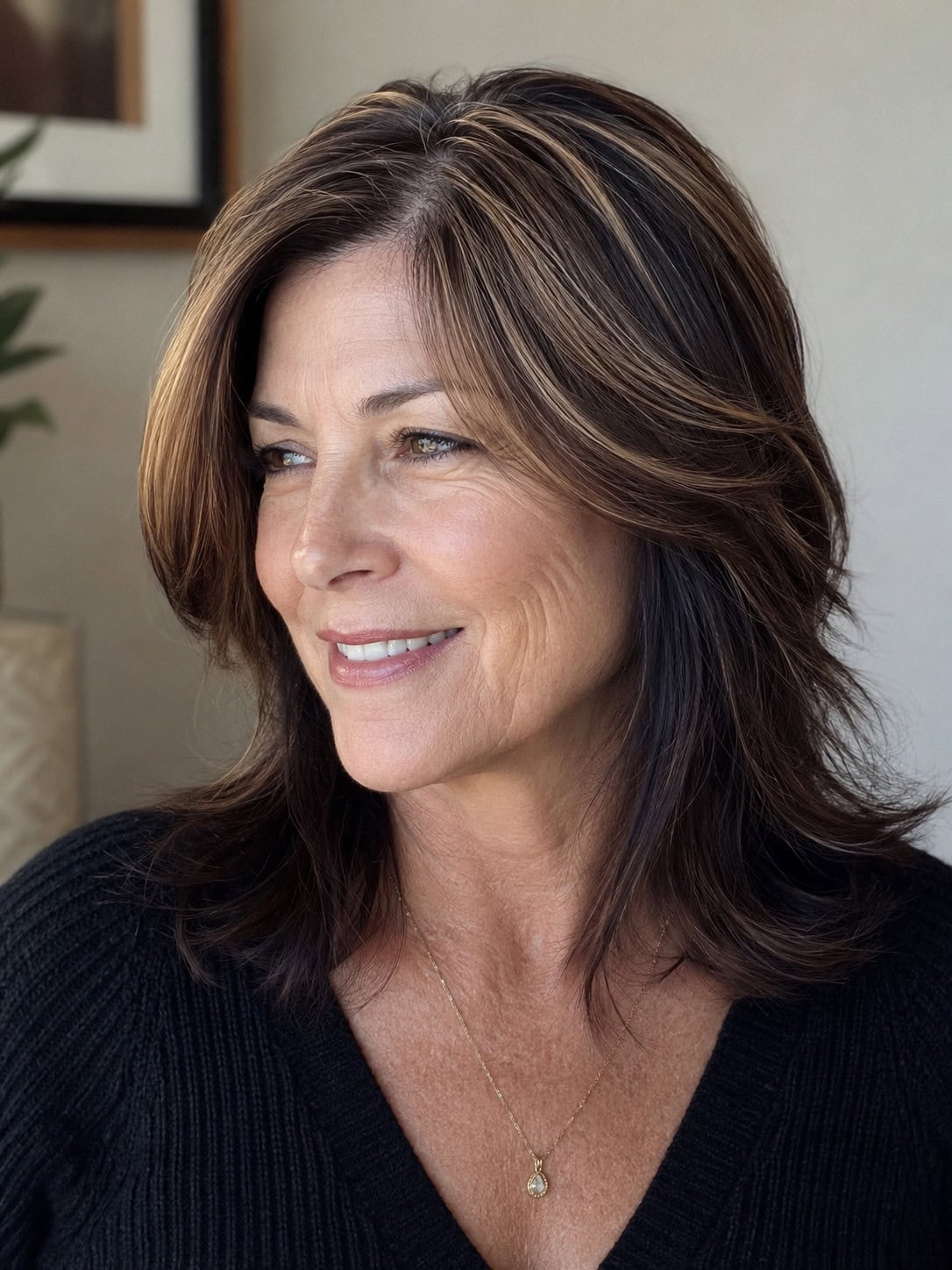
Partial highlights placed only on the top section of the hair, where gray shows most visibly, save money and reduce overall processing.
The bottom layers stay untouched, which keeps damage minimal and preserves natural hair health.
The technique works best for women whose gray concentrates in the visible upper areas around the part and crown. Touch-ups stay quick and affordable since the colorist works on less hair total.
Free-Painted Hair Painting Balayage
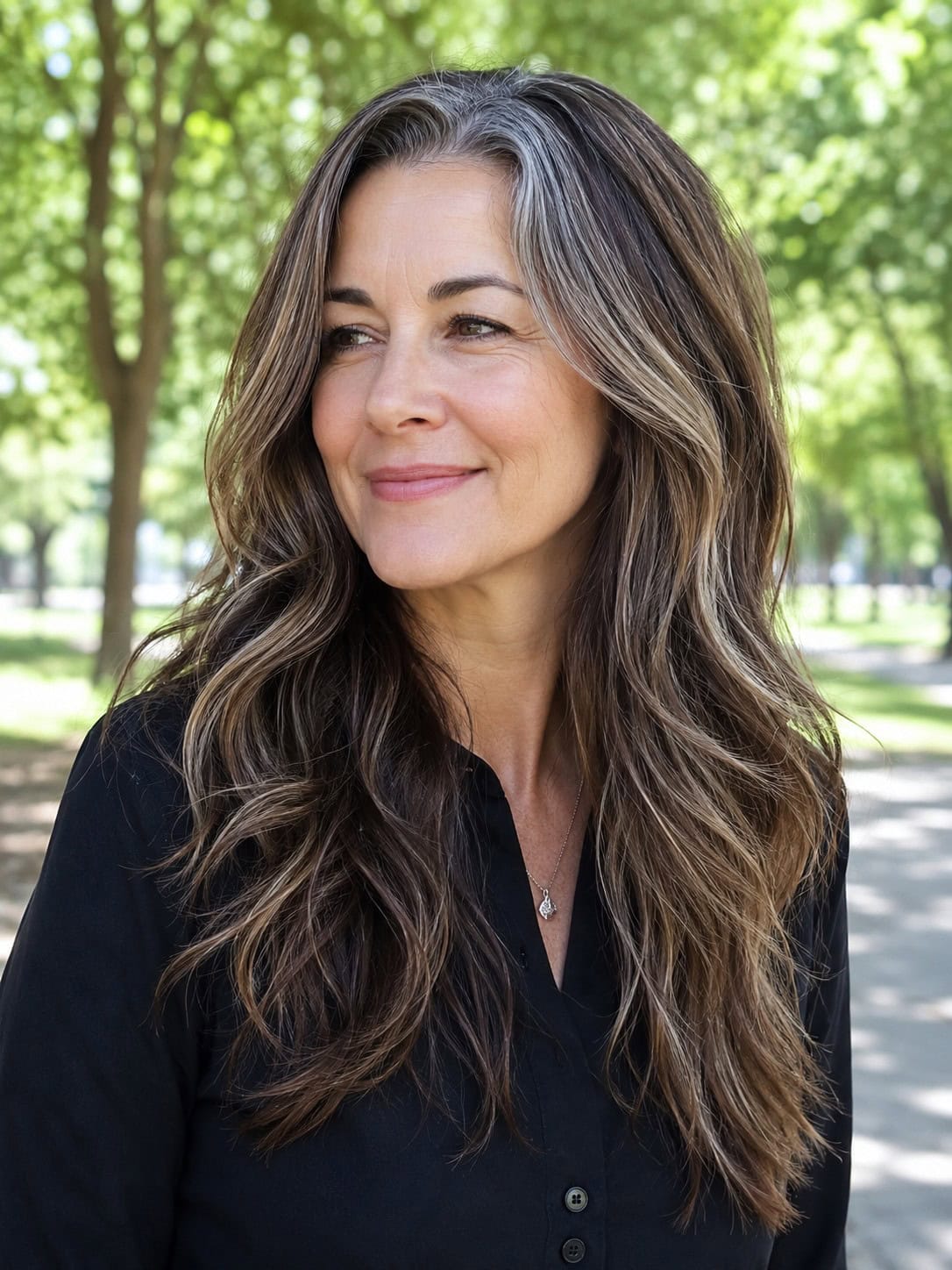
Free-painted balayage, sometimes called hair painting, skips the foil and board steps entirely.
The colorist paints lightening product directly onto strategic sections of dry hair, processing in open air.
This technique creates the softest possible transitions and the most lived-in finish, which makes it especially good for blending salt-and-pepper graying patterns.
The natural-looking result grows out subtly over four to six months.
Dimensional Chocolate Highlights
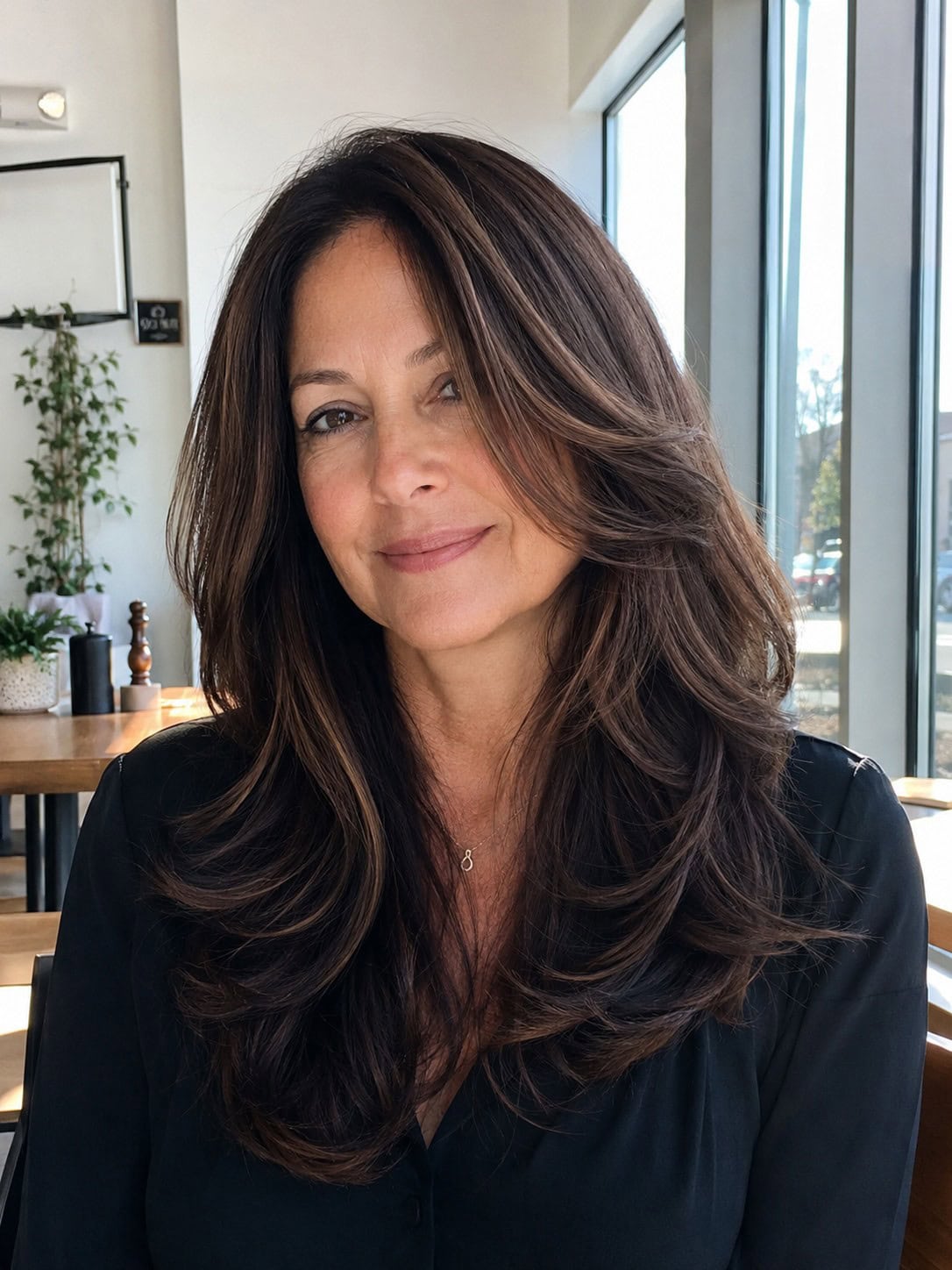
Dimensional chocolate highlights layer multiple shades within the brunette family, often combining milk chocolate, dark chocolate, and a touch of caramel.
The stacked tones create depth that camouflages gray within the natural variation rather than fighting it. This approach suits women who want to stay firmly brunette without lifting too dramatically.
The multi-shade application also lasts longer than single-tone highlights because each shade fades differently.
Pearl-Toned Cool Highlights
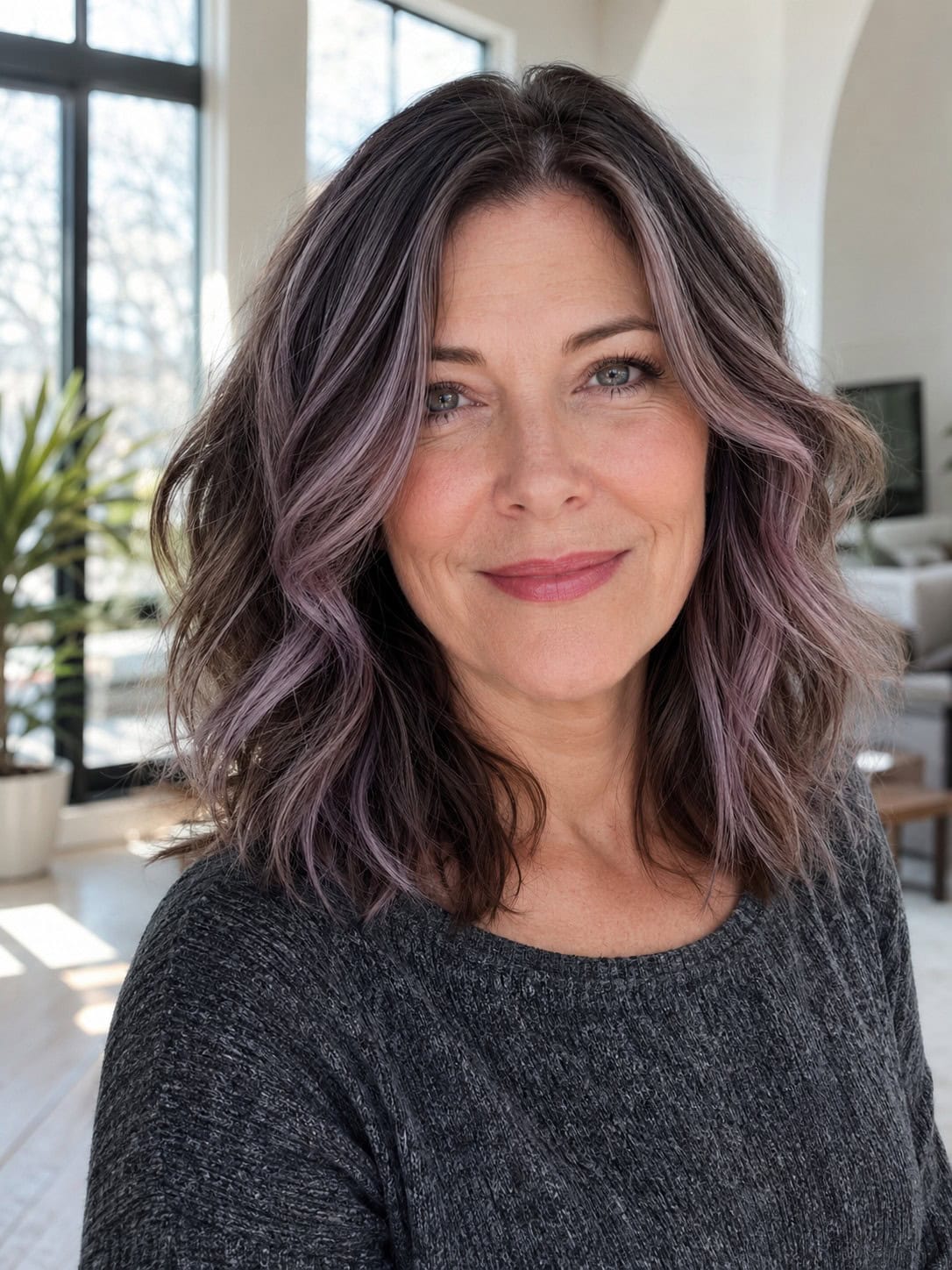
Pearl-toned highlights pull a soft cool sheen through brunette hair, creating a sophisticated finish that suits cool-skinned women particularly well.
The pearl quality keeps the highlights from looking brassy or warm, which can clash with cool natural gray.
Stylists use violet-based toners to achieve the pearl effect and recommend purple shampoo at home to maintain it. The cool tone harmonizes with cool gray strands rather than contrasting against them.
Ribbon Highlights
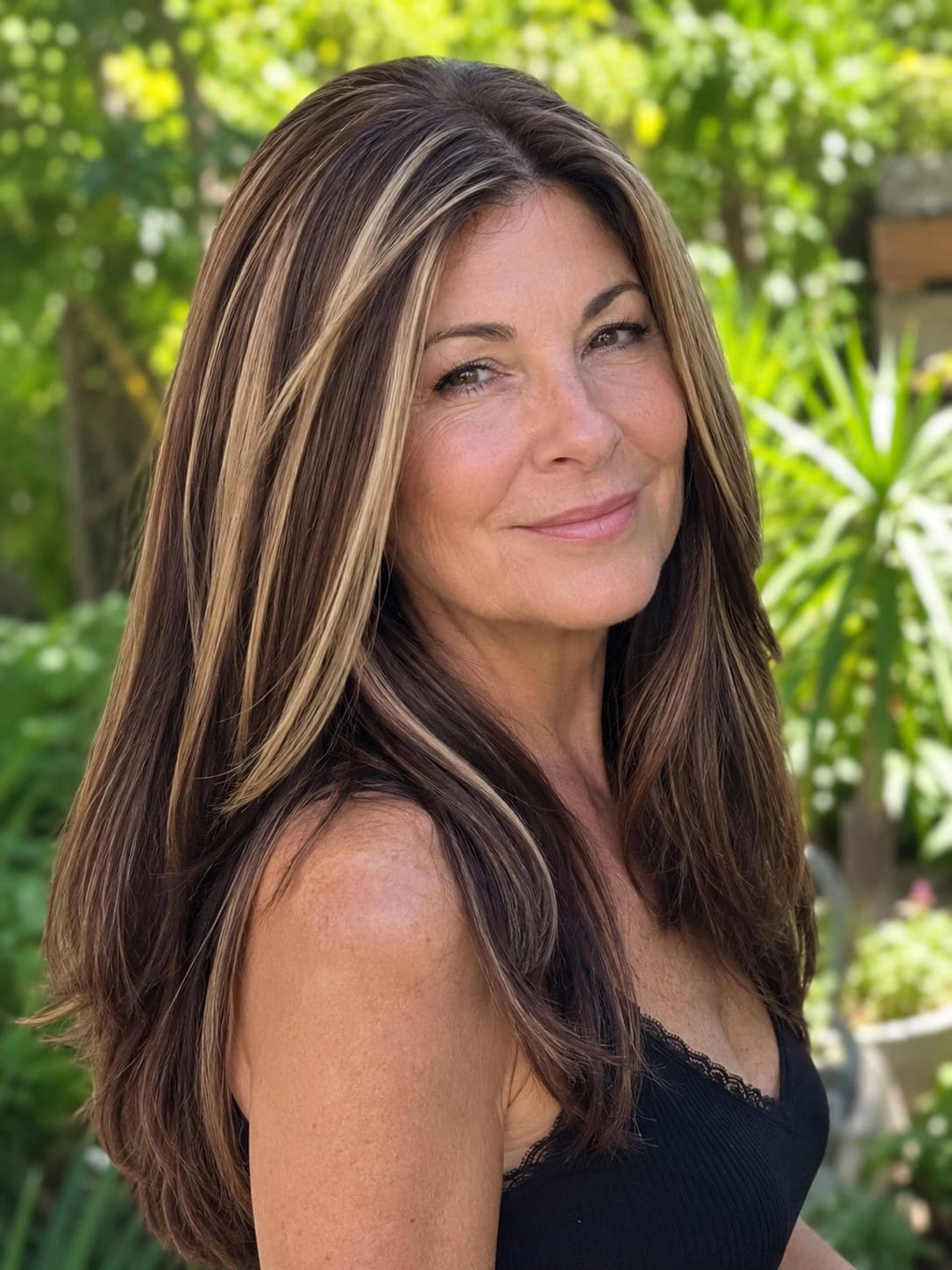
Ribbon highlights, sometimes called chunky highlights, sit in wider, more defined sections than traditional thin highlights.
The 1990s-revival style has returned, and it works surprisingly well for blending gray on brunettes because the bold pieces create strong visual interest.
The eye picks up the ribboned highlights as the dominant pattern, while gray strands sit quietly between them.
Choose shades within two levels of your natural brown to keep the look modern rather than dated.
Toffee Balayage
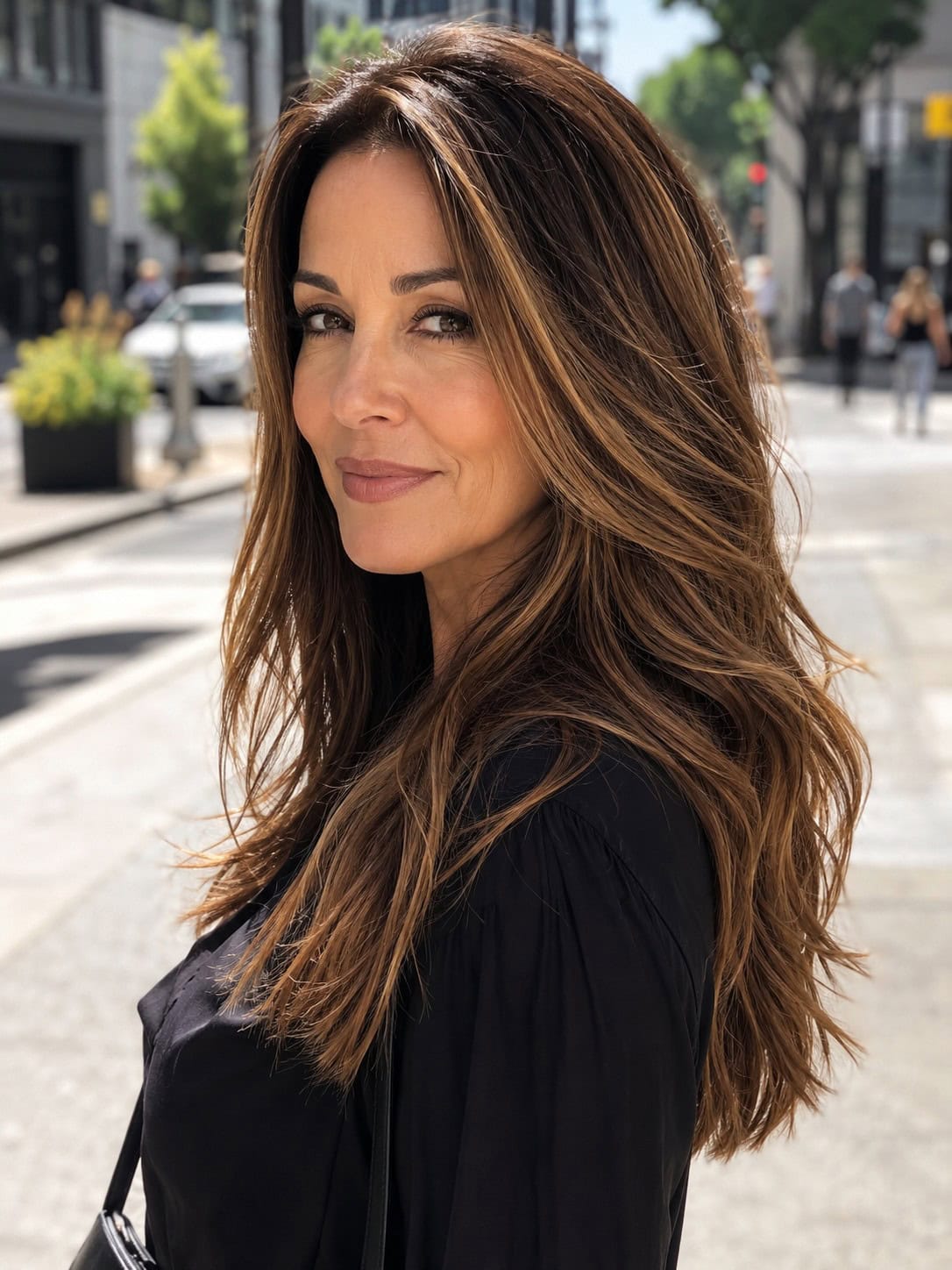
Toffee balayage delivers warm caramel-brown highlights with a slightly deeper foundation than pure caramel.
The shade lands richer than honey but warmer than pure brown, creating a glow that masks gray by infusing the overall hair color with warmth. Toffee suits warm-skinned brunettes especially well.
Hand-painted application gives the soft grown-out finish that requires fewer touch-ups, usually every twelve weeks for most clients.
Mocha Highlights With a Darker Root
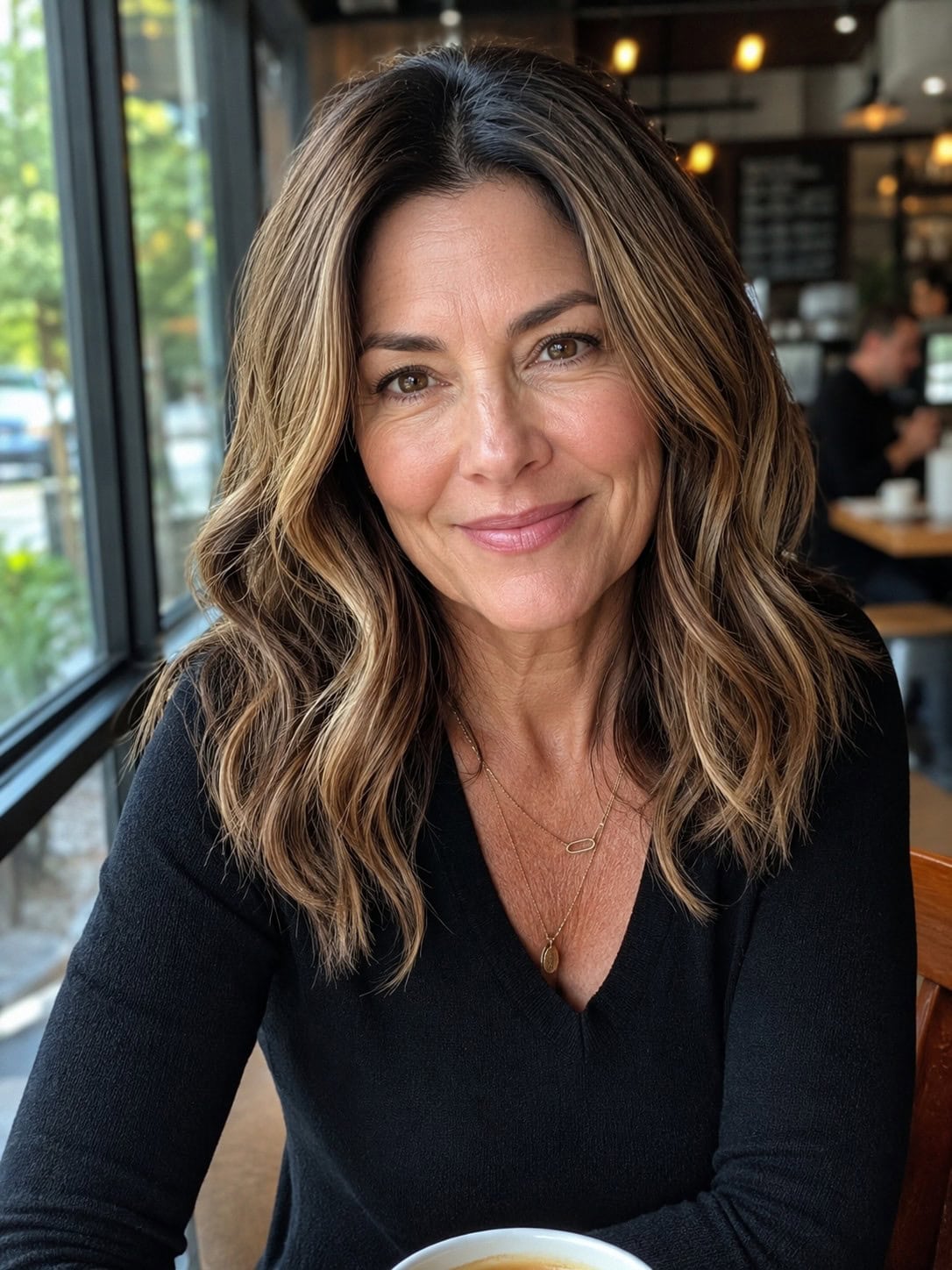
Mocha highlights paired with an intentionally darker root extend the time between salon visits to twelve to sixteen weeks.
The mocha tone, a medium warm brown, lifts gray strands into a unified warm palette while the darker root provides built-in growout camouflage.
This combination works particularly well for busy women who want highlights without monthly maintenance.
Stylists typically blend two shades of mocha for added dimension within the highlights themselves.
Honey and Caramel Blend
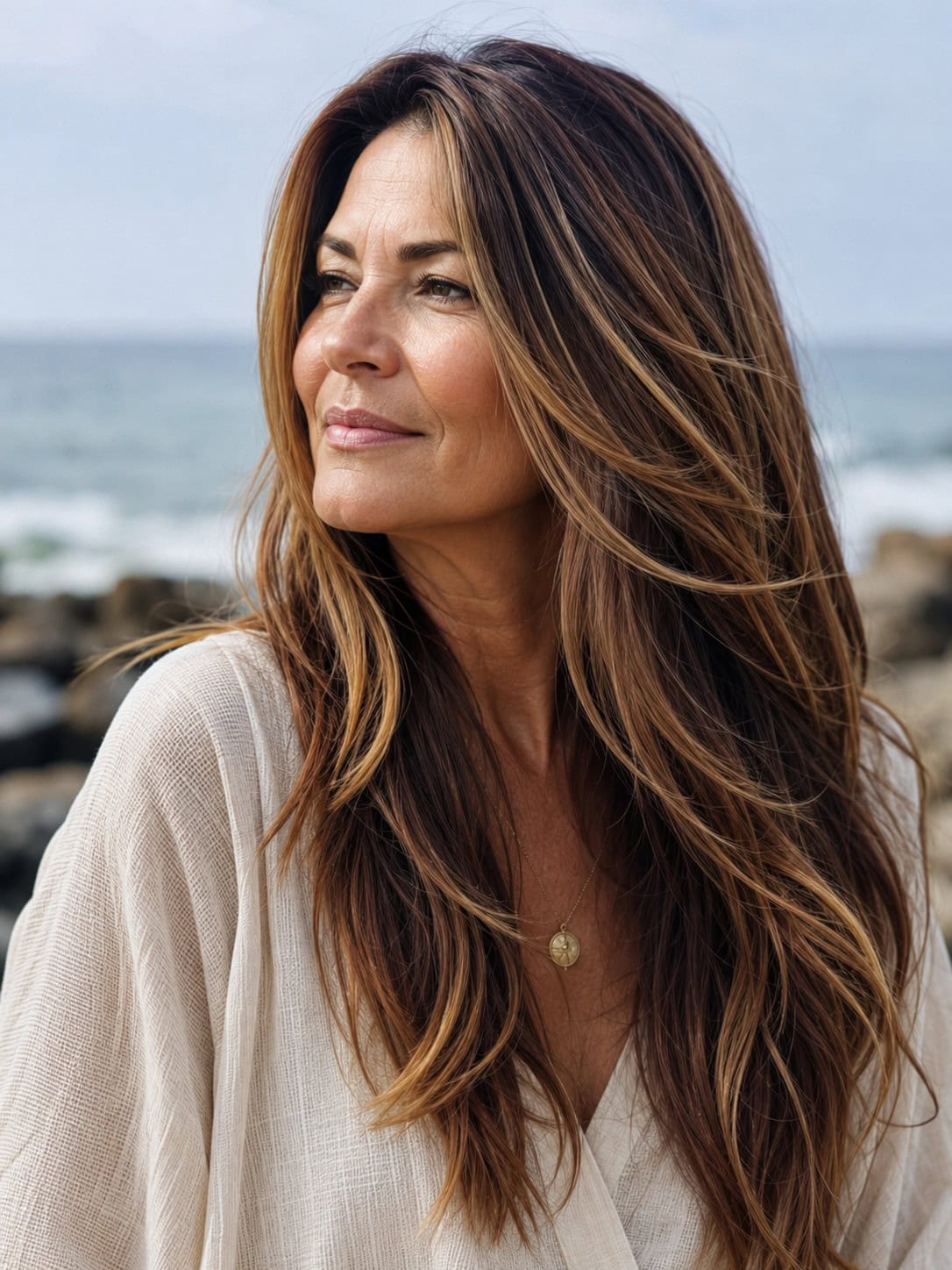
Combining honey and caramel highlights in the same application gives brunette hair multi-tonal warmth that blends gray exceptionally well.
The honey provides bright lift while the caramel adds depth, and together they create a more dimensional finish than either shade alone.
Stylists alternate the two tones throughout the head rather than placing them in distinct zones. The blended effect grows out softly without obvious roots, which suits relaxed maintenance schedules.
Babylights Finished With a Glaze
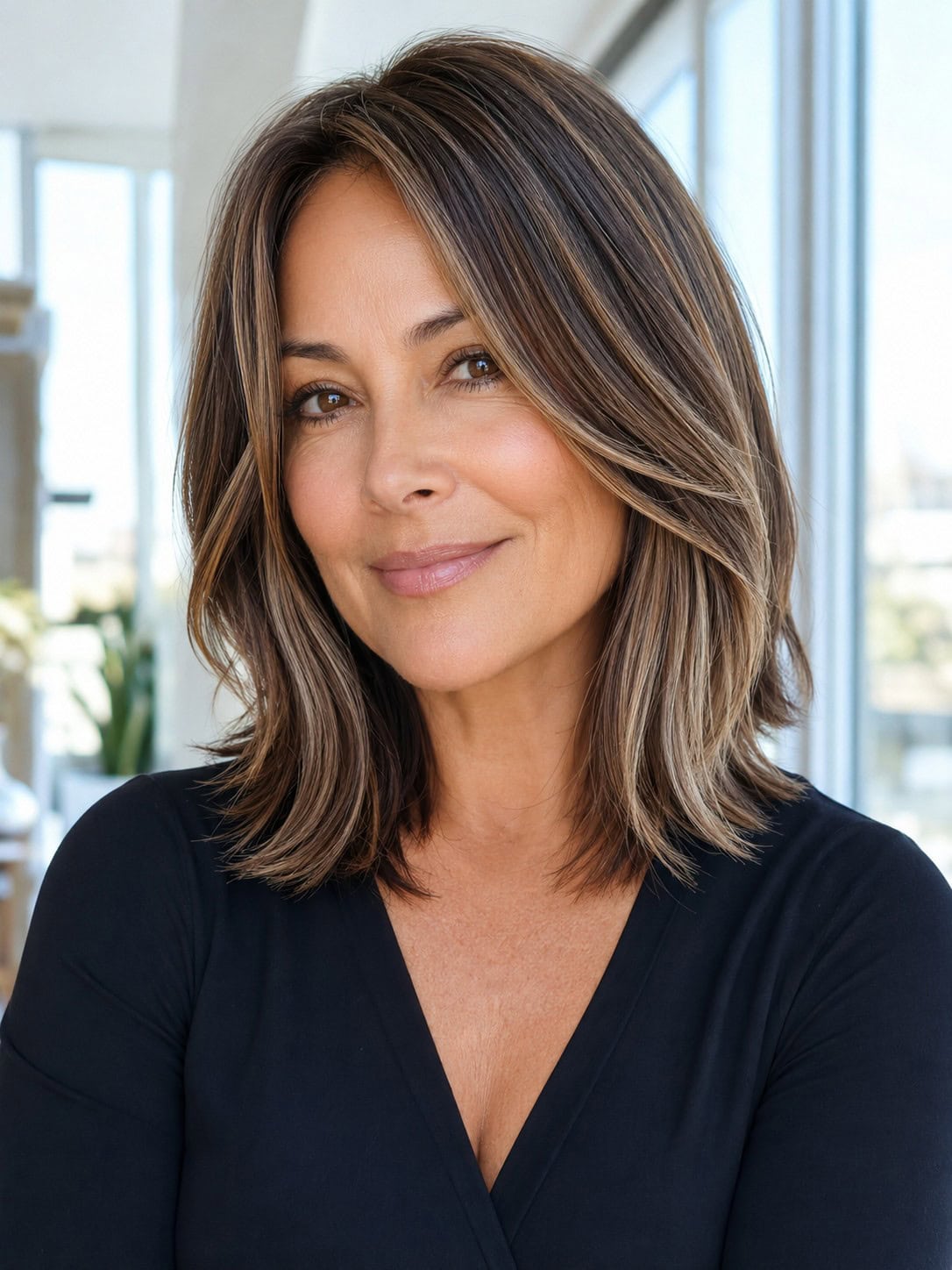
Babylights finished with a clear or tinted glaze treatment add brightness while sealing in shine.
The babylights handle the gray blending while the glaze adds a top layer of color refinement that locks the result.
Glazes also smooth the strand cuticle, which helps gray hair specifically since gray often runs coarser and rougher than pigmented strands.
The combination delivers the brightest, healthiest-looking finish of the highlight options.