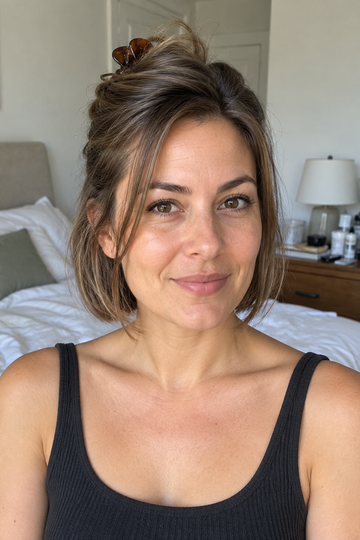
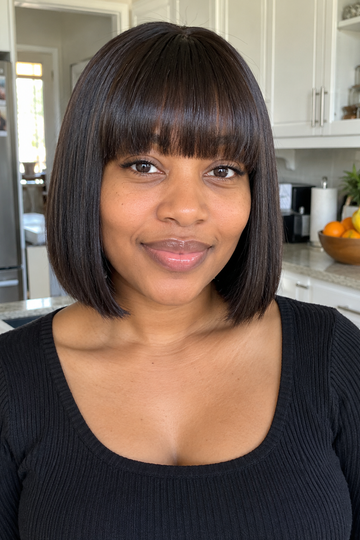
Going darker as a brunette is the easiest color change you can make. There's no lifting, no bleach commitment, no fade window where the result looks halfway between two colors. Dark deposit-only dyes go on, process, and stay rich for weeks. The harder question is which dark to choose, since cool blue-blacks, warm chocolate browns, deep mahoganies, and near-black espressos all sit in the same general territory but look entirely different on the head. Undertone, not level, is what matters most when picking a darker shade.
Jump to:
- Espresso Brown
- Cool-Toned Blue-Black
- Rich Chocolate Brown
- Black Cherry
- Mahogany Brown
- Raven Black
- Mocha Brown
- Dark Auburn
- Chestnut Brown
- Cinnamon Brunette
- Cool Ash Brunette
- Smoky Mocha
- Dimensional Dark Balayage
- Burgundy Brown
- Dark Brown With Money Piece
- Almond Brown
- Dark Brown With Hidden Peekaboo
- Cocoa Brown
- Brunette With a Lowlight Refresh
- Espresso With Subtle Caramel Babylights
- Black With Color-Depositing Gloss
- Walnut Brown
- Cherry Cola
- Bittersweet Chocolate
Espresso Brown

Espresso brown sits one level above true black, with a slight warm coffee undertone that keeps it from looking flat. The shade flatters most skin tones because the warmth bridges cool and warm complexions. Espresso covers gray comfortably while staying lighter than black, which means regrowth shows less aggressively. Stylists recommend espresso for women considering black who want to keep some warmth and softness in the finish.
Cool-Toned Blue-Black
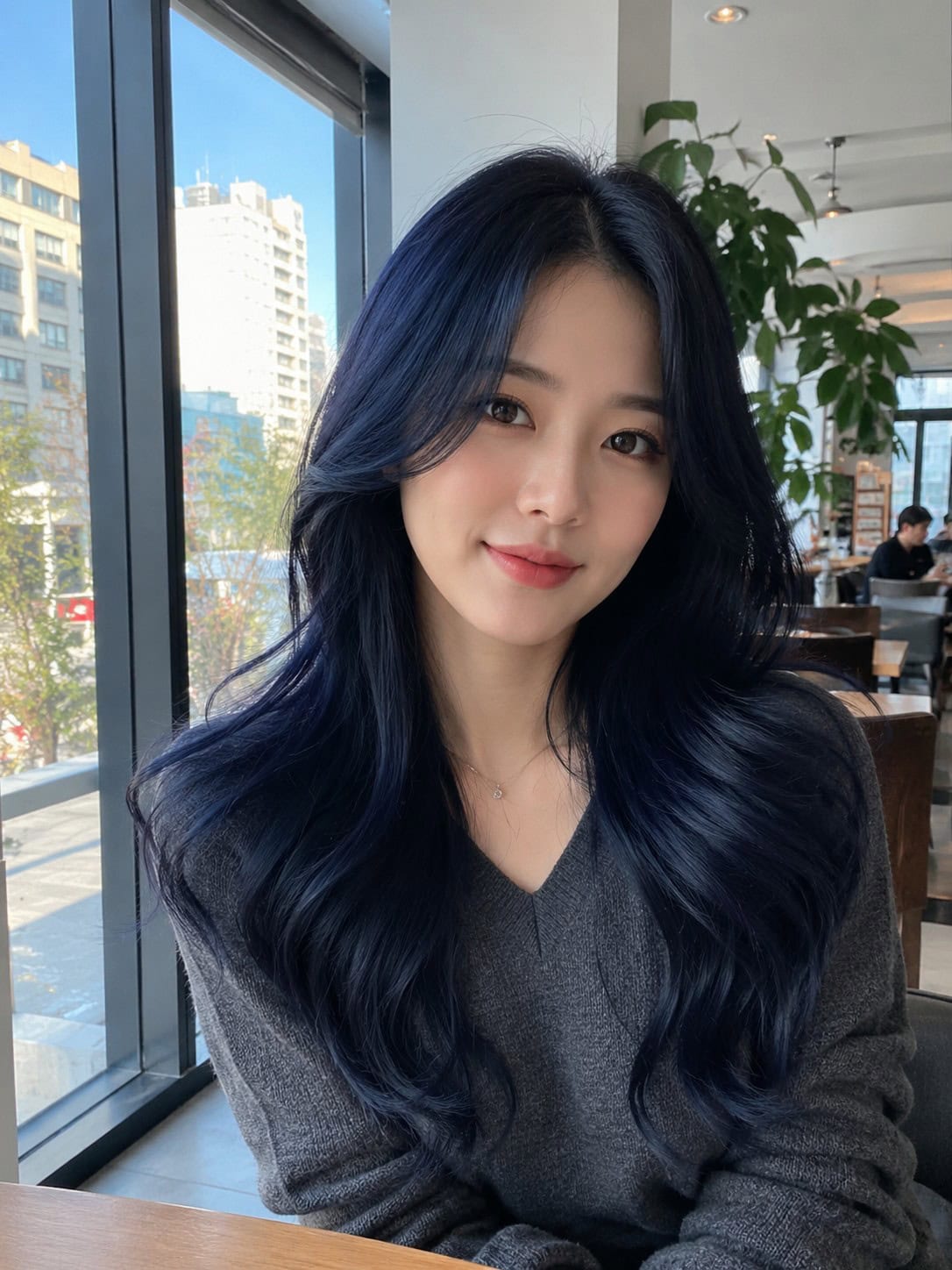
Cool blue-black pulls a subtle blue undertone into the darkest possible base, creating an almost cinematic finish under bright light. The blue quality lives in the toner choice rather than additional dye depth, so the shade reads cool rather than warm. Blue-black drifts warm over time as the blue tones fade first, so cool-toned conditioners and color-depositing treatments are part of the maintenance routine.
Rich Chocolate Brown
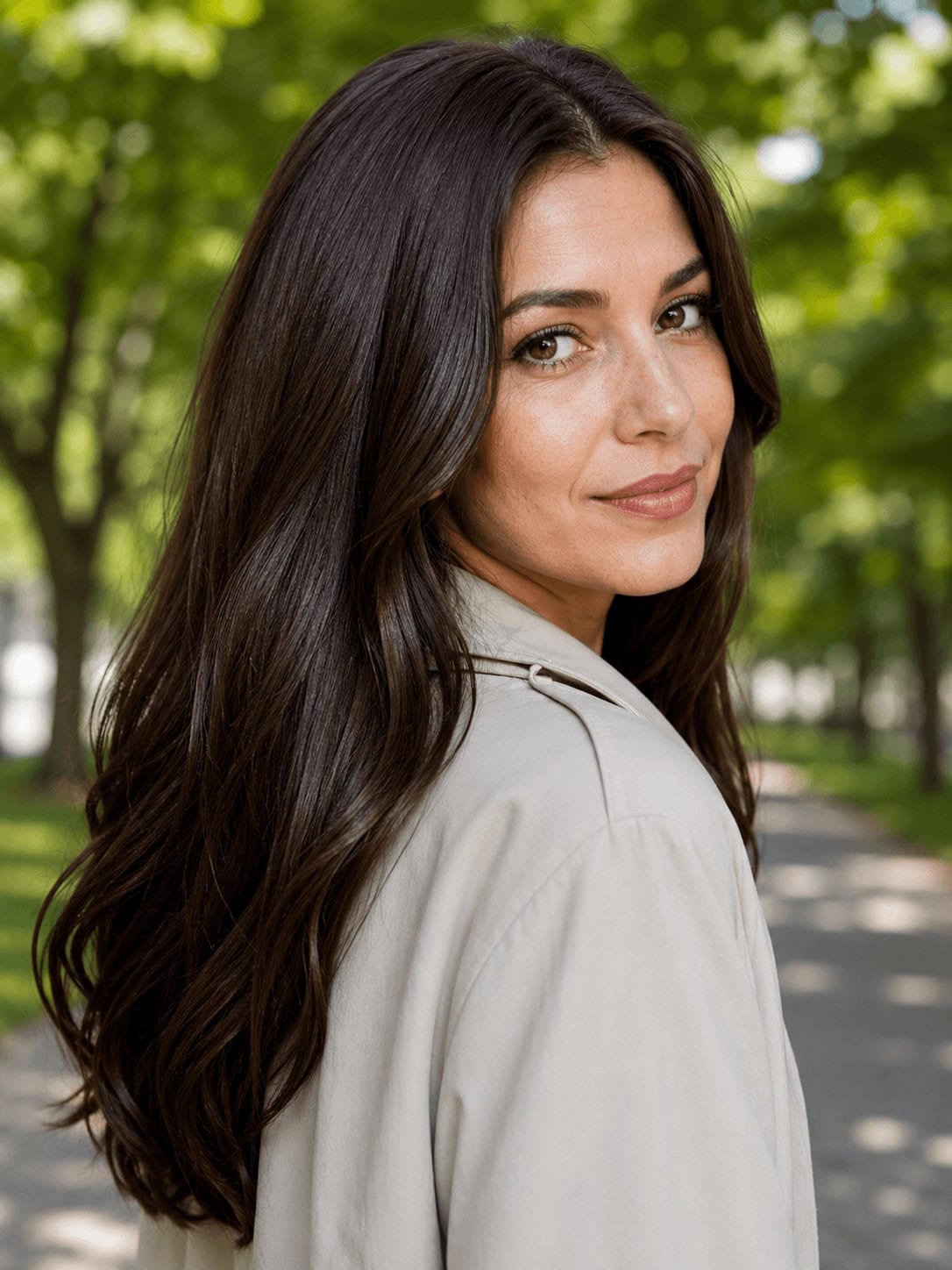
Rich chocolate brown is the everyday brunette upgrade, a deep cocoa shade that adds shine and dimension without going extreme. The neutral undertone suits most skin tones equally well. Chocolate brown lasts longer between salon visits than reds or cool tones because the warm-neutral balance fades gradually rather than dramatically. A glossing treatment every six weeks keeps the chocolate quality rich rather than dull.
Black Cherry
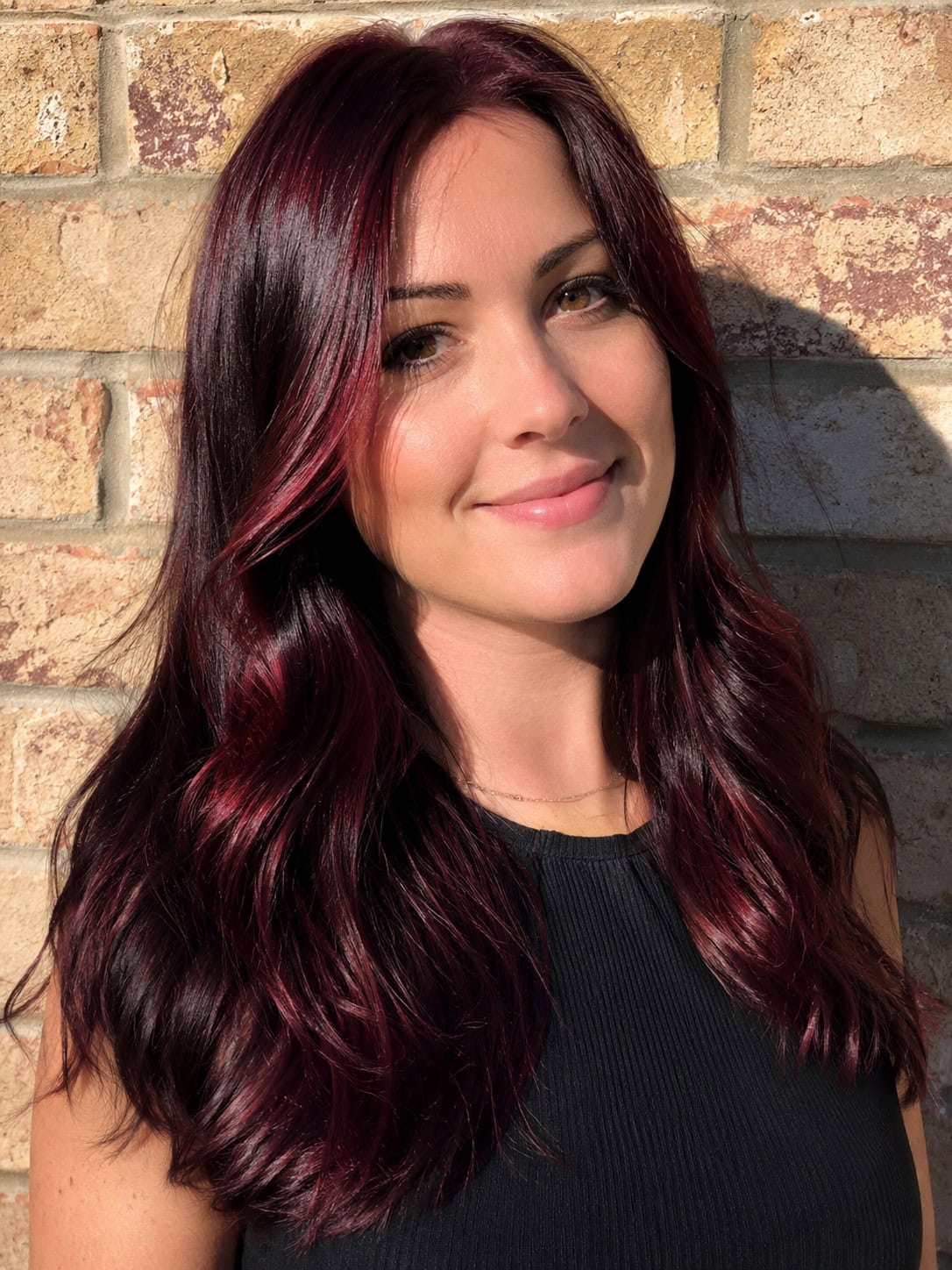
Black cherry combines deep brown with a wine-red undertone, creating depth that shows red only when light hits directly. In standard lighting the shade reads as dark brown with rich warmth. Under direct sunlight or warm indoor lights, the cherry quality reveals itself. This dual-personality makes the shade especially flattering for women who want red without committing to obvious red hair. Touch-ups happen every six to eight weeks since red fades faster than brown.
Mahogany Brown

Mahogany brown leans into red-brown territory more openly than black cherry, with the red undertone clearly visible in all lighting. The shade pairs beautifully with warm and olive skin tones. Mahogany covers gray strongly because the red molecules deposit densely. Color-depositing red conditioners between salon visits extend the wear time. Stylists often combine multiple shades within the mahogany family to add dimension rather than applying one flat tone.
Raven Black
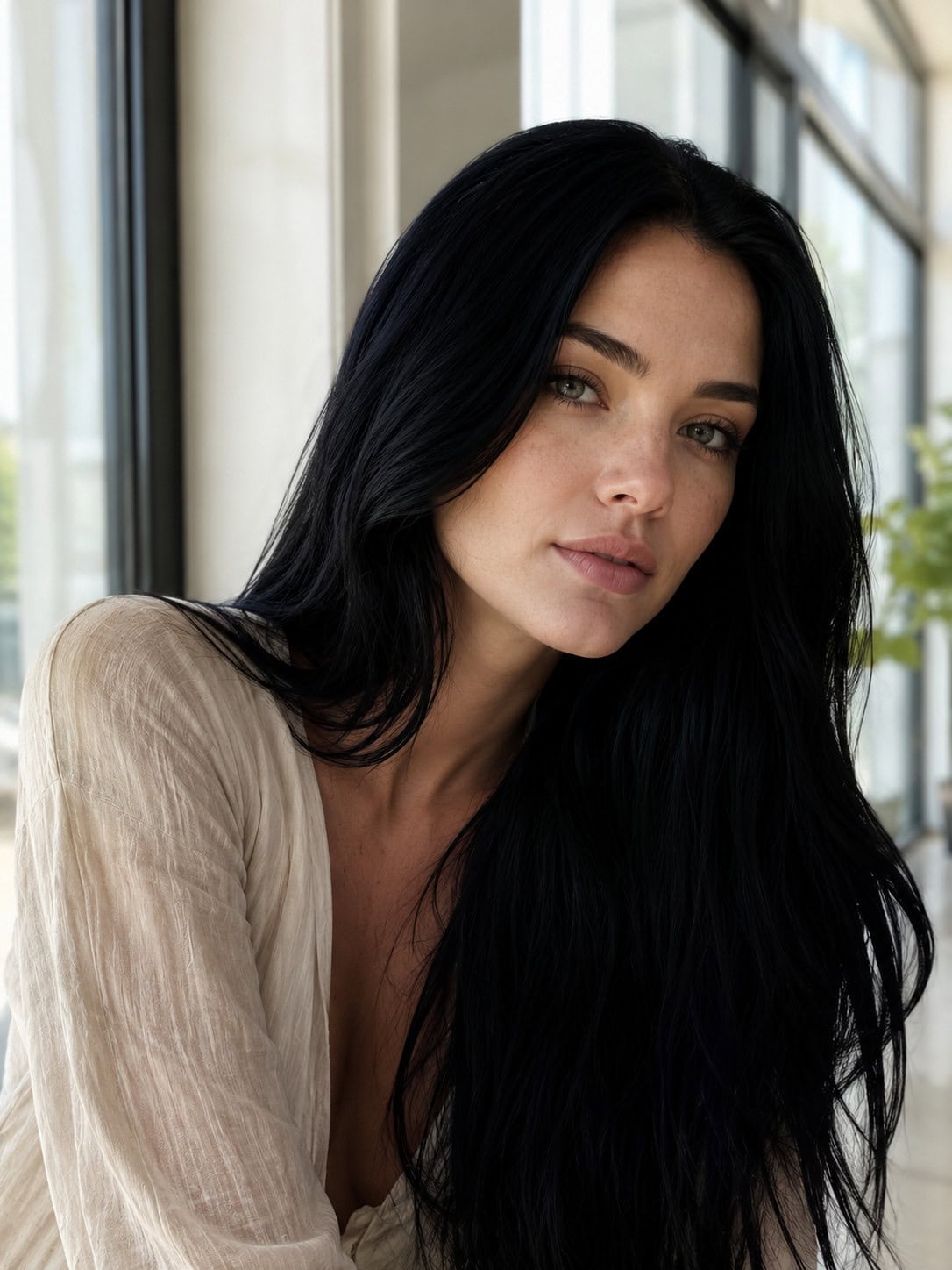
True raven black is the deepest commitment in the dark hair family. The shade absorbs light entirely rather than reflecting it, creating the dramatic flat-black finish that defines goth and edgy aesthetics. Black covers everything underneath it permanently, which means returning to lighter colors later requires color removal or growing out completely. This is the most permanent dark choice. Make sure you want it long-term before applying.
Mocha Brown

Mocha brown sits between chocolate and espresso, with a slight cool undertone that distinguishes it from warmer chocolate shades. The cool quality makes mocha especially flattering for cool-toned skin. Stylists describe mocha as the sophisticated dark brunette, neither too warm nor too cool, with enough depth to read clearly as dark hair. The shade ages well between touch-ups since the cool tones don't drift dramatically into brassiness.
Dark Auburn
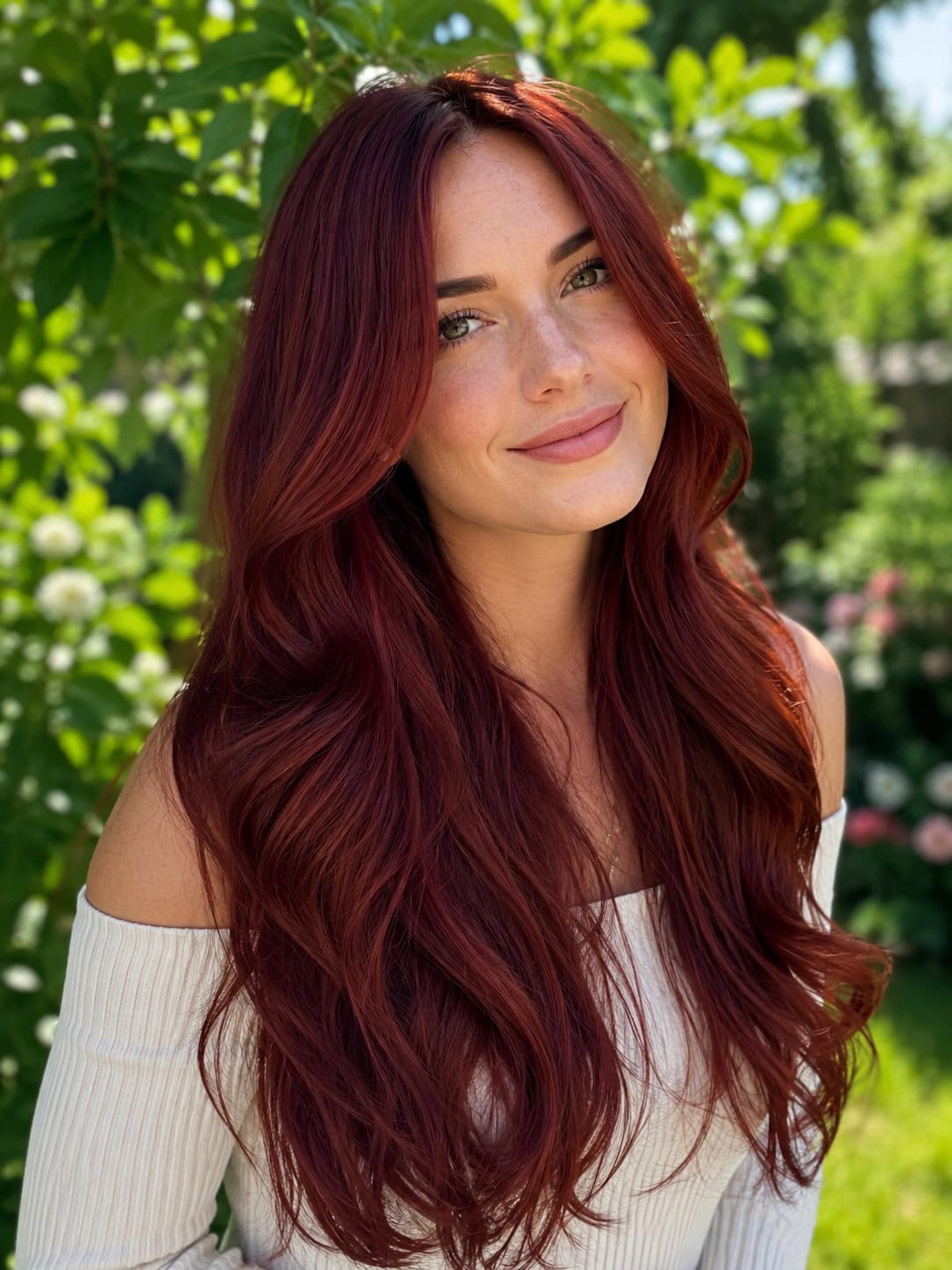
Dark auburn combines deep brown with strong red undertones, leaning more red than mahogany without crossing into true red territory. The shade flatters fair skin with warm undertones particularly well. Auburn requires the same red-maintenance routine as other red-family shades: color-safe shampoo, cool water washing, and gloss treatments to combat fade. The deep base keeps the red looking rich rather than faded for longer than brighter red shades.
Chestnut Brown

Chestnut brown carries a warm reddish-brown quality without the intensity of true auburn or mahogany. The shade lives in the medium-dark brunette family, slightly lighter than chocolate but distinctly warmer than neutral browns. Chestnut suits warm and neutral skin tones. The reddish warmth comes alive in sunlight while staying subtle indoors, which is part of what makes the shade so versatile for daily wear.
Cinnamon Brunette

Cinnamon brunette pulls warm spiced undertones into a medium-dark brown base, creating a cozy autumnal version of the shade. The cinnamon quality reads warmer than chestnut and more orange-leaning than mahogany. This shade suits women whose dark hair has started looking too flat or one-dimensional and needs warmth restored. A color-depositing cinnamon conditioner extends the warm tone between salon applications.
Cool Ash Brunette

Cool ash brunette removes all warmth from dark brown hair, landing in cool gray-brown territory. The shade flatters cool-toned skin exceptionally well and creates a sophisticated modern finish. Achieving true ash requires precise toning with blue or green-based formulations. Brassy warmth tries to return between salon visits, so purple shampoo formulated for brown hair becomes part of the routine to maintain the cool finish.
Smoky Mocha
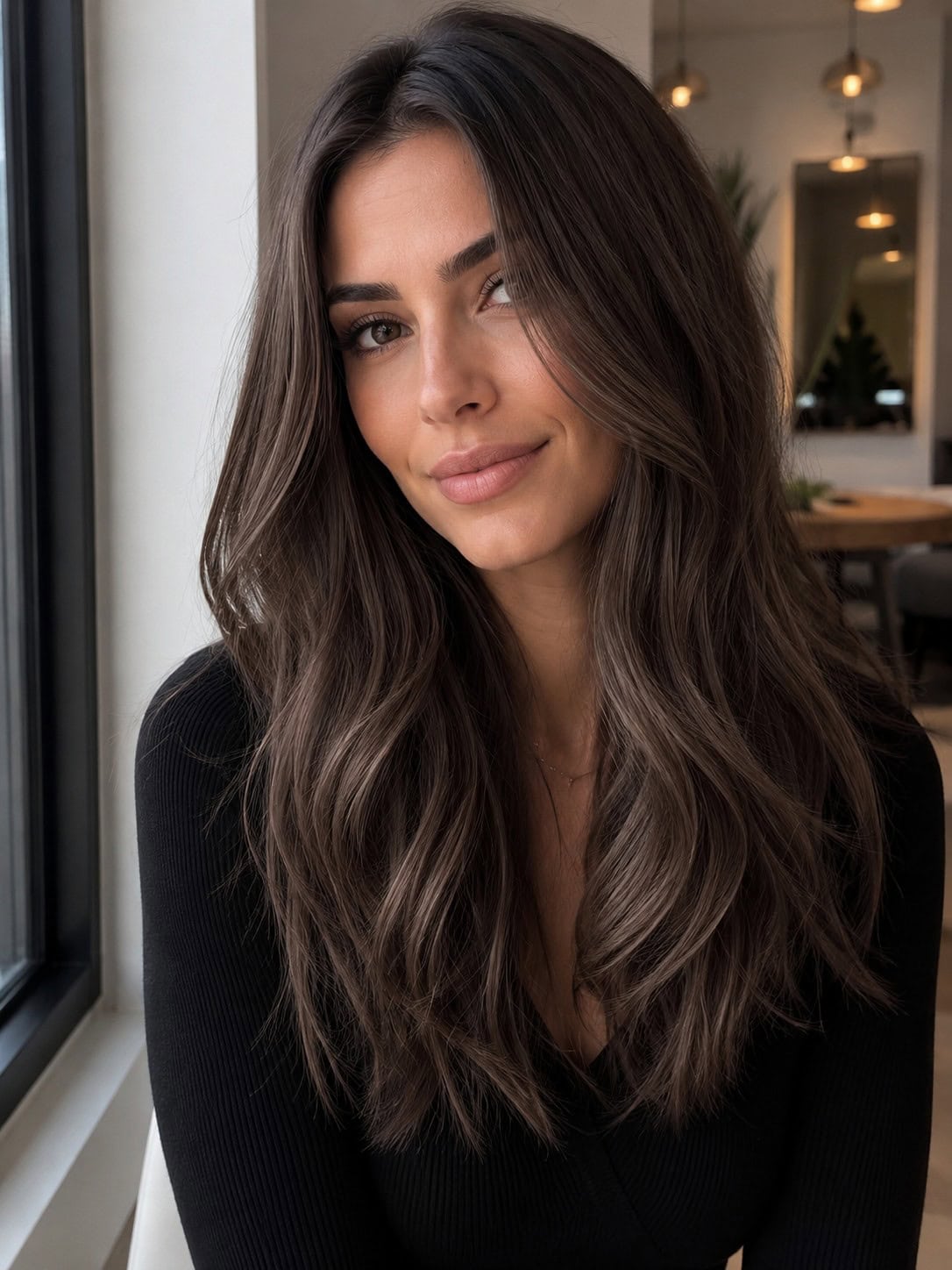
Smoky mocha combines cool mocha undertones with a slightly hazy finish, creating a moodier version of standard mocha. The smoky quality lives in the toner balance, which leans cool with a deliberate muted gray cast. This version flatters cool-skinned women particularly well. Stylists usually layer ash and violet toners to land the smoky finish. The shade ages between touch-ups more gracefully than crisper cool tones because the haziness disguises slight warm drift.
Dimensional Dark Balayage
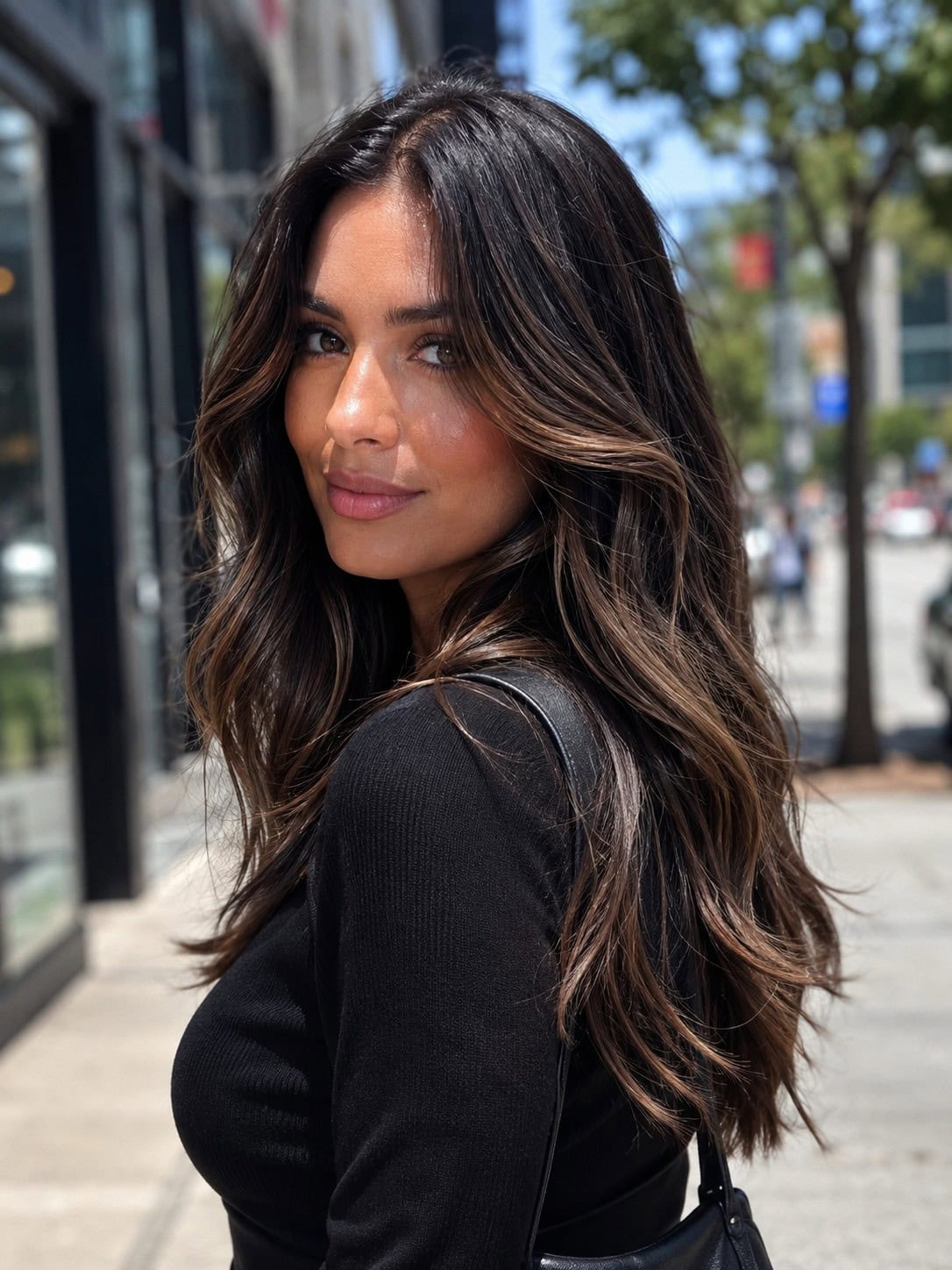
Hand-painted balayage placed into a dark brunette base adds dimension without sacrificing depth. The painted sections sit only a level or two lighter than the base, creating subtle brightness that catches the eye without changing the overall dark identity of the hair. This technique suits women who want movement and shine in their dark hair without the brightness commitment of full highlights. Touch-ups happen every twelve weeks since the technique grows out softly.
Burgundy Brown
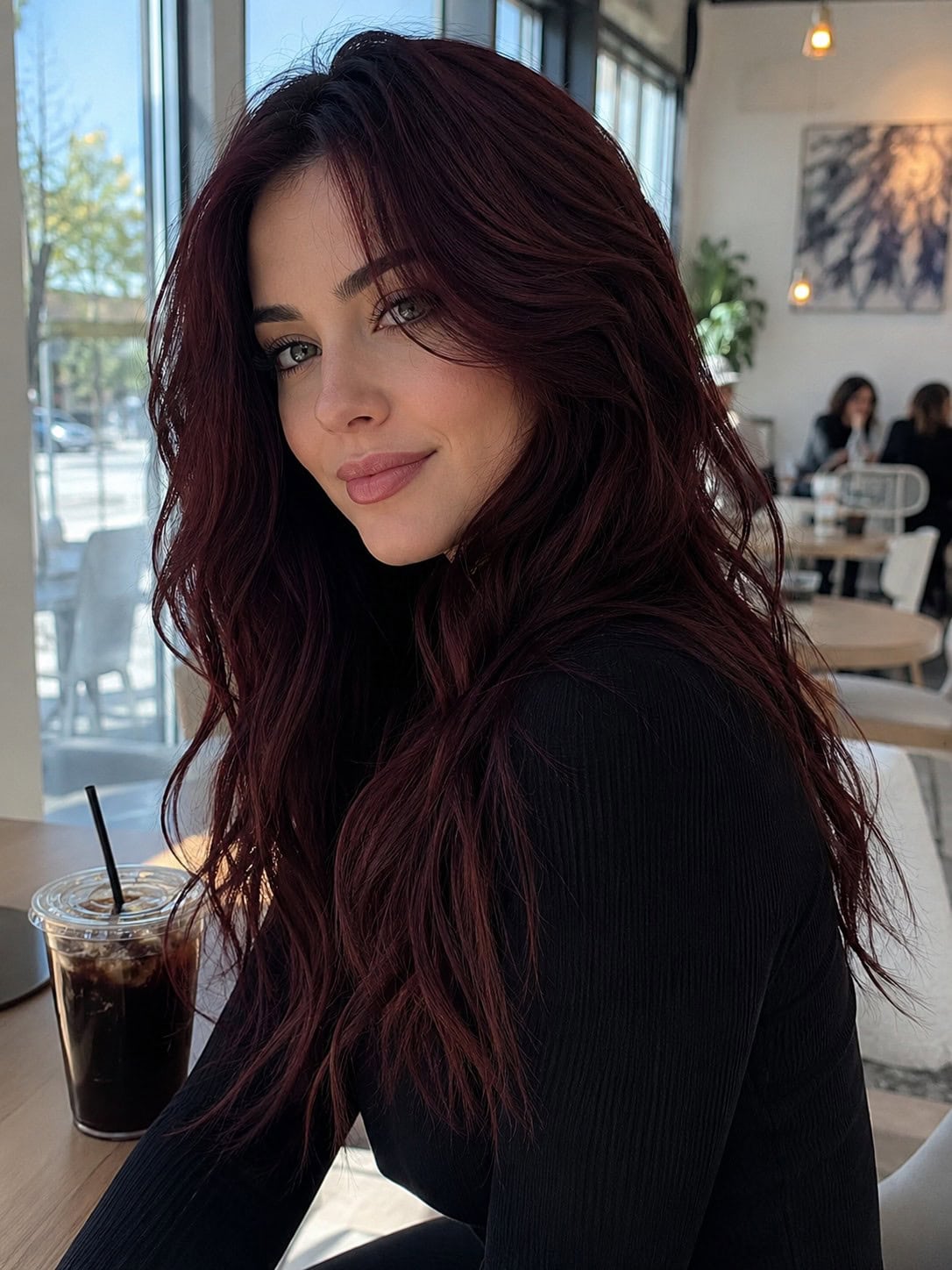
Burgundy brown deepens the wine-red family into rich dark brunette territory. The shade carries more red than mahogany but darker overall than burgundy by itself, creating a sultry sophisticated finish. Burgundy brown flatters cool-toned skin best because the wine undertone harmonizes with cool complexions. The deep base keeps the burgundy from fading as quickly as brighter wine shades. Color-safe shampoo and cool-water washing extend wear time significantly.
Dark Brown With Money Piece
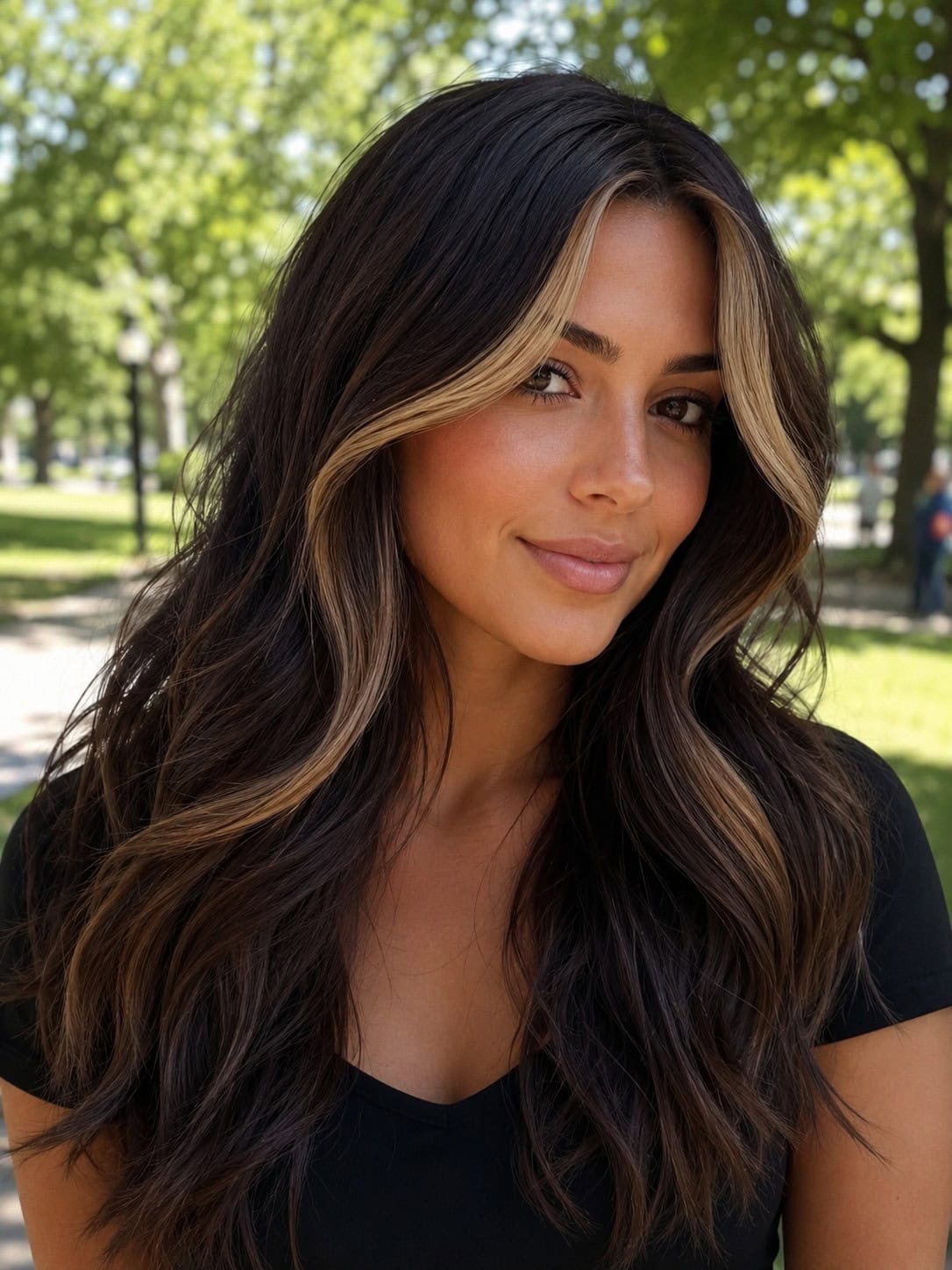
A money piece against a dark brown base concentrates lighter pieces at the front of the face, where light naturally hits hardest. The placement frames the face in a brighter shade two or three levels lighter than the base while keeping the rest of the hair its rich dark color. Touch-ups affect only those two front pieces, usually every six to eight weeks, which makes this a low-commitment way to brighten dark hair.
Almond Brown
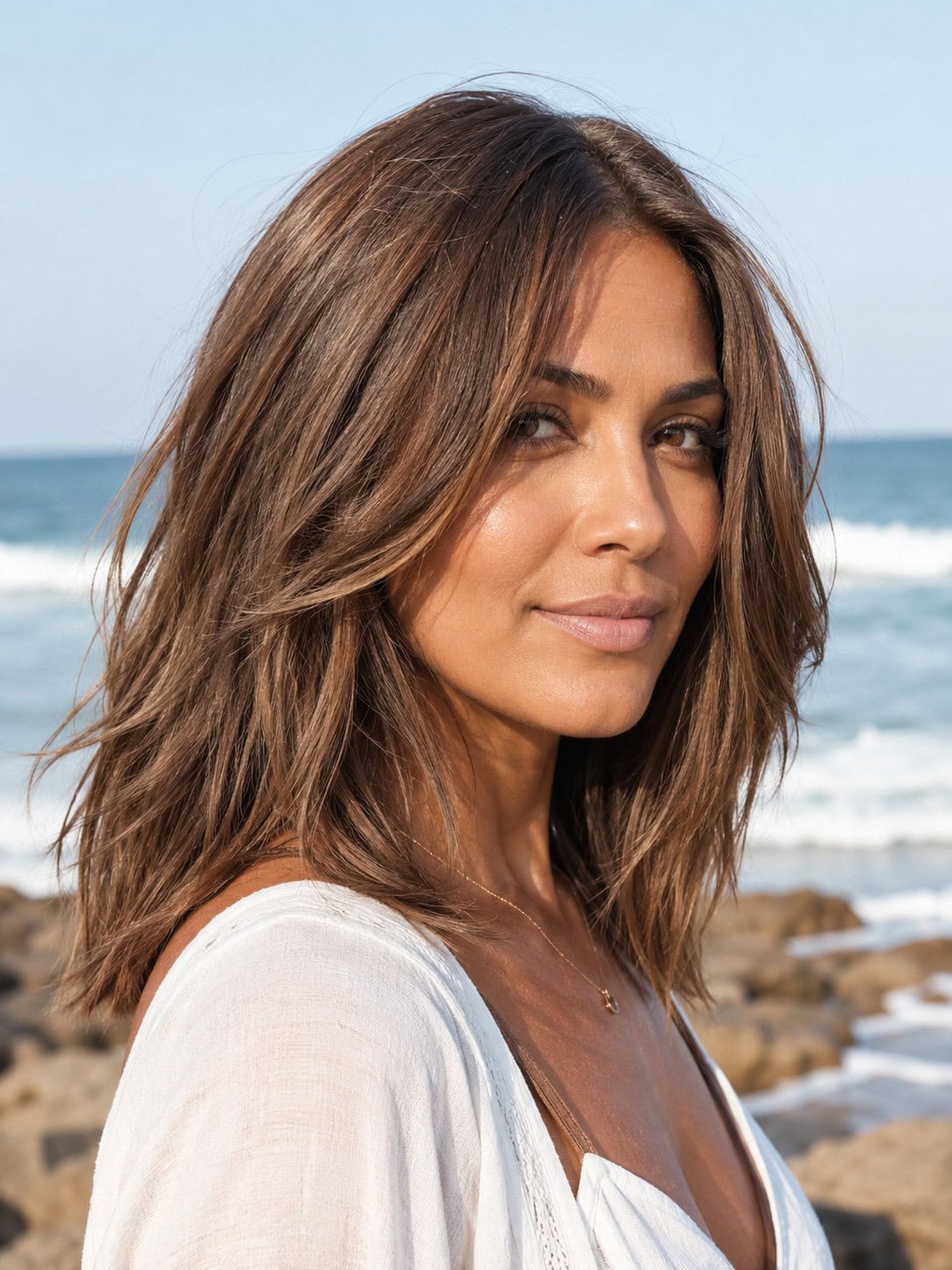
Almond brown sits in warm light-medium brunette territory, slightly warmer than chestnut and more golden than mocha. The shade pulls a nutty warm-neutral undertone that flatters warm and neutral skin tones. Almond brown reads natural and effortless rather than dramatic, which makes it appealing for women who want their dark hair to look genuinely organic. The shade ages between touch-ups well because the warm-neutral balance disguises growout.
Dark Brown With Hidden Peekaboo
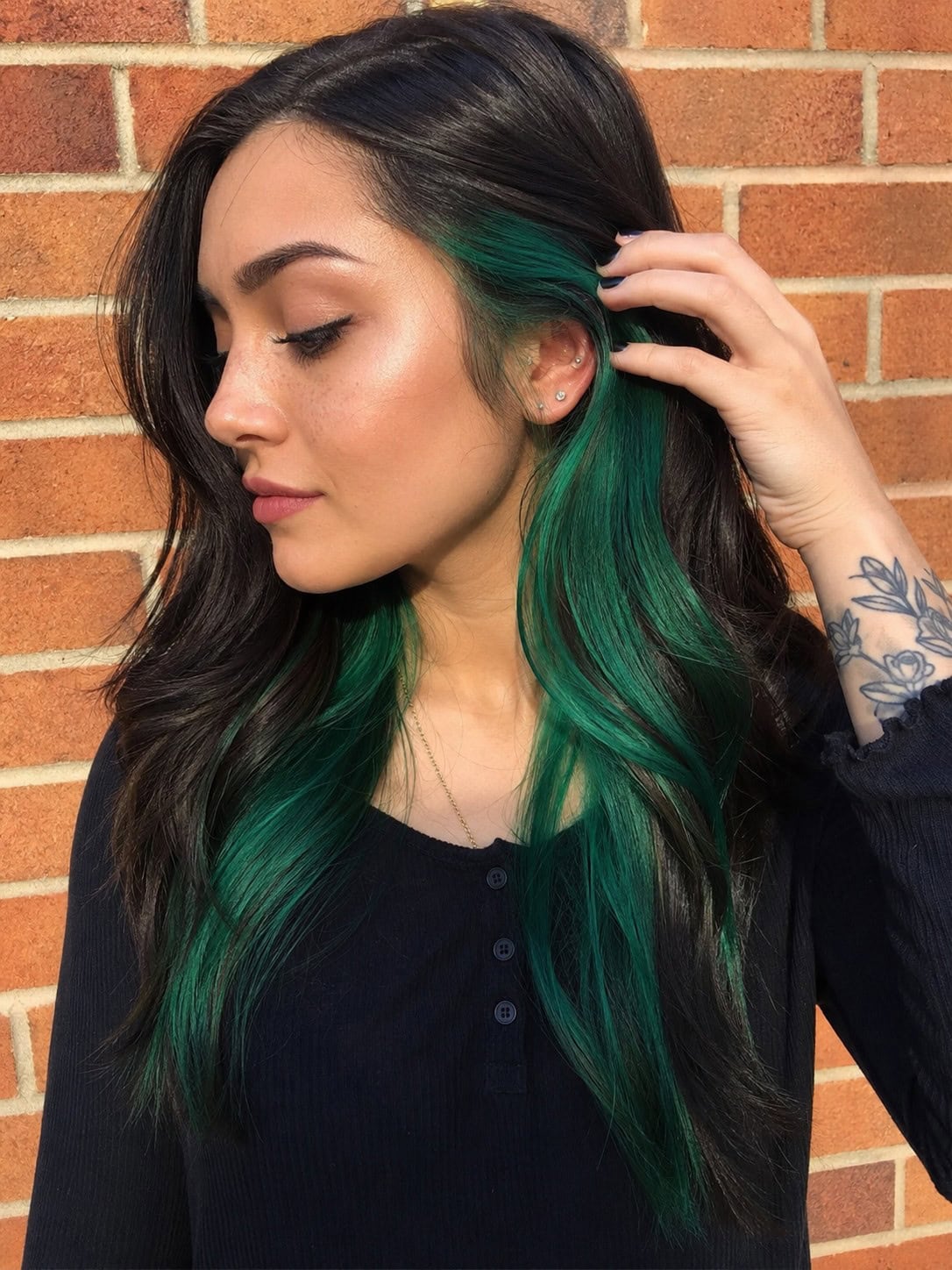
Vivid peekaboo panels hidden under a dark brown top layer combine a natural-looking surface with hidden personality. Popular peekaboo color choices for dark brown bases include burgundy, deep purple, copper, and emerald green. The dark base requires lifting only the hidden panels, which keeps most of the hair untouched. The hidden color shows only when hair tucks behind an ear or pulls into a ponytail, creating intentional surprise.
Cocoa Brown
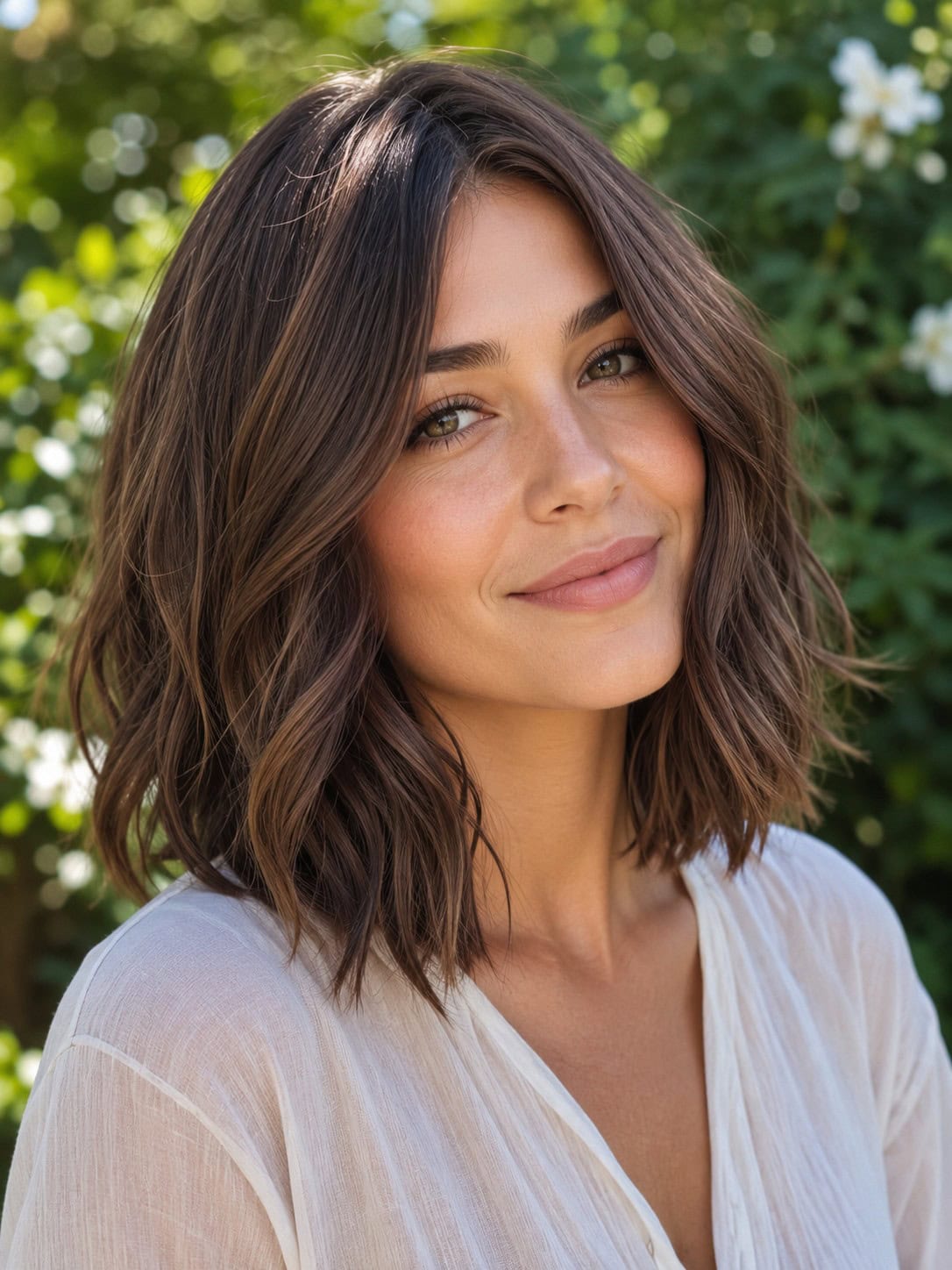
Cocoa brown lives in the neutral chocolate family with a slightly more dusty quality than rich chocolate. The shade reads softer and slightly less glossy than chocolate brown, which gives it a more natural, lived-in finish. Cocoa flatters most skin tones because the neutrality avoids competing with skin undertone. The shade ages between touch-ups gracefully since the neutral balance avoids dramatic shifts in either direction.
Brunette With a Lowlight Refresh
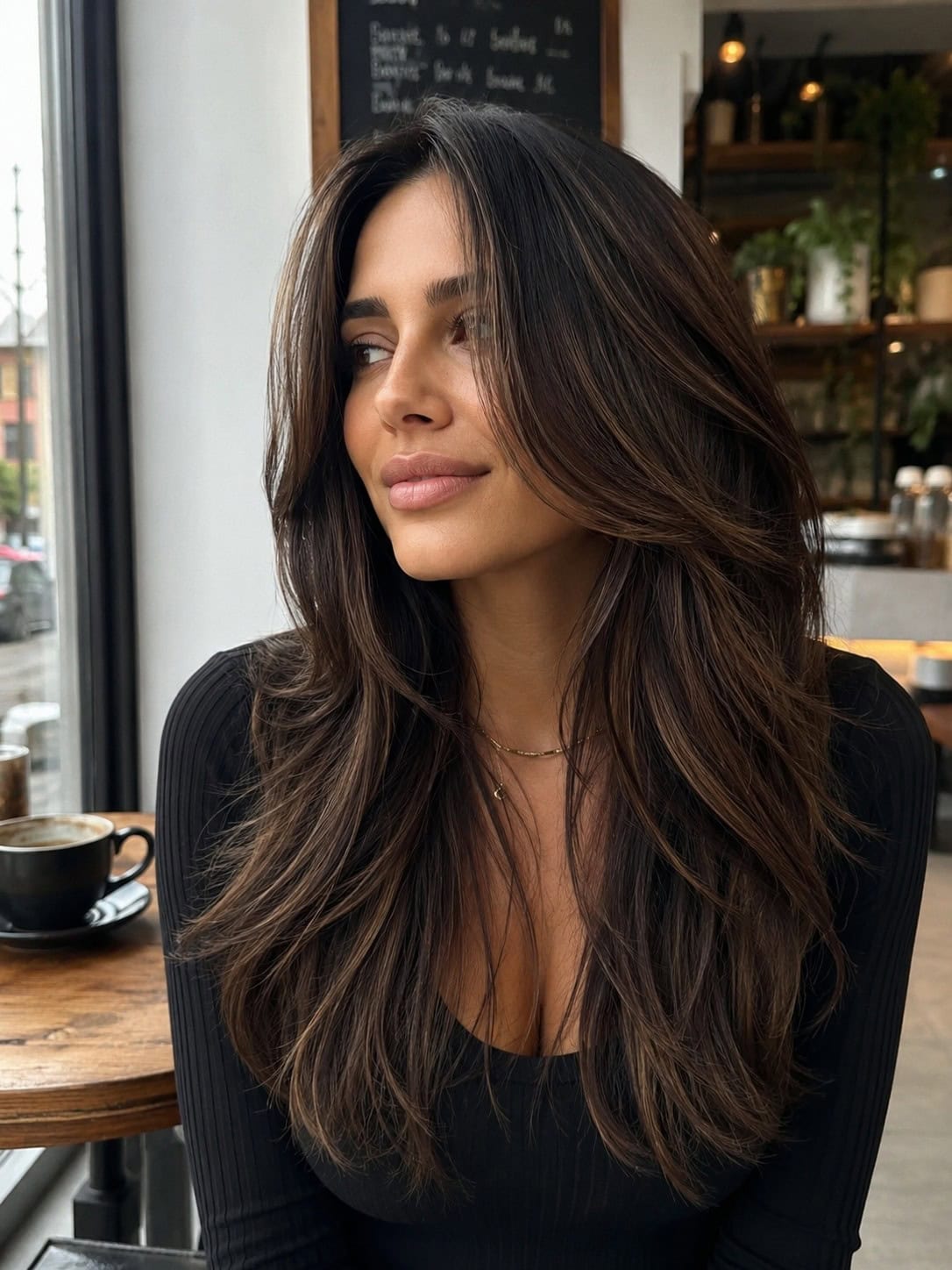
Strategic lowlights added back into brunette hair that has lifted or faded restore depth without committing to all-over dark application. The lowlights sit deeper than the existing color, creating dimensional richness near the roots and through the mid-lengths. This technique suits women whose dark brown has become too light or one-dimensional over time and needs depth restored. Touch-ups happen every ten to twelve weeks.
Espresso With Subtle Caramel Babylights
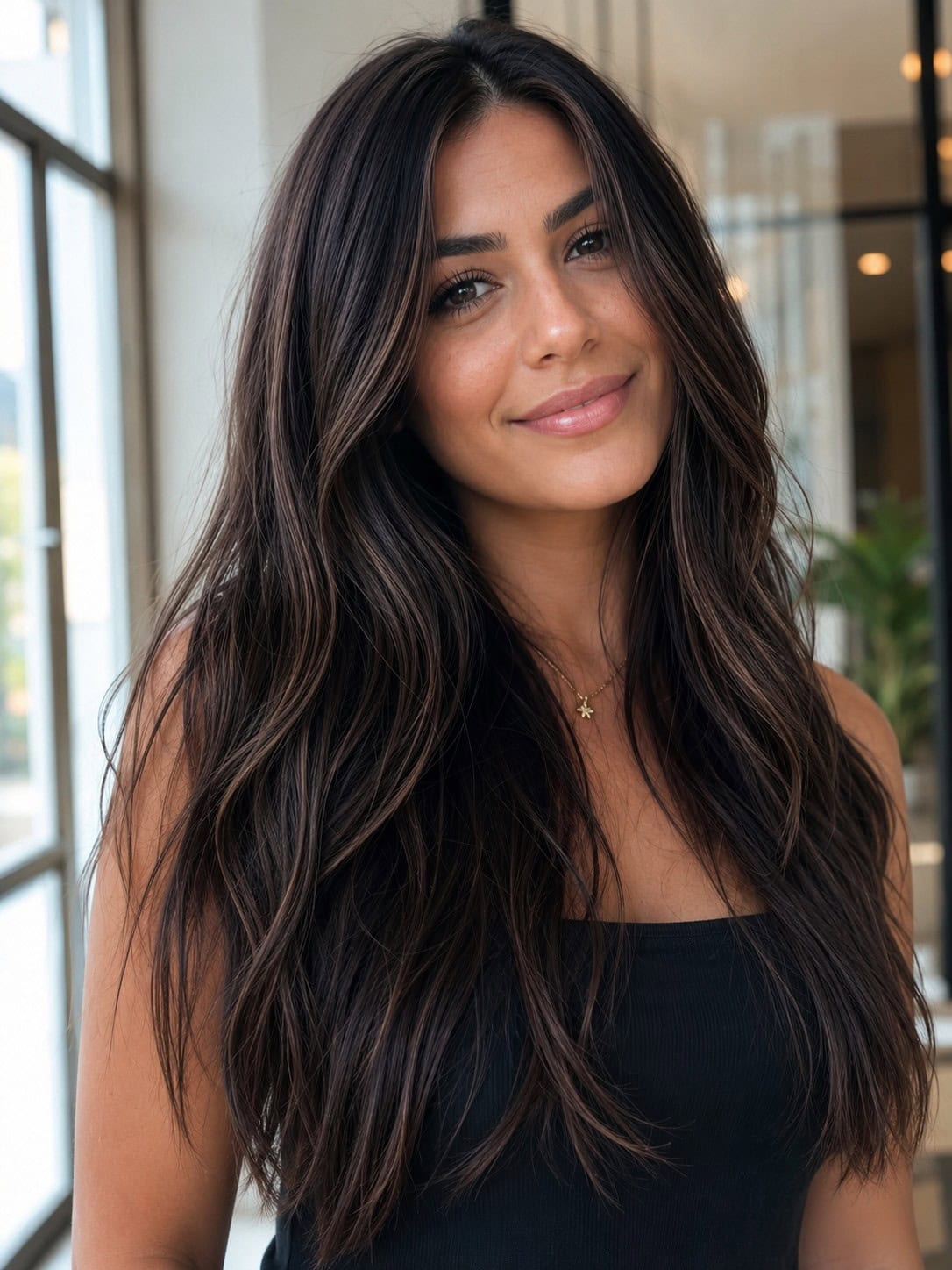
Espresso brown punctuated by ultra-fine caramel babylights delivers depth with the smallest possible dimensional accent. The babylights sit just bright enough to catch light without changing the overall espresso identity. The fineness of the technique means regrowth blends invisibly. This combination suits women who want their dark hair to stay clearly dark but with whisper-light warmth weaving through.
Black With Color-Depositing Gloss
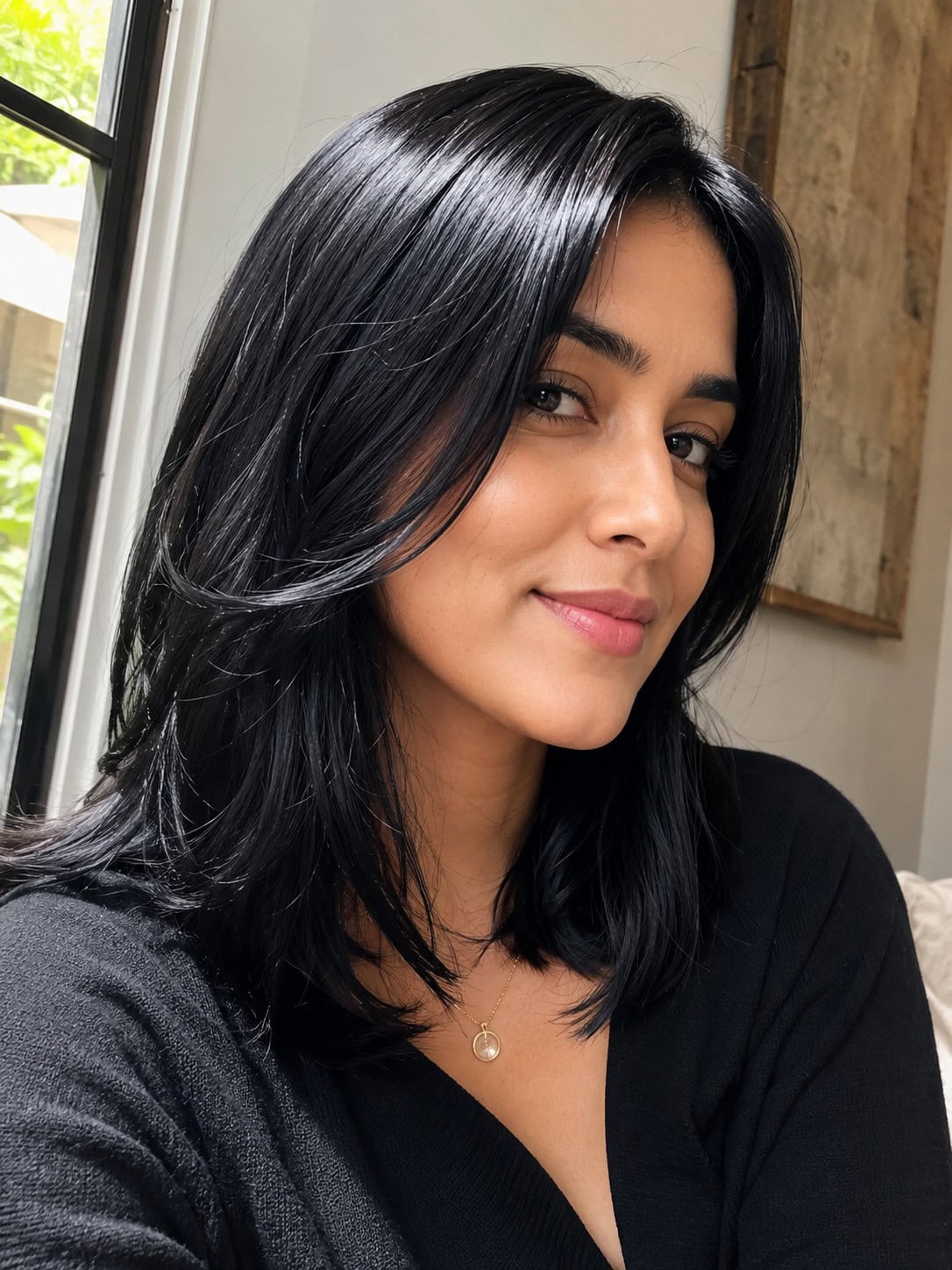
True black hair finished with a color-depositing gloss treatment adds reflective shine and depth to the densest dark shade available. The gloss can be clear or tinted toward subtle red or blue undertones, depending on which direction you want to push the black. Glossing treatments last six to eight weeks between salon visits and dramatically improve the visual quality of black hair, which can otherwise look flat or matte.
Walnut Brown
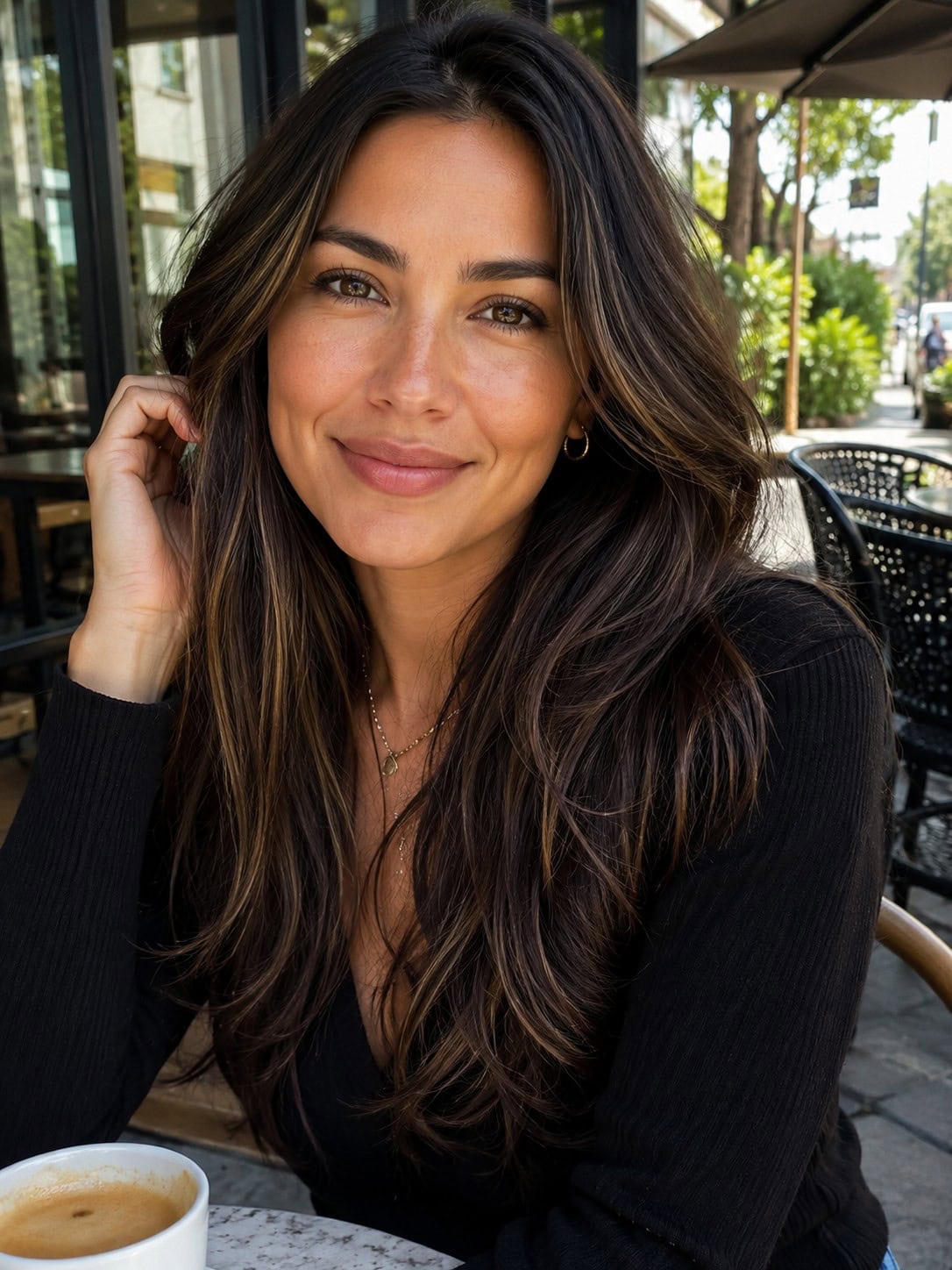
Walnut brown combines cool brown undertones with a slightly warm cast at the core, landing in neutral-cool territory that flatters most skin tones. The shade reads sophisticated and adult, often appearing in editorial color forecasts as a refined dark brunette option. Walnut suits women who want a shade that doesn't commit to either warm or cool extremes. The neutrality also makes regrowth blend more easily over time.
Cherry Cola
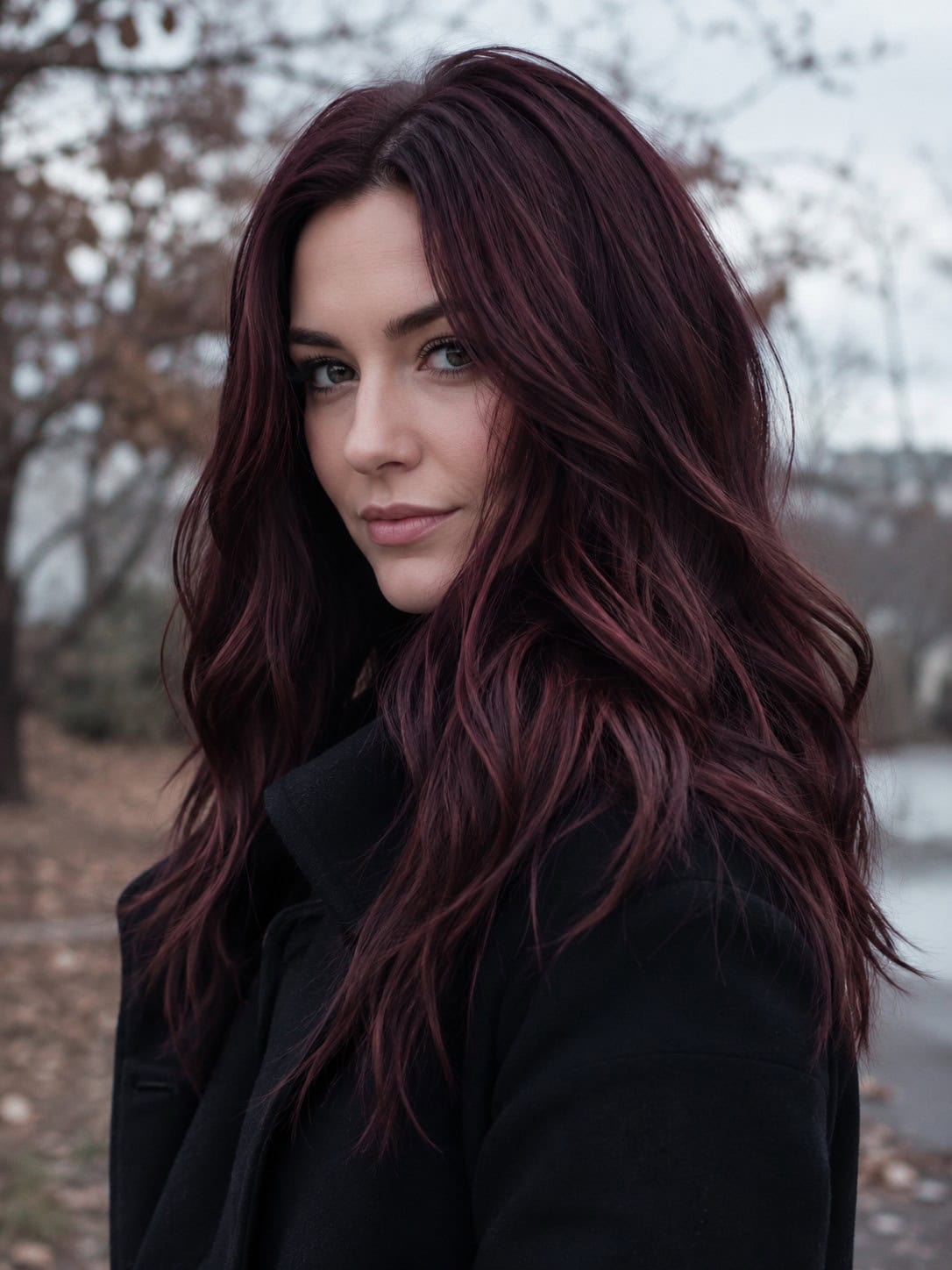
Cherry cola combines deep brown with red-brown undertones and a slight purple cast, creating a shade that resembles its namesake drink. The complex undertone gives cherry cola dimension that flat single-tone darks cannot match. The purple-red quality flatters cool-toned skin particularly well. Like all red-family shades, cherry cola requires color-safe maintenance routines to slow the fade of the red molecules.
Bittersweet Chocolate
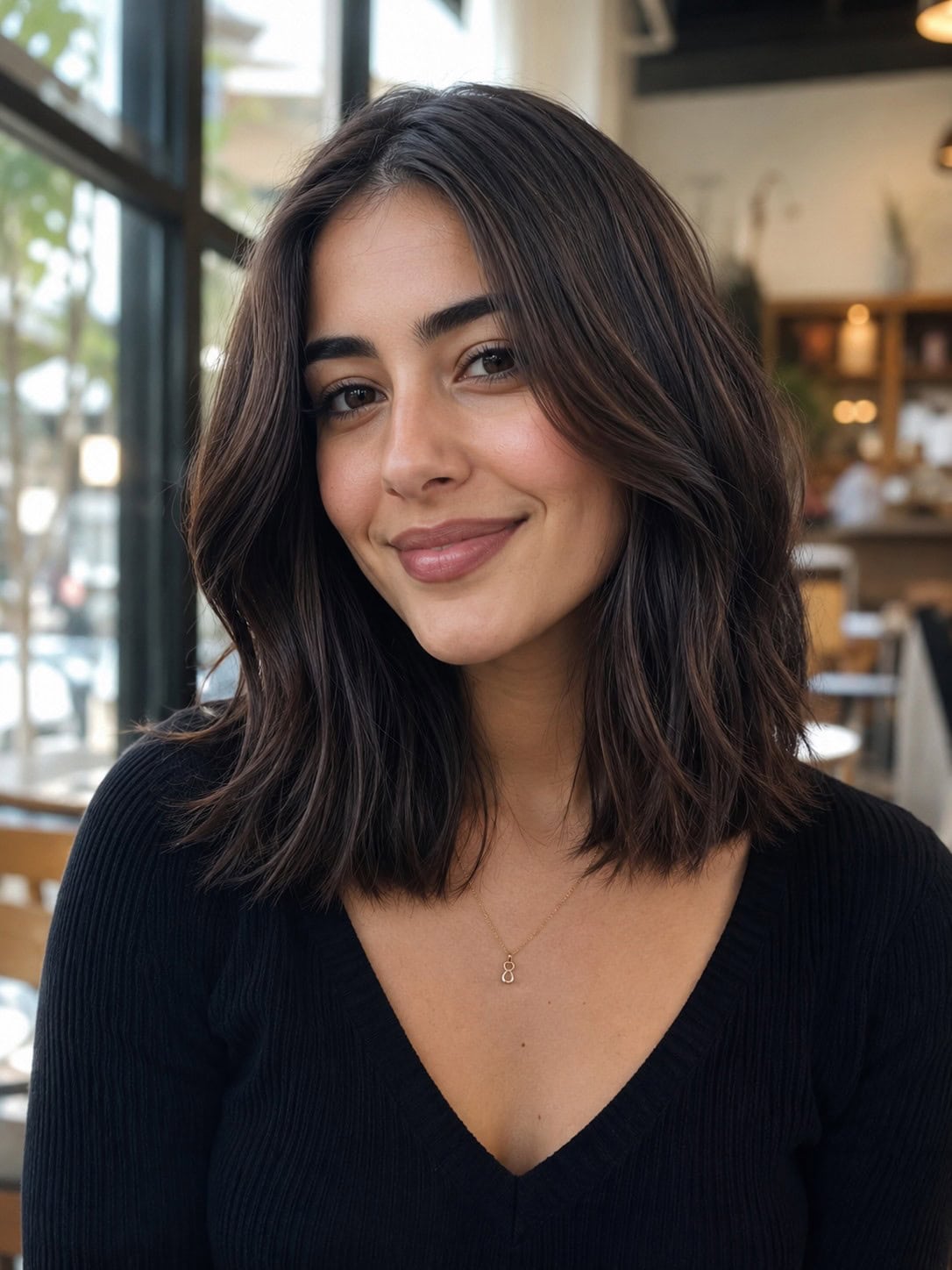
Bittersweet chocolate sits darker and more cocoa-forward than rich chocolate brown, with a slightly bitter quality that distinguishes it from sweeter warm chocolates. The shade leans cool-neutral rather than fully warm. Bittersweet covers gray comfortably and ages between touch-ups gracefully because the slightly cool undertone resists brassy warm drift. This version suits women who like chocolate brown but want something less obviously warm.