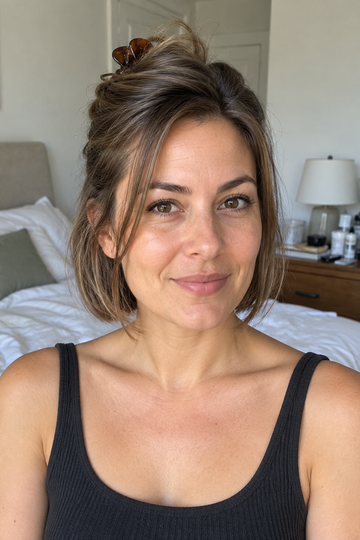
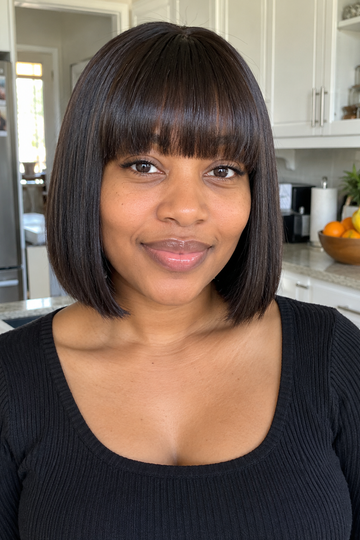
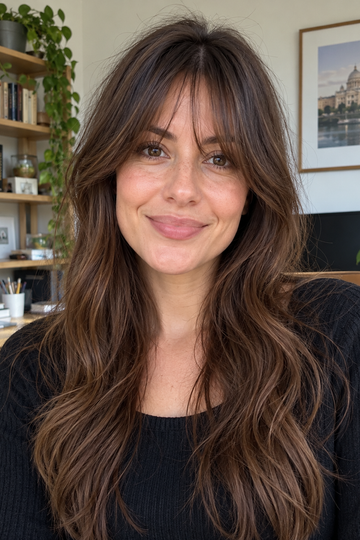
The truth about black hair color is that it almost never sits at one single tone in the most flattering versions. True jet black, painted flat onto every strand, can come across matte and dimensionless under harsh light. Black hair that looks expensive in photos almost always has subtle undertones, glossing treatments, or strategic dimension built into it. Whether that means a violet cast, hidden vivid panels, or hand-painted darker shades within the black, every option below treats black as a starting point rather than a final destination.
Jump to:
- Jet Black With High-Shine Gloss
- Cool Blue-Black
- Violet-Toned Raven Black
- Black With Subtle Red Undertone
- Soft Lifted Off-Black
- Black Cherry
- Deep Mahogany Black
- Espresso Near-Black
- Burgundy Wine Black
- Dark Auburn on a Black Base
- Cherry Cola Black
- Hidden Fire Red Underlayer
- Plum Peekaboo Beneath Black
- Black With Burgundy Money Piece
- Multi-Tonal Dimensional Black
- Espresso Balayage on Black
- Black to Dark Cherry Ombré
- Subtle Mahogany Lowlights
- Sleek Black Bob With Red Glaze
- Long Black With Cherry Cola Tips
- Black With Hidden Teal Panel
- Charcoal Smoky Black
- Dark Copper Streaks on Black
- Two-Tone Black and Burgundy Split
- Onyx Black With Subtle Dimension
Jet Black With High-Shine Gloss
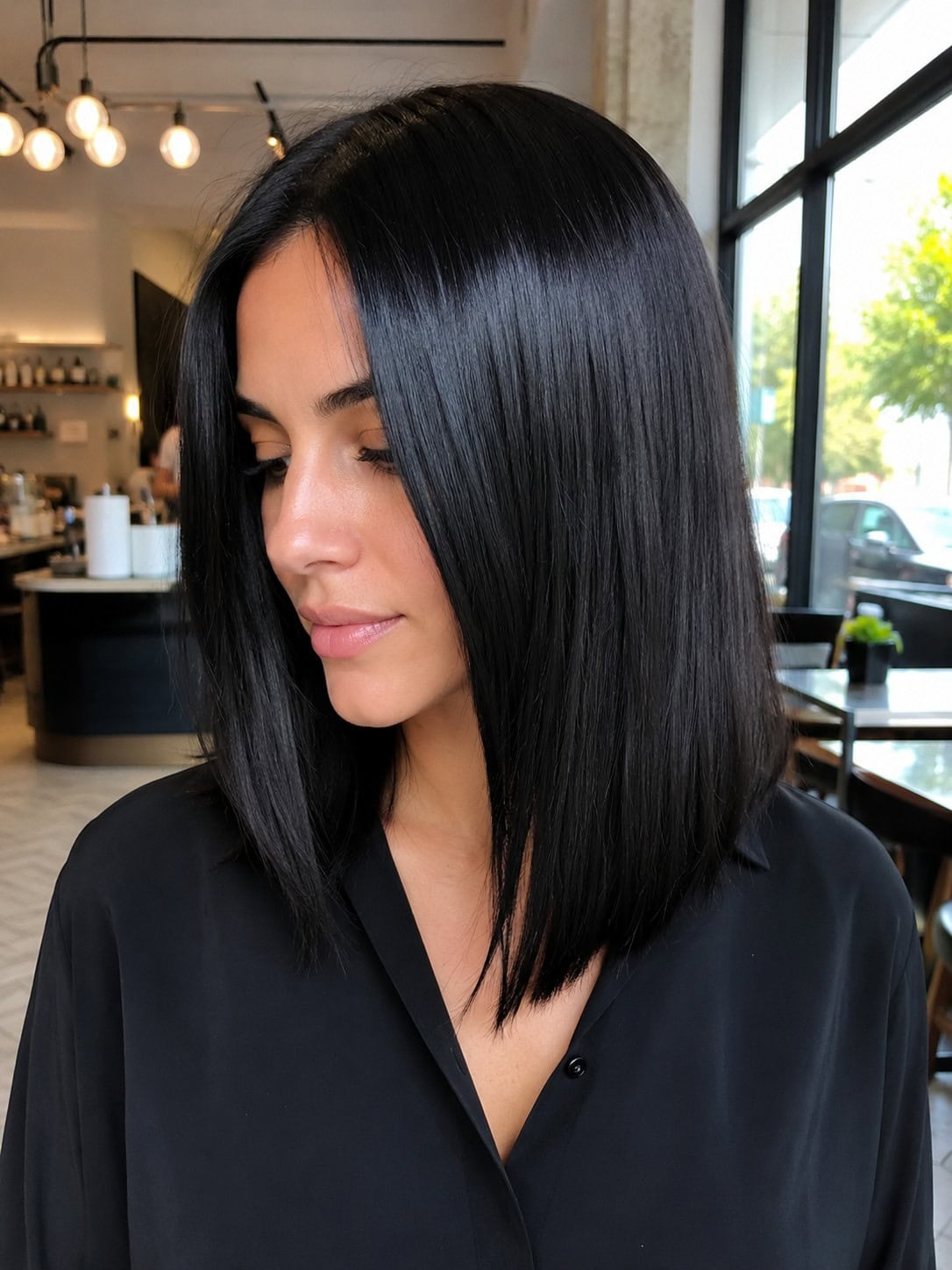
Jet black hair finished with a high-shine clear gloss treatment delivers the cinematic version of true black. The gloss seals the cuticle so light bounces off the surface evenly rather than absorbing into the strand. Black hair without glossing often comes across matte and flat, which is the opposite of the polished editorial look. Glossing treatments last six to eight weeks between salon visits and add depth without changing the underlying color.
Cool Blue-Black
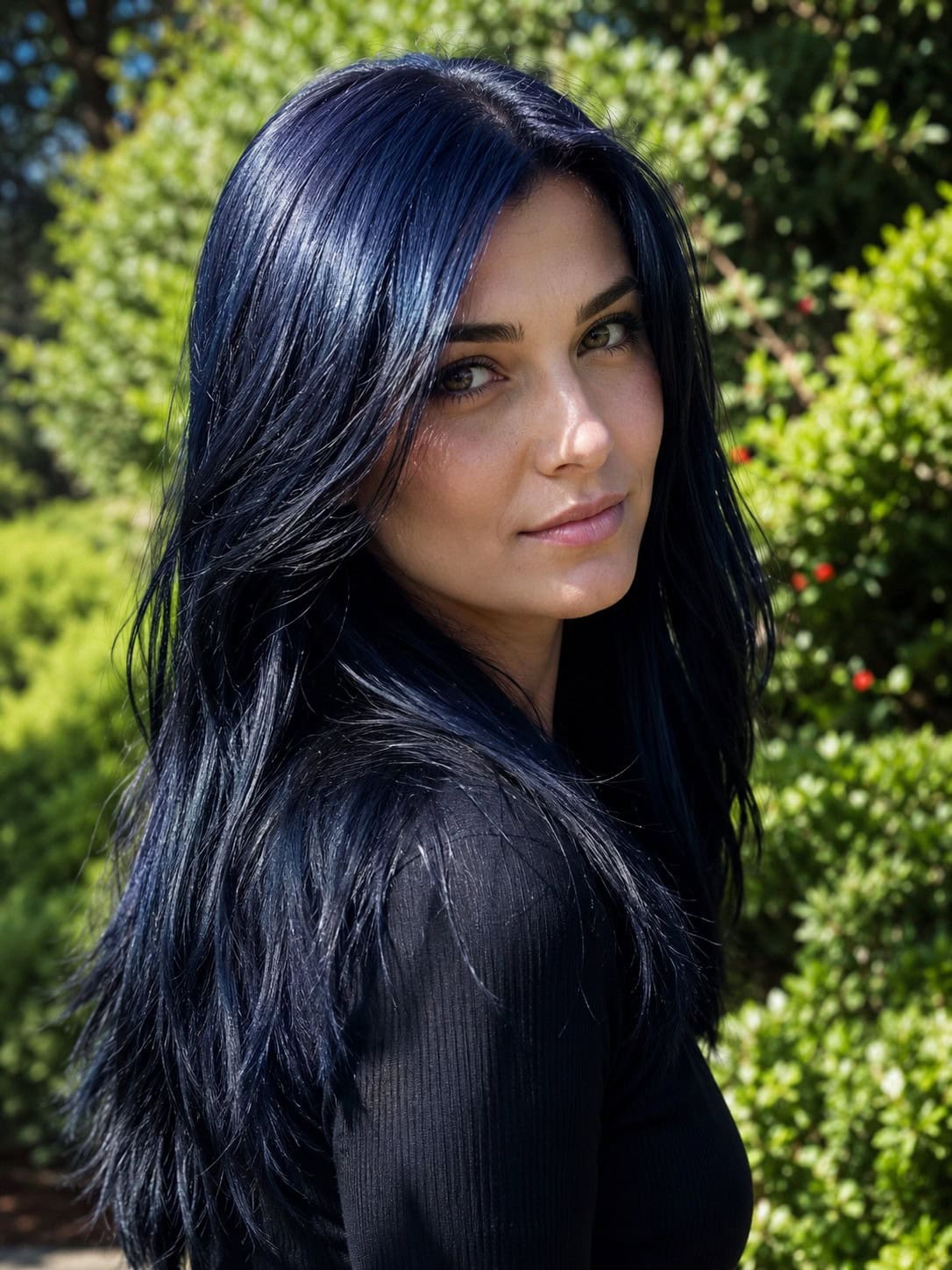
Cool blue-black pulls subtle blue undertones through true black hair, creating depth that appears almost cinematic under bright light. The blue quality lives in the toner choice rather than additional dye level. Blue-black drifts warm over time as the blue tones fade first, so cool-toned conditioners and color-depositing blue treatments belong in the maintenance routine. This shade flatters cool-toned women particularly well, especially those whose natural pigments lean cool already.
Violet-Toned Raven Black
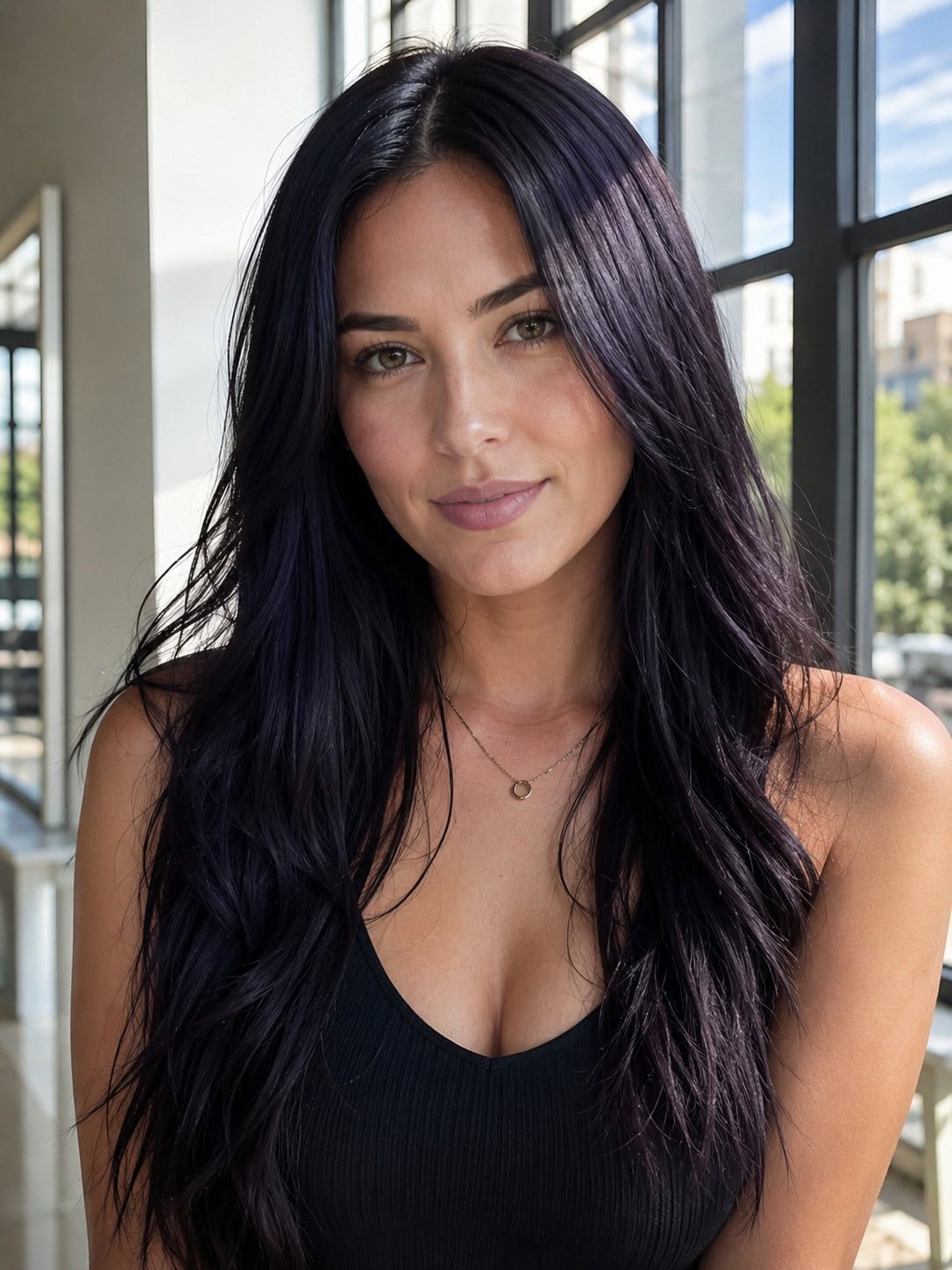
A violet gloss applied over jet black hair adds a barely-perceptible purple cast that reveals itself only when light catches the strands at the right angle. The result lands more sophisticated than obvious purple, since the purple sits beneath the black rather than competing with it. Violet toning also neutralizes any unwanted red warmth that black hair sometimes develops over time. Glossing visits happen every six weeks to maintain the cool quality.
Black With Subtle Red Undertone
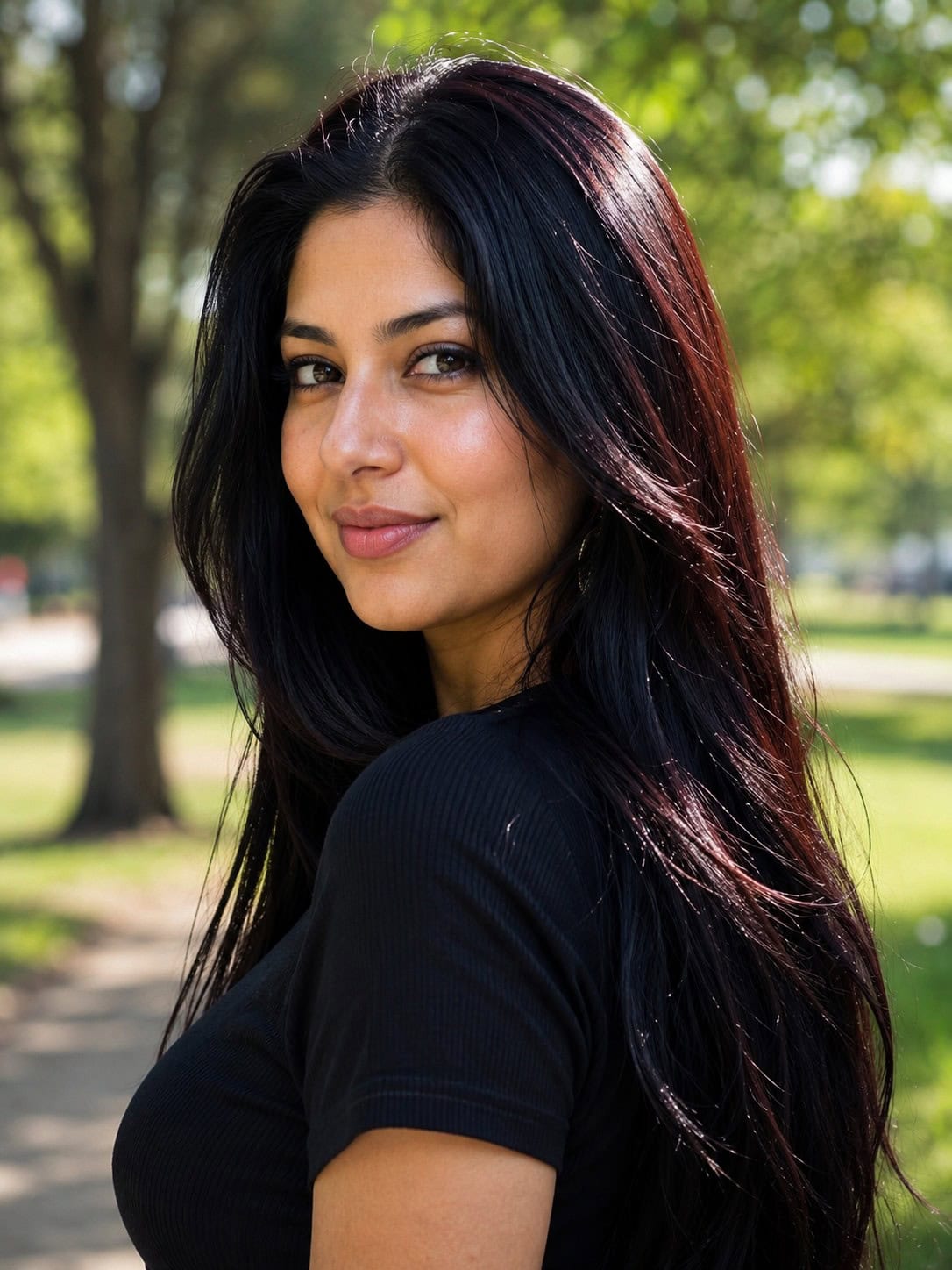
For warmth without commitment to obvious red, a subtle red-toned gloss layered over black hair creates the dual-personality effect. In standard lighting the hair appears simply black. Under direct sunlight or warm indoor bulbs, the red undertone reveals itself in the strands. Warm-toned women find this version particularly flattering since the red harmonizes with warm complexions. The gloss treatment fades gradually rather than dramatically over six to eight weeks.
Soft Lifted Off-Black
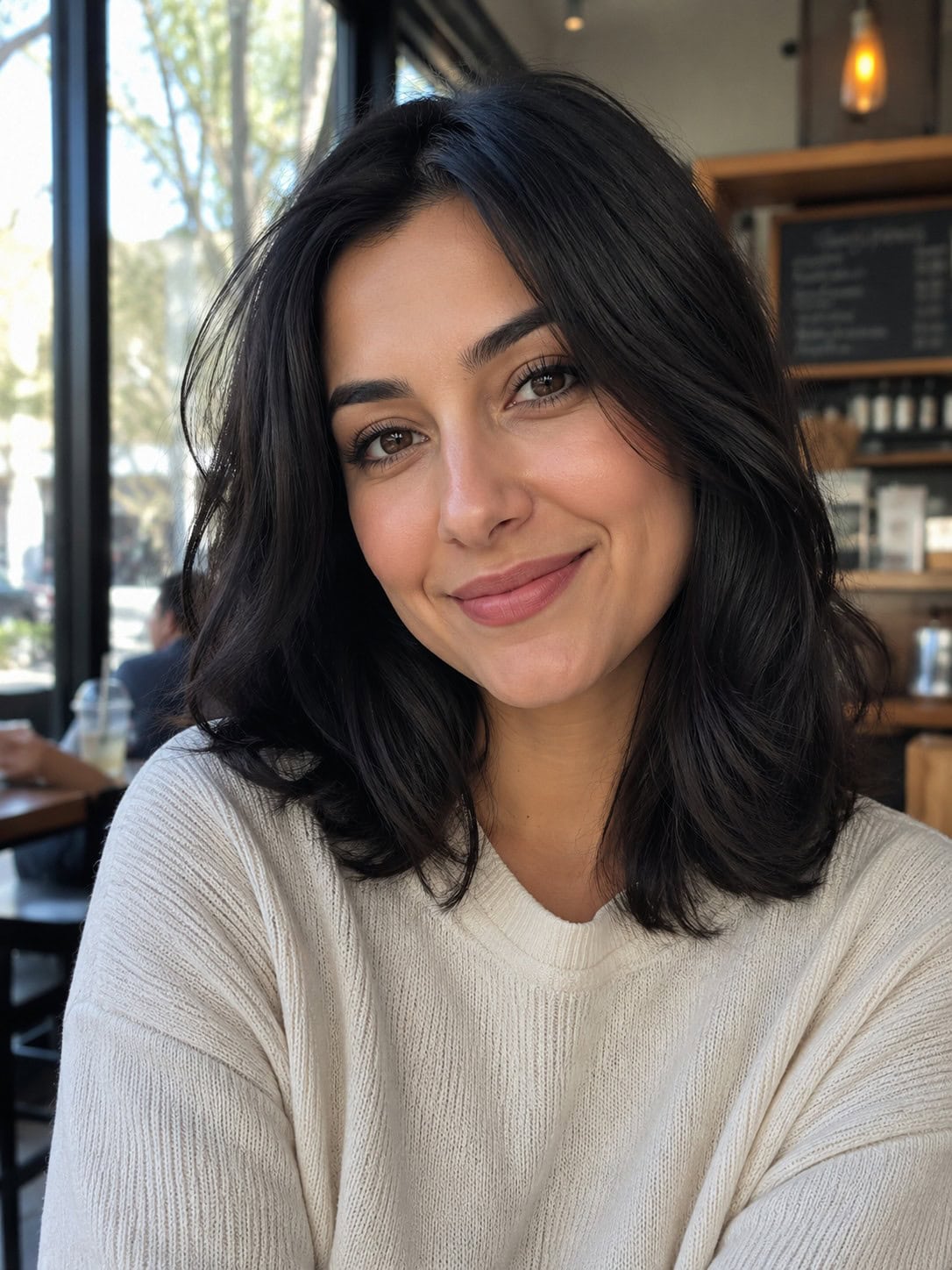
Soft off-black sits one tiny step lighter than true black, the difference invisible to most observers but transformative for women who find pure black too harsh against their complexion. Stylists achieve this by lifting black hair just enough to remove the stark quality without losing the dark depth. The shade flatters women whose skin pulls cool or whose features get overpowered by true black. Touch-ups happen every six to eight weeks.
Black Cherry
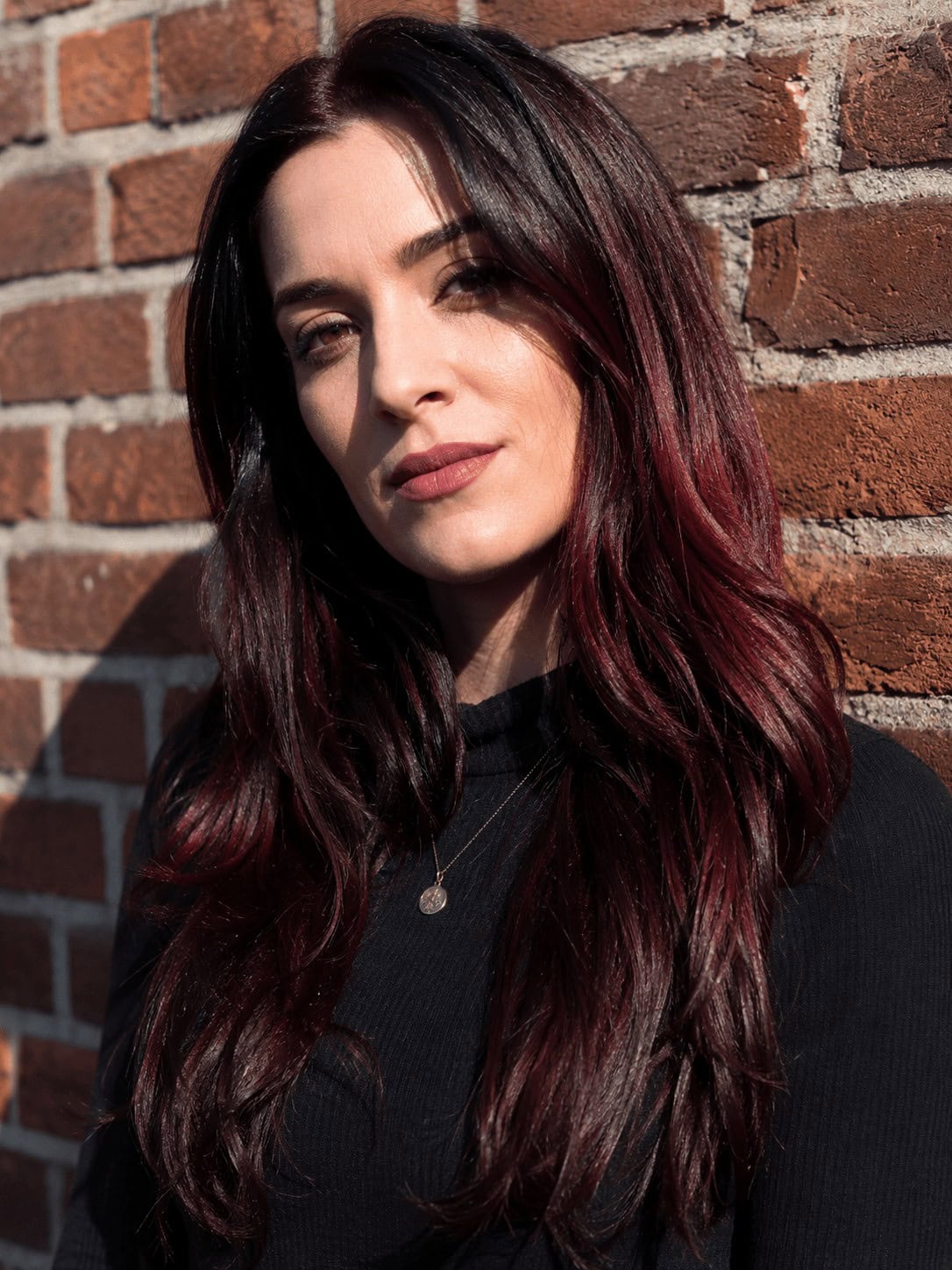
Black cherry sits within the black family but pulls a deep wine-red undertone through the base, creating depth that shows red only when light hits directly. In standard lighting, the shade looks black. Under sunlight, the cherry quality reveals itself in the strands. This dual-personality makes black cherry especially flattering for women who want red without obvious red commitment. Touch-ups happen every six to eight weeks since the red molecules fade faster.
Deep Mahogany Black
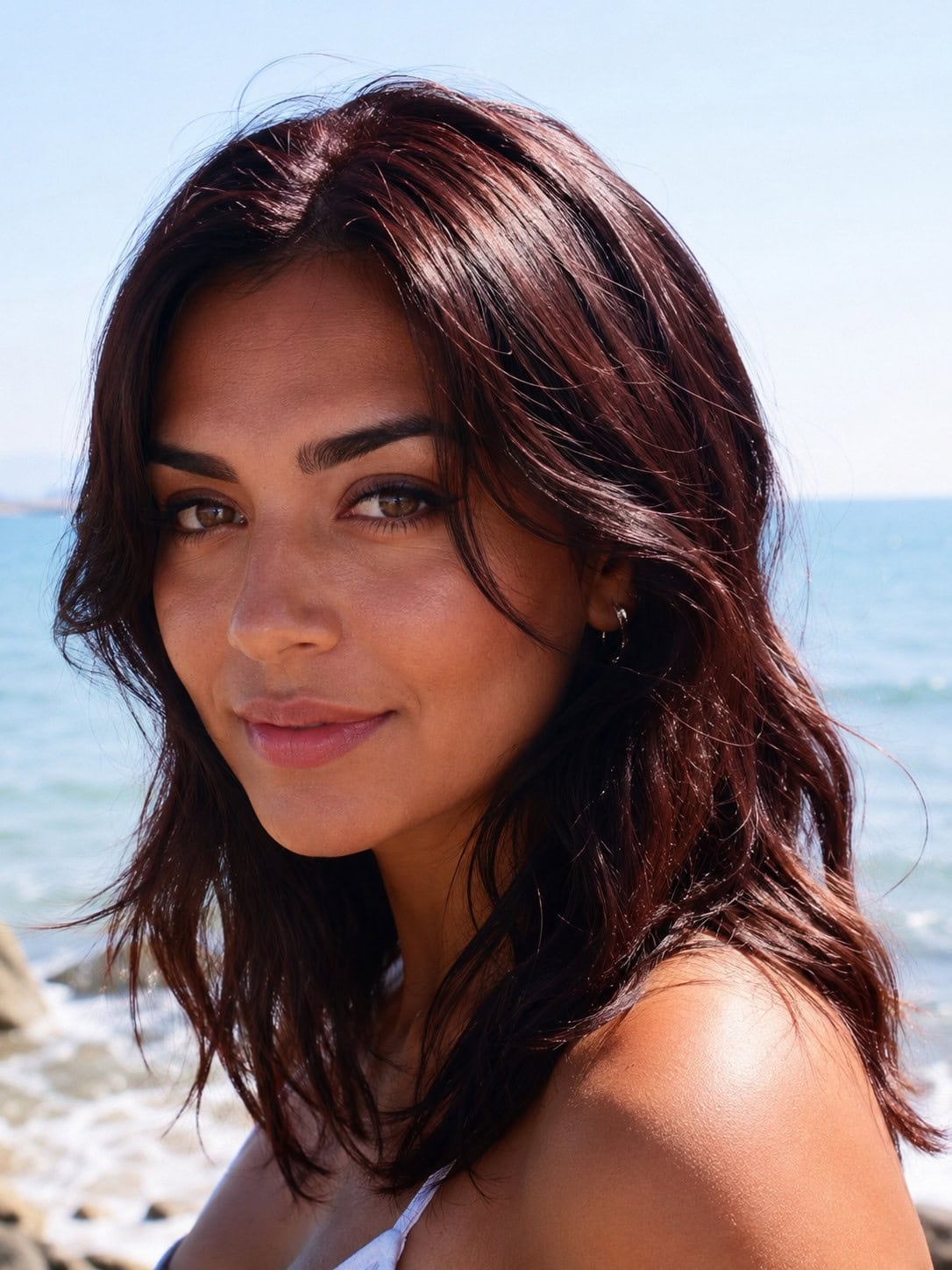
Deep mahogany sits just lighter than black but stays clearly within dark territory, with strong red-brown undertones pulling through the base. The shade lands richer than black cherry because the red dominates more visibly. Mahogany flatters warm and olive skin tones beautifully. Color-depositing red conditioners between salon visits extend the wear time of the warm undertone. Stylists often combine multiple mahogany shades for added dimension within a single application.
Espresso Near-Black
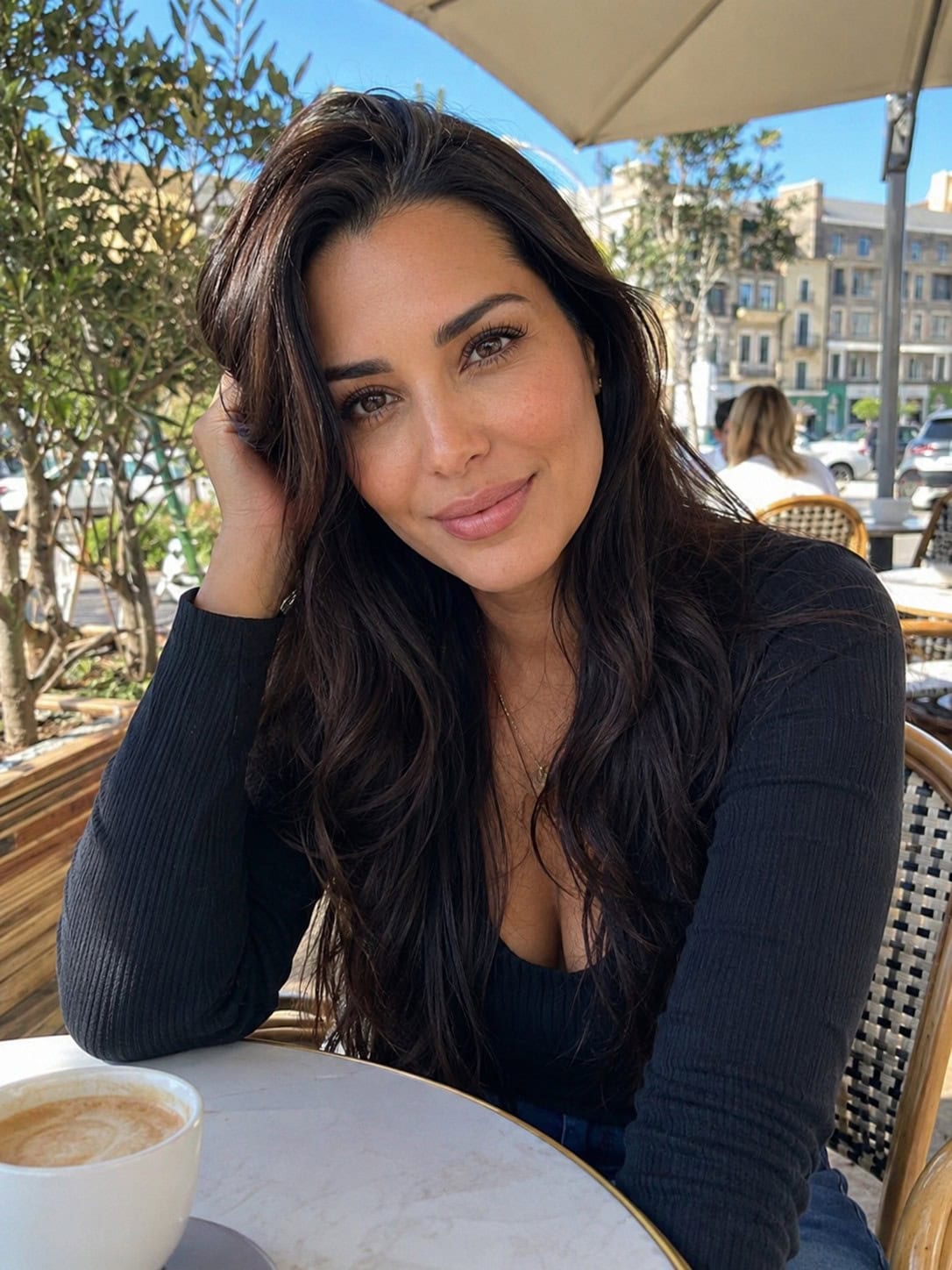
Espresso brown sits one level above true black, with a warm coffee undertone that keeps the shade from looking flat. The slight warmth bridges cool and warm complexions, making espresso one of the most universally flattering dark shades. Espresso covers gray comfortably while staying lighter than black, which means regrowth shows less aggressively. Stylists recommend espresso for women considering black who want softness rather than starkness in the result.
Burgundy Wine Black
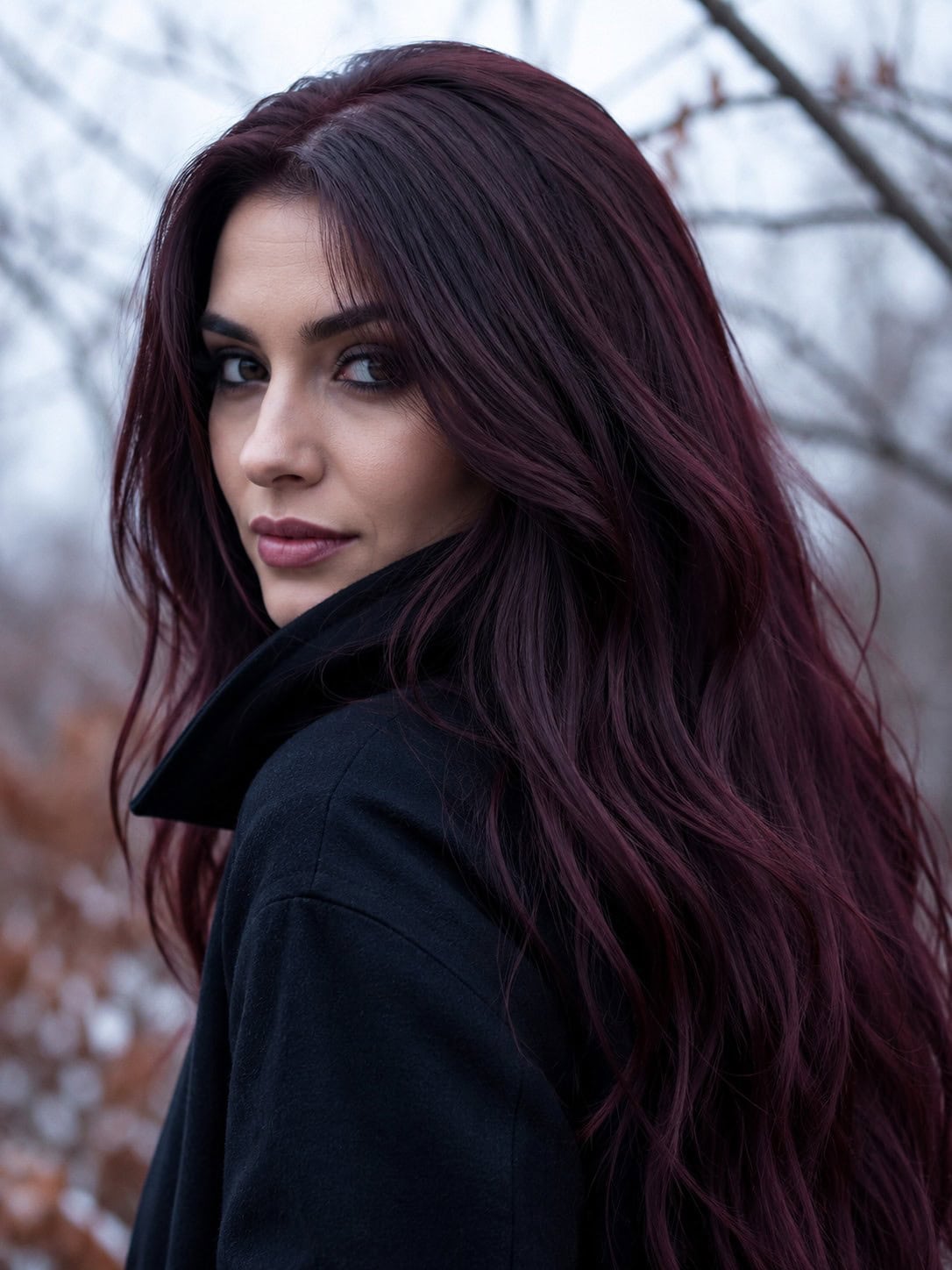
Burgundy wine black combines the deepest wine-red undertones with a near-black base, creating a sultry sophisticated finish that lives between true black and obvious burgundy. The shade flatters cool-toned skin particularly well because the wine undertone harmonizes with cool complexions. The deep base extends fade time compared to brighter wine shades. Color-safe shampoo and cool-water washing matter especially here to slow red molecule fade.
Dark Auburn on a Black Base
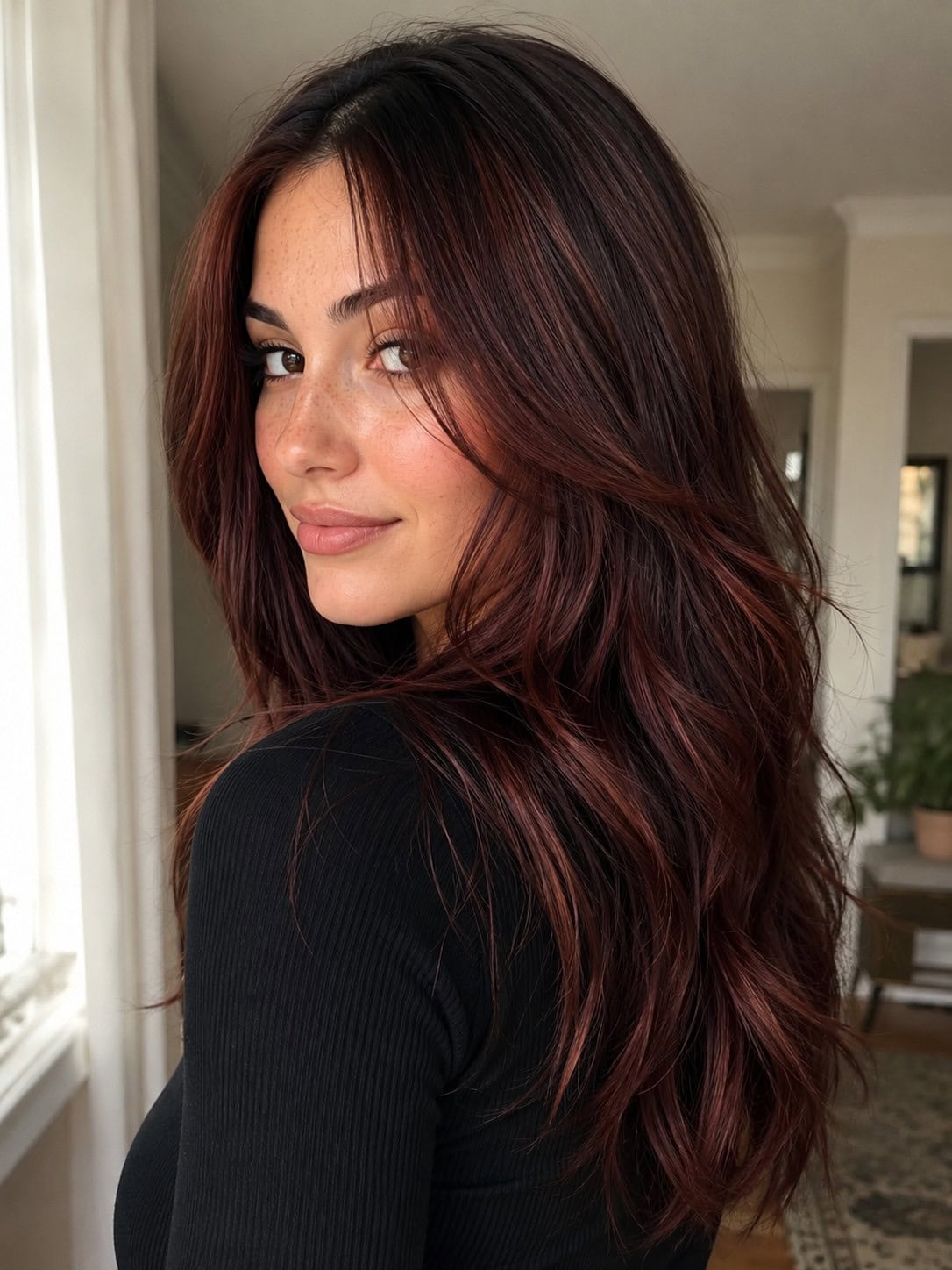
Lifting black hair just enough to deposit dark auburn creates a rich red-brown that pulls warmer and more obviously red than mahogany. The shade requires careful lifting since red molecules need a slightly lifted base to deposit cleanly. Auburn against the residual depth of pre-lifted black hair creates dimension that all-over auburn dye cannot match. Touch-ups happen every six weeks given the red fade pattern typical of all auburn shades.
Cherry Cola Black
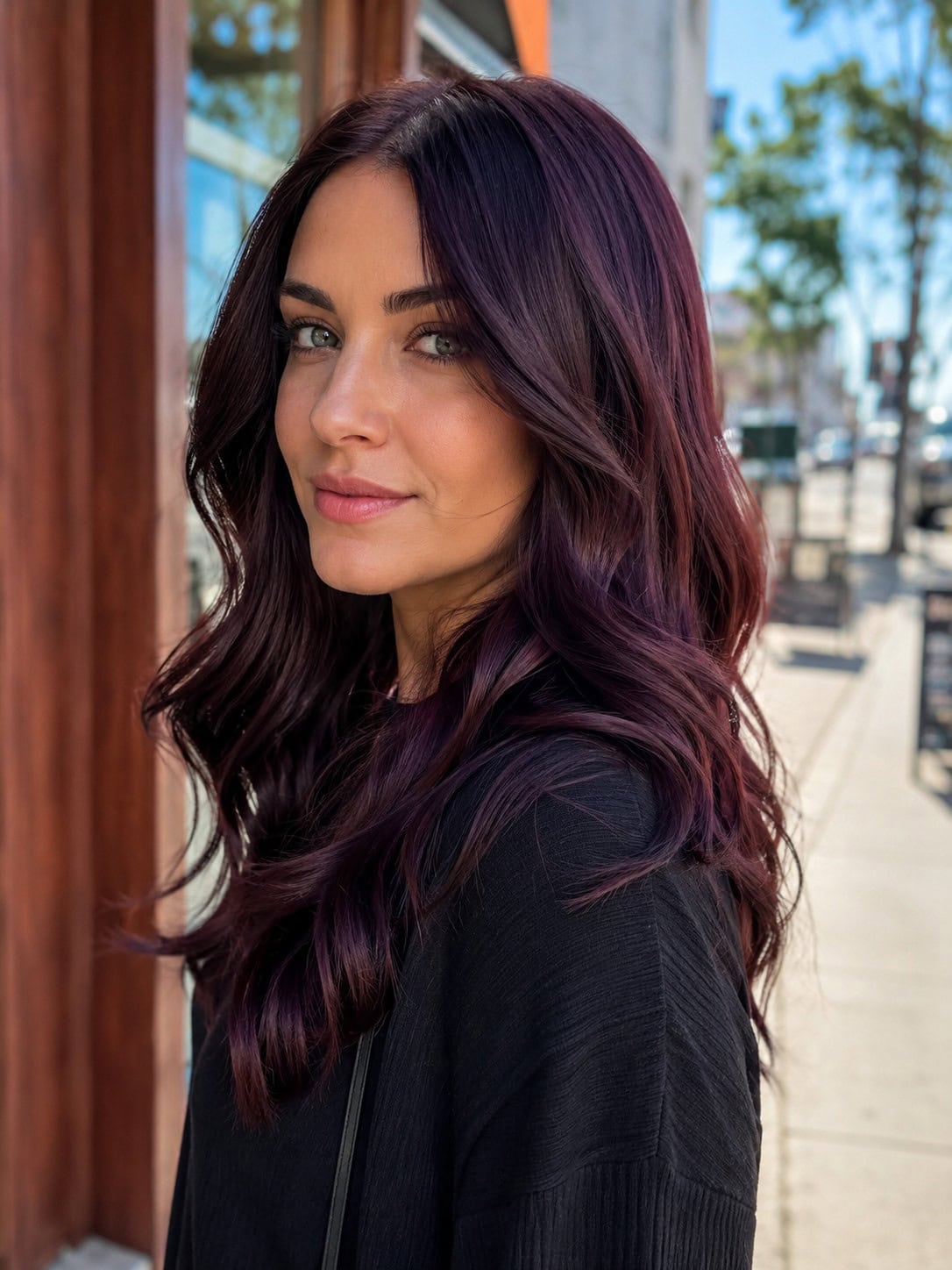
Cherry cola combines deep black-brown with red-brown undertones plus a slight purple cast, creating a shade that resembles its namesake drink. The complex undertone gives cherry cola visual dimension that flat single-tone darks cannot achieve. The purple-red quality flatters cool-toned skin best. Like all red-family shades, cherry cola requires color-safe maintenance routines to slow the fade of the red and purple molecules layered into the formulation.
Hidden Fire Red Underlayer
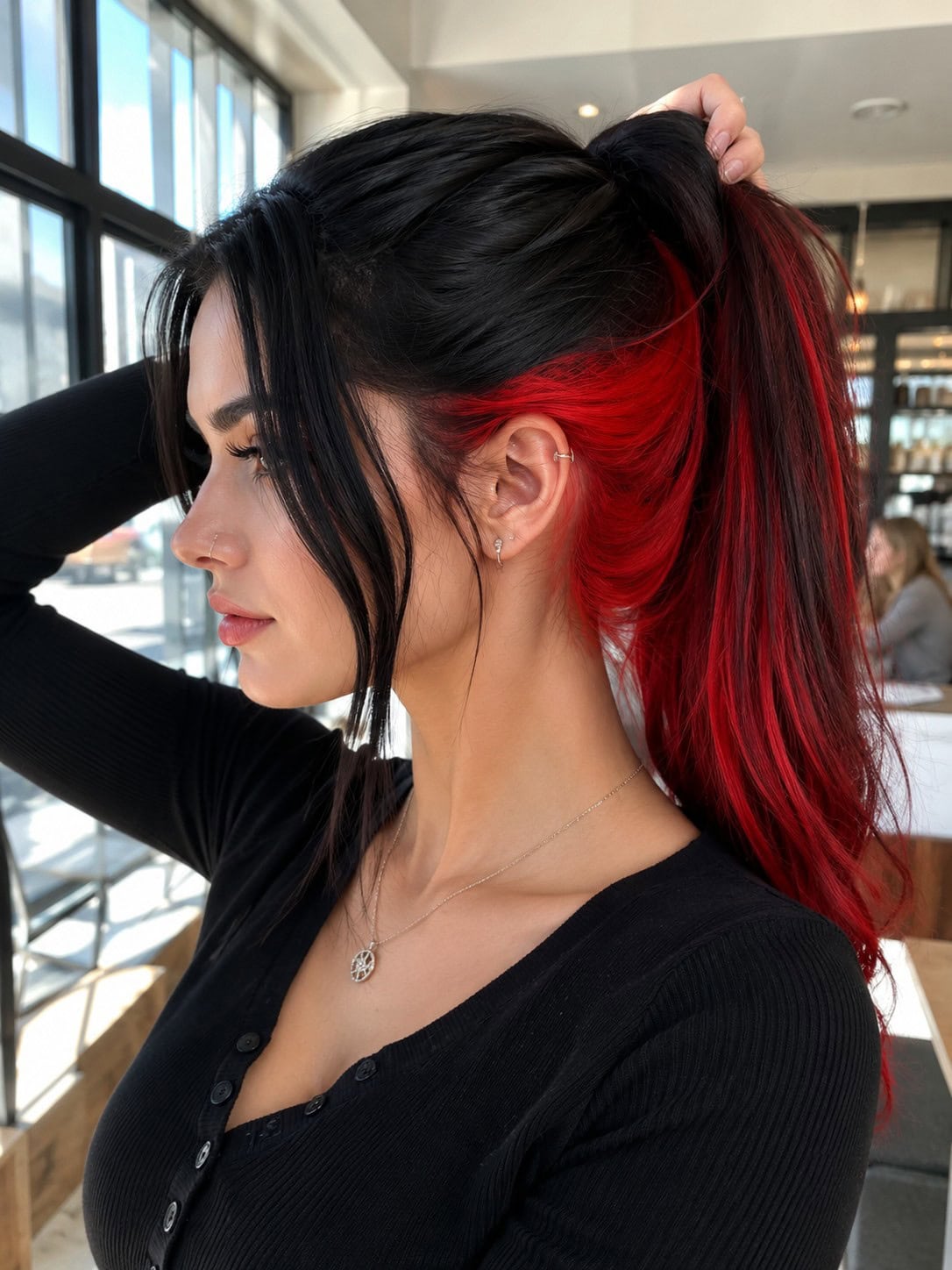
Bright fire-engine red hidden across the entire underlayer of black hair creates a dramatic reveal when the hair pulls up or tucks behind an ear. The contrast between true black on top and saturated red beneath delivers maximum visual impact in any reveal moment. Pre-lifting the underlayer requires multiple sessions to lift past the resistant black base, but the result holds for weeks. Refresh the red every four to six weeks.
Plum Peekaboo Beneath Black
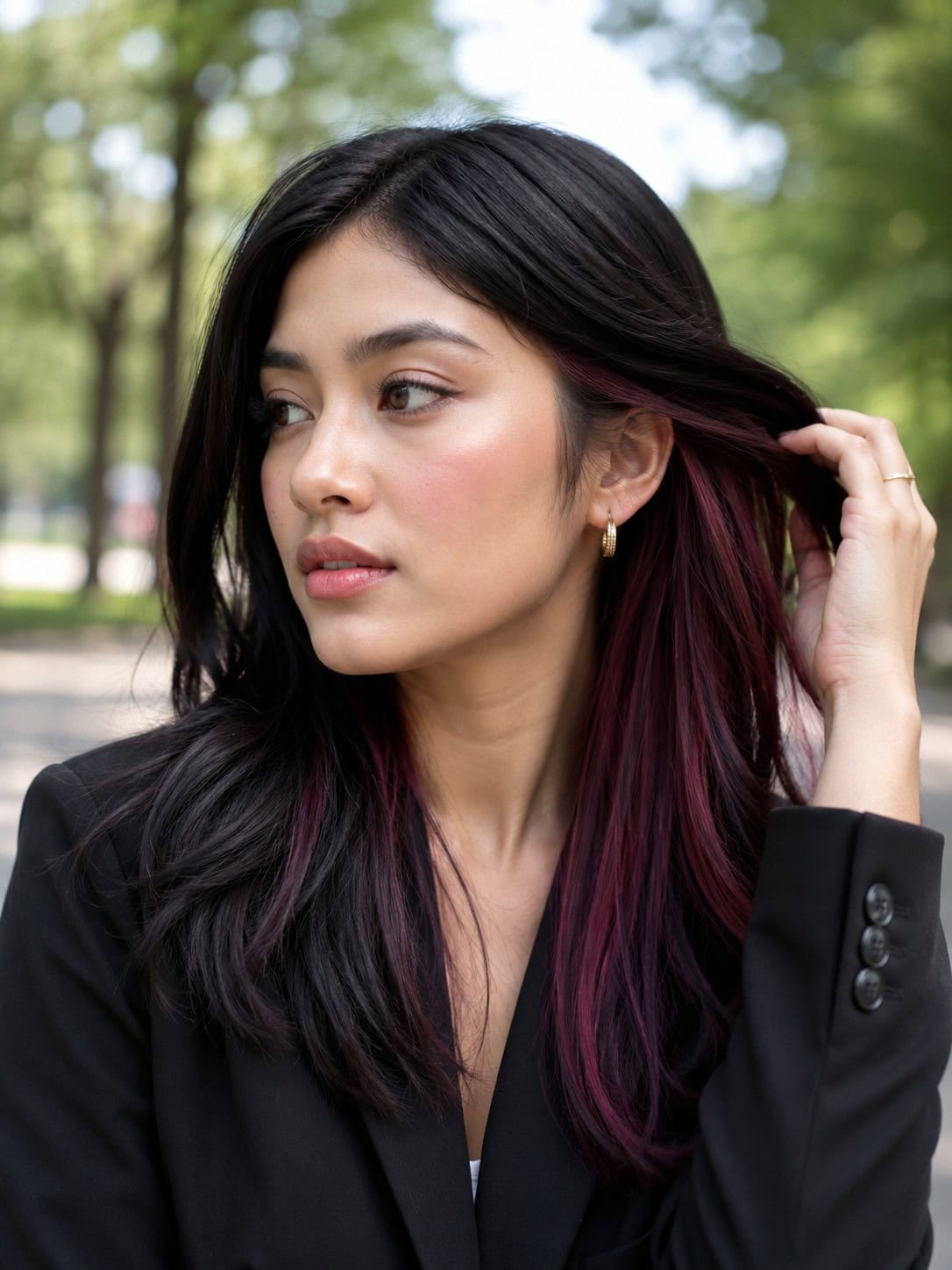
Plum peekaboo panels hidden beneath jet black hair offer a more sophisticated alternative to brighter red or purple peekaboos. The wine-purple shade harmonizes with the black base rather than fighting it, creating a moodier reveal moment when hair is tucked. Plum requires only moderate pre-lifting since the deep purple tolerates a slightly darker base than vivid hot pink or yellow. The hidden zone covers just the underside layer.
Black With Burgundy Money Piece
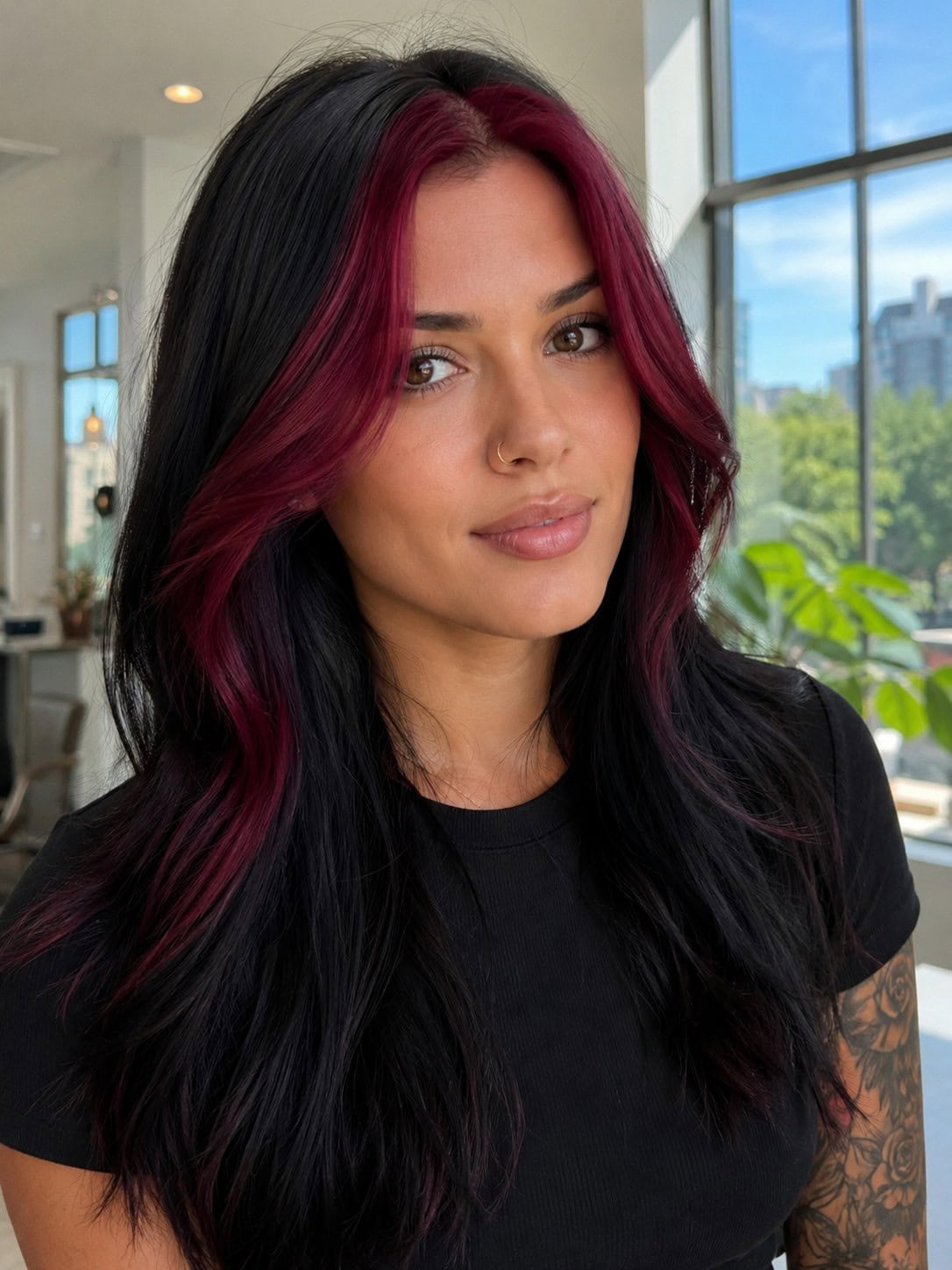
Burgundy money piece sections placed at the front of jet black hair concentrate red intensity where it frames the face most directly. The two burgundy strips start at the temples and run through the lengths, creating a strong facial frame against the otherwise black base. The rest of the hair stays its natural black, keeping the maintenance focused on just those two front pieces. Touch-ups happen every six weeks.
Multi-Tonal Dimensional Black
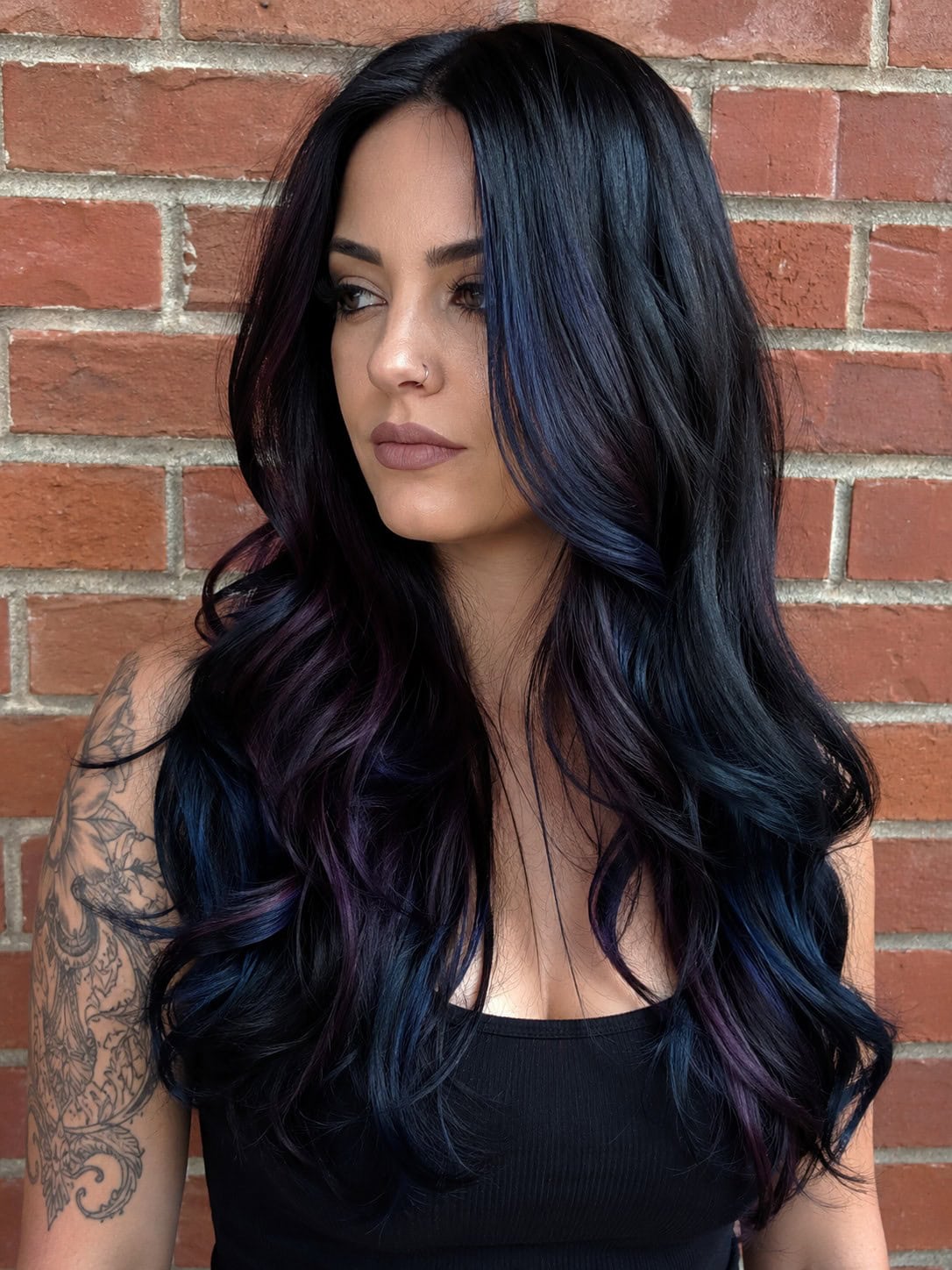
Multi-tonal dimensional black layers several variations of black within the same application, often combining true black, blue-black, and violet-black across different sections. The result lands less flat than single-tone black because the eye picks up subtle variation throughout the hair. Stylists hand-paint the variations rather than applying them in distinct zones, creating dimensional depth invisible from a distance but visible up close. This approach extends visual richness significantly.
Espresso Balayage on Black
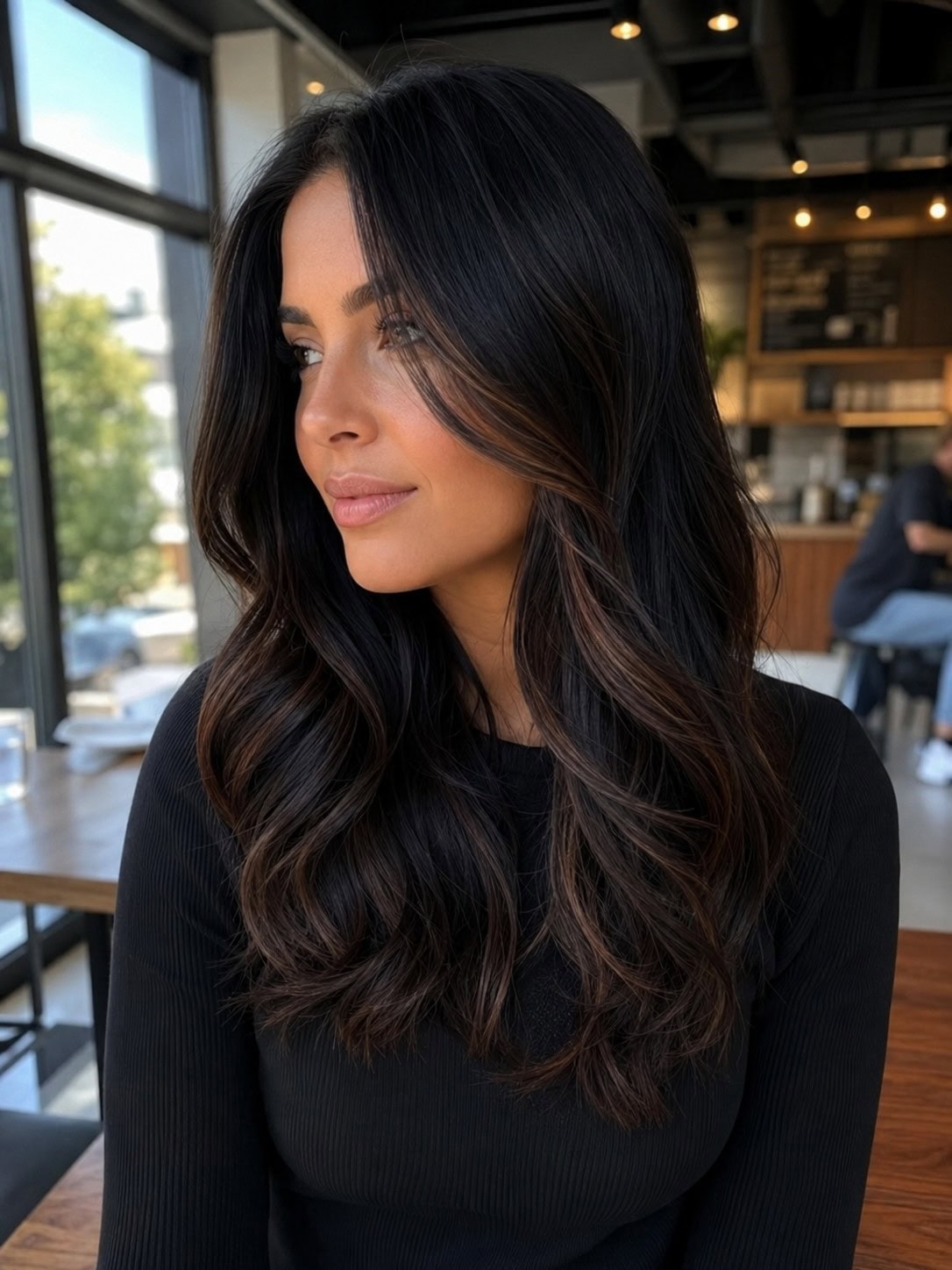
Hand-painted espresso balayage placed onto a black base brings subtle dimension to flat black hair without sacrificing the dark identity. The painted sections sit only one level lighter than the base, which keeps the overall hair clearly dark while adding movement. Espresso suits black hair particularly well because the warm coffee undertone bridges the dark base into a warmer overall finish. Touch-ups happen every twelve weeks given the grown-out painted technique.
Black to Dark Cherry Ombré
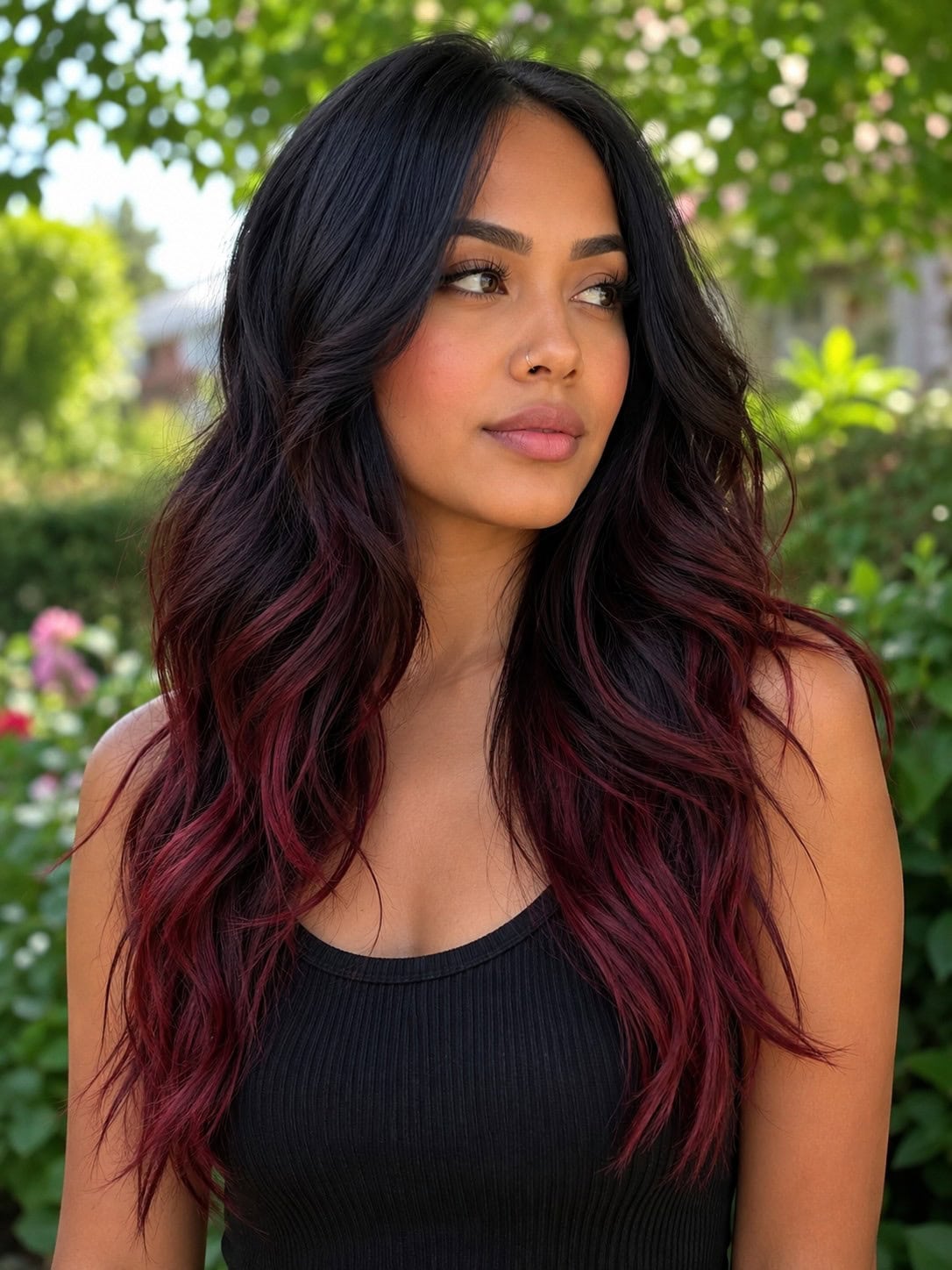
A black root melting into dark cherry through the lengths and ends creates an ombré entirely within the dark color family. The transition zone sits around chin level, framing the face in true black before the red emerges below. The lengths require lifting before depositing cherry, but the dark roots stay untouched, which extends the salon visit interval significantly. Regrowth blends seamlessly into the black top by design.
Subtle Mahogany Lowlights
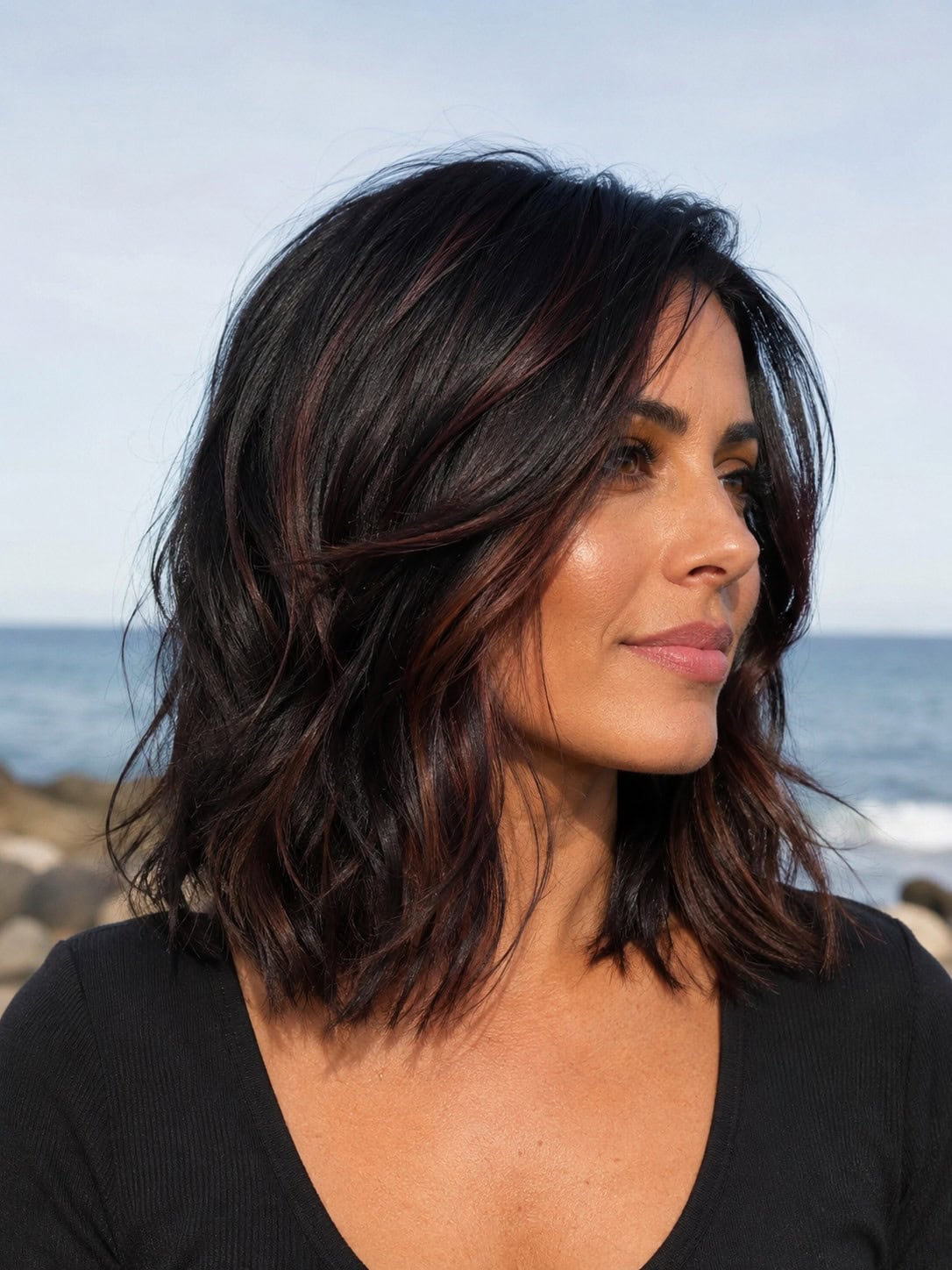
Subtle mahogany pieces woven through black hair add red-brown depth without lifting the overall color into noticeably lighter territory. The mahogany sections sit slightly lighter than pure black while still firmly in dark territory, creating dimension that flat black cannot achieve. Stylists hand-paint these sections for the softest grown-out finish. Touch-ups happen every ten to twelve weeks since the painted technique grows out softly without harsh demarcation.
Sleek Black Bob With Red Glaze
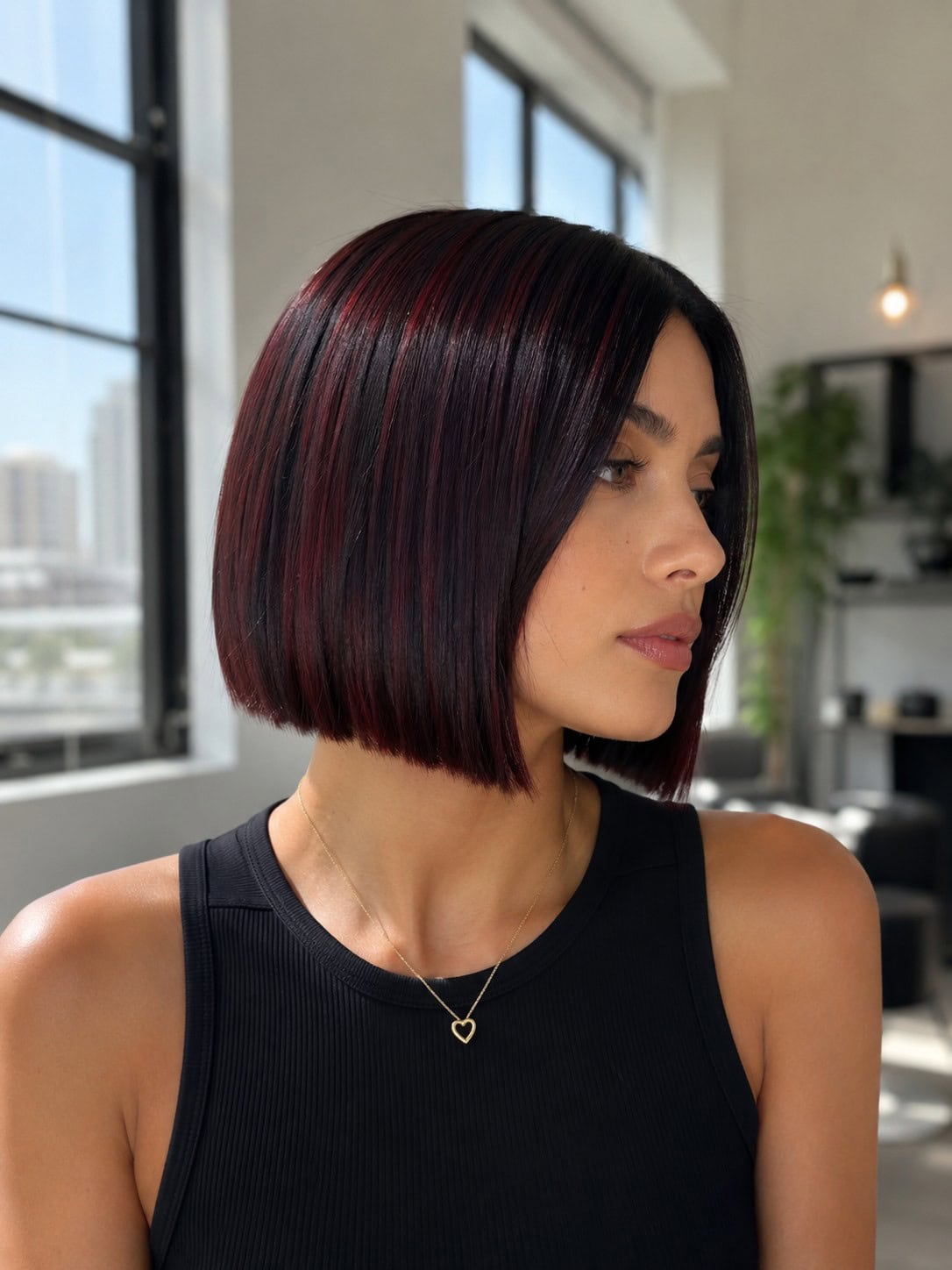
A sharp chin-length black bob finished with a red-tinted glossing glaze takes a classic dark cut into more sophisticated territory. The straight blunt shape shows the black-red shimmer along one long flat surface. The red cast appears only in direct light, which keeps the overall look black while adding subtle warmth. Glossing visits every six weeks maintain the red tint while bond-building treatments keep the bob strong.
Long Black With Cherry Cola Tips
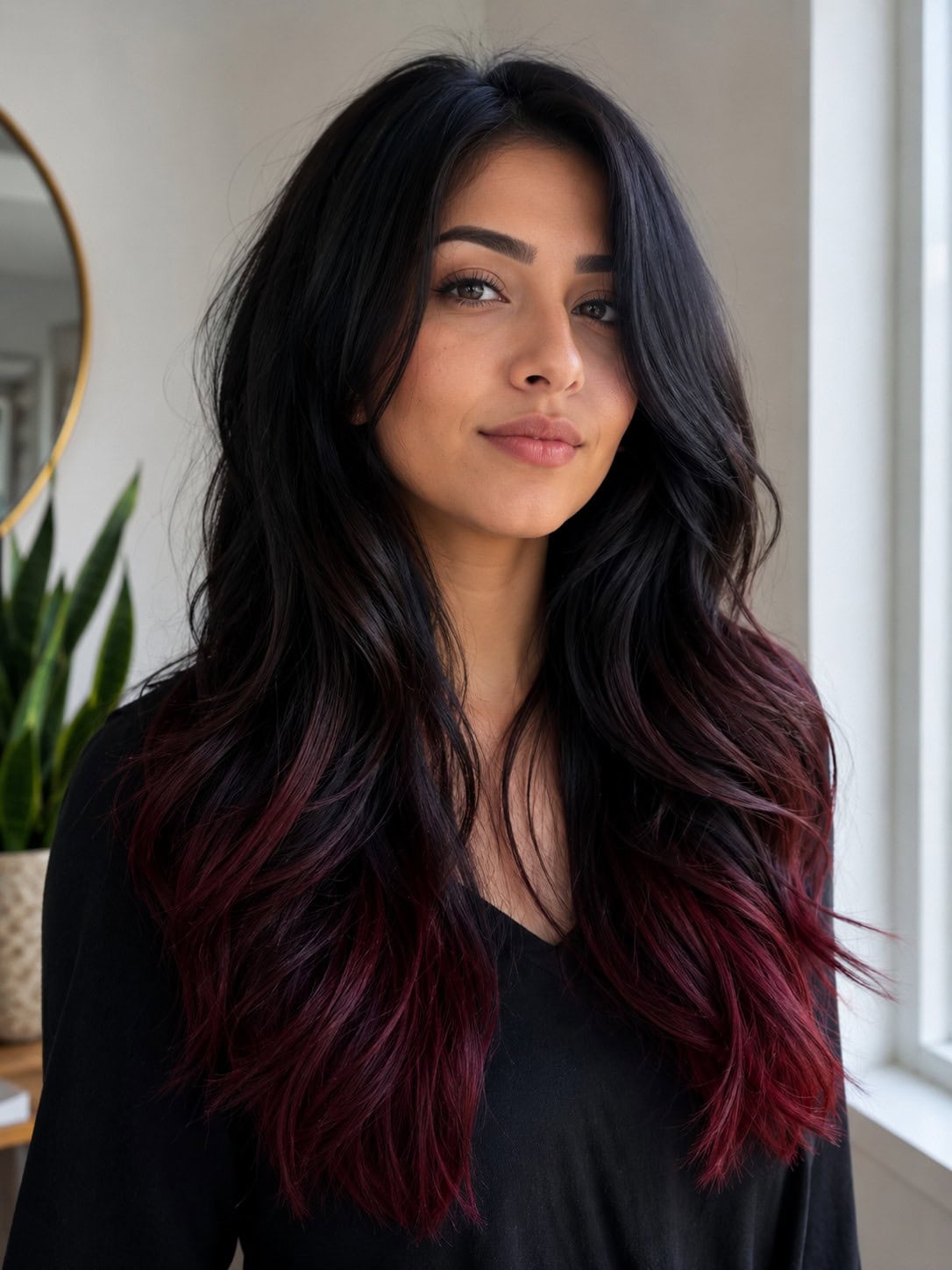
Long black hair with cherry cola concentrated only at the bottom third of the length creates a subtle ombré that lives within the dark family. The transition between true black and cherry cola sits well below the shoulders, which keeps the visible everyday look mostly black. The cherry cola tips reveal themselves when hair pulls into a low ponytail or braid. Lengths require lifting before depositing the cherry cola tone.
Black With Hidden Teal Panel
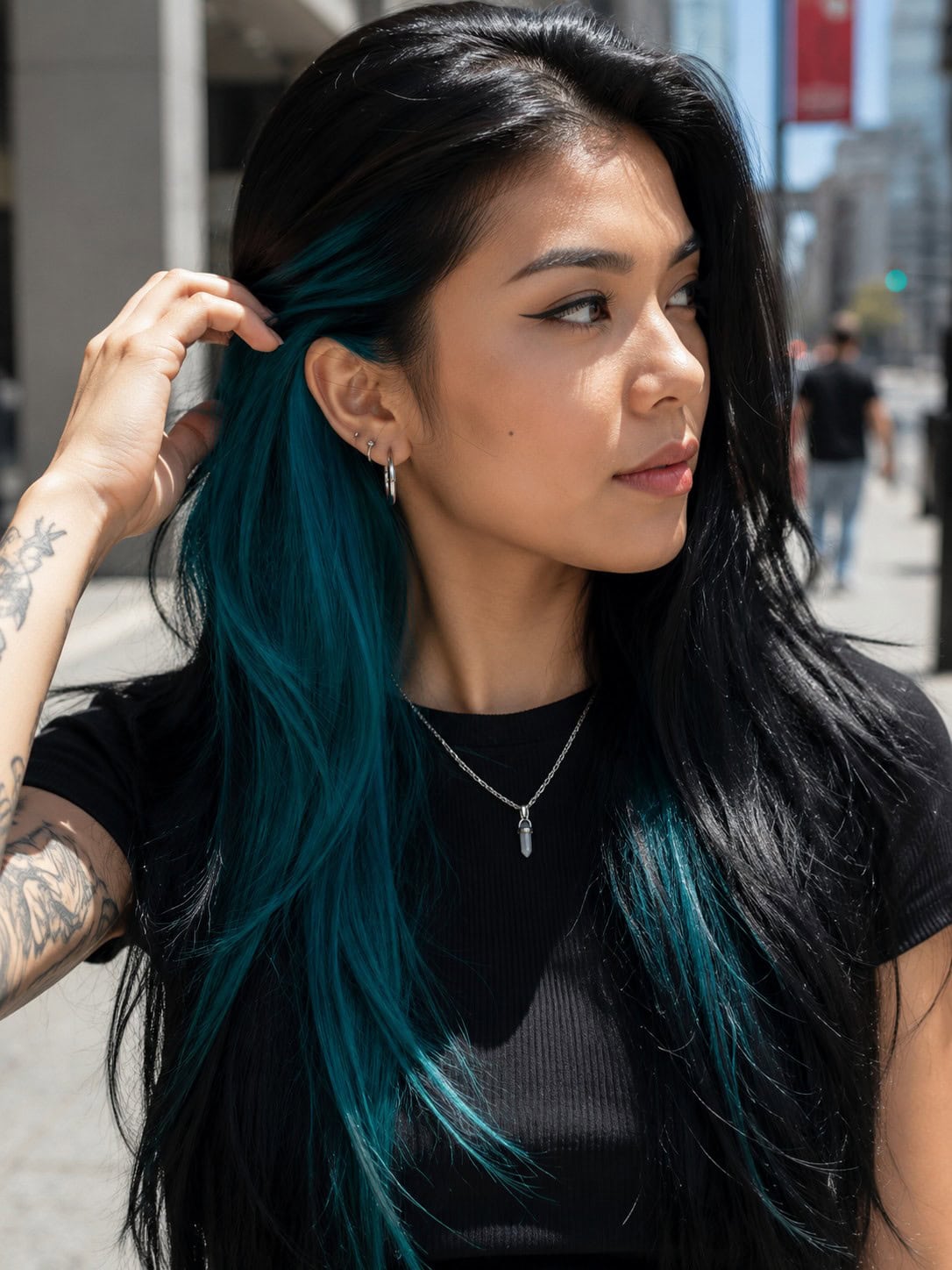
Hidden teal panels beneath black hair offer one of the most unexpected peekaboo combinations because cool teal against true black is a rarer pairing than reds or purples. The cool blue-green panel sits across the underlayer, fully hidden when hair is worn down. Achieving true teal requires aggressive pre-lifting on the resistant black base. The reveal flashes a cool jewel tone that contrasts sharply with the warm-leaning natural quality of black hair.
Charcoal Smoky Black
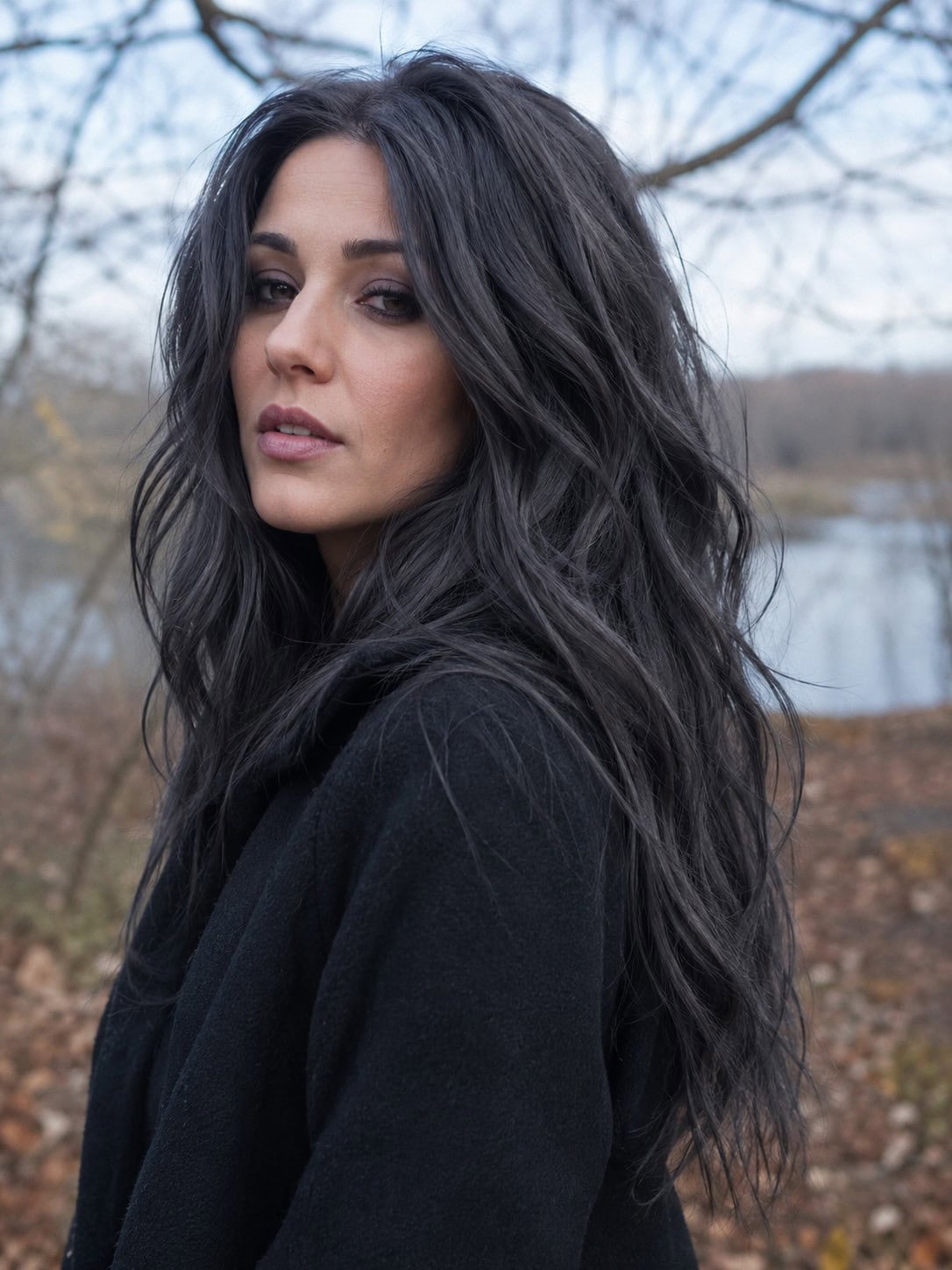
Charcoal smoky black sits just lighter than true black with a deliberately hazy gray-toned finish, creating a moody softer version of the dark base. The smoky quality lives in the toner balance, which leans cool with a muted gray cast. This version flatters cool-toned women particularly well. Stylists usually combine ash and violet toners to land the smoky finish. The shade ages between touch-ups gracefully because the haziness disguises any drift.
Dark Copper Streaks on Black
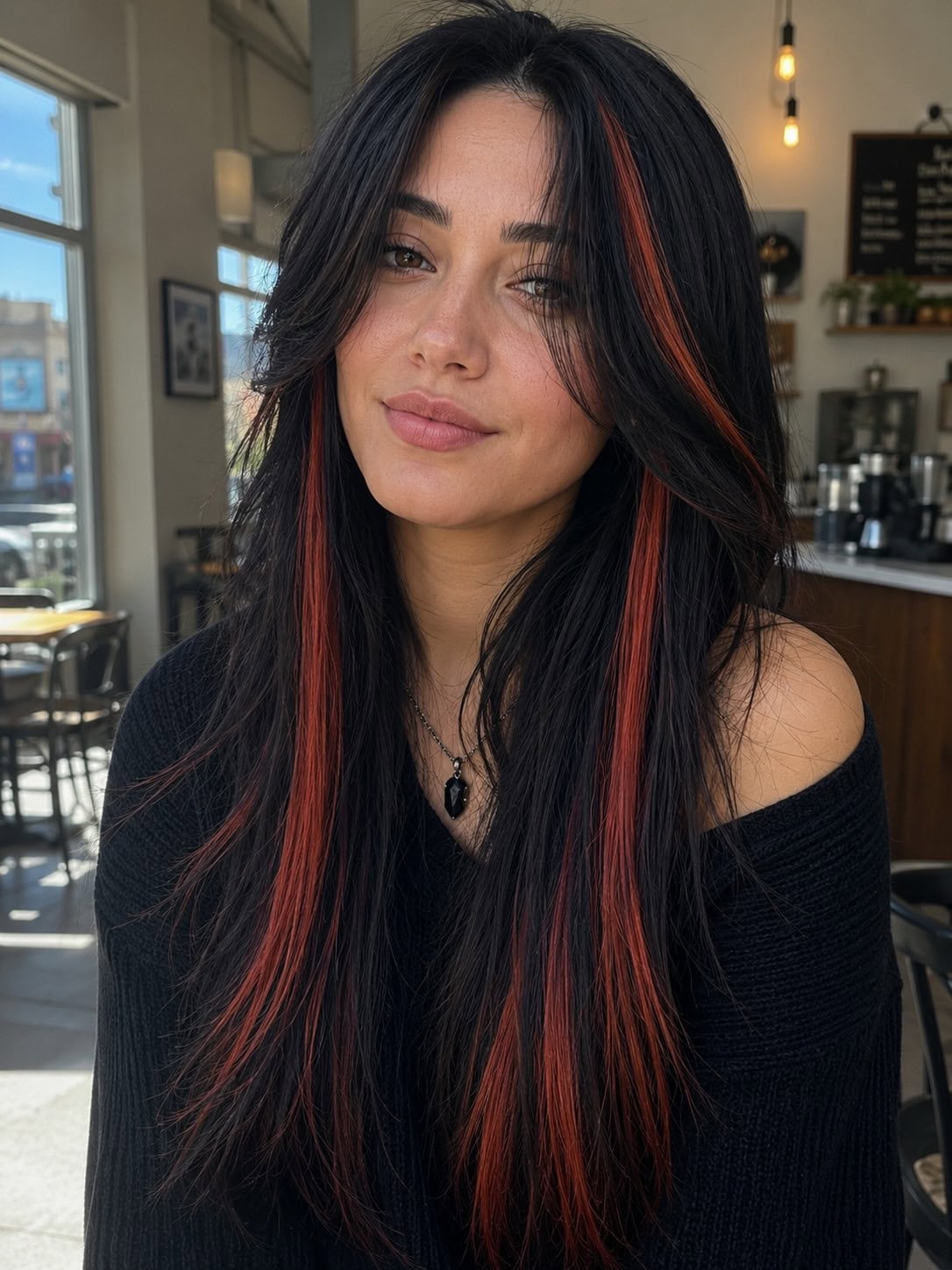
Three to five dark copper streaks placed asymmetrically through black hair create an edgy bold finish without committing to all-over warm color. Each streak requires moderate pre-lifting to deposit the copper clearly. The streaks run the full length of the hair rather than concentrating in any one zone. Dark copper holds longer than brighter copper because the deeper base color masks early fade. Touch-ups every six to eight weeks.
Two-Tone Black and Burgundy Split
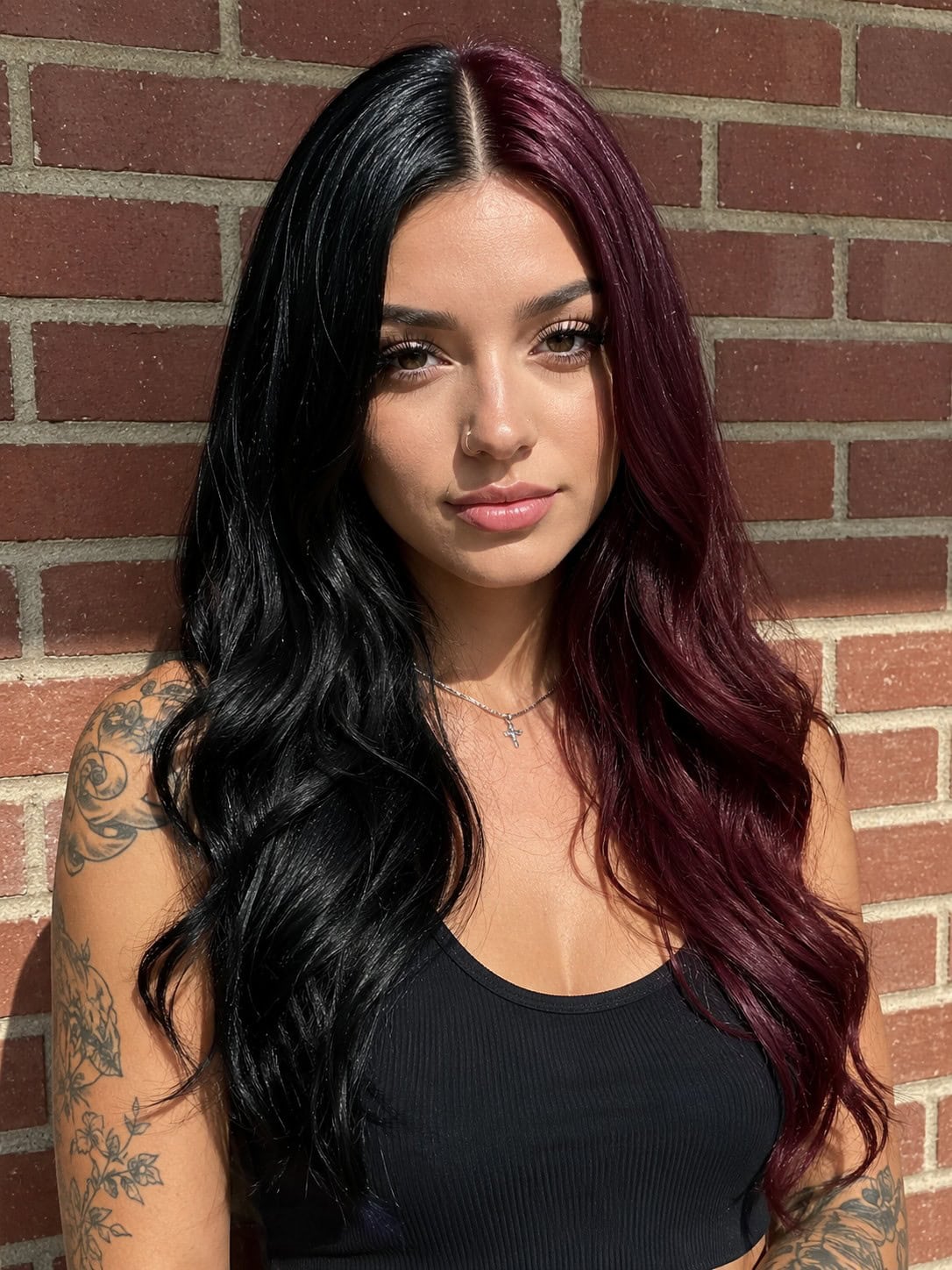
A vertical split-dye down the center, with jet black on one side and deep burgundy on the other, creates one of the strongest two-tone visuals possible while staying within dark color territory. The center part has to stay exactly straight every day to keep the visual sharp. Burgundy against black delivers high contrast within a single dark color family. Touch-ups concentrate on the precise center demarcation every five weeks.
Onyx Black With Subtle Dimension
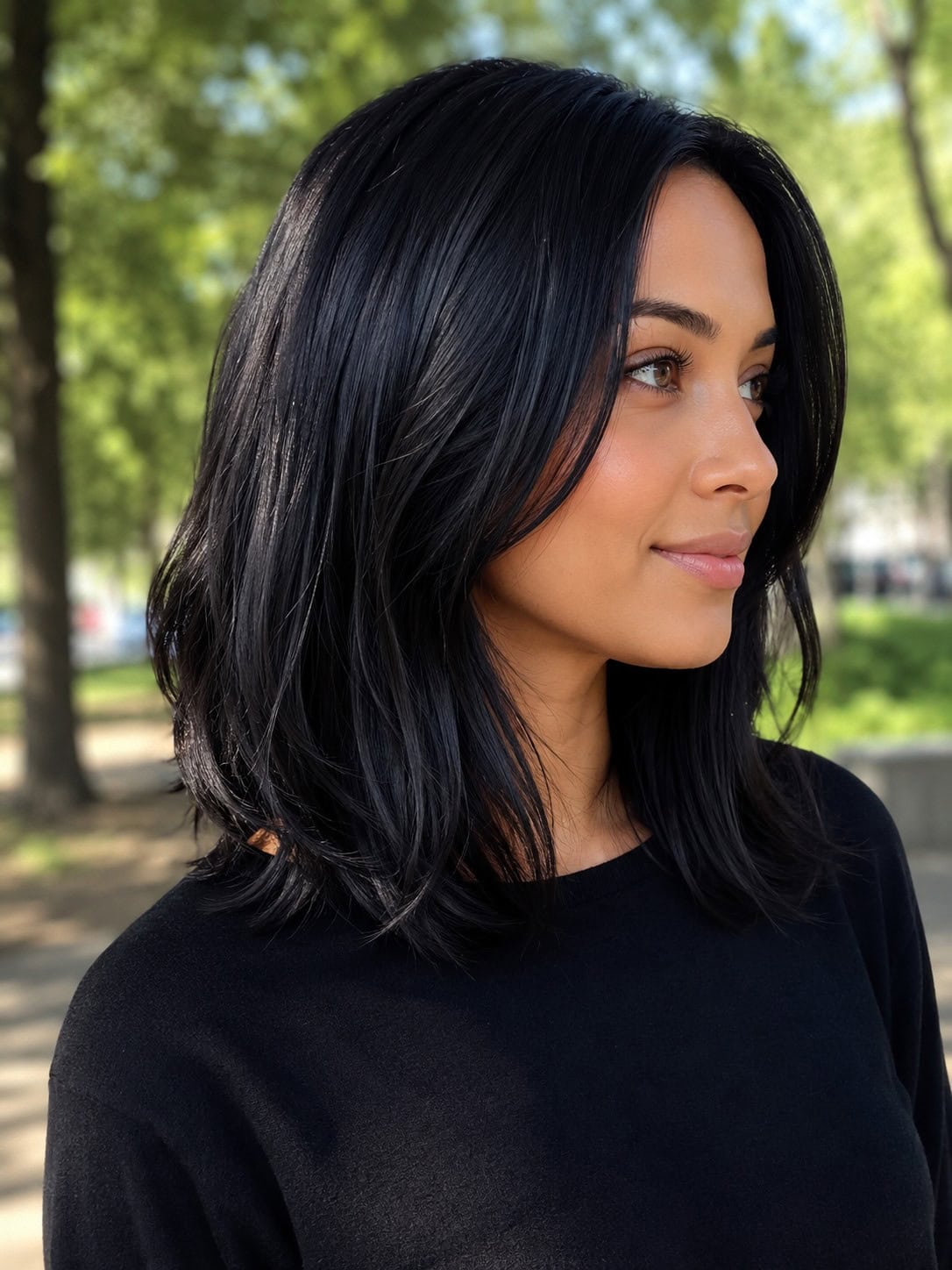
Onyx black layers slightly varied black tones throughout the hair in such subtle proportions that the dimension reveals itself only on closer inspection. The technique mimics how natural black hair carries minute variation between strands rather than appearing as a single flat color. Stylists paint these variations in extremely thin sections, almost like micro-babylights but in the dark color family. The result lands as the most refined version of black.