Fulani braids carry centuries of West African tradition in the cornrowed patterns and beadwork that define them. The Fulani people across Senegal, Mali, Niger, and Nigeria have braided hair in specific structural patterns for generations, with cowrie shells (historically used as currency) and coordinated beadwork as the defining cultural markers. Modern social media reduced the style to a single visual: one center forward braid. The actual tradition is far richer, with geometric cornrowed sections, diamond and zigzag parts, side-swept cornrows, and significant accessorizing. The 18 Fulani braid variations below honor that broader tradition while incorporating curls in different ways. Each entry specifies the front cornrow pattern, the accessory style, and where the curls appear.
Jump to:
- Geometric Cornrowed Fulani Braids with Curly Ends
- Side-Swept Fulani Cornrows with Bohemian Curls
- Fulani Braids with Diamond Parting and Cowrie Shells
- Fulani Braids with Zigzag Parts and Beads
- Fulani Braids with Front-to-Back Cornrows and Curly Ends
- Fulani Braids with Center Parting and Side Cornrows
- Honey Blonde Fulani Braids with Curly Ends and Cowrie Shells
- Burgundy Fulani Braids with Wavy Ends
- Ombré Fulani Braids with Goddess Curls
- Fulani Braids with Curly Front Pieces and Geometric Cornrows
- Small Fulani Braids with Defined Curls and Beadwork
- Large Fulani Braids with Bold Cornrows and Curly Ends
- Fulani Braids with Side Cornrows and Curly Back
- Fulani Braids with Decorative Beadwork Throughout
- Waist-Length Fulani Braids with Cowrie Shells
- Fulani Braids with Tight Cornrows and Loose Bohemian Curls
- Fulani Braids with Triangle Cornrowed Front and Defined Curls
- Shoulder-Length Fulani Braids with Curly Ends
Geometric Cornrowed Fulani Braids with Curly Ends
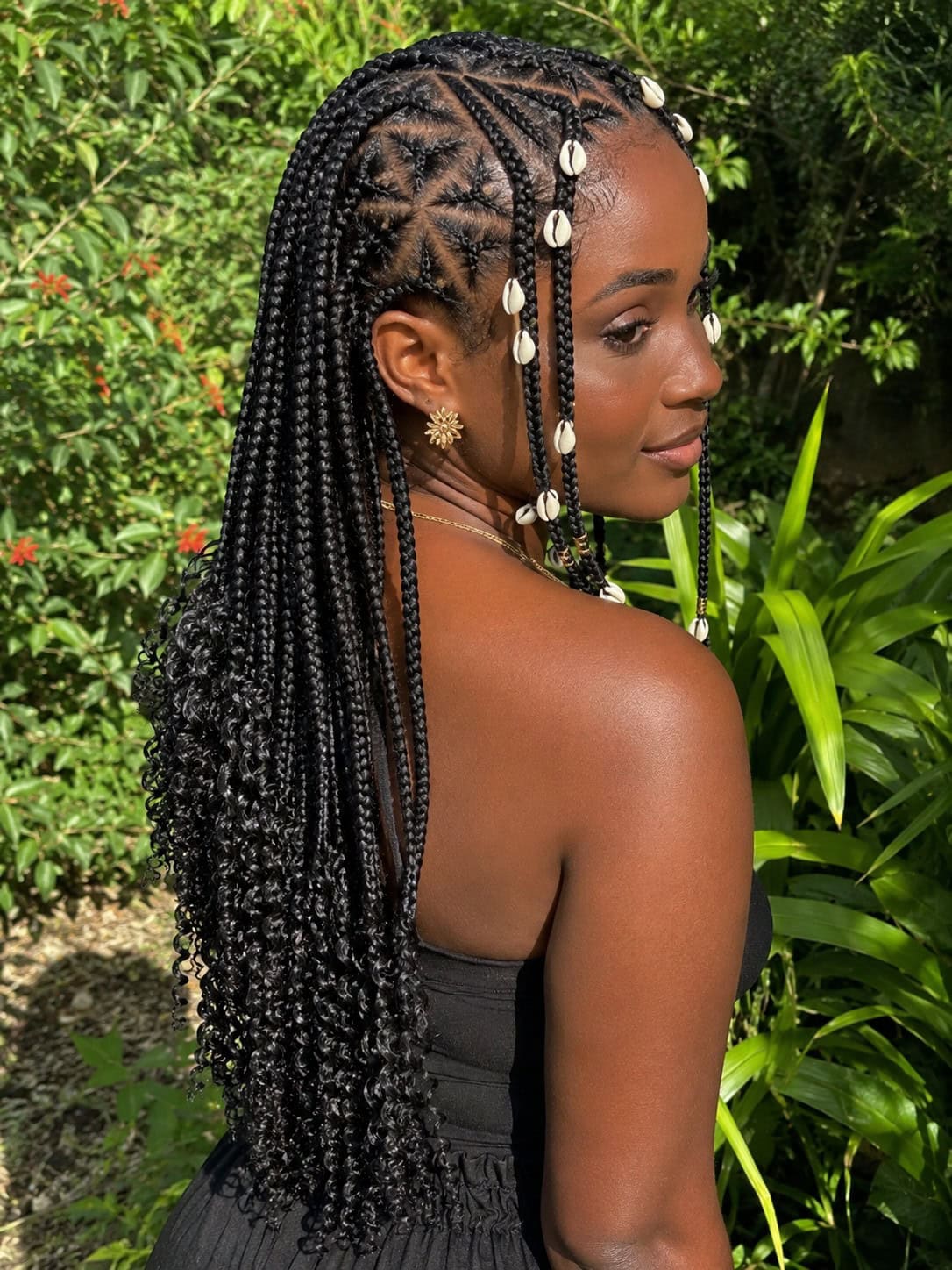
Traditional Fulani braiding with geometric cornrowed sections at the front of the head, where the cornrows form distinct triangle or diamond patterns along the hairline before the hair continues into individual braids extending down the back. Defined curly ends throughout the back braids. Cowrie shells incorporated into the cornrowed front sections honor the most authentic traditional accessory. Style by leaving down to showcase both the geometric front pattern and the curly ends.
Side-Swept Fulani Cornrows with Bohemian Curls
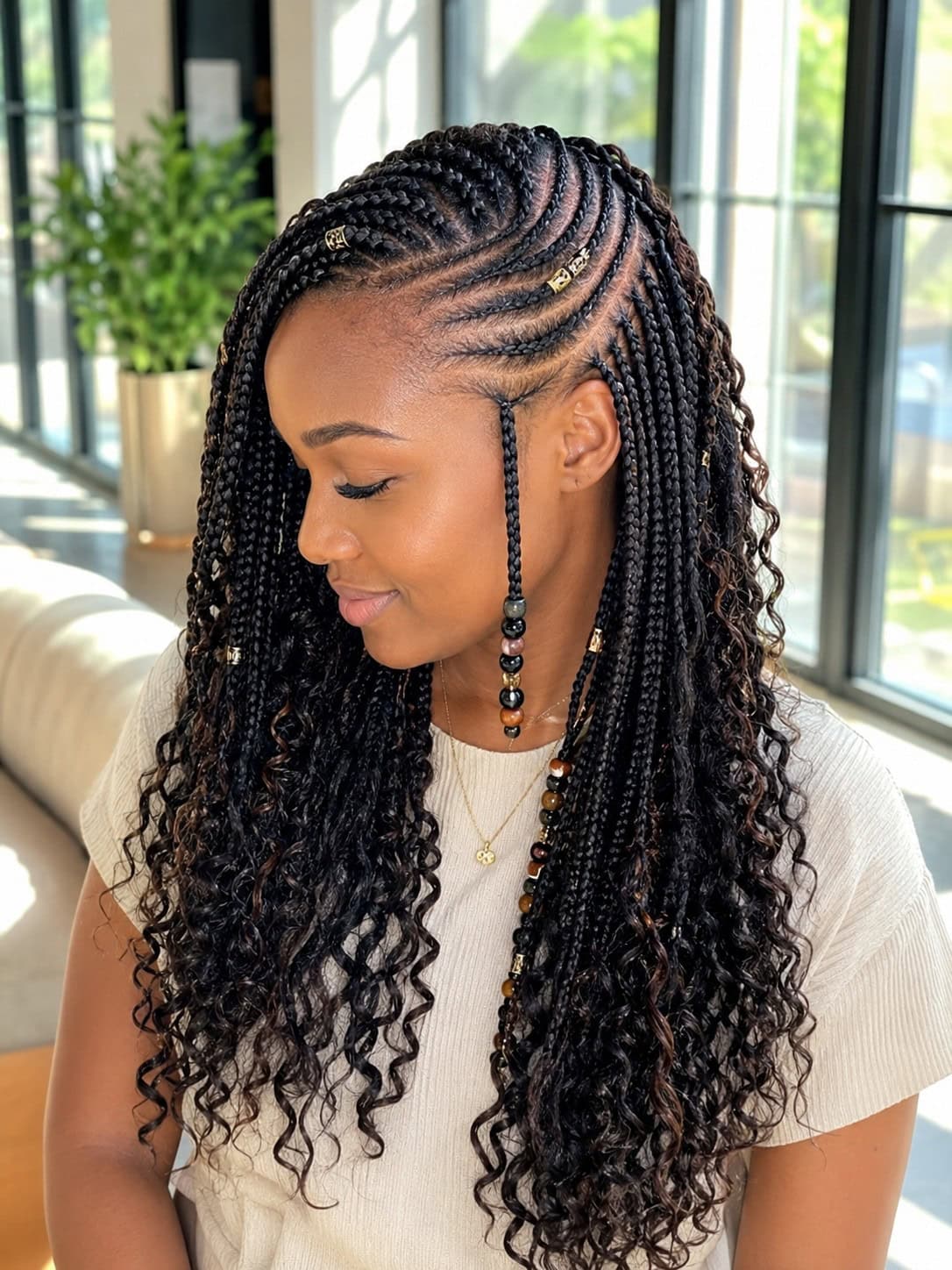
Traditional Fulani braiding with cornrowed sections sweeping to one side of the head rather than running straight forward or back. The asymmetric cornrow pattern creates directional visual movement across the front of the head. Bohemian curly sections appear throughout the back and side braids at intervals. The side-swept cornrowing represents one of the major regional variations in traditional Fulani styling. Style by leaving the cornrowed side forward to showcase the pattern.
Fulani Braids with Diamond Parting and Cowrie Shells
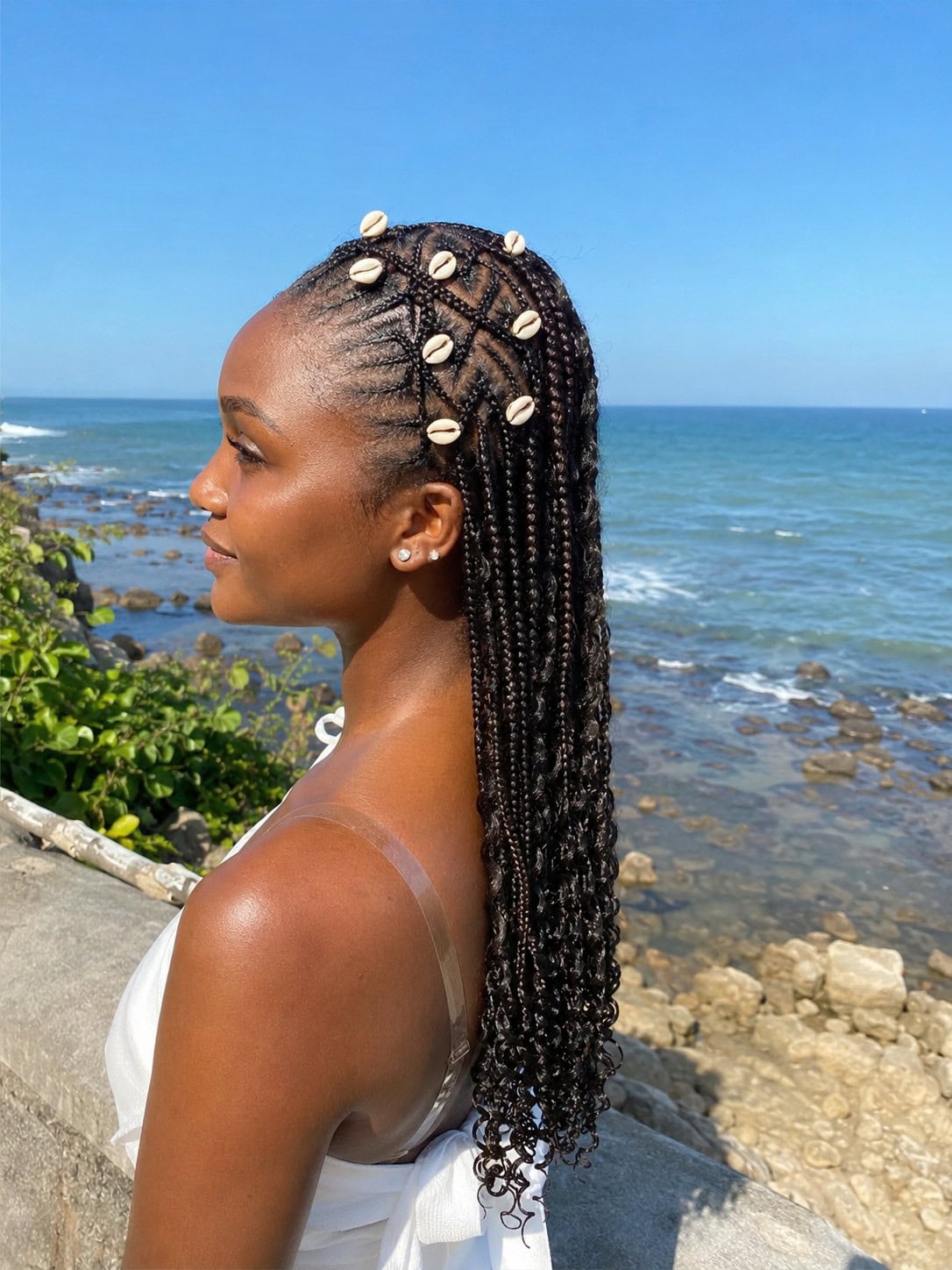
Traditional Fulani braiding with diamond-shaped parts in the cornrowed front section, where the parting creates visible diamond patterns across the front of the head. Cowrie shells are woven directly into the diamond cornrows as the traditional accessory. Defined curly ends extend from the cornrows through the back braids. The diamond parting represents one of the more intricate traditional Fulani techniques and requires braiders experienced with geometric cornrowing.
Fulani Braids with Zigzag Parts and Beads
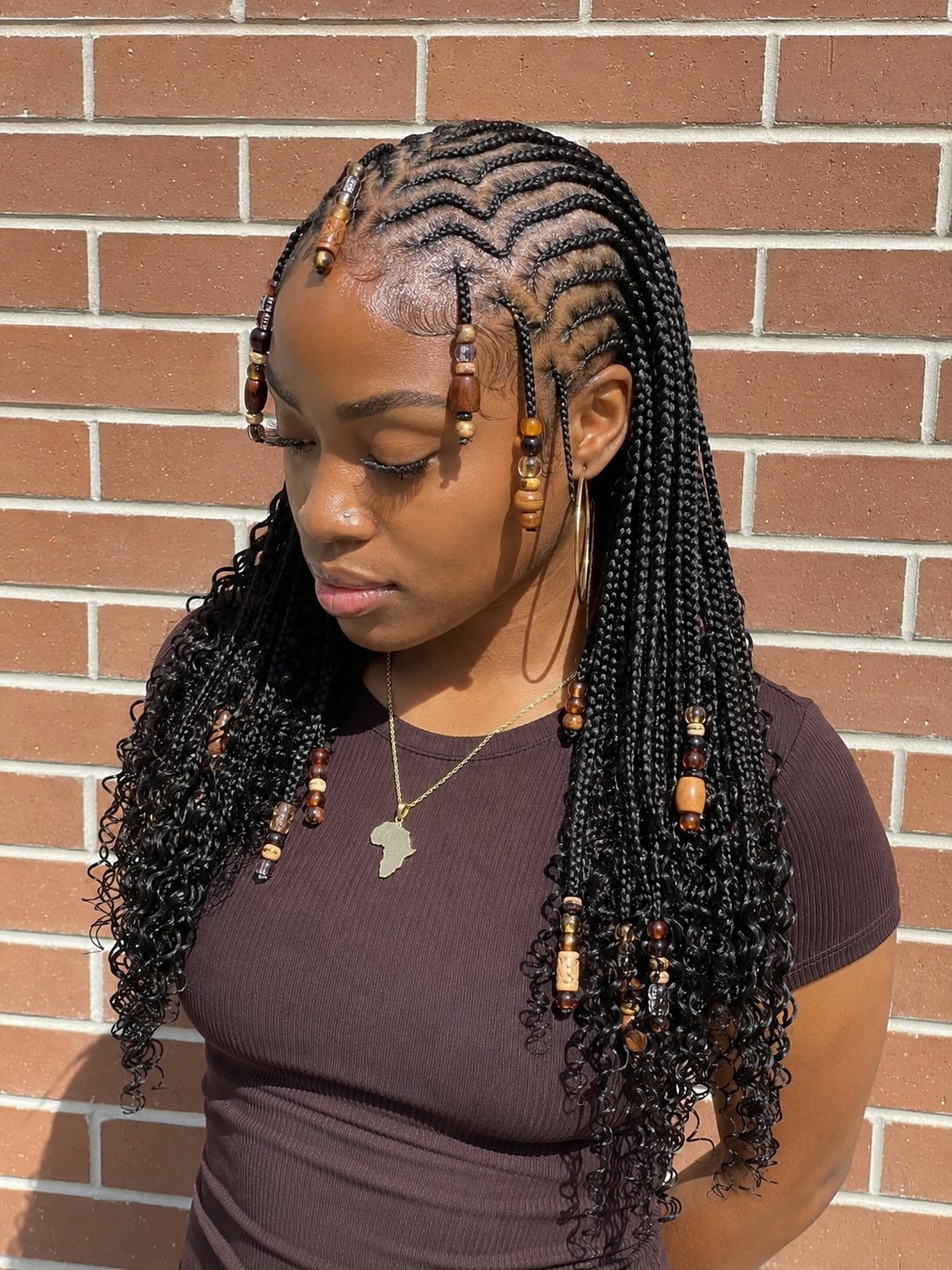
Traditional Fulani braiding with zigzag parts in the cornrowed front section, creating wave-like visible patterns across the front of the head. Wood and glass beads are strung along selected cornrows and the back braids. Defined curly ends throughout. The zigzag parting creates particularly distinctive visual movement and remains one of the more eye-catching traditional Fulani techniques. Style by leaving down to showcase the parting pattern and the bead placement.
Fulani Braids with Front-to-Back Cornrows and Curly Ends
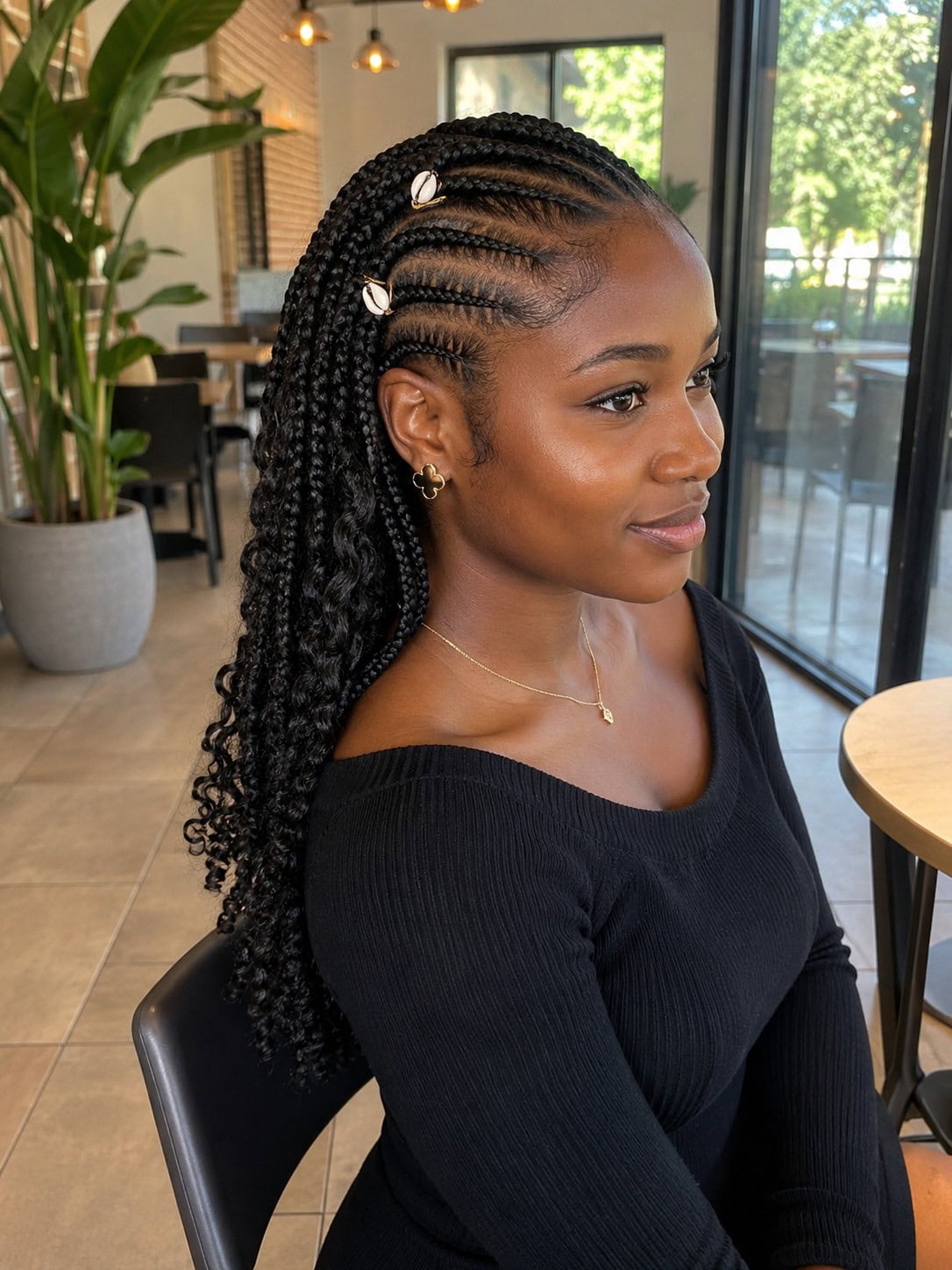
Traditional Fulani braiding where the cornrowed front sections run from the forehead toward the back of the head, with the cornrows transitioning into individual braids at the crown. The hair extends in individual braids from the cornrows down the back, with defined curly ends throughout. This pattern represents one of the most common traditional Fulani techniques. Cowrie shells appear at the transition points between cornrow and individual braid.
Fulani Braids with Center Parting and Side Cornrows
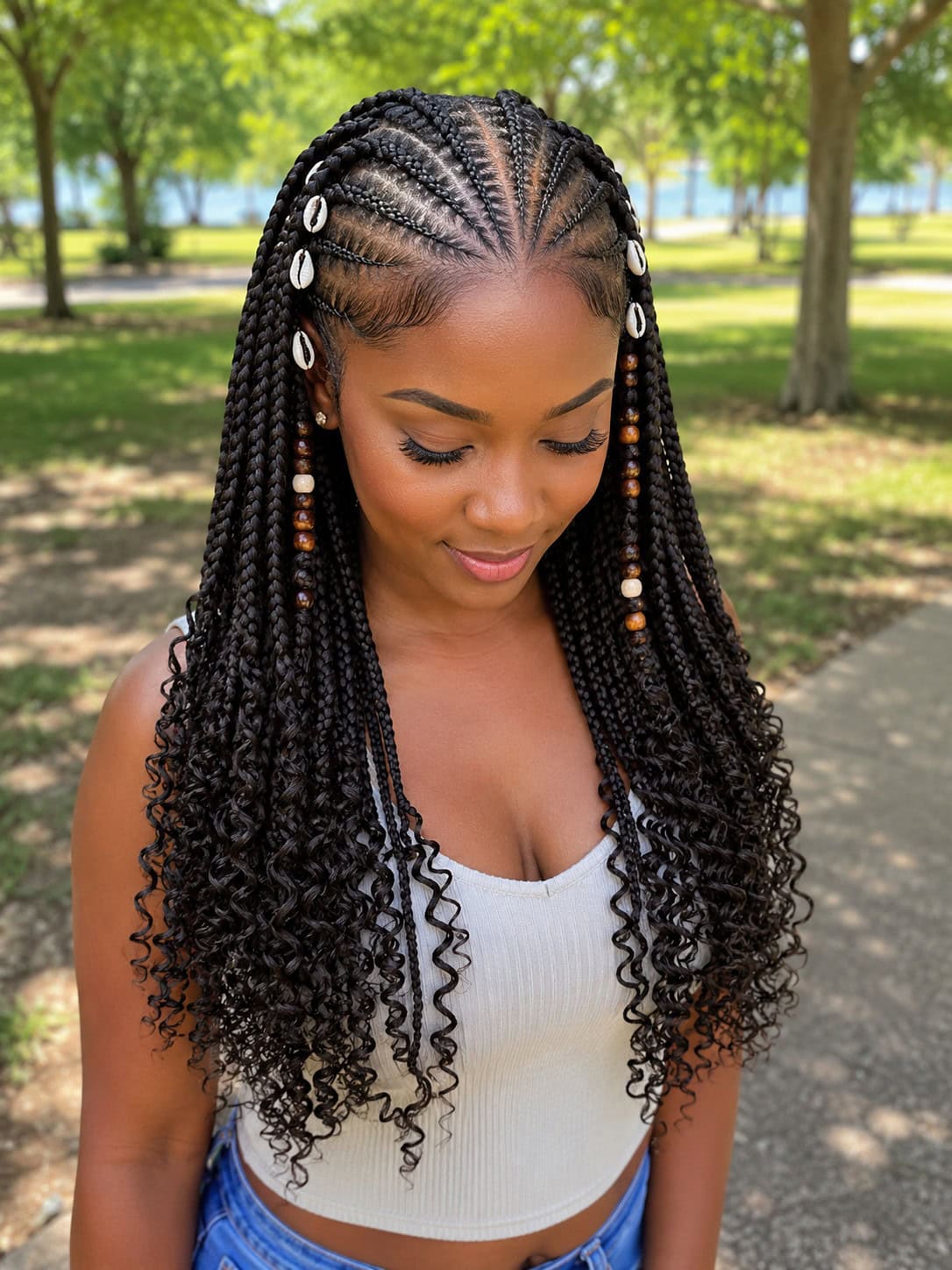
Traditional Fulani braiding with a clean center part down the head, with cornrowed sections running along both sides of the parting before transitioning into individual braids. The symmetric pattern creates balanced visual structure. Cowrie shells and beads are placed along the side cornrows. Defined curly ends throughout the back braids. This pattern works particularly well for women who want clear traditional structure without asymmetric elements.
Honey Blonde Fulani Braids with Curly Ends and Cowrie Shells
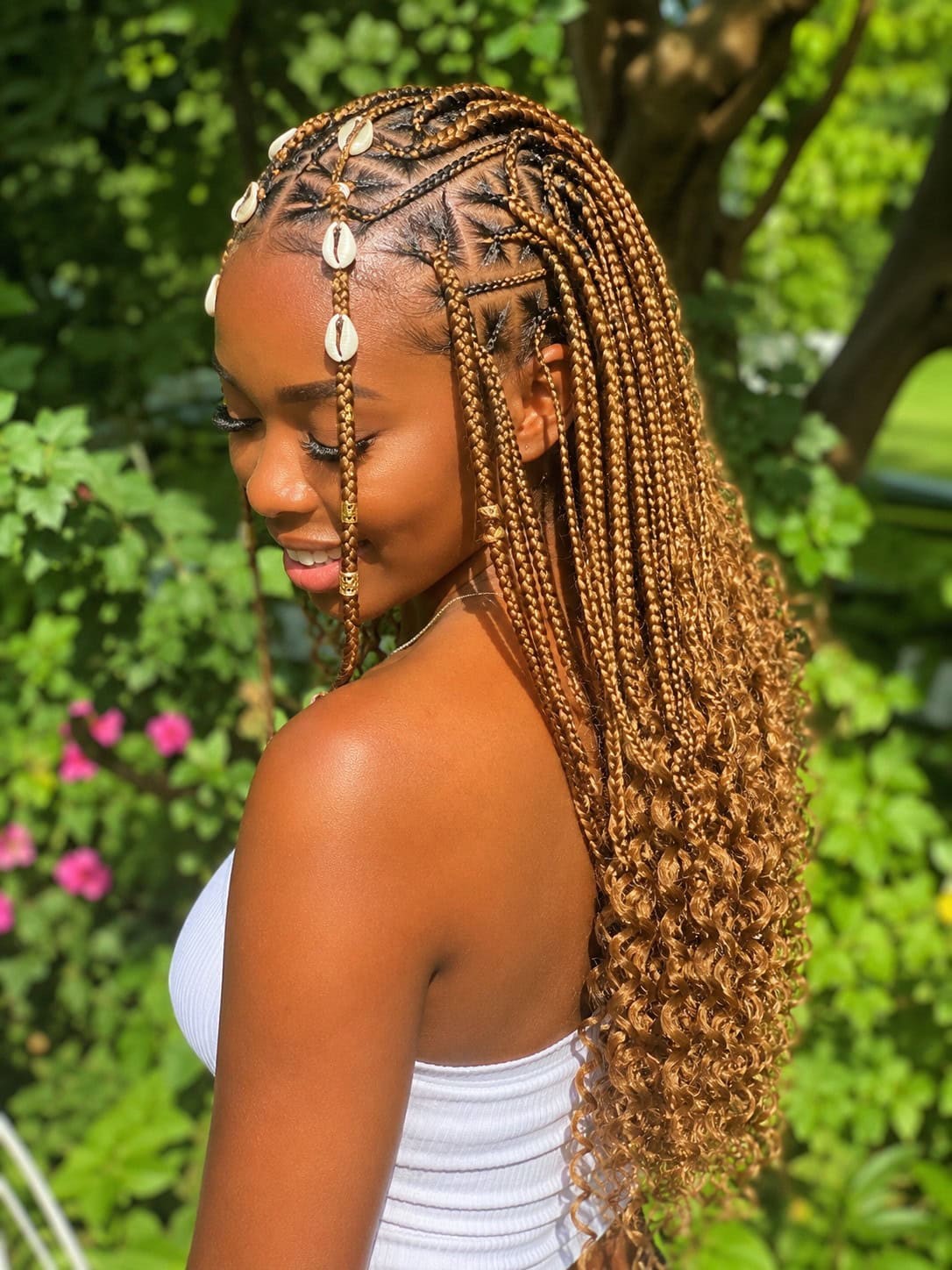
Traditional Fulani braiding installed in honey blonde extension hair throughout, with cornrowed front sections and defined curly ends. Cowrie shells incorporated into the cornrowed front sections create striking contrast against the warm honey color. The lighter color tone makes the geometric cornrow patterns particularly visible. Best for women who want both the cultural specificity of Fulani braiding and the visual statement of full color change throughout the install.
Burgundy Fulani Braids with Wavy Ends
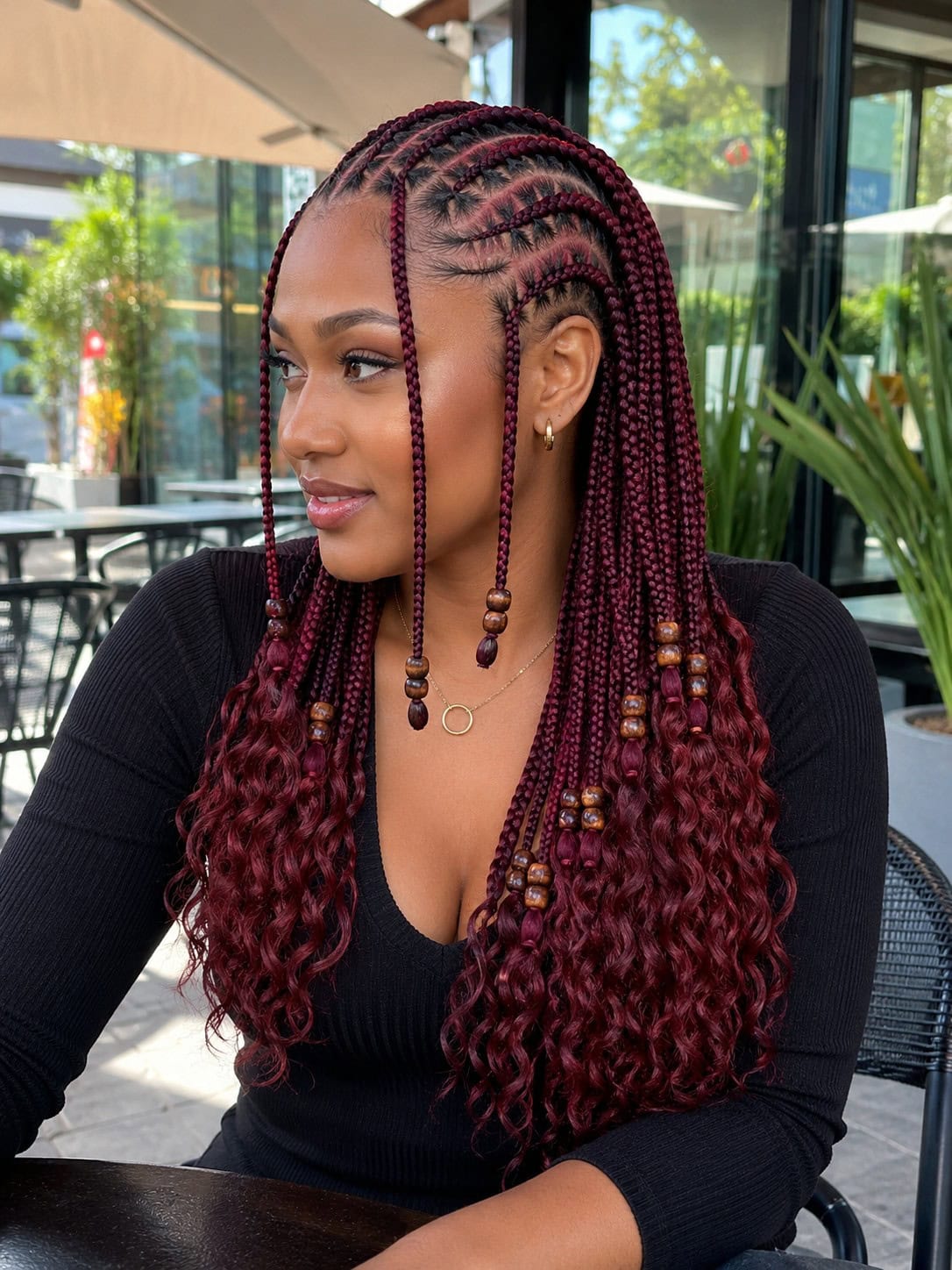
Traditional Fulani braiding installed in burgundy or wine-red extension hair, with cornrowed front sections and loose wavy ends rather than tight curls. The burgundy color creates dramatic statement coloring while preserving the traditional Fulani structural elements. Wood beads in coordinated colors with the burgundy hair appear in the cornrowed front sections. The combination works particularly well for autumn and winter seasons and formal occasions.
Ombré Fulani Braids with Goddess Curls
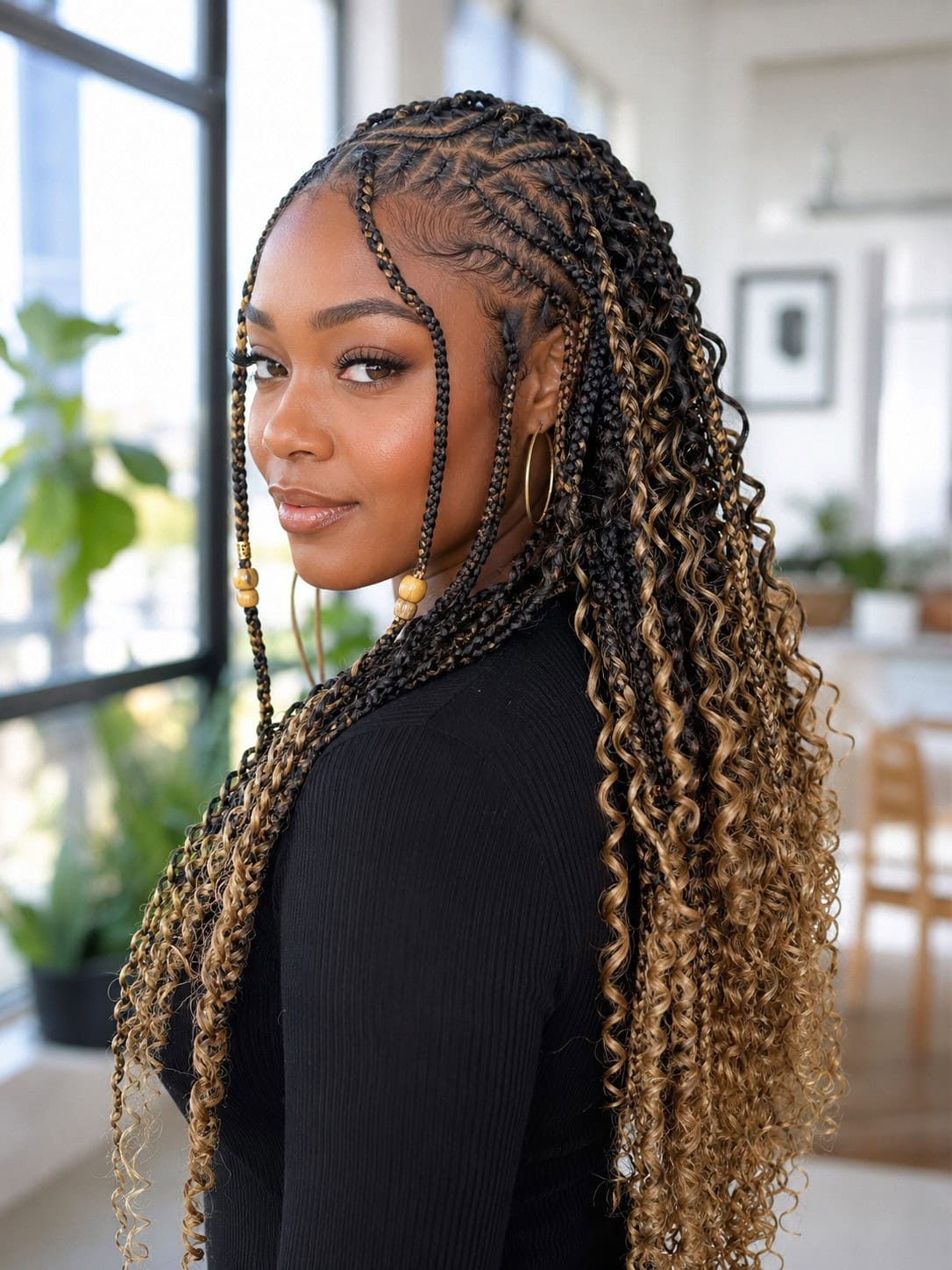
Traditional Fulani braiding installed with ombré extension hair transitioning from deep dark roots to lighter ends, with goddess curl sections worked into the back braids at multiple intervals. The Fulani cornrowed front sections remain in the darker color, creating clear visual transition from the traditional dark front to the lighter ombré sections and curly elements. Best executed by braiders experienced with both Fulani styling and goddess curl techniques.
Fulani Braids with Curly Front Pieces and Geometric Cornrows
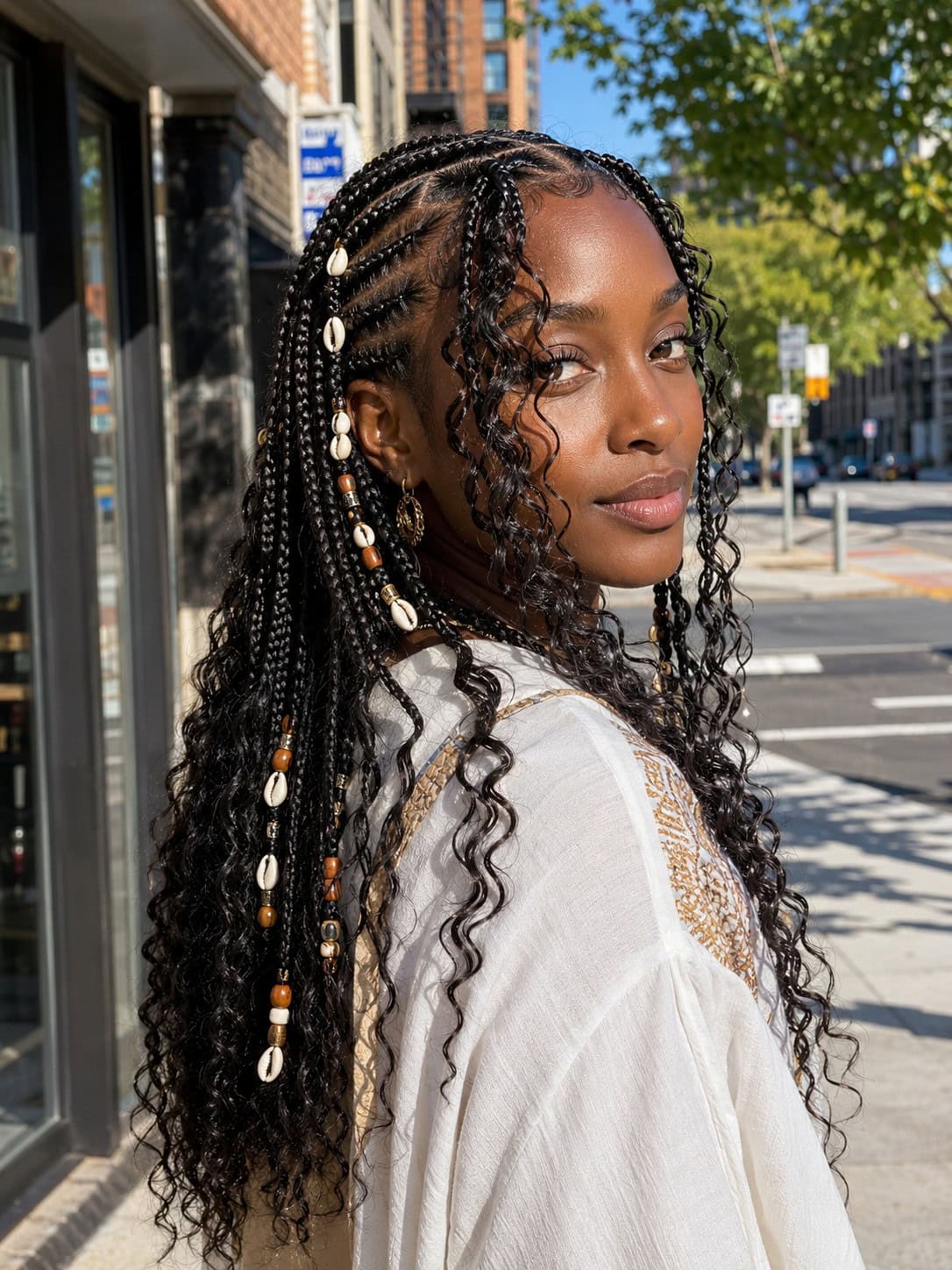
Traditional Fulani braiding with geometric cornrowed sections in the standard Fulani patterns, paired with curly bohemian sections specifically in the front face-framing pieces that extend beyond the cornrows. The combination preserves the traditional cornrow patterns while adding face-framing curl detail. Cowrie shells and beads appear in the cornrowed sections. The front curly pieces soften what would otherwise be a strictly structured traditional install.
Small Fulani Braids with Defined Curls and Beadwork
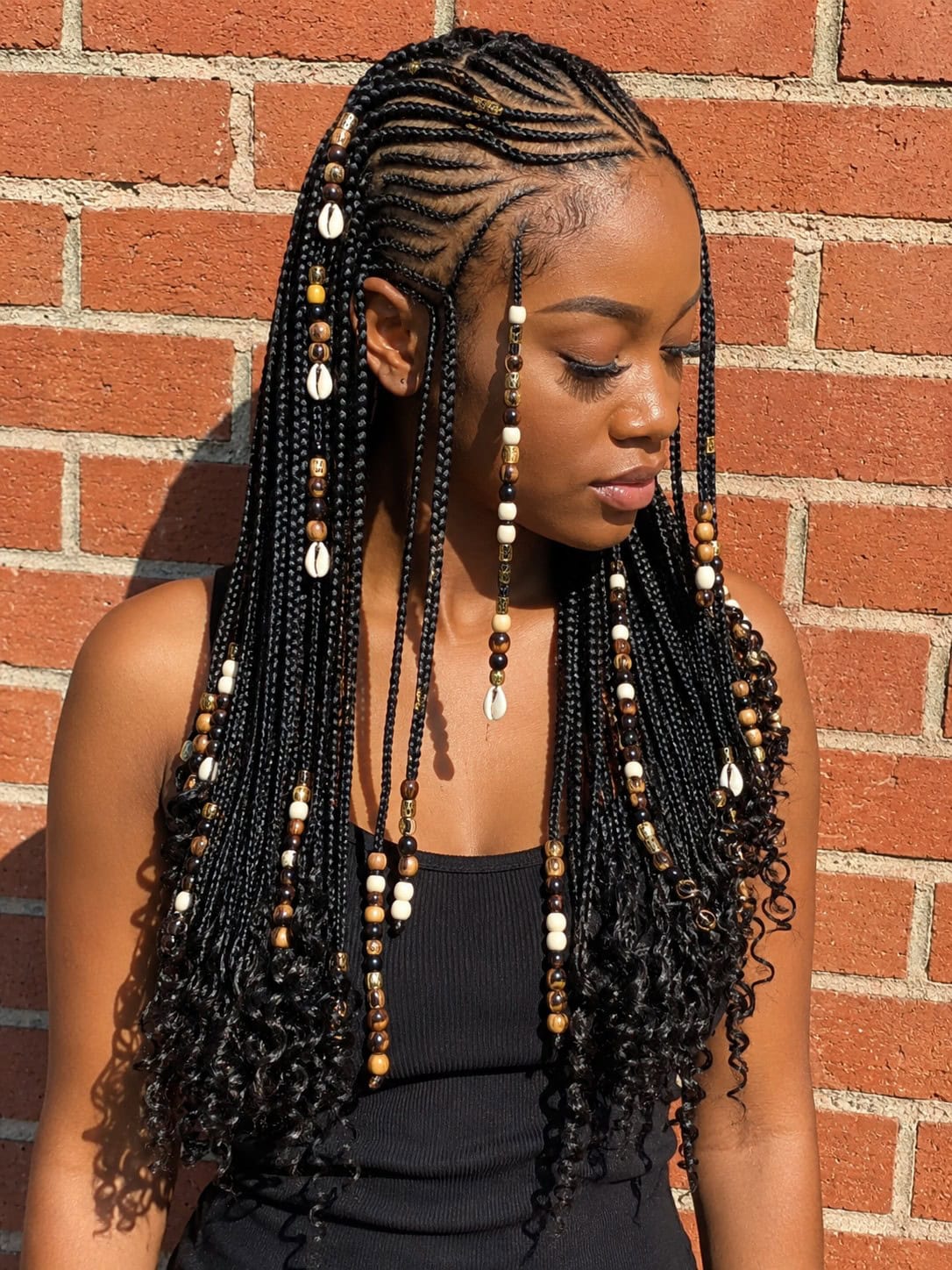
Traditional Fulani braiding executed in small-thickness braids throughout, with intricate cornrowed front sections and defined curly ends. The small braid size makes the geometric cornrow patterns particularly fine and detailed. Extensive beadwork appears throughout the cornrows and along selected individual braids. Install time runs significantly longer due to the small braid size. The small braid Fulani style with full beadwork lasts ten to twelve weeks.
Large Fulani Braids with Bold Cornrows and Curly Ends
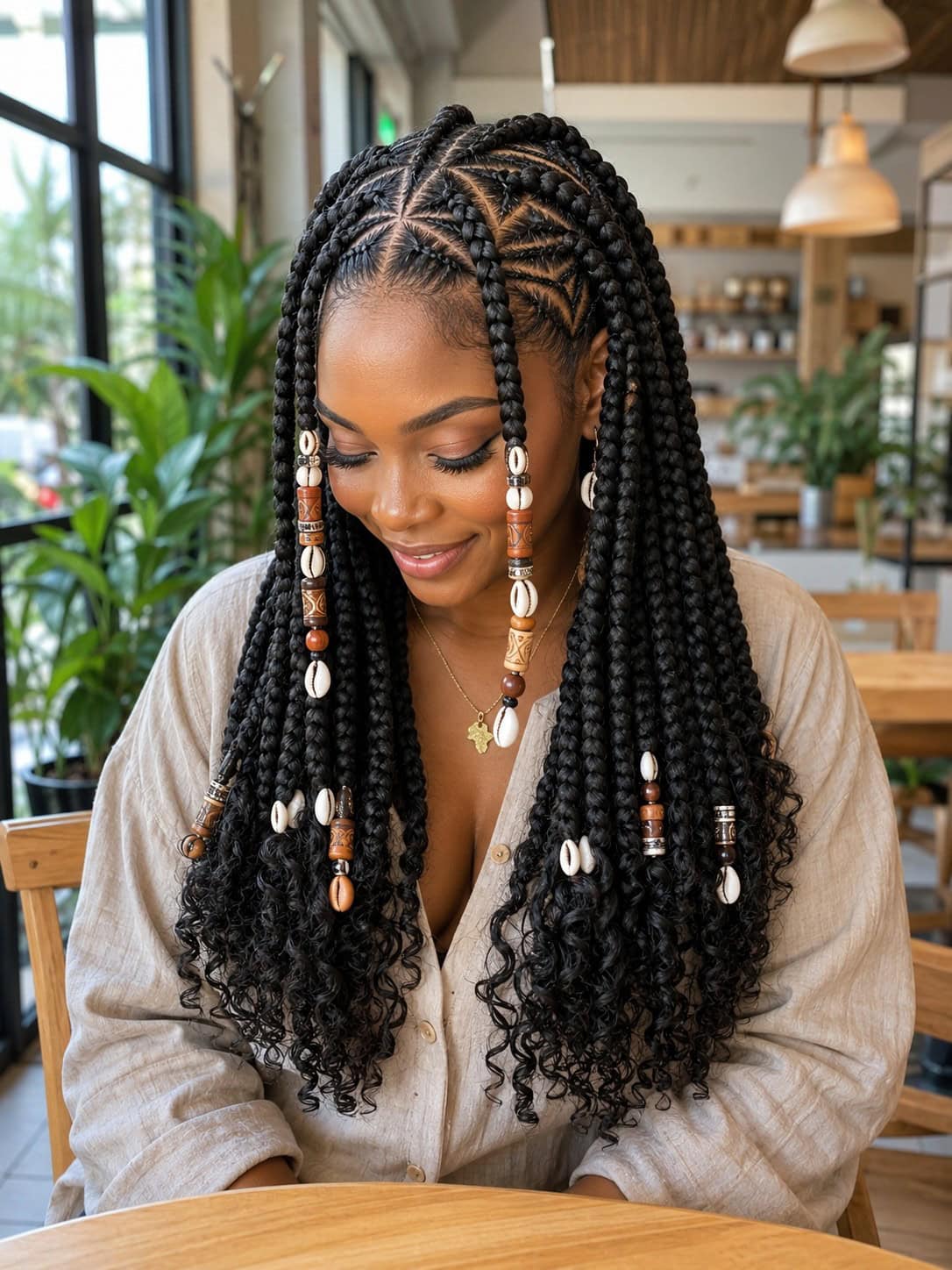
Traditional Fulani braiding executed in large-thickness braids throughout, with bold geometric cornrowed front sections and defined curly ends. The large braid size makes the cornrow patterns appear bolder and more visually statement-making. Substantial cowrie shells and wood beads work proportionally with the bold braid thickness. Install time runs shorter than smaller braid sizes (four to six hours typically). Best for women who want bold visual impact with cultural specificity.
Fulani Braids with Side Cornrows and Curly Back
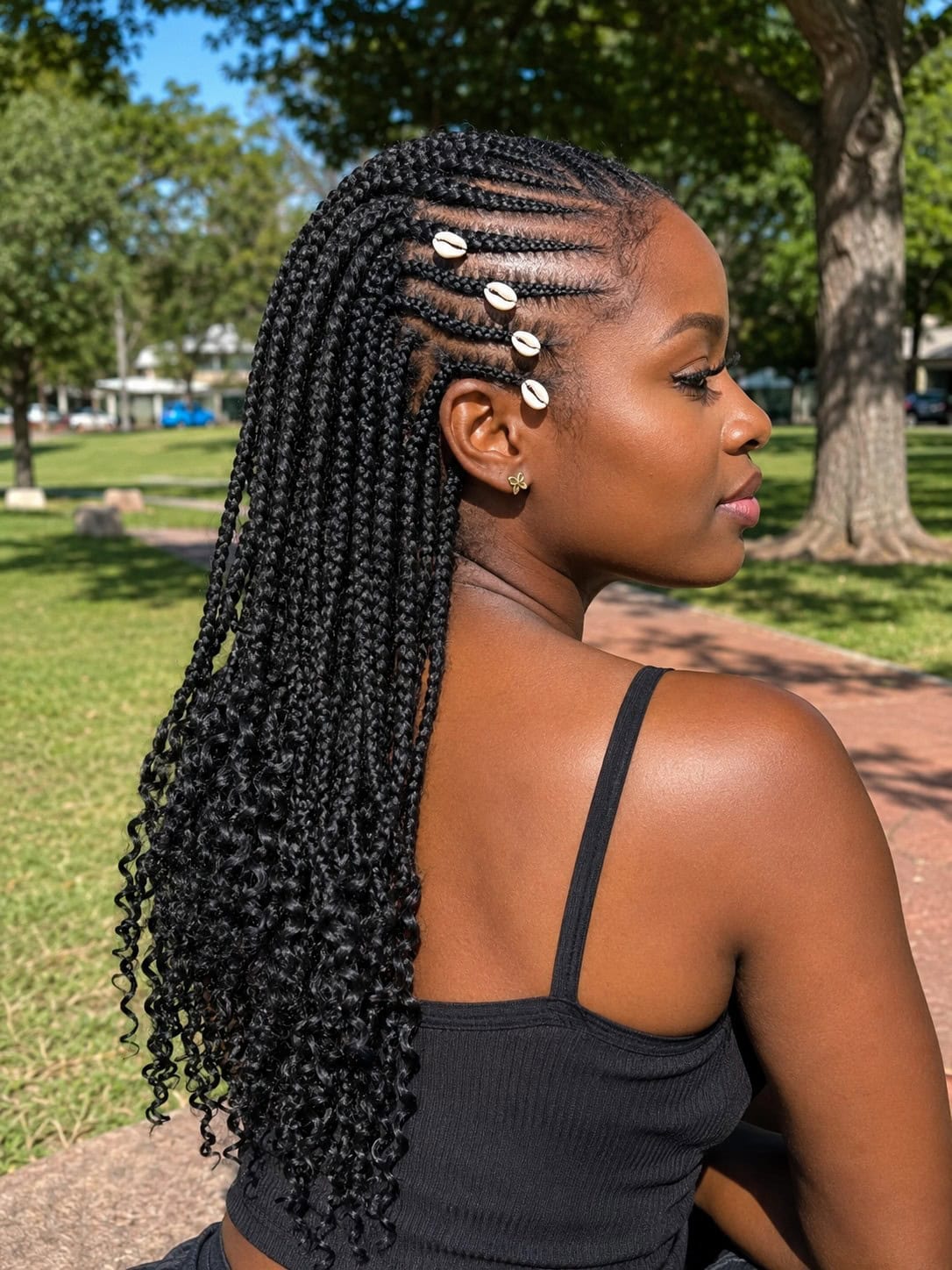
Traditional Fulani braiding with cornrowed sections only along the sides of the head, with the back of the head braided in individual braids with defined curly ends. The side-cornrow approach creates clear visual zones: structured at the sides, individually braided and curly at the back. Cowrie shells appear in the side cornrows. The structural difference between the cornrowed sides and the individually braided back creates particularly interesting visual variation.
Fulani Braids with Decorative Beadwork Throughout
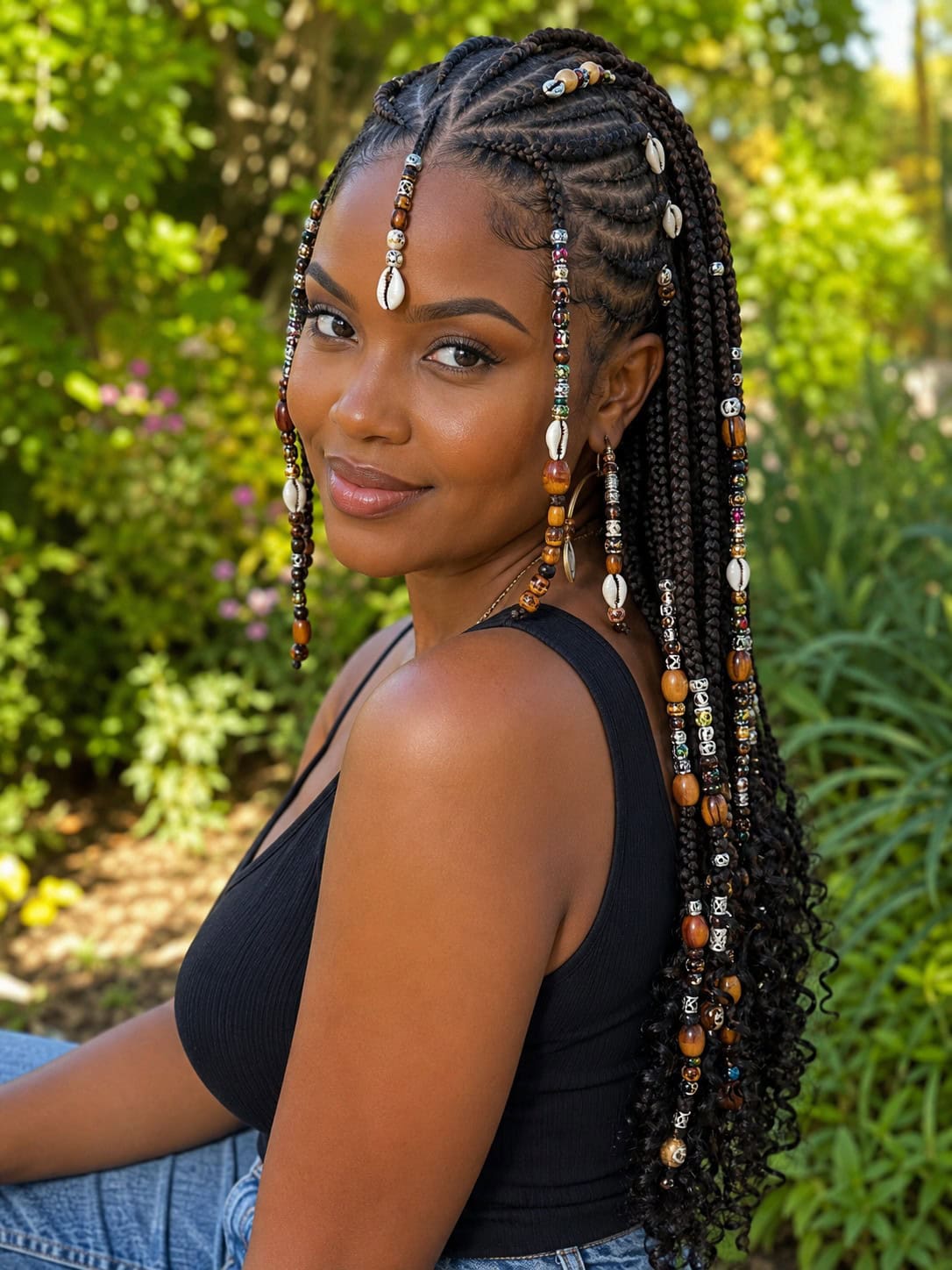
Traditional Fulani braiding with multiple bead types placed throughout the install, including the cornrowed front sections, the parting lines, and along selected back braids. Wood beads, glass beads, cowrie shells, and small metal beads create coordinated decorative patterns. The bead-heavy interpretation honors the traditional importance of accessories in Fulani styling. Defined curly ends throughout the back braids. Best executed by braiders experienced with extensive beadwork placement.
Waist-Length Fulani Braids with Cowrie Shells
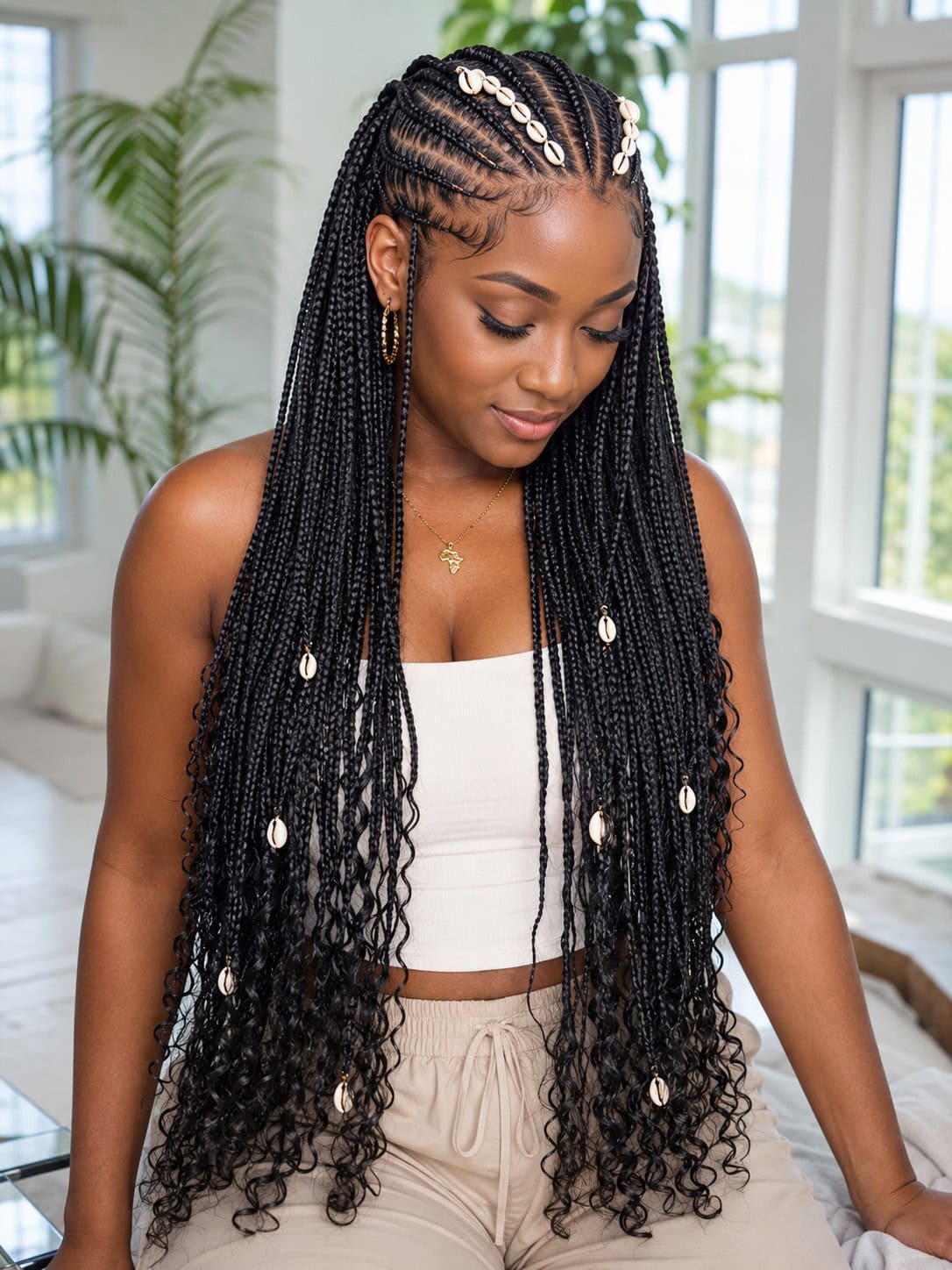
Traditional Fulani braiding extending to waist length with cornrowed front sections, cowrie shells woven into the cornrows, and defined curly ends throughout. The dramatic length amplifies the cultural statement of the traditional Fulani structural elements. Install time runs seven to nine hours given the additional length plus curl setting and beadwork. Style by leaving down for maximum visual impact across all the elements.
Fulani Braids with Tight Cornrows and Loose Bohemian Curls
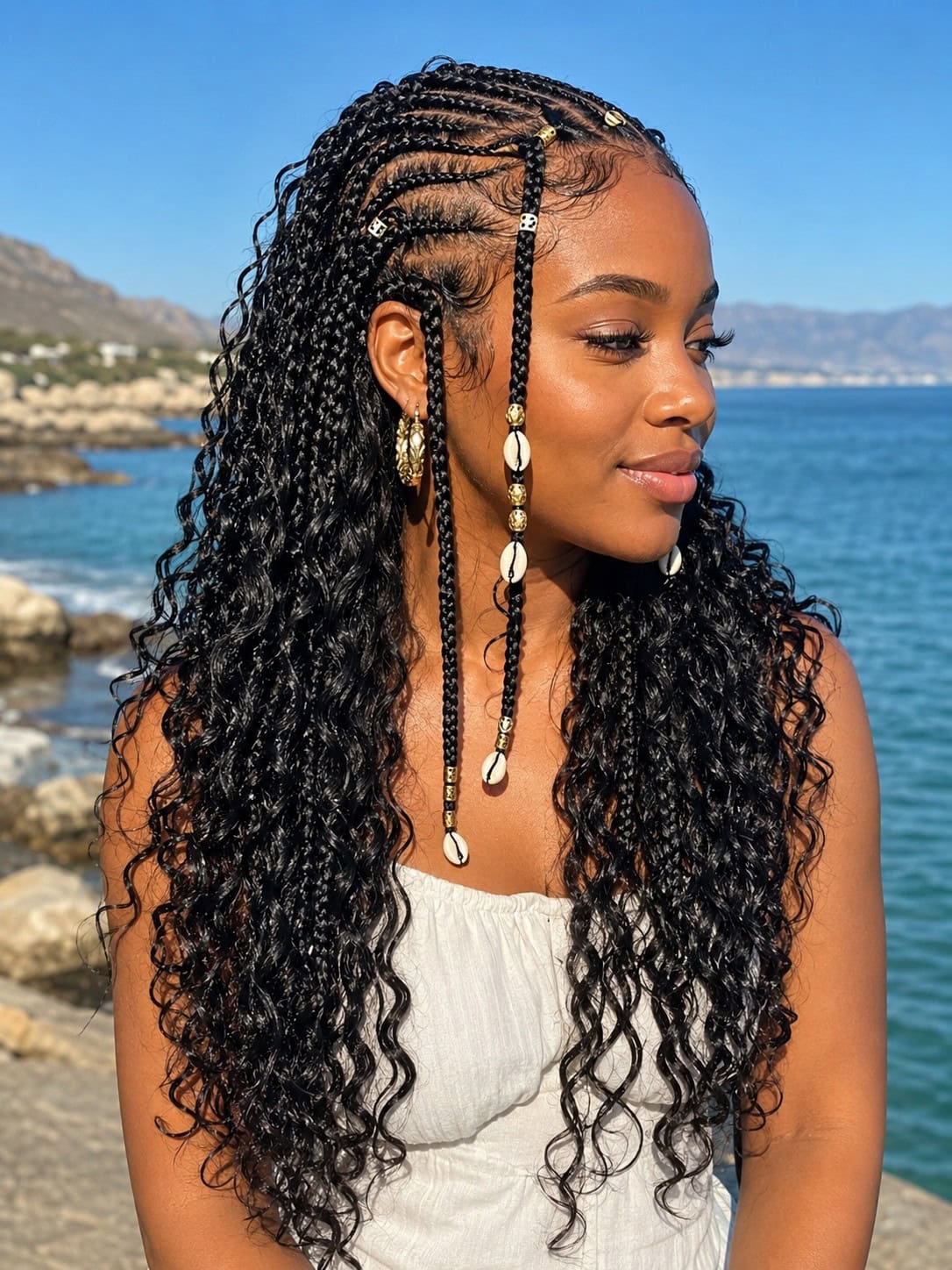
Traditional Fulani braiding with tight precise cornrowed front sections paired with loose bohemian curls in the back braids. The contrast between the structured cornrows and the loose bohemian texture creates particularly striking visual variation. Cowrie shells and beads appear in the cornrowed front sections. The combination provides clear visual zones: precise and traditional at the front, relaxed and bohemian at the back. Best executed by braiders experienced with both techniques.
Fulani Braids with Triangle Cornrowed Front and Defined Curls
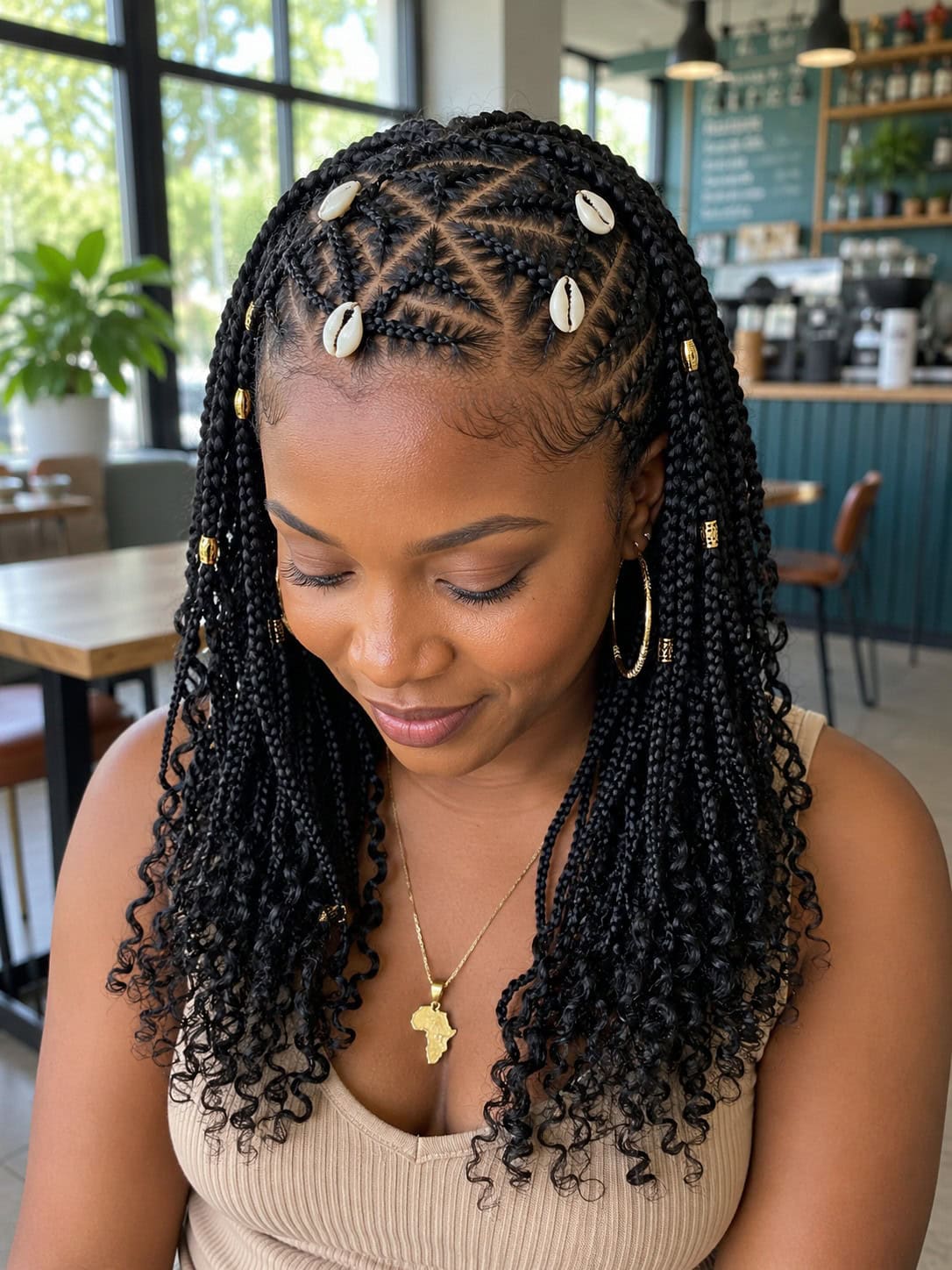
Traditional Fulani braiding with triangle-shaped cornrowed sections at the front of the head, where the cornrows form clear triangular patterns. The triangular parting creates strong geometric visual interest. Cowrie shells appear at the points of the triangles. Defined curly ends throughout the back braids. The triangle pattern represents one of the more dramatic traditional Fulani techniques and creates particularly memorable visual statement. Best for women who want maximum geometric impact.
Shoulder-Length Fulani Braids with Curly Ends
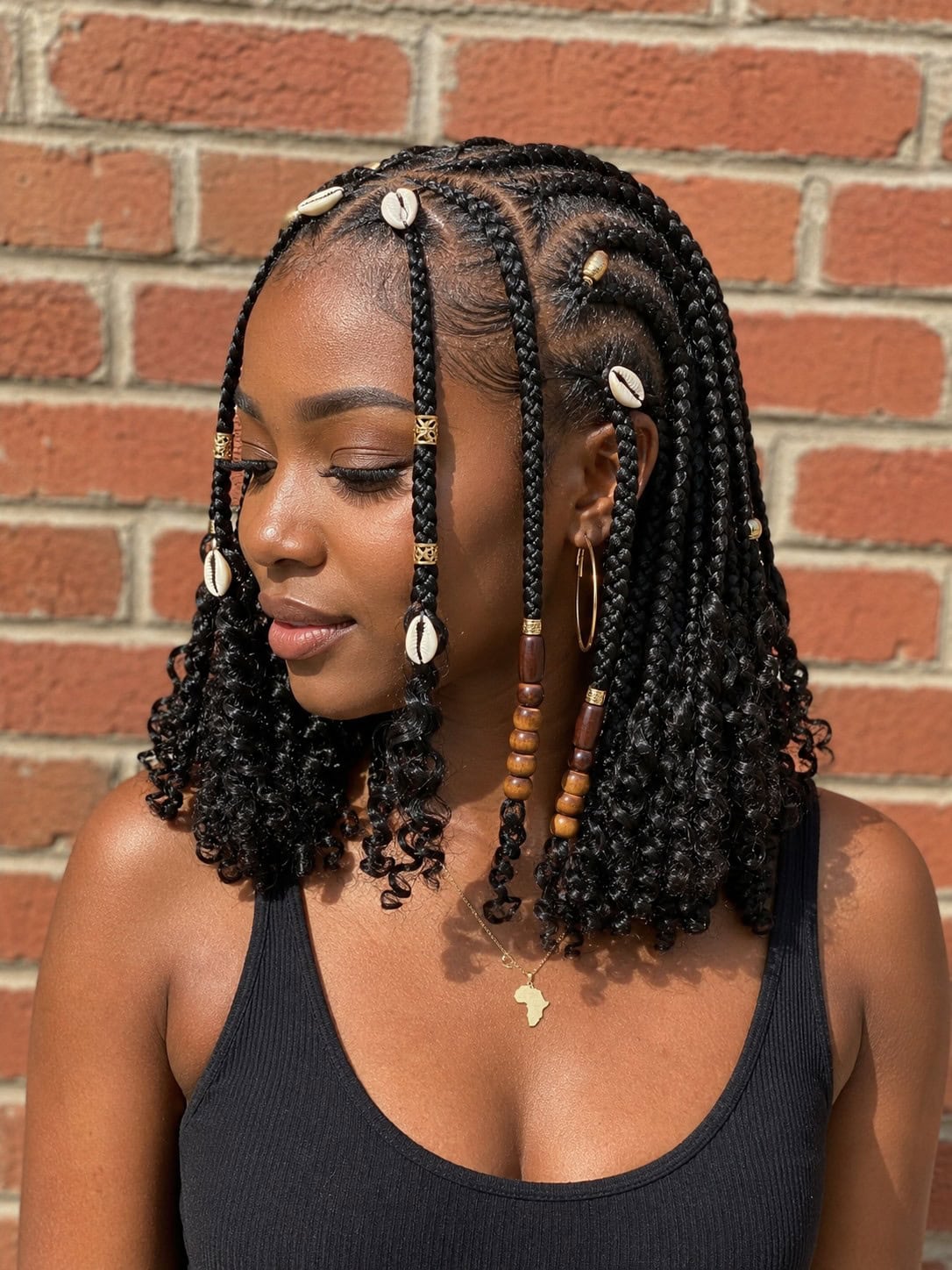
Traditional Fulani braiding cut to shoulder length with cornrowed front sections and defined curly ends. The shorter length provides a more practical interpretation while preserving the defining cultural elements. Cowrie shells and beads appear in the cornrowed front sections. Install time runs four to five hours given the shorter length. Best for women new to traditional Fulani styling or those who prefer shorter installs while still honoring the cultural specificity of the technique.