The taper fade fixed the one thing that used to make short natural cuts feel like a compromise. Instead of buzzing everything down evenly, a barber shrinks the hair gradually around the temples and nape while leaving the crown full, so all your volume and texture stay up top where you want them. The trade-off is standing time in the barber's chair. Fades look their sharpest for about two weeks and want a shape-up every two to four, so the upkeep lives in the maintenance, not the daily styling. Here are the versions worth knowing before you sit down.
Jump to:
- Low Taper Fade
- Mid Taper Fade
- High Taper Fade
- Drop Fade
- Burst Fade
- Taper Fade With an Etched Design
- Taper Fade With a Hard Part
- Tapered TWA
- Tapered Afro
- Sponge Coils on Top
- Finger Coils on Top
- Wash-and-Go on Top
- Twist-Out on Top
- Braid-Out on Top
- Flat Twists on Top
- Cornrows on Top With Tapered Sides
- Two-Strand Twists on Top
- Curly Frohawk With a Taper
- Curly Fringe With a Taper
- Curly Blowout on Top
- Copper Tapered Cut
- Honey-Blonde Tapered Cut
Low Taper Fade

A low taper fade keeps the blend down near your hairline, tapering just the temples, sideburns, and nape while leaving everything above full. It is the softest and most subtle of the fades, which makes it the safe first move if you have never faded your sides before. It flatters just about every face shape and grows out gently. Ask specifically for a low taper if you want blended sides rather than anything sharp or high.
Mid Taper Fade

The mid taper starts the blend higher, around the temple line, for a bit more contrast between the short sides and the full crown. Barbers will tell you it is the most requested fade going right now, and that is because it splits the difference so well. Clean enough to look sharp, soft enough to still feel natural. It suits most people, which is exactly why it is the one to ask for when you are not sure.
High Taper Fade

A high taper fade takes the blend up higher still, starting a couple of inches above the ear for maximum contrast. This is the boldest of the three heights, putting all the drama on the tall stack of curls or coils sitting on top. It flatters longer and oval faces especially, since the height adds balance. Be aware the high fade looks off sooner as it grows, so plan on more frequent shape-ups to keep it crisp.
Drop Fade

A drop fade curves the fade line downward as it travels behind the ear, dropping toward the nape instead of running straight across. That curve follows the natural shape of your head and adds visual interest from the side and back. It pairs beautifully with a full curly crown, since the dropping line draws the eye around the shape. A good barber adjusts the curve to your skull, so it is worth going to someone experienced for this one.
Burst Fade

The burst fade fans out around the ear in a curved arc, like a little sunburst, while keeping the back of the neck longer. It is a bolder, more sculptural take on the fade that shows real barbering skill. On natural hair it looks striking paired with a frohawk or a tall curly top, since the burst frames the ear and lets the volume rise up the center. It needs a skilled hand and regular touch-ups to hold that clean arc.
Taper Fade With an Etched Design
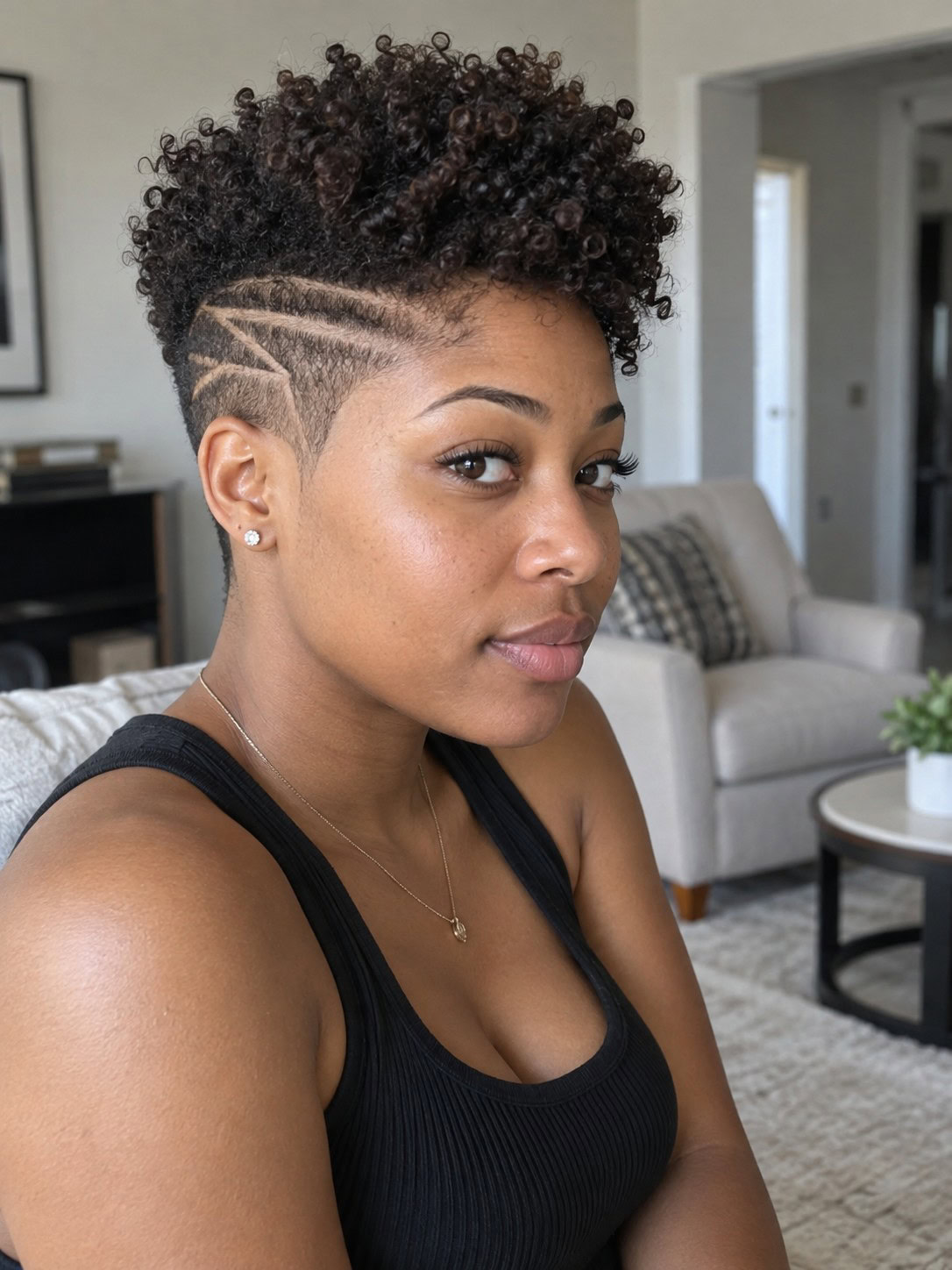
Once the sides are faded down, they become a canvas. A skilled barber can etch lines, geometric patterns, zigzags, or a small motif into the faded area for a personal, edgy detail. The crisp shaved design against your soft curls on top is the whole appeal. Fair warning, designs are the first thing to blur as the hair grows, usually within a week or two, so this look asks for the most frequent maintenance of any here.
Taper Fade With a Hard Part
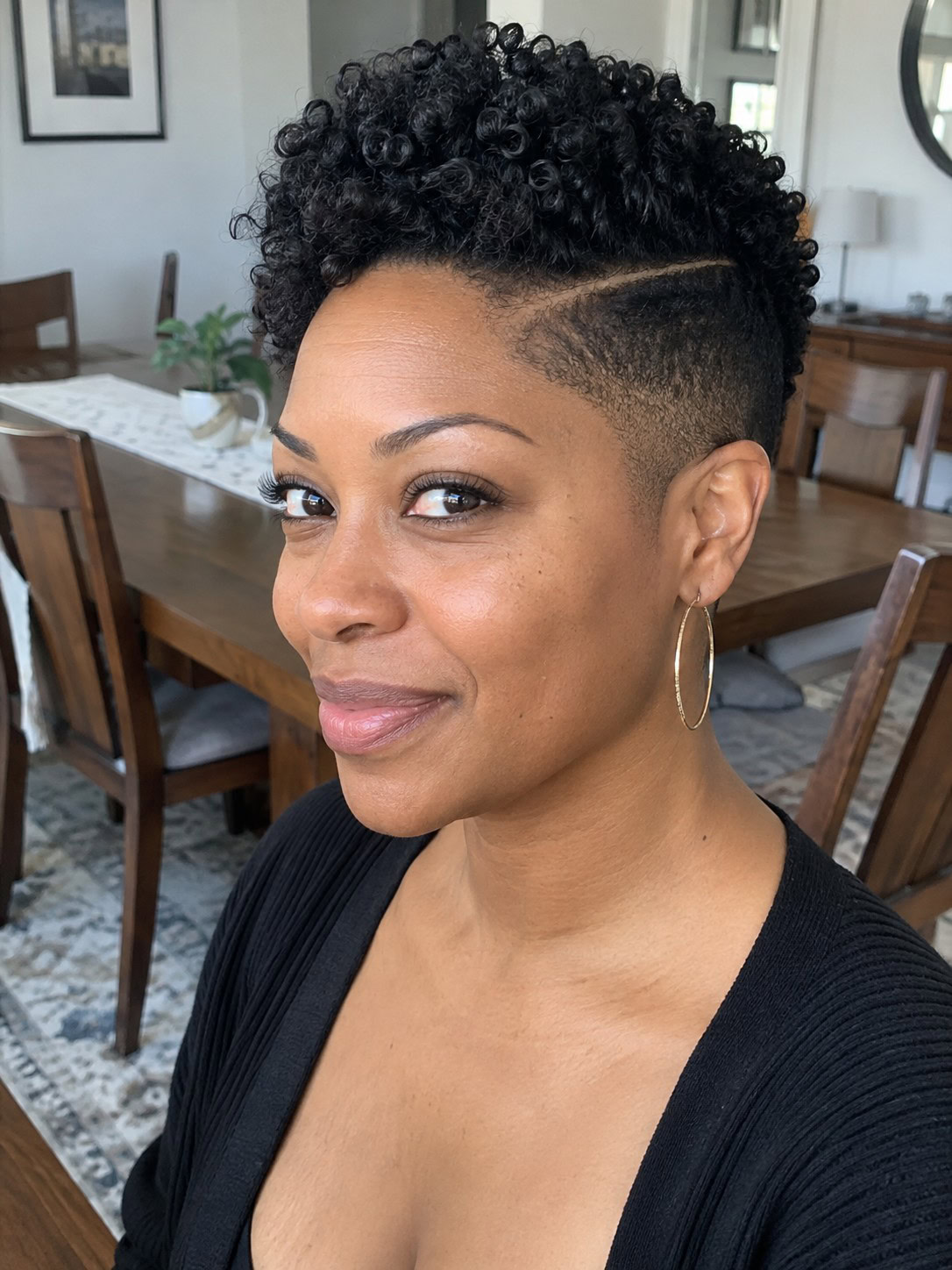
A hard part is a single clean line shaved into the faded side, usually where you would naturally part your hair. It is the more understated cousin of a full etched design, adding definition and a sharp finishing touch without committing to a whole pattern. It works with almost any top style, from a twist-out to a simple wash-and-go. Like any shaved detail, it softens within a couple of weeks, so a quick line touch-up keeps it looking deliberate.
Tapered TWA
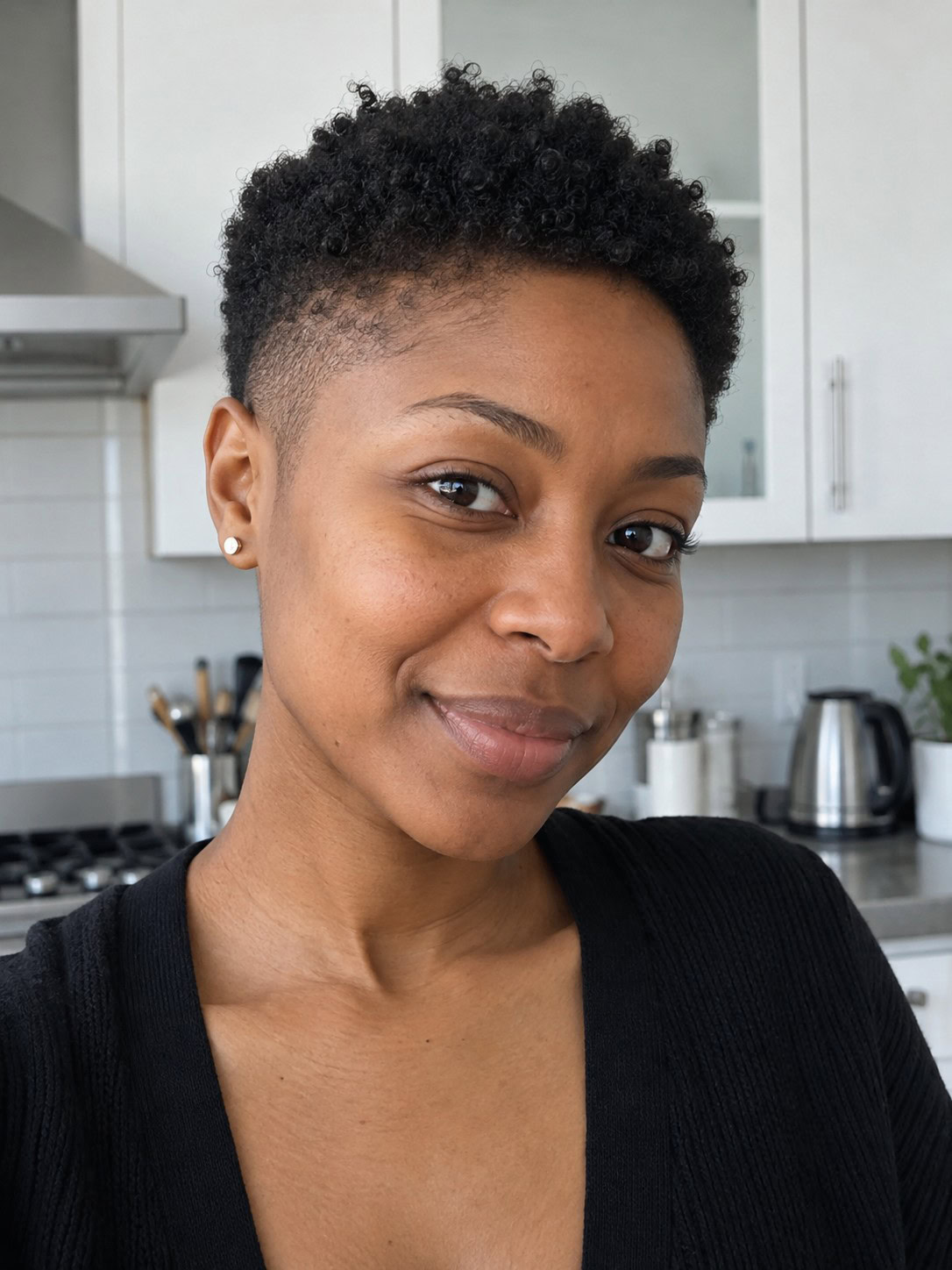
Pairing a teeny weeny afro with a taper is one of the cleanest looks in the whole natural-hair world. The sides fade down close while the short coils on top keep just enough height to shape. It is about as low-effort as styling gets day to day, though the short length means daily moisture matters, since a TWA dries out fast. A spritz of water and a light leave-in each morning keeps the coils soft instead of brittle.
Tapered Afro
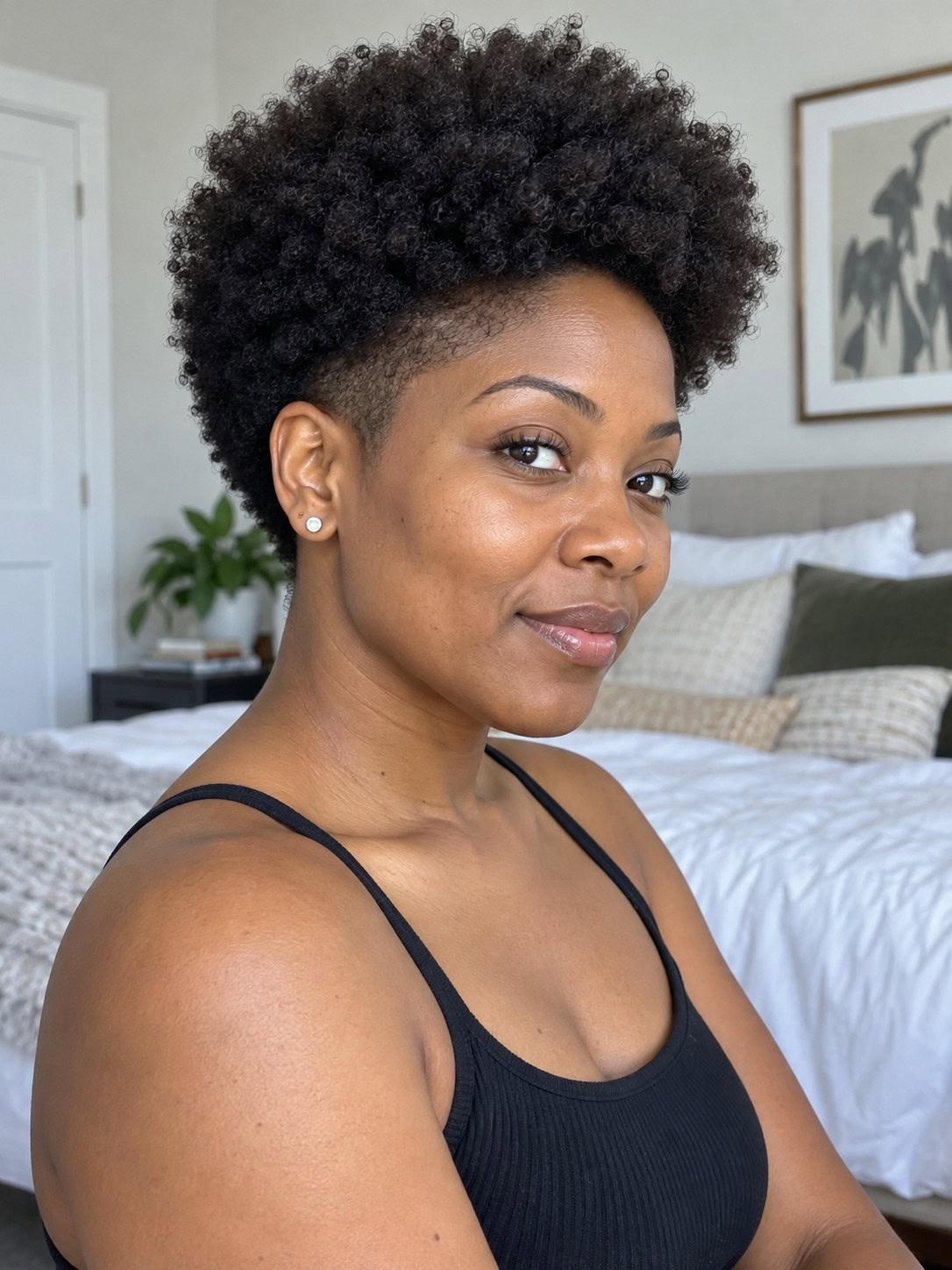
Let the top grow into a rounded afro and taper the sides, and you get height, volume, and a clean perimeter all at once. The faded sides keep an afro from looking bulky around the ears, which is the usual complaint, so all the fullness sits up and out where it belongs. Pick it out gently from the roots for lift, and shape it with a pick rather than pulling. A satin bonnet at night protects the round shape while you sleep.
Sponge Coils on Top
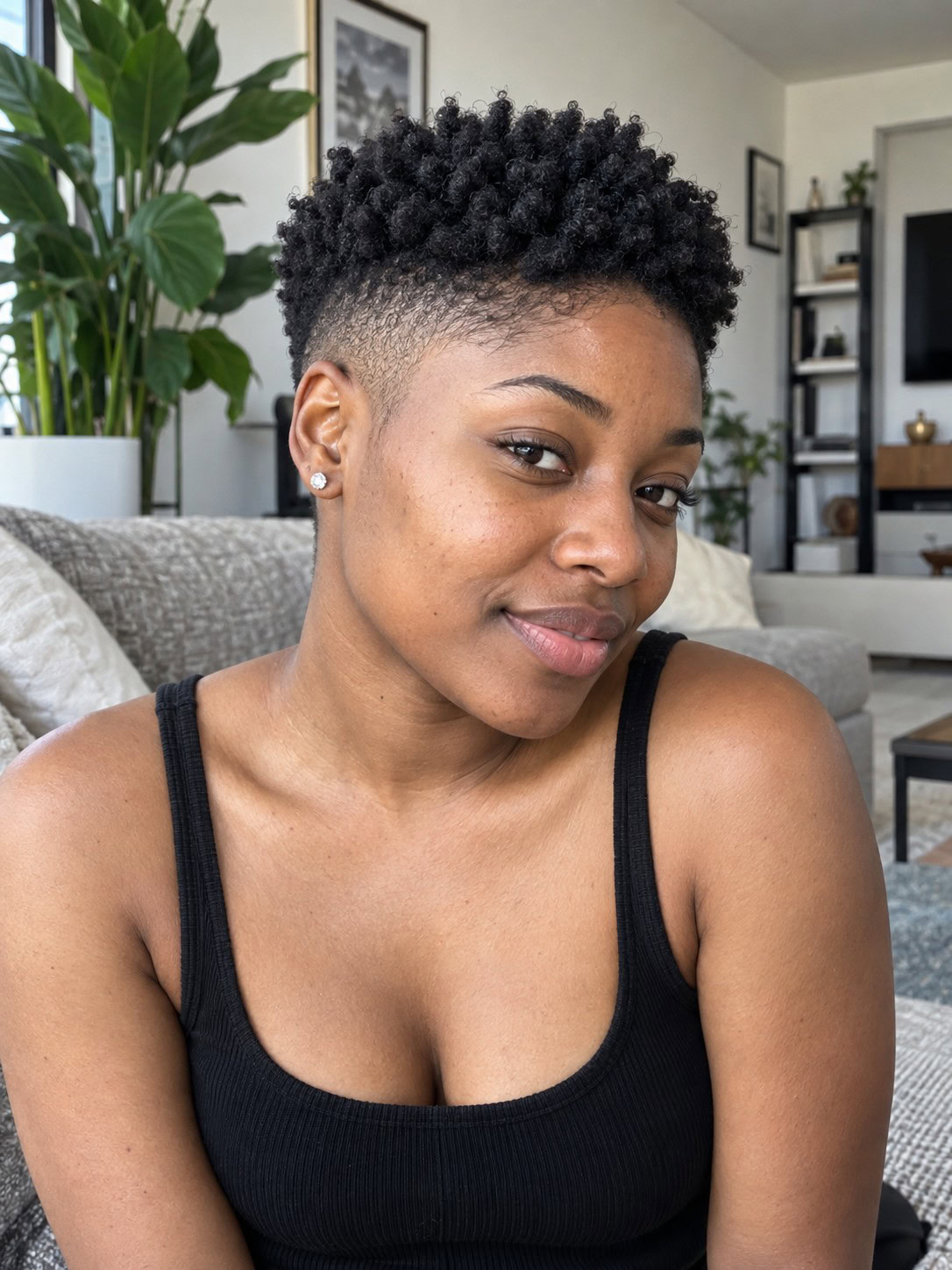
A curl sponge turns the crown into a field of tight, uniform coils that pop against the faded sides. You press the textured sponge in small circles over damp, product-coated hair and the coils form in minutes. It is fast and looks sculpted. One honest caveat, working the sponge too hard or too often can cause single-strand knots and breakage, so keep a light hand and keep the hair moisturized between styling sessions.
Finger Coils on Top
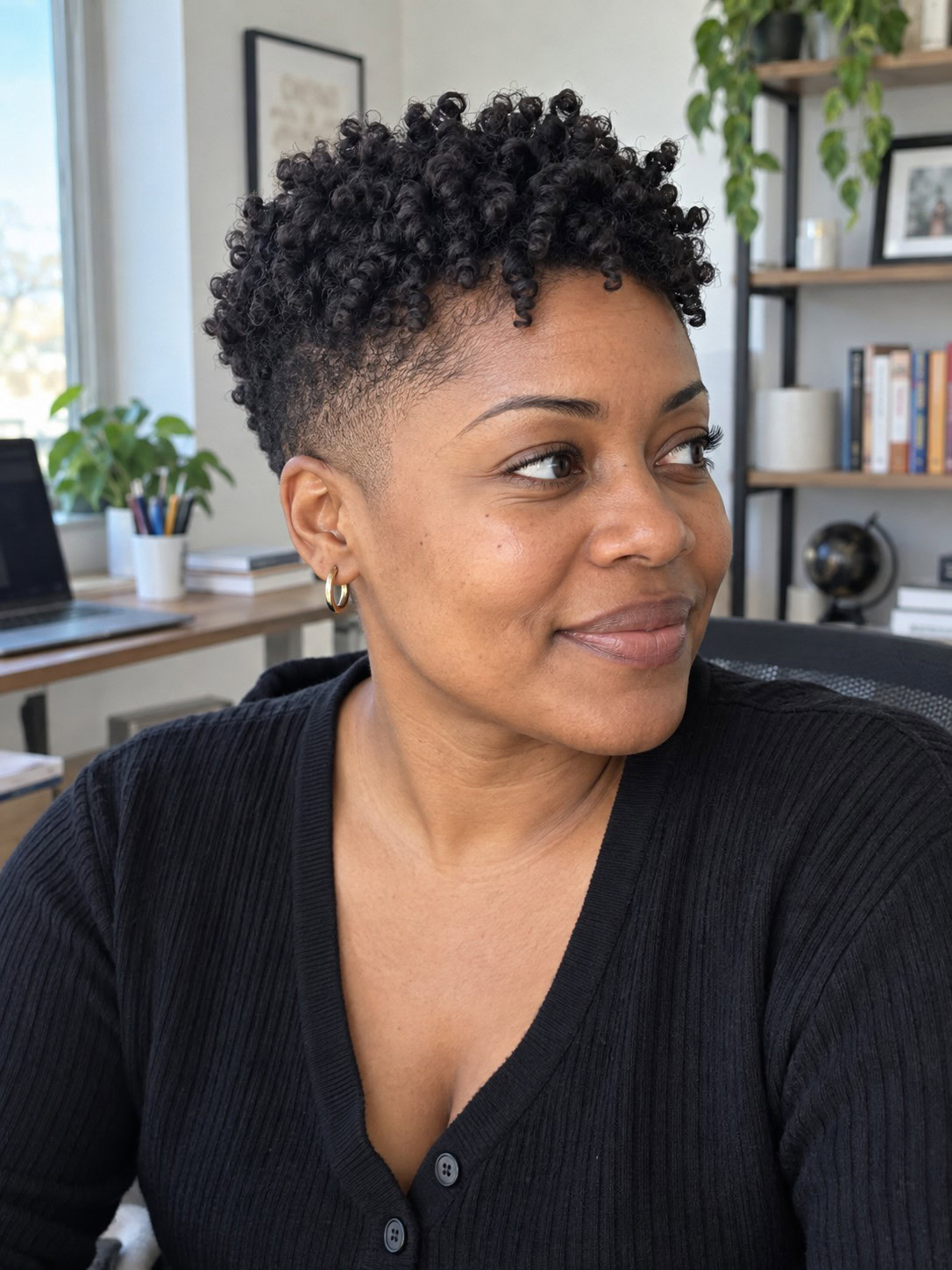
Finger coils give the crown more definition than a sponge, with each coil wrapped by hand around your finger into a smooth spiral. It takes real time, often an hour or more, but the payoff is neat, sculpted coils that hold their shape for days against the clean fade. They loosen gradually, at which point you can fluff the top out into a soft coil-out and stretch a few more days of wear out of the style.
Wash-and-Go on Top
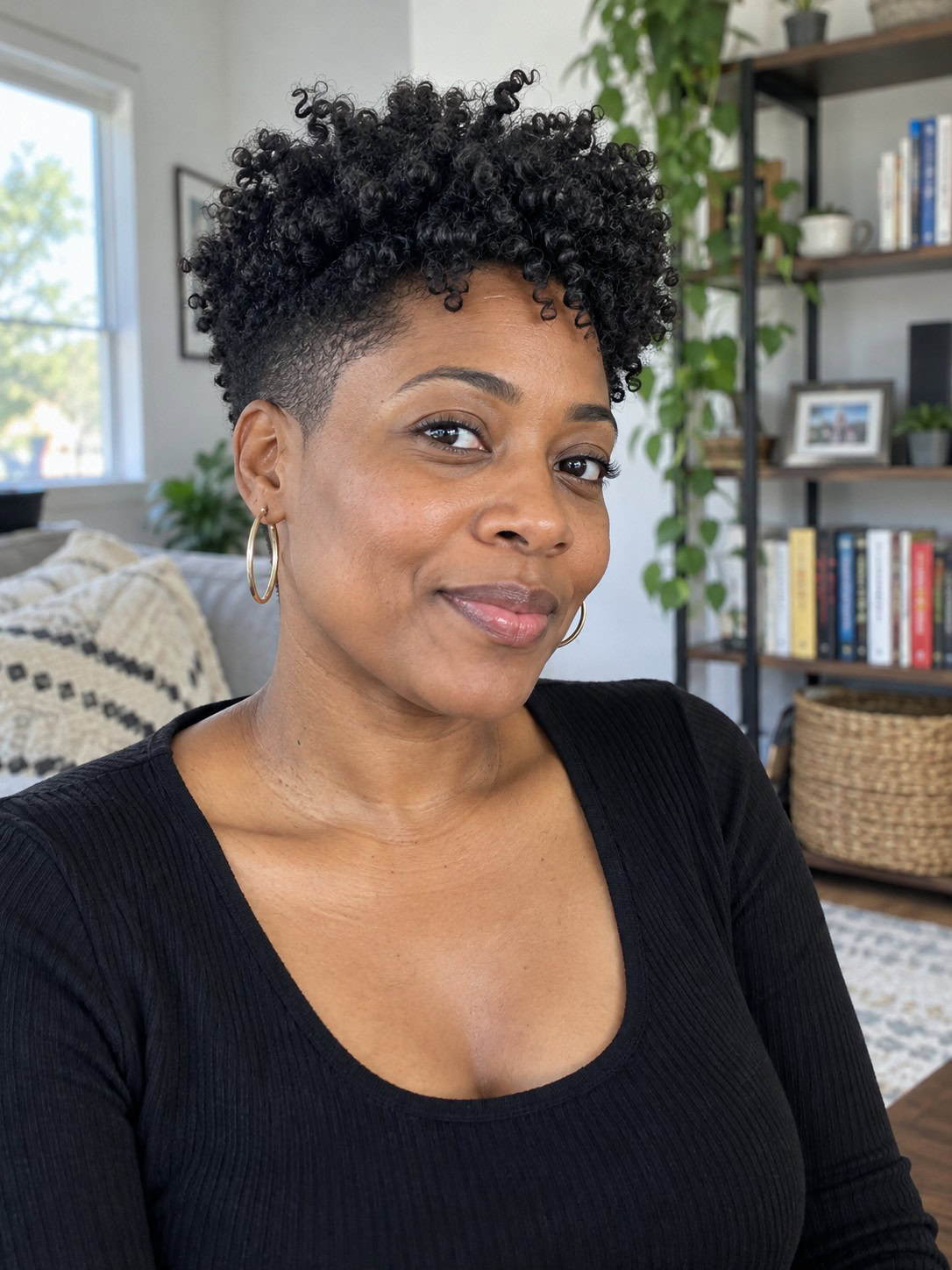
A wash-and-go on top is the most natural of the defined-coil options, showing your true curl pattern rather than a uniform set. You apply a curl cream and gel to soaking wet hair, scrunch, and let the crown dry into its own clumped coils above the fade. It suits looser textures that clump well on their own. Expect noticeable shrinkage on the top, and refresh it every couple of days with a water-and-leave-in mist.
Twist-Out on Top
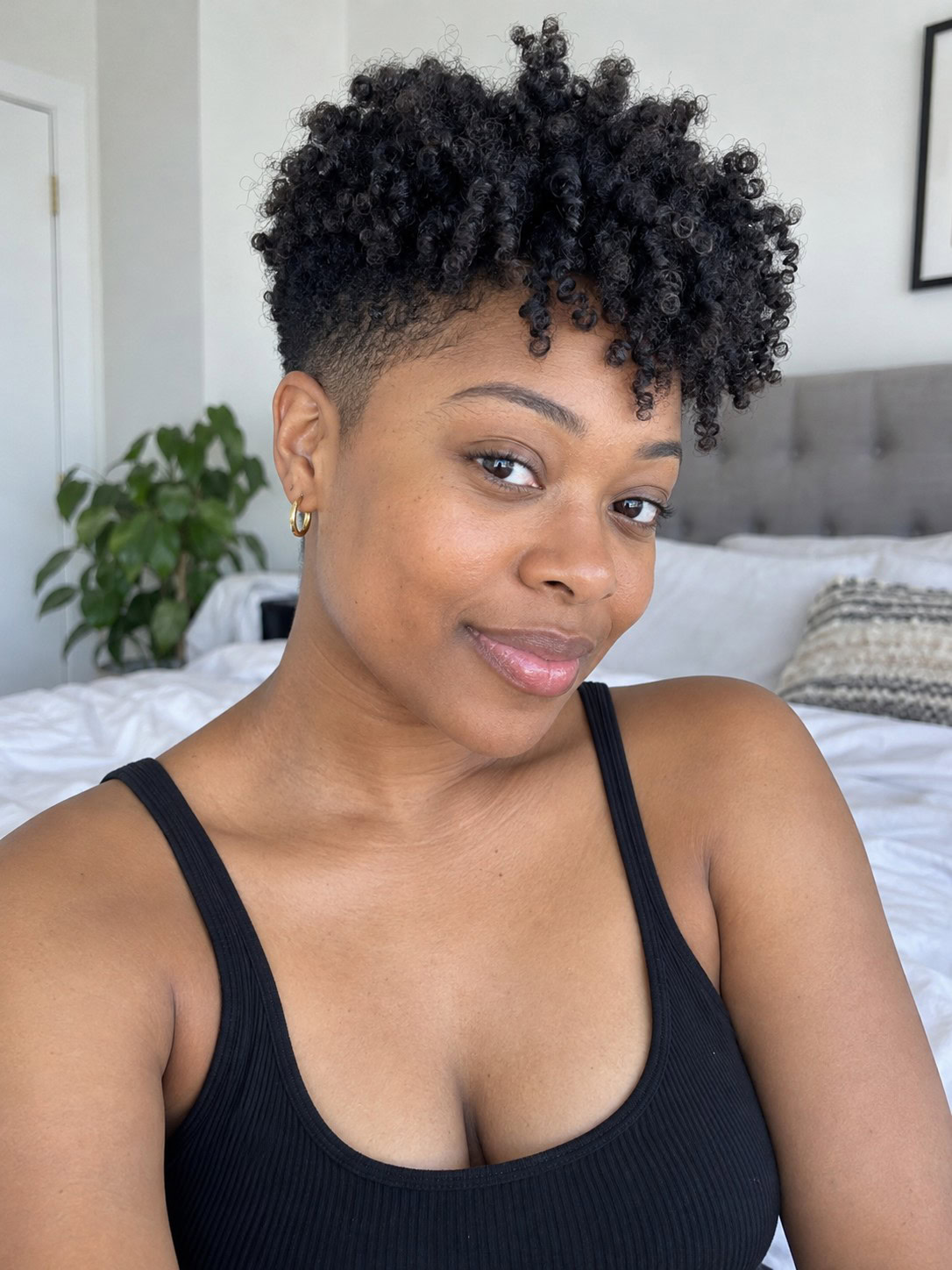
A twist-out gives the crown springy, stretched curls with more volume than a wash-and-go. You two-strand twist the damp top, let it set fully, then unravel each twist so it falls into defined waves above the fade. The contrast between the loose curly top and the tight faded sides is what makes it work. Let it dry completely before you unravel, because taking down damp twists means frizz and a top that goes flat by midday.
Braid-Out on Top
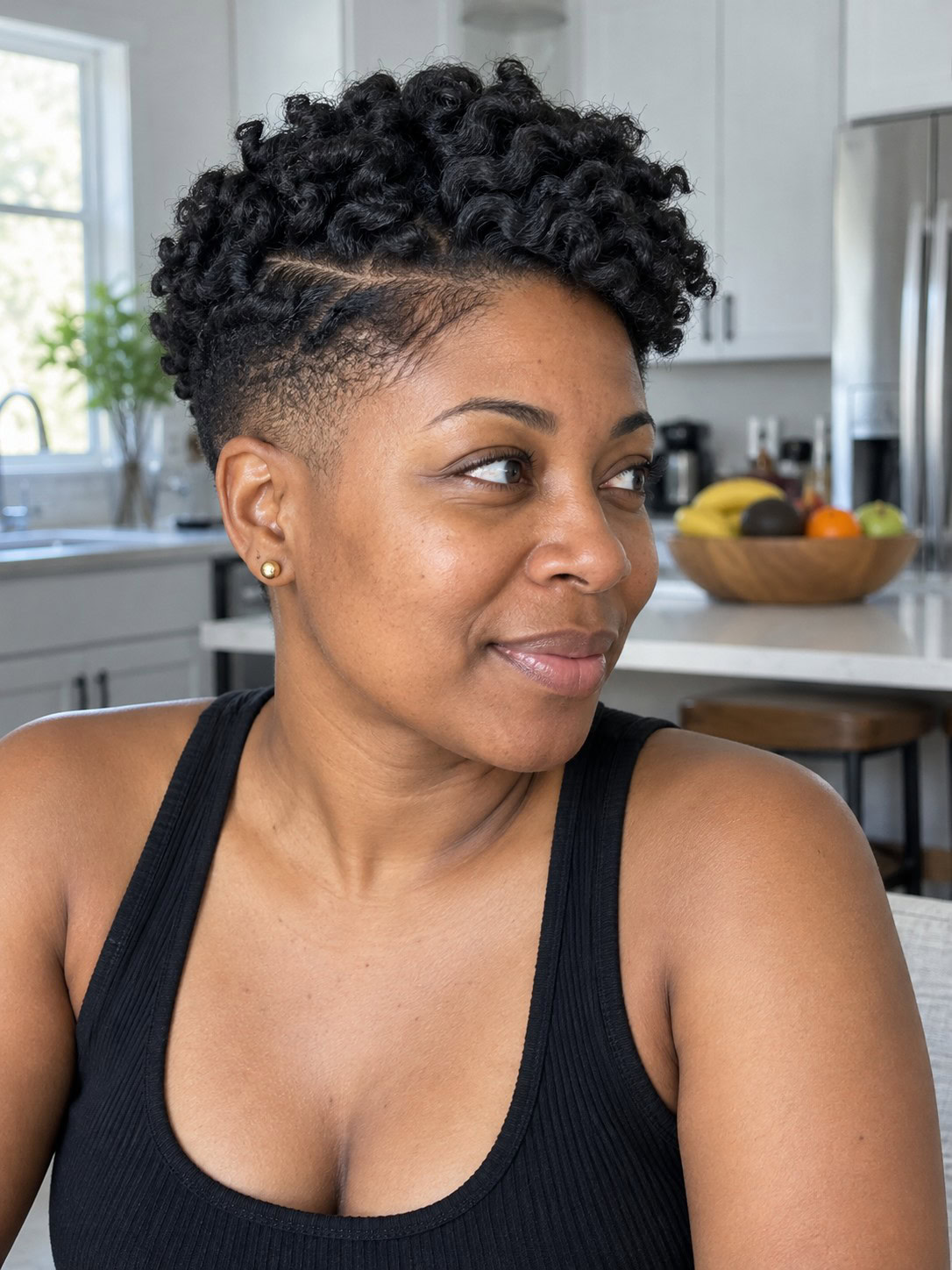
A braid-out works like a twist-out but with three-strand braids instead of twists, and the difference shows in the curl. Braids leave a tighter, more crimped wave with a defined zigzag running through it, sitting full above the faded sides. The smaller the braids, the tighter the pattern. Let the top dry completely before you unravel, and run a little oil through your fingers during take-down to keep the crimped waves from frizzing.
Flat Twists on Top
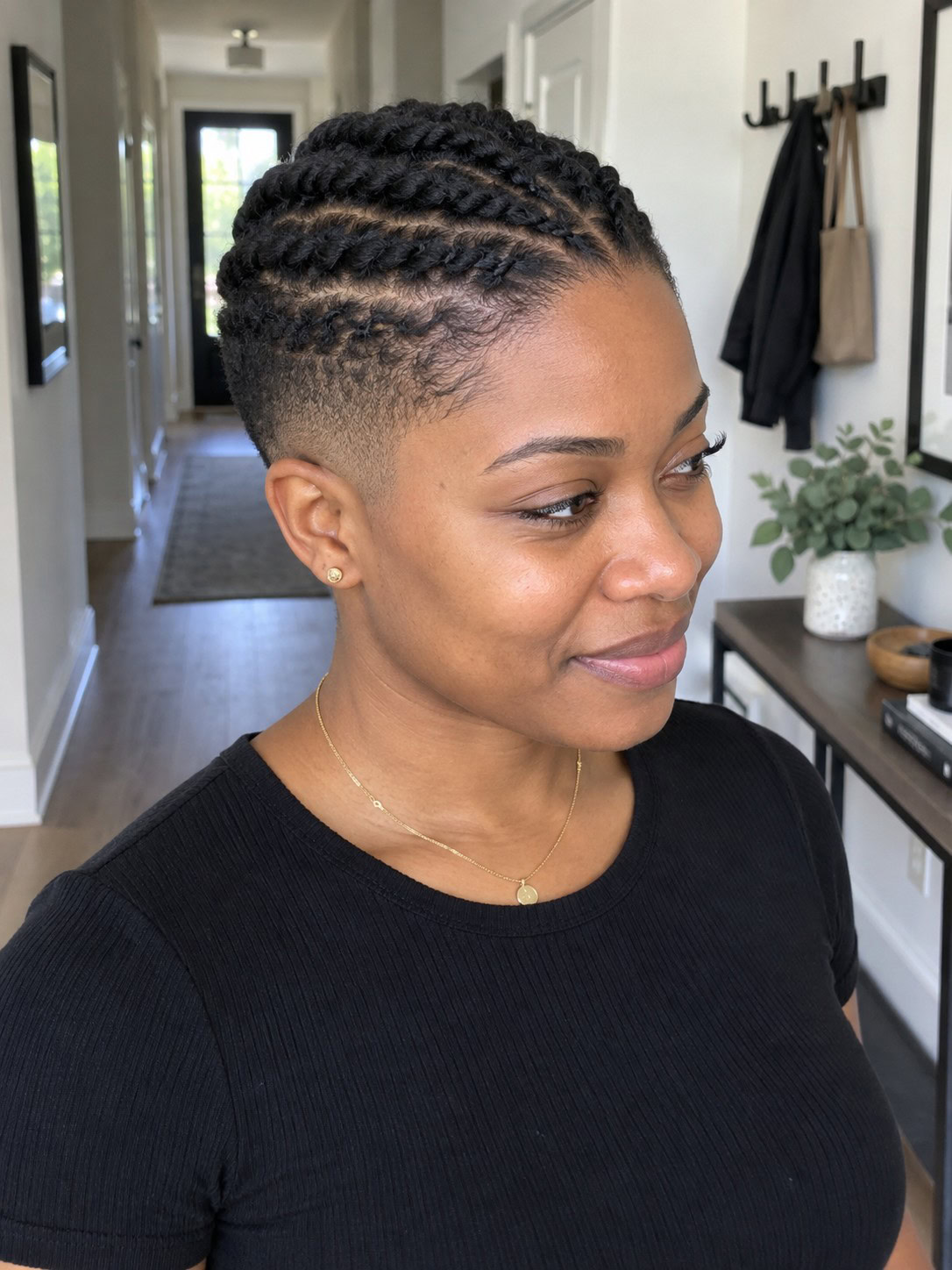
Flat twists sit flush against the scalp on top, a bit like cornrows but using two strands instead of three. Worn in, they create a neat pattern across the crown that pairs cleanly with faded sides. Taken out, they give a stretched twist-out with lift at the root. Either way they double as a low-effort style that lasts several days. Moisturize the top before twisting so the hair stays soft through the week.
Cornrows on Top With Tapered Sides
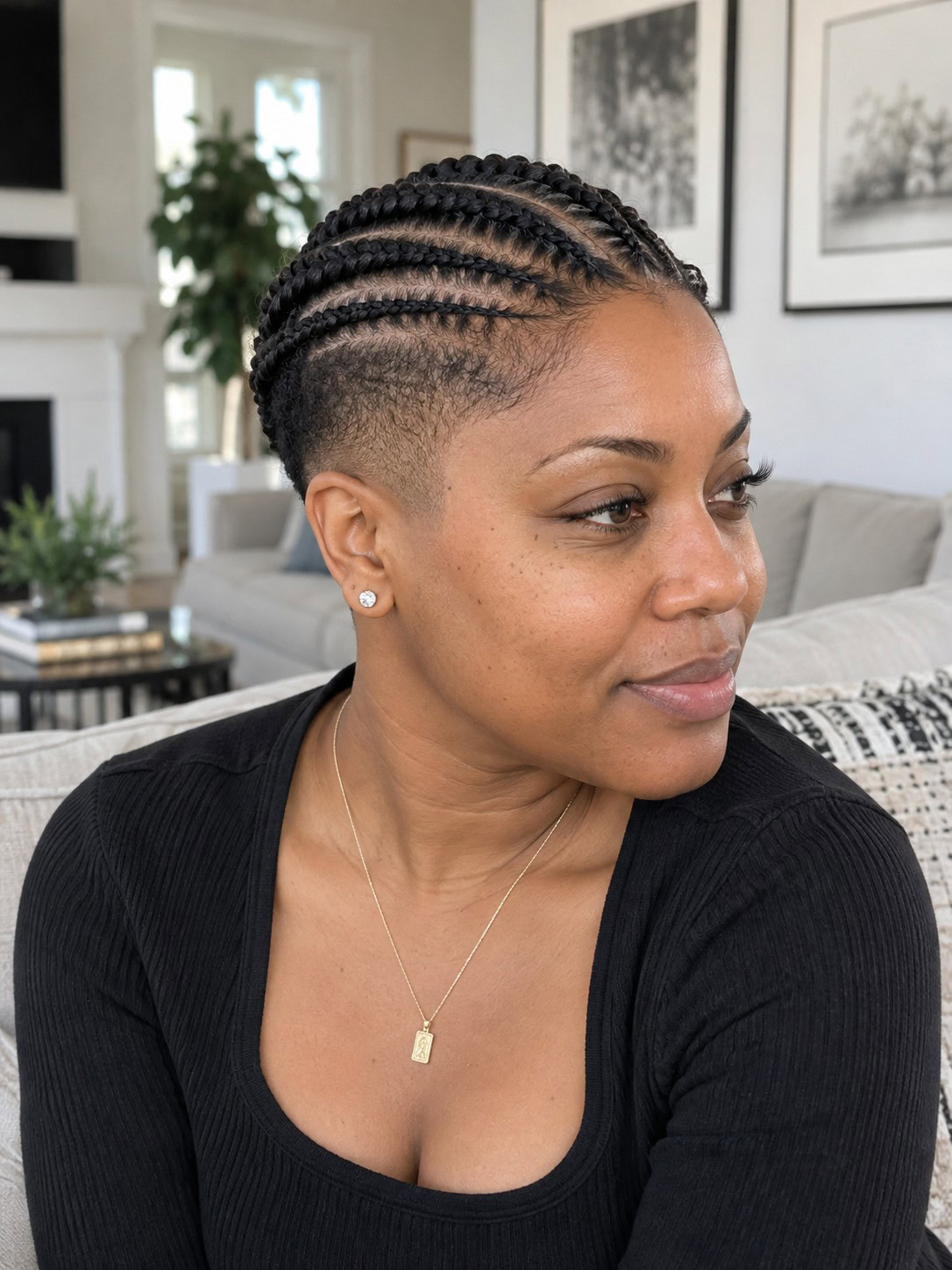
Braiding just the top into cornrows while the sides stay faded is a sharp, practical combination. The cornrows lie flat and last a week or more, so your daily styling drops to almost nothing, while the fade keeps everything looking crisp and modern. You can braid them straight back, to one side, or into a simple pattern. Do not braid too tight at the hairline, since tension there is the most common cause of edge thinning over time.
Two-Strand Twists on Top
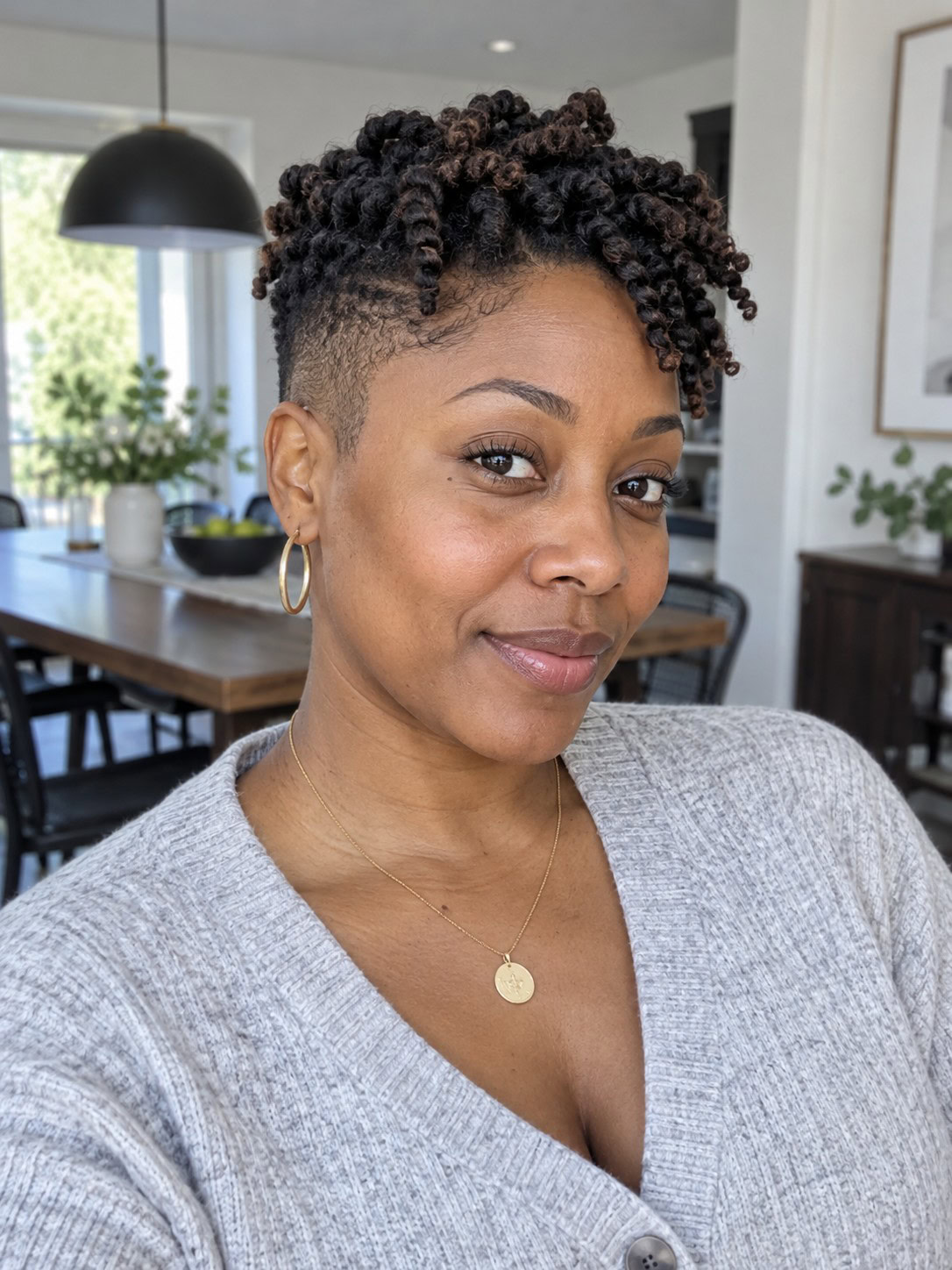
Two-strand twists worn in on the crown give a tidy, textured top you can wear as is, no take-down required. The neat twists sit above the fade and last a week or more with minimal fuss, and when you are ready for a change you can unravel them for an instant twist-out. Moisturize before twisting so the hair does not dry out mid-week. It is one of the most versatile ways to wear a tapered natural cut.
Curly Frohawk With a Taper
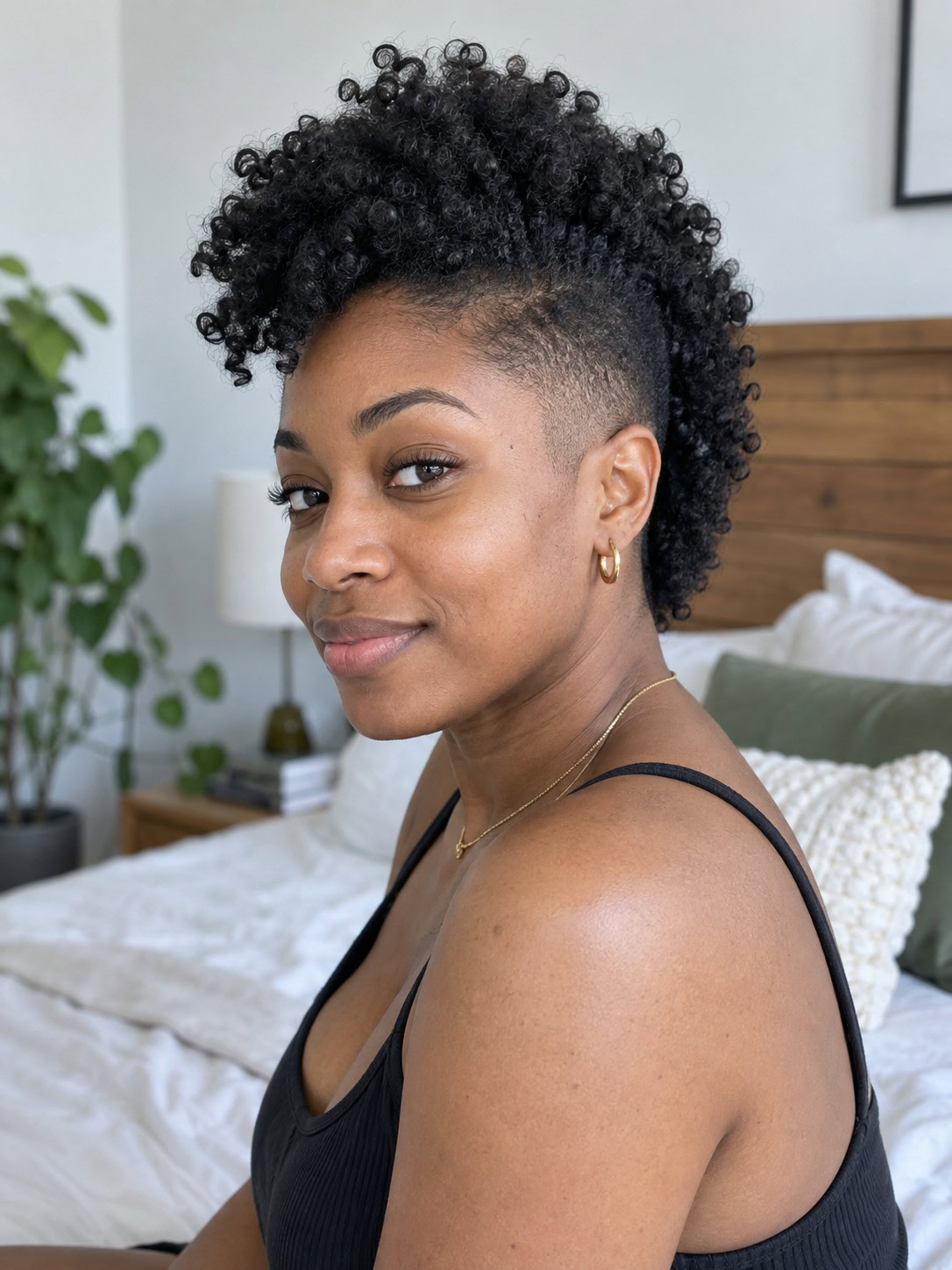
The frohawk concentrates your curly volume down the center of the head while the tapered sides drop away, giving serious height with no gel holding it up. On natural hair it becomes a soft, curly ridge rather than a stiff spike. It flatters long and oval faces and makes a real statement. Keep the tapered sides tidy with regular trims, and use a curl cream that defines the center strip without weighing it flat.
Curly Fringe With a Taper
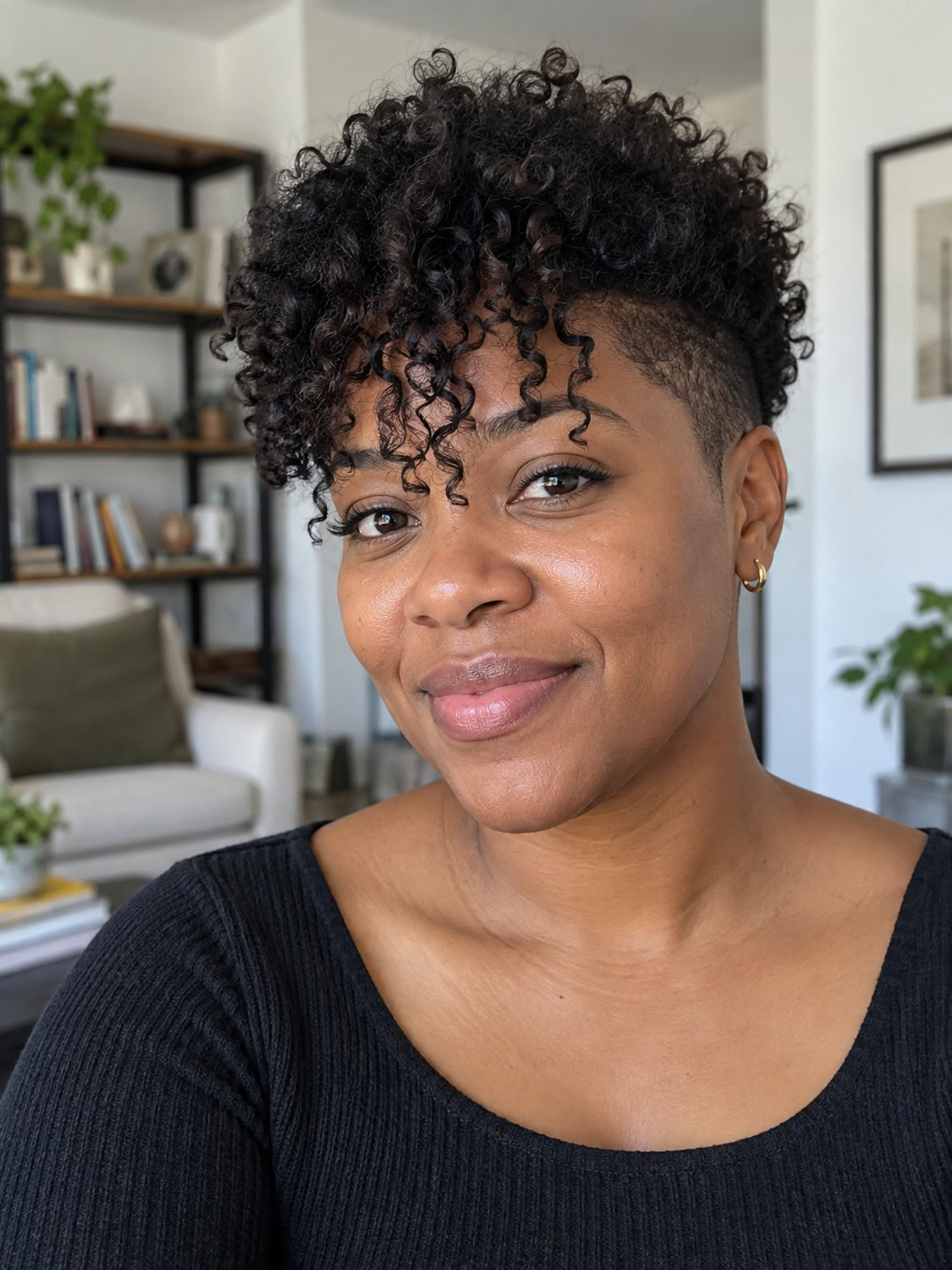
Leaving length at the front for a curly fringe while tapering the sides puts all the softness right around your face. The longer curls fall forward over the forehead, contrasting with the short faded sides for a look that is playful and flattering at once. It suits anyone wanting to soften a high forehead or a longer face. A curl-defining cream keeps the fringe springy, and a quick refresh mist revives it between wash days.
Curly Blowout on Top
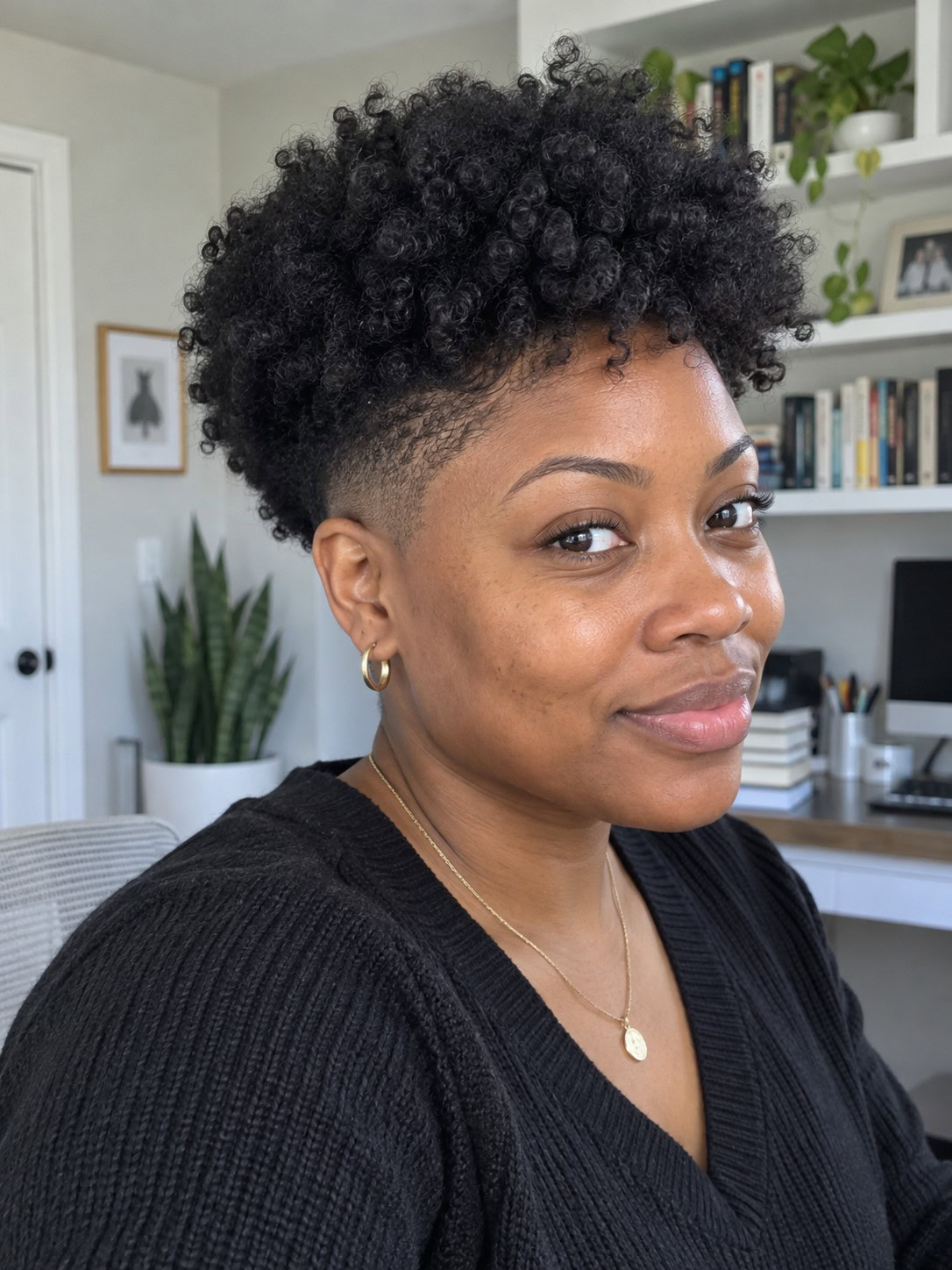
A curly blowout stretches the crown into soft, rounded volume rather than tight definition. You blow-dry the top with a comb attachment or a round brush, lifting the coils into a fuller, taller shape that sits above the faded sides. It shows off length the shrinkage usually hides. Go easy on the heat and use a heat protectant, since regular high-heat blowouts on natural hair can lead to dryness and heat damage over time.
Copper Tapered Cut
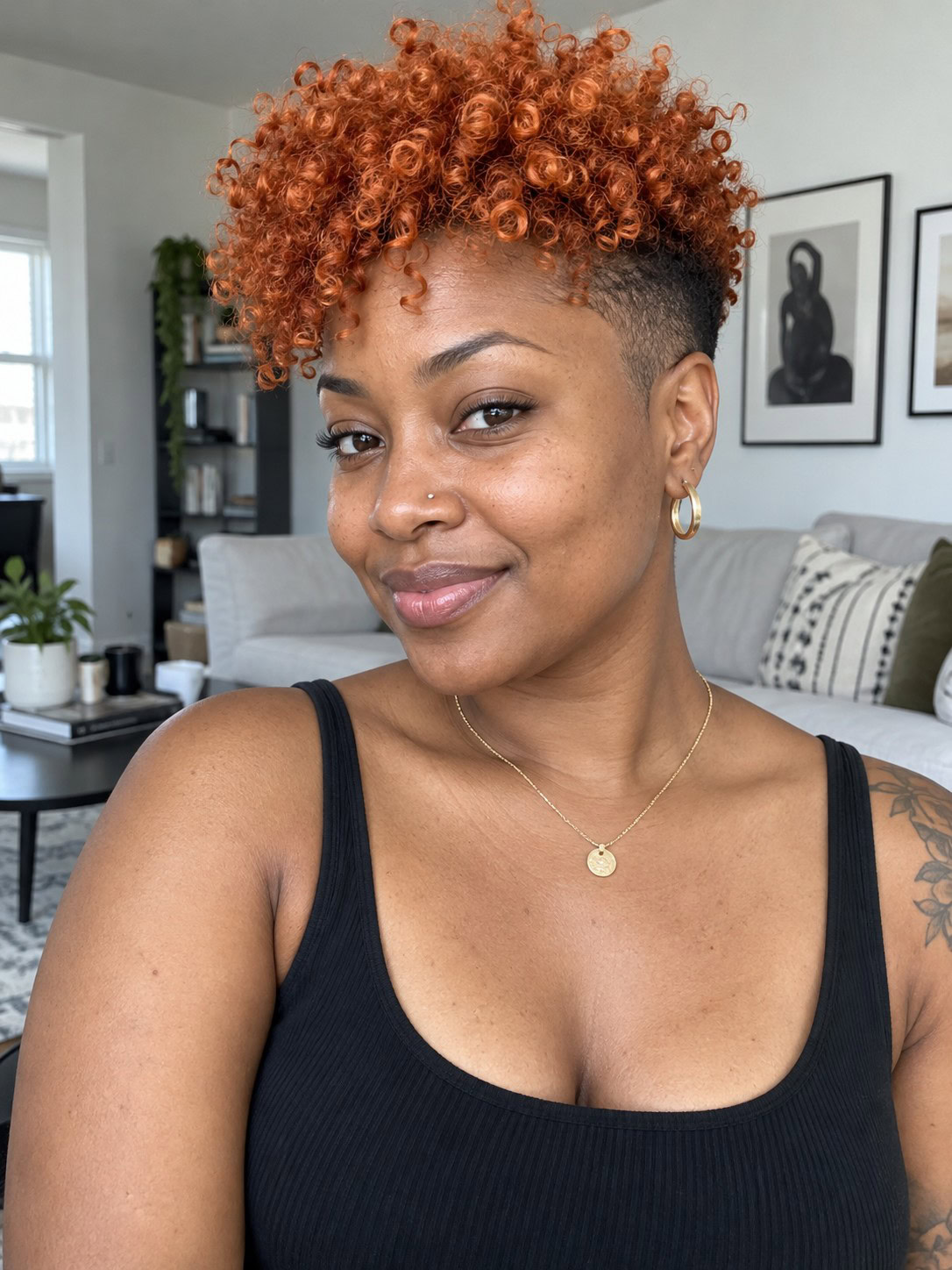
Color turns a tapered cut into a real statement, and warm copper brings out every curl on top while the faded sides catch the light. Go in knowing copper is one of the fastest-fading shades there is, though. The bright warmth dulls within a few weeks, so keeping it vivid means regular gloss refreshes and gentle, sulfate-free washing. If you would rather not chase the color, ask for a slightly deeper copper that fades more gracefully.
Honey-Blonde Tapered Cut
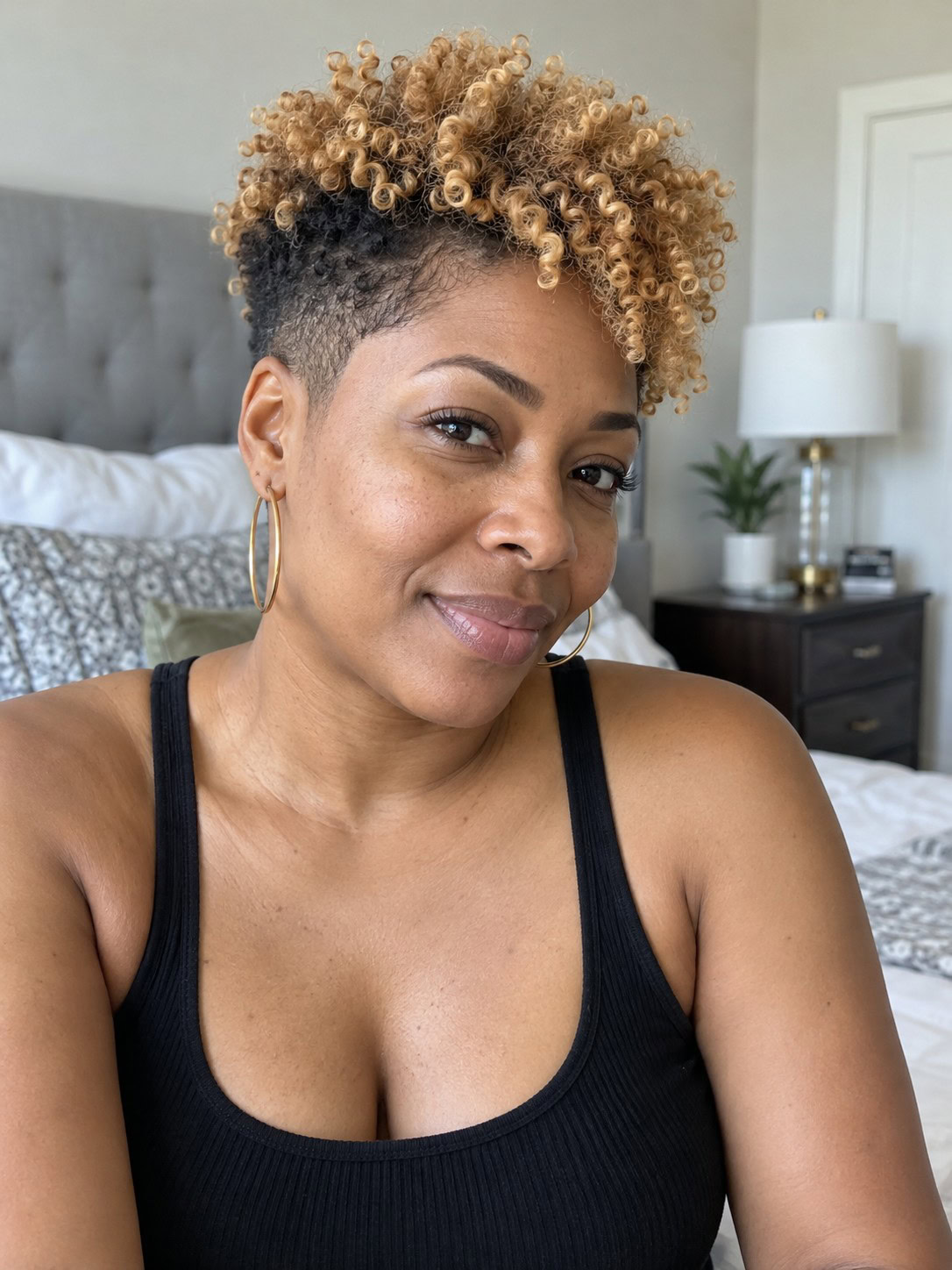
Honey blonde on a tapered natural cut is striking, but it is the biggest commitment on this list. Lifting dark coily hair to a true honey shade takes real processing, and lifting leaves curls drier and more fragile, so deep conditioning and a bond-building treatment stop being optional. Many wearers lighten only the crown and leave the tapered sides their natural dark color, which limits the damage and gives a nice contrast against the fade.