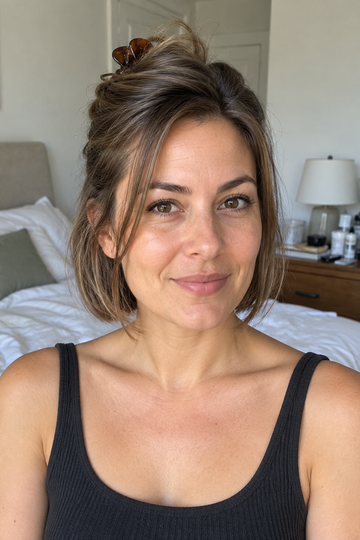
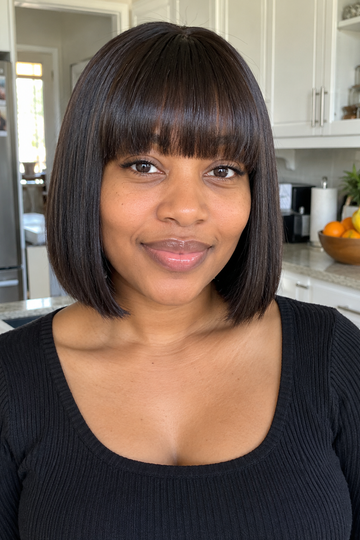
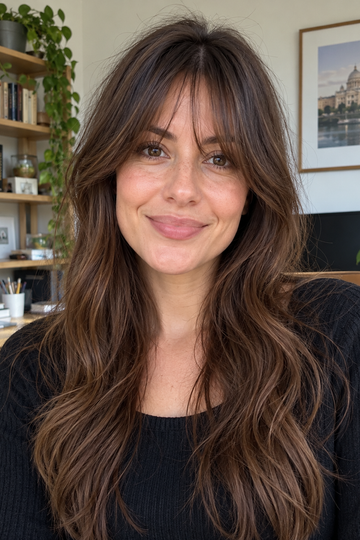
Shoulder length is a bit of a trap. Left all one length, hair that hits the shoulders tends to flip out at the ends and pile into a heavy triangle by afternoon. Layers are the fix. They break up that weight, give the ends somewhere to go, and add the movement that makes a cut feel alive instead of blunt and flat. The catch is that the type of layers matters enormously, and the difference between a soft internal layer and a choppy disconnected one is the difference between two completely different haircuts. Here are the versions worth knowing before your next appointment.
Jump to:
- Long Layers
- Choppy Layers
- Modern Shag
- Wolf Cut
- Butterfly Layers
- Feathered Layers
- V-Cut Layers
- U-Cut Layers
- Face-Framing Layers
- Curtain Bangs With Layers
- Bottleneck Bangs With Layers
- Side-Swept Layers
- Layered Beach Waves
- Layered Curly Hair
- Layered Natural Coils
- Razor-Cut Layers
- Sleek Straight Layers
- Voluminous Blowout Layers
- Flipped-Out Ends
- Invisible Layers
- Layers for Fine Hair
- Layers for Thick Hair
- Balayage on Layered Hair
- Money-Piece With Layers
Long Layers

Long layers are the gentlest way in. Your stylist keeps the bulk of the length intact and cuts the internal layers long, so movement builds gradually from the mid-lengths down. Nothing about the shape looks drastic, which is exactly the appeal for anyone nervous about a big change. It suits straight and wavy hair equally, and because the layers are subtle, growing them out never leaves you stuck in an awkward stage.
Choppy Layers

Choppy layers go the opposite direction, with shorter, more disconnected pieces cut throughout for a bolder, textured result. The ends look deliberately uneven rather than blended, which gives the hair grit and attitude. This works best on thick or coarse hair that can carry the disconnection without looking sparse. Fine hair can wear it too, just ask for the choppiness kept softer. Texture spray is your friend for keeping the separation defined all day.
Modern Shag

The shag is having a long moment, and shoulder length is where it sits most comfortably. It stacks lots of layers from the crown down, usually paired with a soft fringe, for a lived-in, rock-leaning finish. The whole point is texture, so it rewards hair with natural wave or a bit of grip. Dead-straight, fine hair can fall limp in a shag unless you work in some product and let it air-dry a little rough.
Wolf Cut

Think of the wolf cut as a shag turned up louder. It borrows from the mullet too, with a shorter, heavily layered crown and longer, wispy pieces trailing toward the shoulders, plus a fringe framing the face. The disconnection is sharper and the attitude bolder. It thrives on texture and forgives a lot of messiness, but straighter hair needs regular trims or the shape starts to look overgrown rather than deliberately wild.
Butterfly Layers

The butterfly cut is the most requested layered look going right now, and for good reason. It combines short face-framing layers around the crown with much longer layers underneath, so the top pieces spring up with volume while your length stays put. The contrast gives serious body around the face. It loves a round-brush blowout to fan the shorter layers out, and it flatters hair with natural body more than pin-straight fine hair.
Feathered Layers
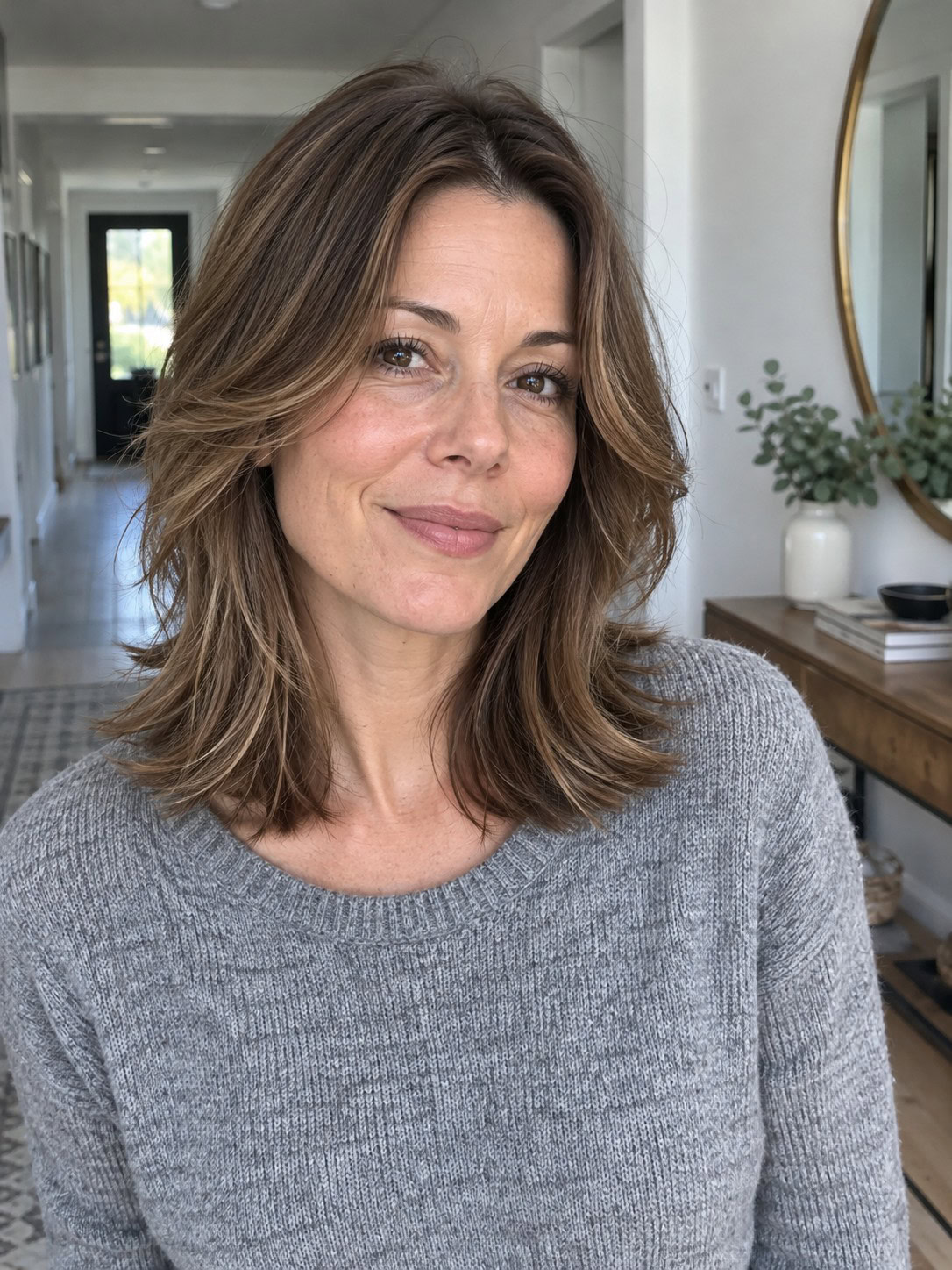
Feathered layers pull straight from the seventies and keep coming back because they simply look good in motion. The layers are cut and flicked so the ends sweep away from the face in soft wings, framing the cheekbones on both sides. It is a softer, prettier cousin of the shag. A round brush or a few large hot rollers gets that outward flick, and a light hairspray keeps the wings from collapsing by lunchtime.
V-Cut Layers
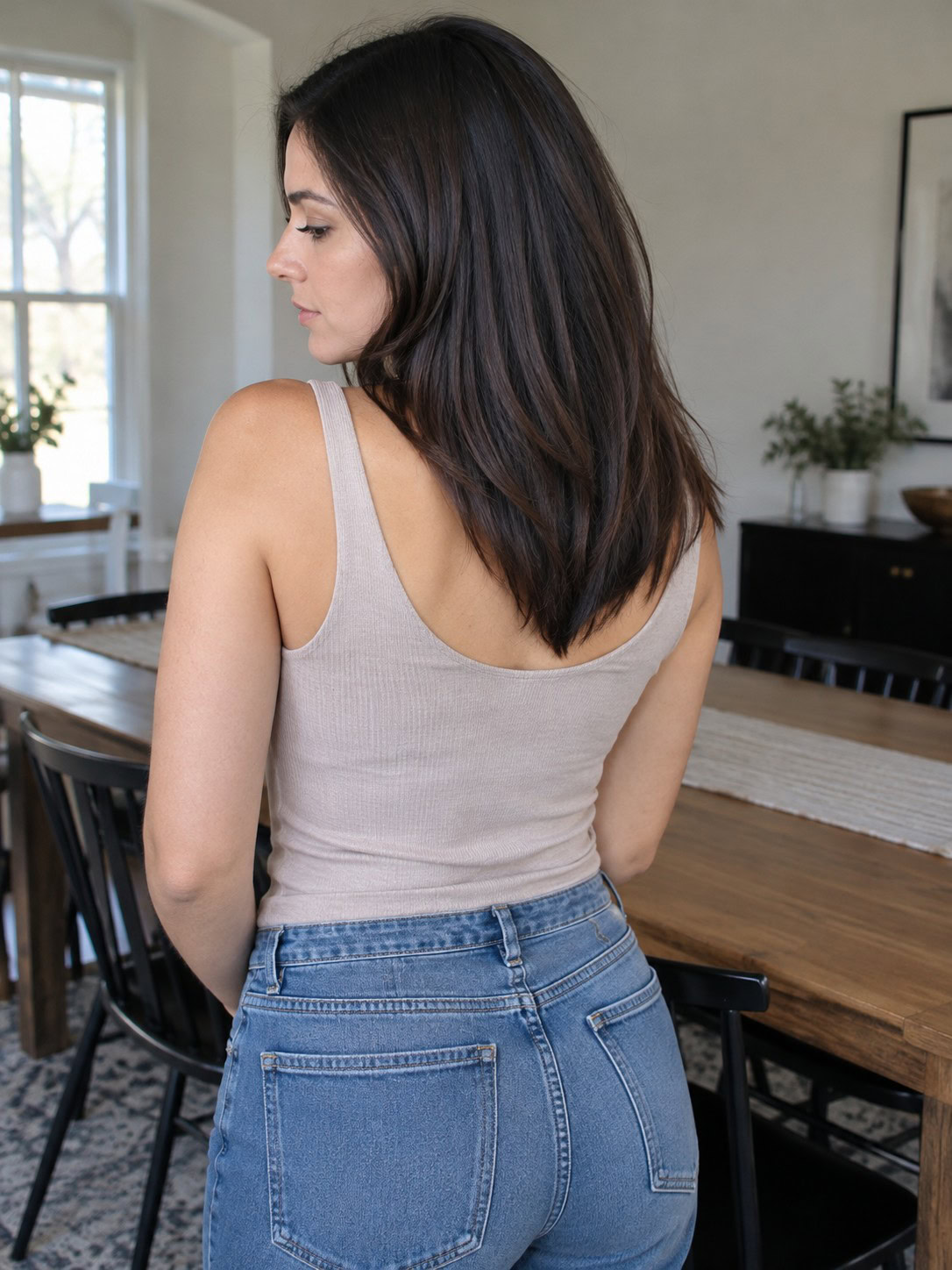
A V-cut shapes the back into a point, with the layers getting gradually longer toward the center so the whole thing tapers down to a soft V. It adds the illusion of length and keeps heavy hair from sitting like a solid block. You mostly notice it from behind, which makes it a nice choice when you want visible layering up front and a defined shape in the back. It suits thick hair especially well.
U-Cut Layers

A U-cut works on the same idea as the V but rounds the bottom into a soft U instead of a point. The result is gentler and more classic, with the layers curving evenly from shoulder to shoulder. It keeps more weight through the ends than a V-cut does, so it is the better pick if you want fullness at the bottom rather than a tapered finish. Razor-cut layers on top add movement without thinning it out.
Face-Framing Layers
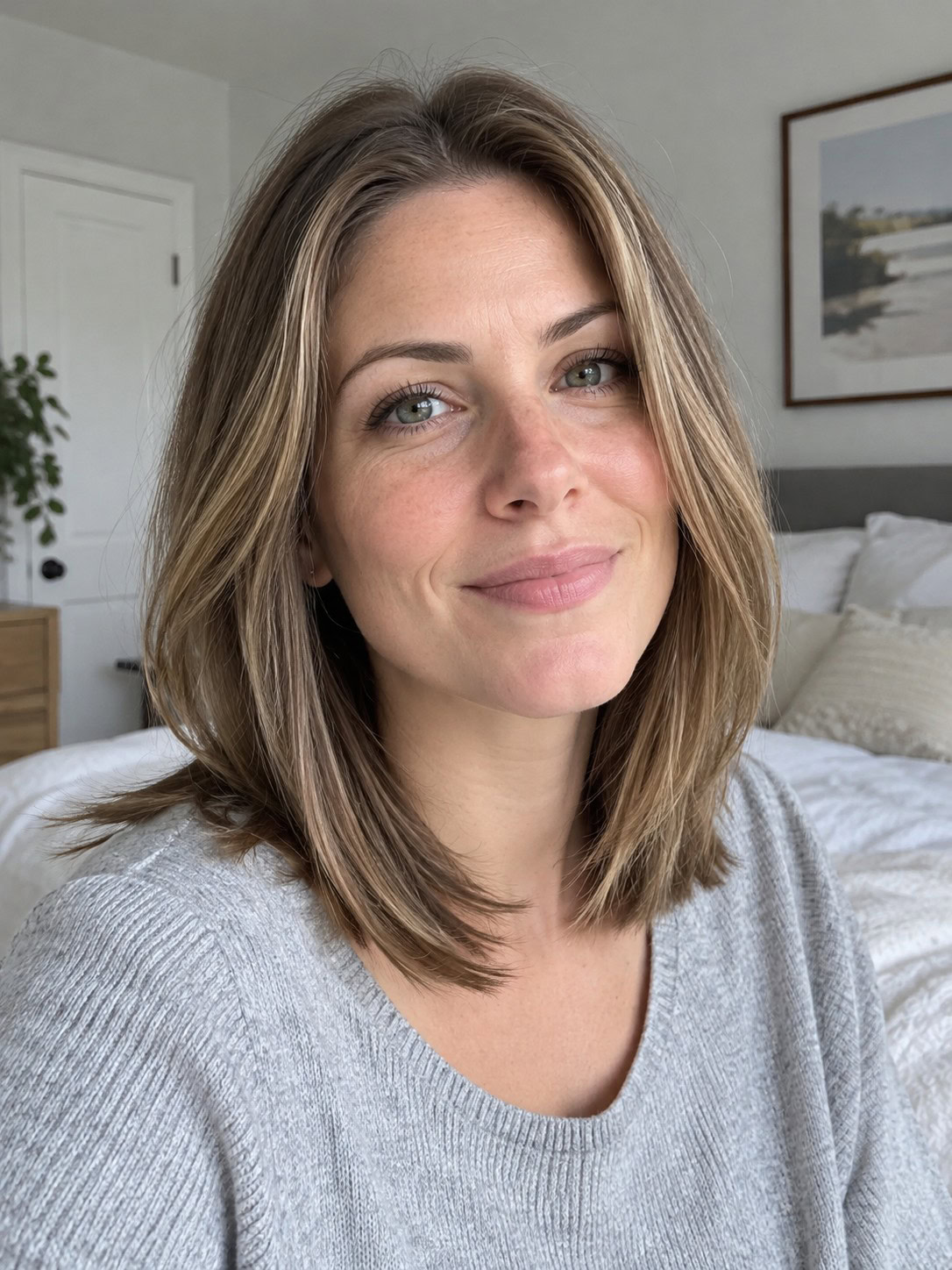
Face-framing layers are the small change with the biggest payoff. A few shorter pieces cut around the front, angled to fall along your cheekbones and jaw, draw attention to your features and soften the whole cut. There is no fringe involved, so nothing to grow out awkwardly. They blend back into your length within a couple of inches. This is the layer to ask for if you want to look different without committing to much at all.
Curtain Bangs With Layers
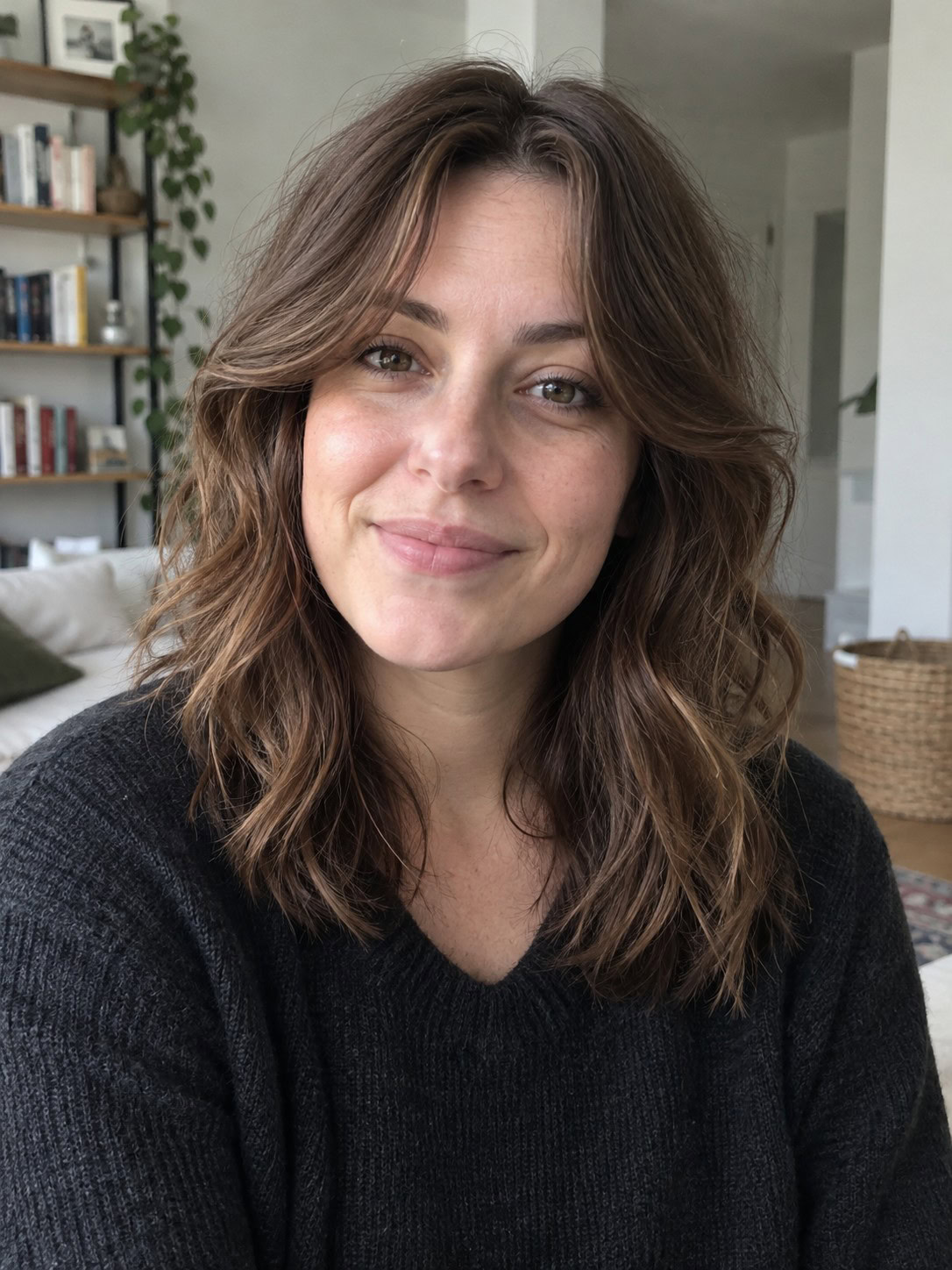
Curtain bangs take the face-framing idea and turn it into an actual fringe, split down the middle so the pieces sweep open on either side like a curtain. Paired with layers through the rest of the hair, they tie the front and the length together. They grow out kindly, blending into the layers rather than hanging in your eyes. Styling takes a minute with a round brush, but the payoff around the face is worth it.
Bottleneck Bangs With Layers
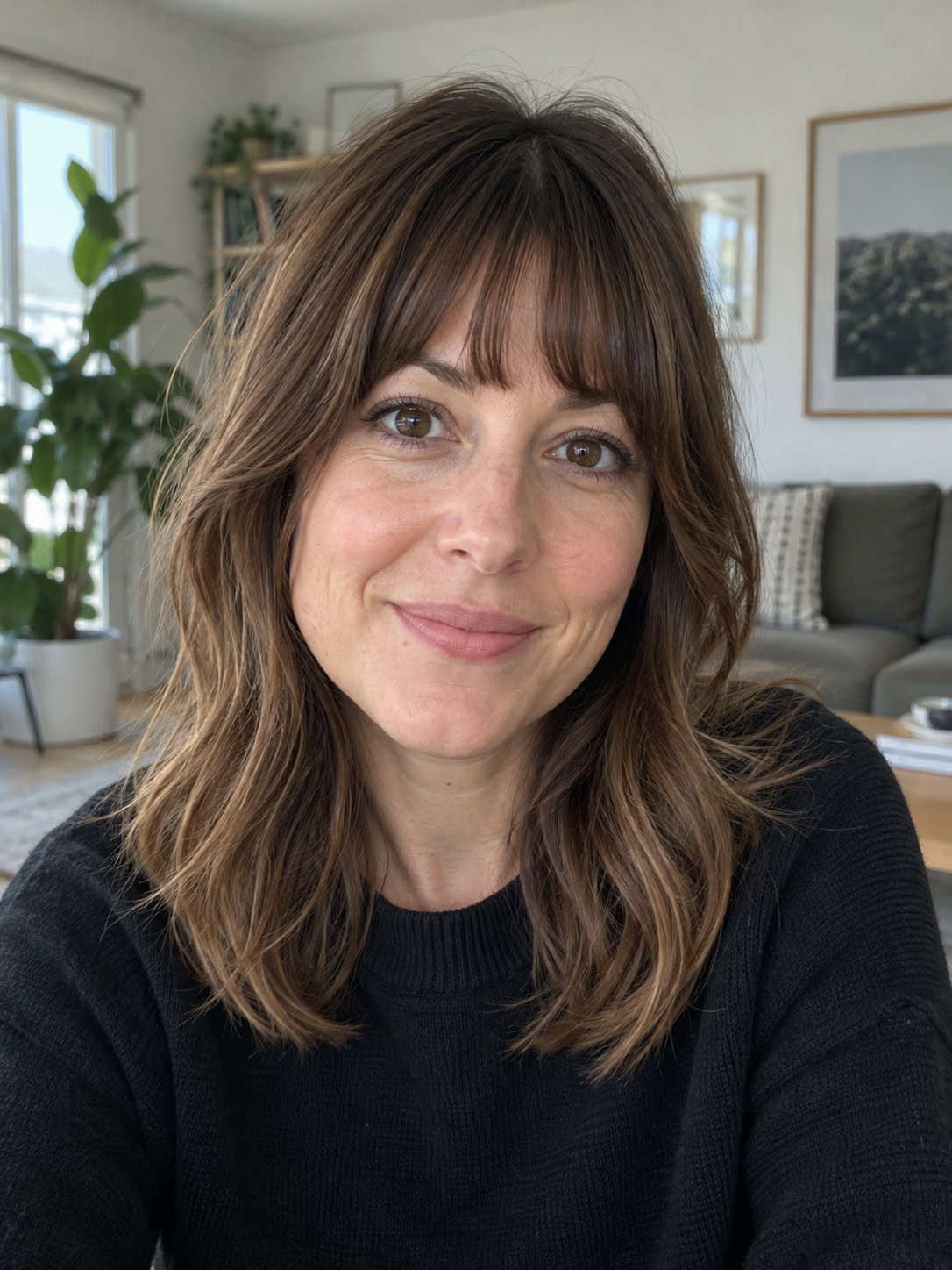
Bottleneck bangs are the softer, more forgiving fringe. They sit shorter and rounder in the middle and get gradually longer at the sides, narrowing in like the neck of a bottle before flowing into your face-framing layers. The shape is less severe than a blunt fringe and less open than curtain bangs, which makes it a good middle ground. It flatters heart and oval faces particularly well and blends into shoulder-length layers without a hard line.
Side-Swept Layers
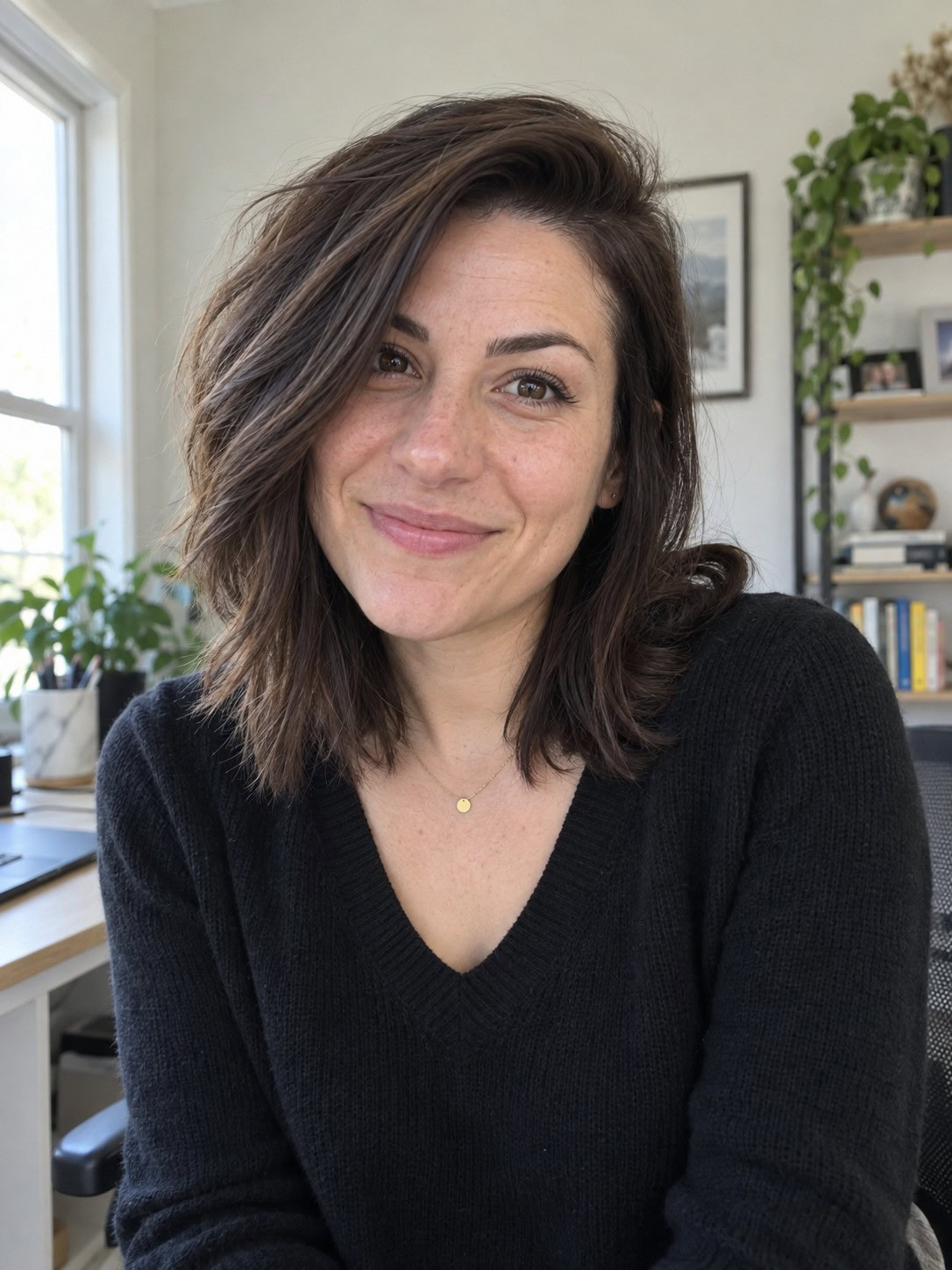
A deep side part changes layered hair completely. Sweeping everything to one side stacks volume on the fuller side and lets the layers cascade across at an angle. No new cut is required, just a comb and a part you are willing to retrain for a few days. It adds instant drama and works on almost any hair type. Fine hair especially benefits, since the side part creates lift at the root that a center part flattens.
Layered Beach Waves
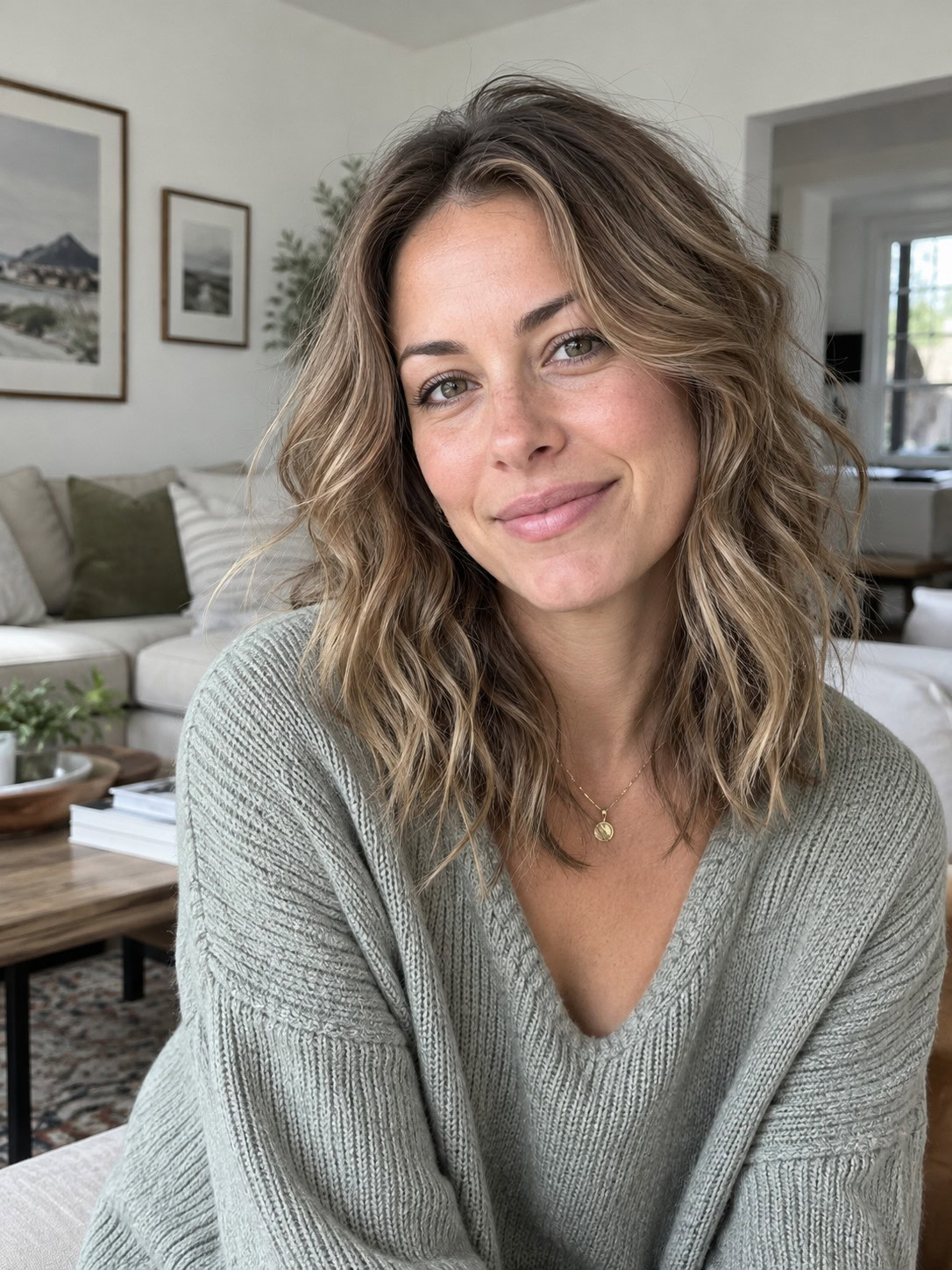
Beach waves and layers were made for each other. The layers give the waves room to bend and separate instead of clumping into one solid wave, so the finished texture looks loose and undone. You can get there with a curling wand, a flat iron, or an overnight braid on damp hair. A texturizing spray locks it in. On shoulder-length hair the waves hold their shape better than they do on heavy long hair.
Layered Curly Hair
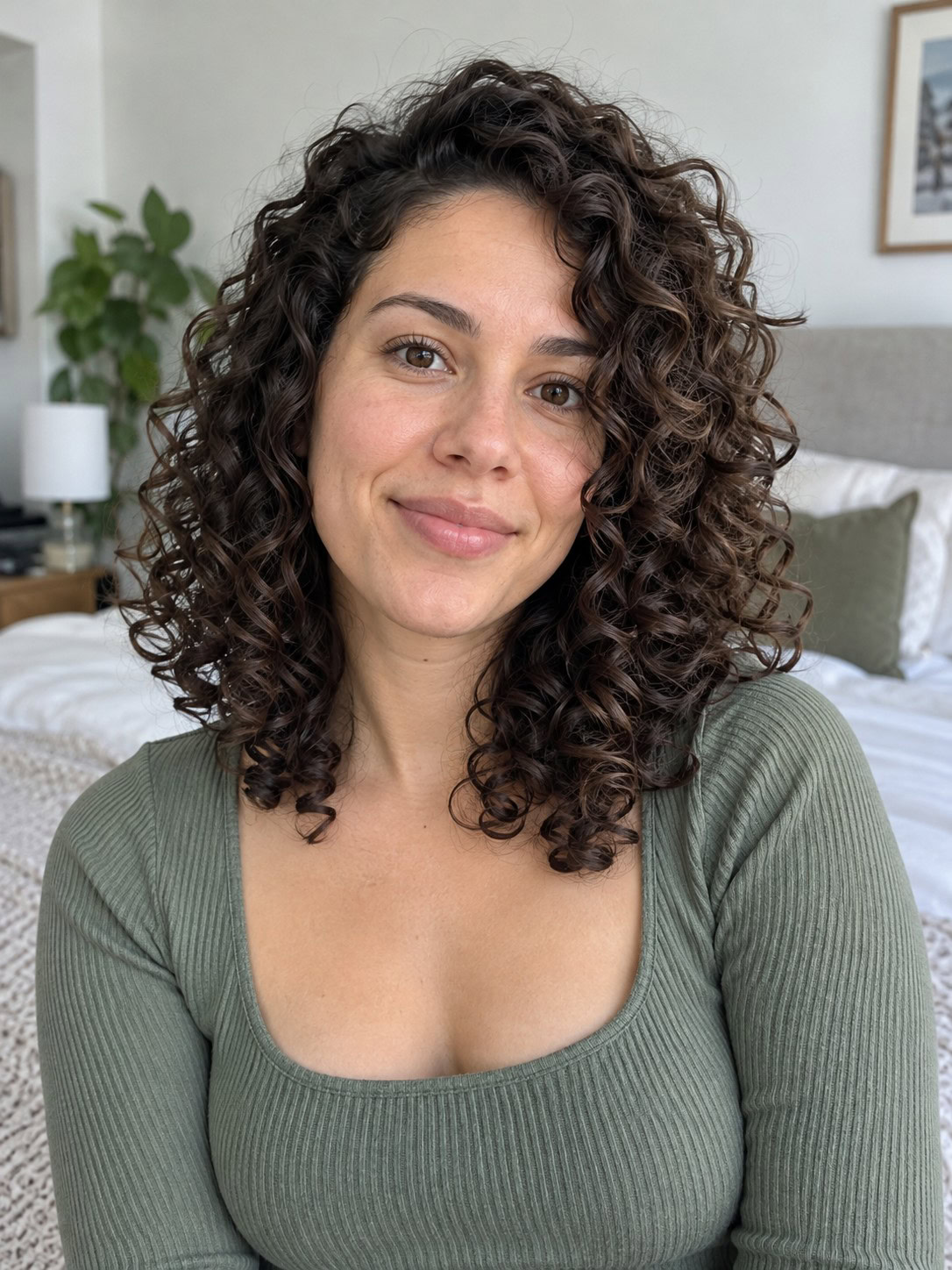
Curly hair needs layers more than most, because one length on curls balloons into a triangle fast. Layers cut into the curl remove that bulk and let each section spring and stack the way it wants to. The key is having it cut dry, curl by curl, so your stylist can see the actual shape. Wet cutting on curly hair is a gamble. Done right, shoulder-length curls look full and shaped rather than boxy.
Layered Natural Coils
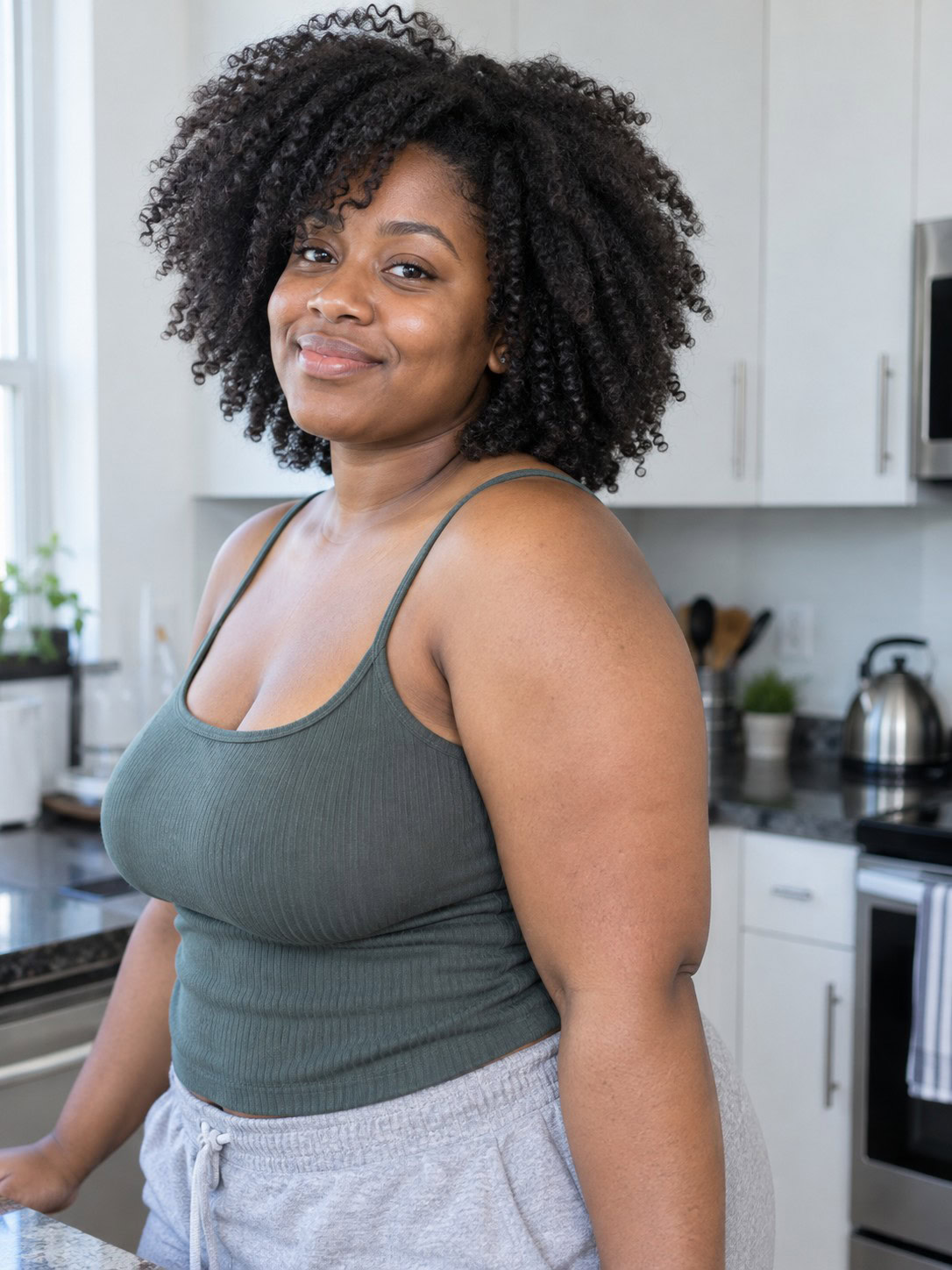
Tight natural coils take beautifully to layering when it is done with the texture in mind. Layers cut into coily hair build a rounded, shaped body at shoulder length and stop the hair from sitting flat and heavy. A skilled stylist cuts it stretched or dry to account for shrinkage, since coils can bounce up several inches shorter than they look wet. Regular moisture and a satin bonnet at night keep the shape soft and the definition intact.
Razor-Cut Layers
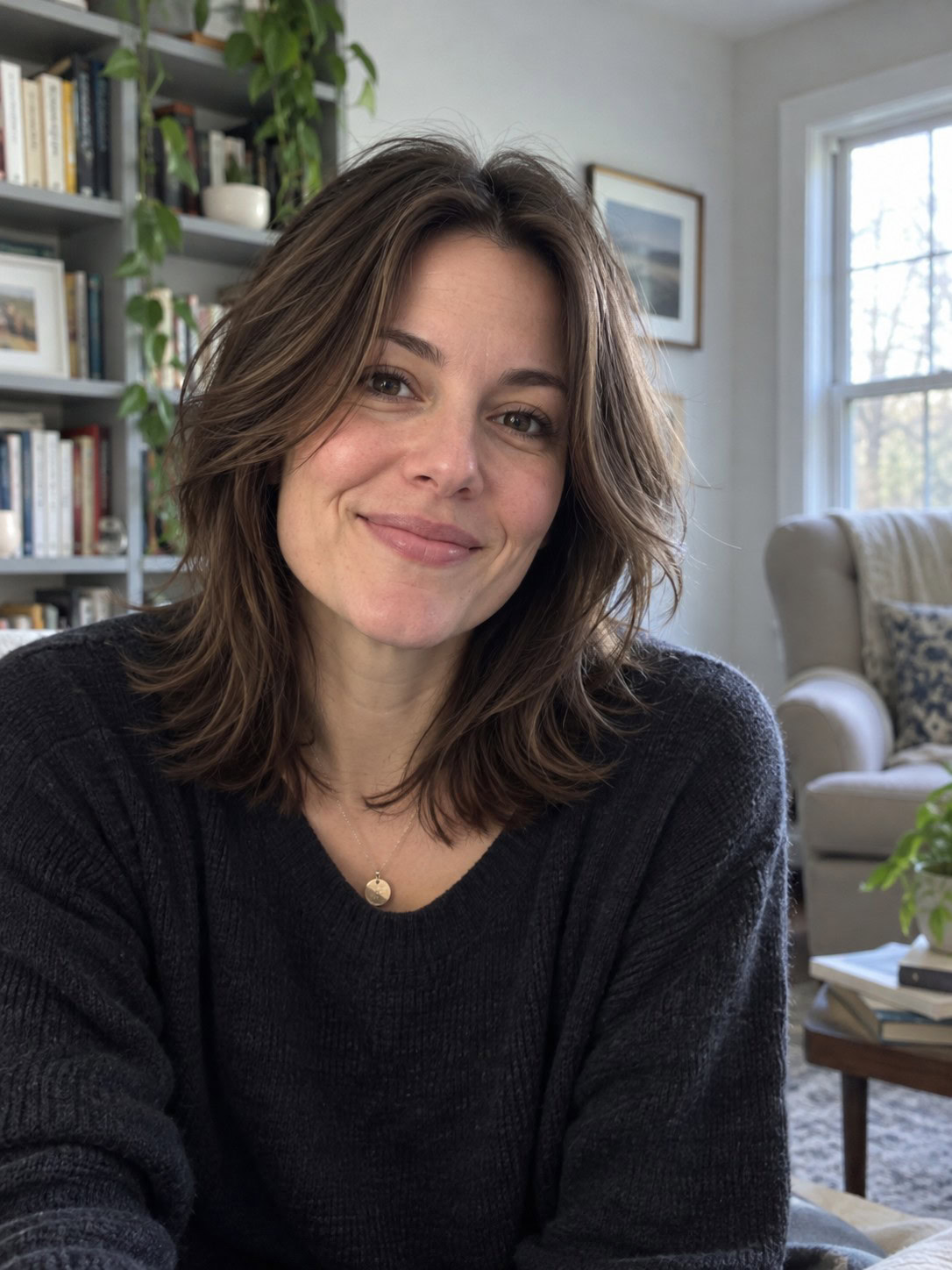
A razor gives layers a different character than scissors do. Instead of a clean blunt edge, the razor tapers each piece to a fine, wispy point, so the layers melt into one another with soft, feathered ends. The effect is airy and lived-in. There is a catch worth knowing, razoring can rough up the cuticle and encourage frizz or splits on dry or fragile hair, so it is best saved for healthy, medium-to-thick hair.
Sleek Straight Layers
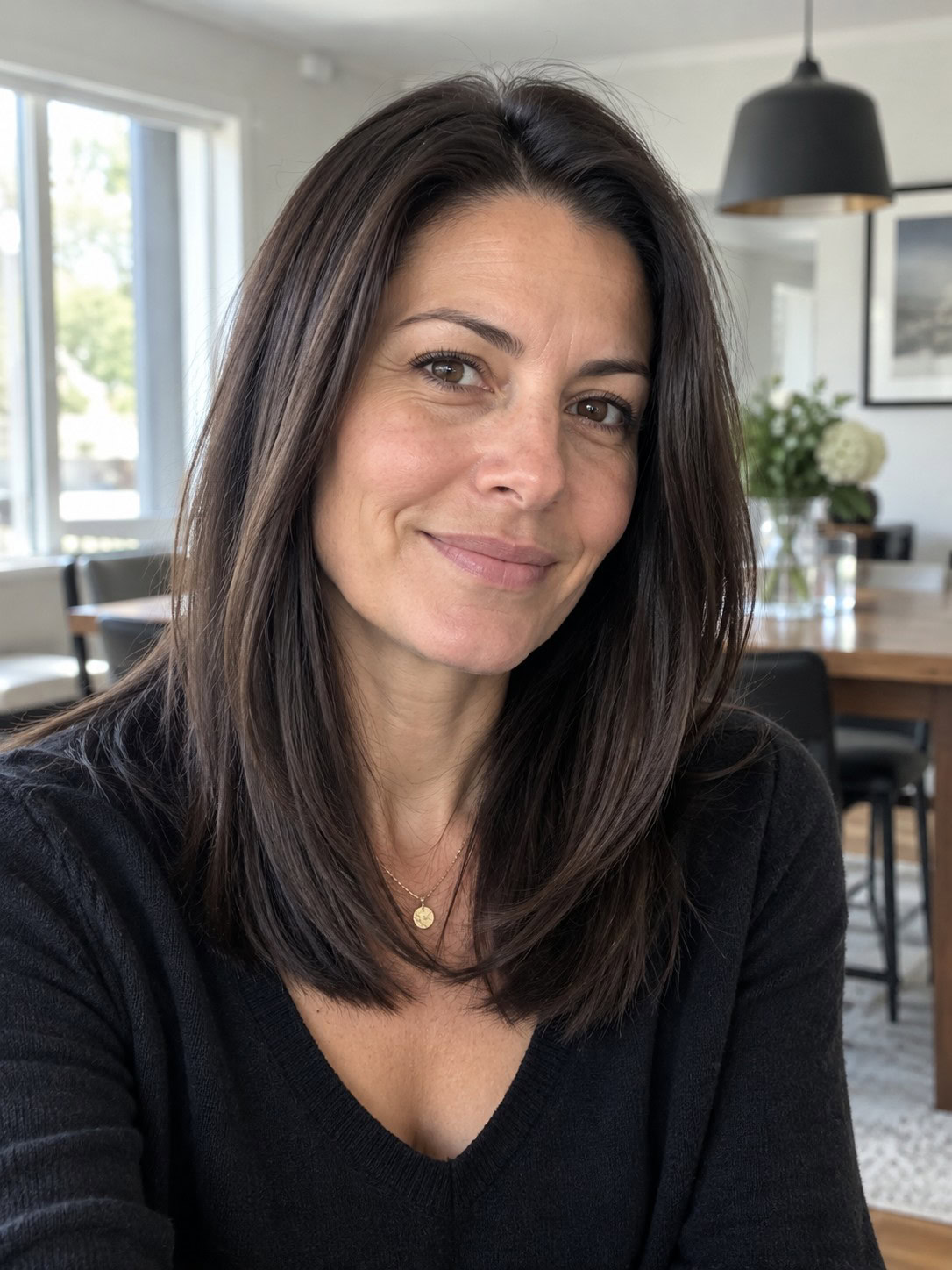
Not every layered look needs to be tousled. Layers on sleek, straight hair give you a smooth, glassy finish with just enough movement to keep it from looking flat. The layers catch the light and create dimension a blunt cut cannot. This one asks for effort though, a good blow-dry, a flat iron, and a smoothing serum, and it shows every bit of frizz. Best for those who do not mind a few extra minutes at the mirror.
Voluminous Blowout Layers
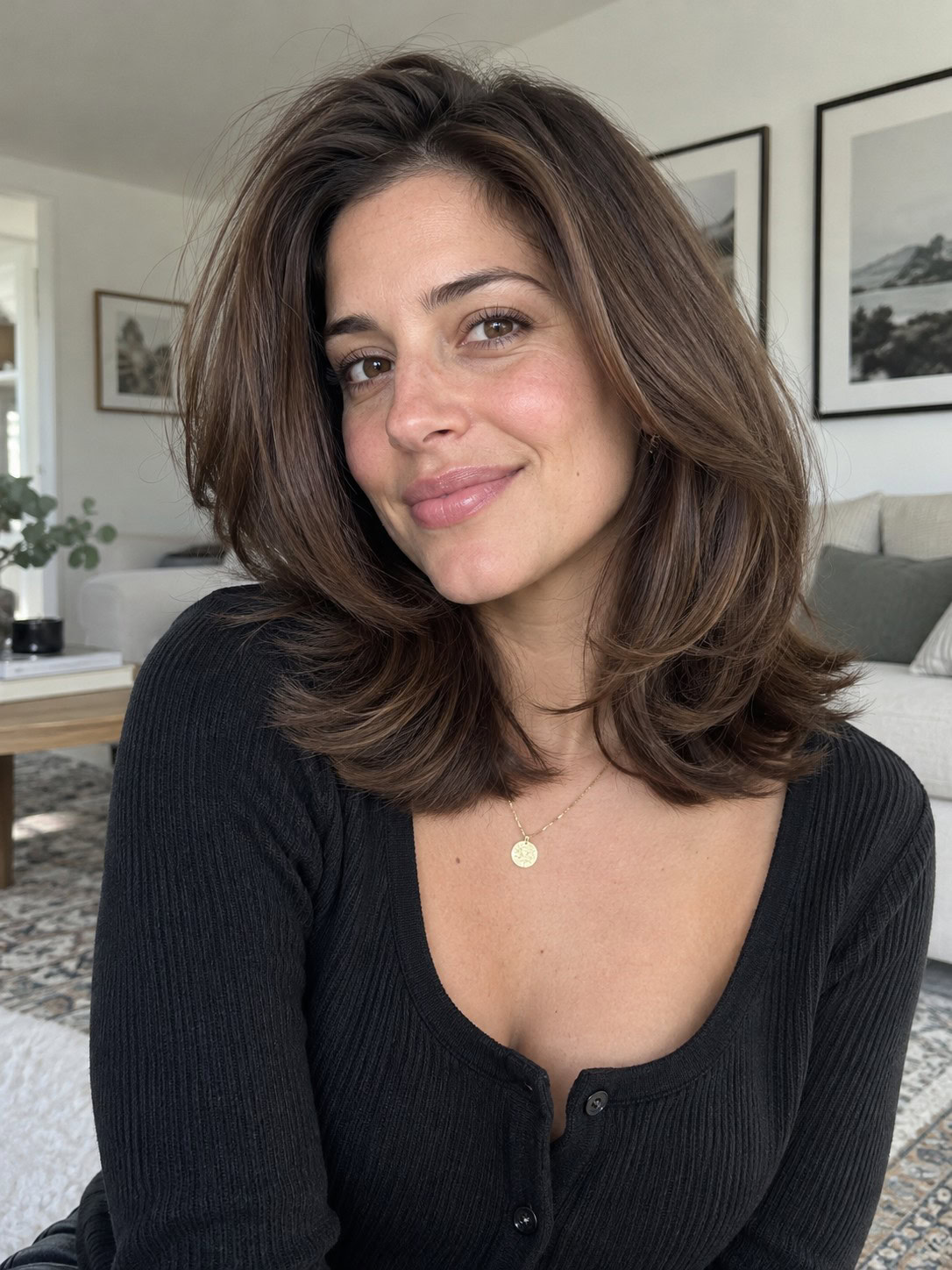
A bouncy blowout is where layers really show off. Round-brushing each section as you dry it lifts the layers at the root and curves the ends under or out, building the kind of full, swingy body you see on morning shows. The layers are what make the volume possible, giving the brush something to grip and shape. It drops a little as the day goes on, but a quick pass with hot rollers revives it fast.
Flipped-Out Ends
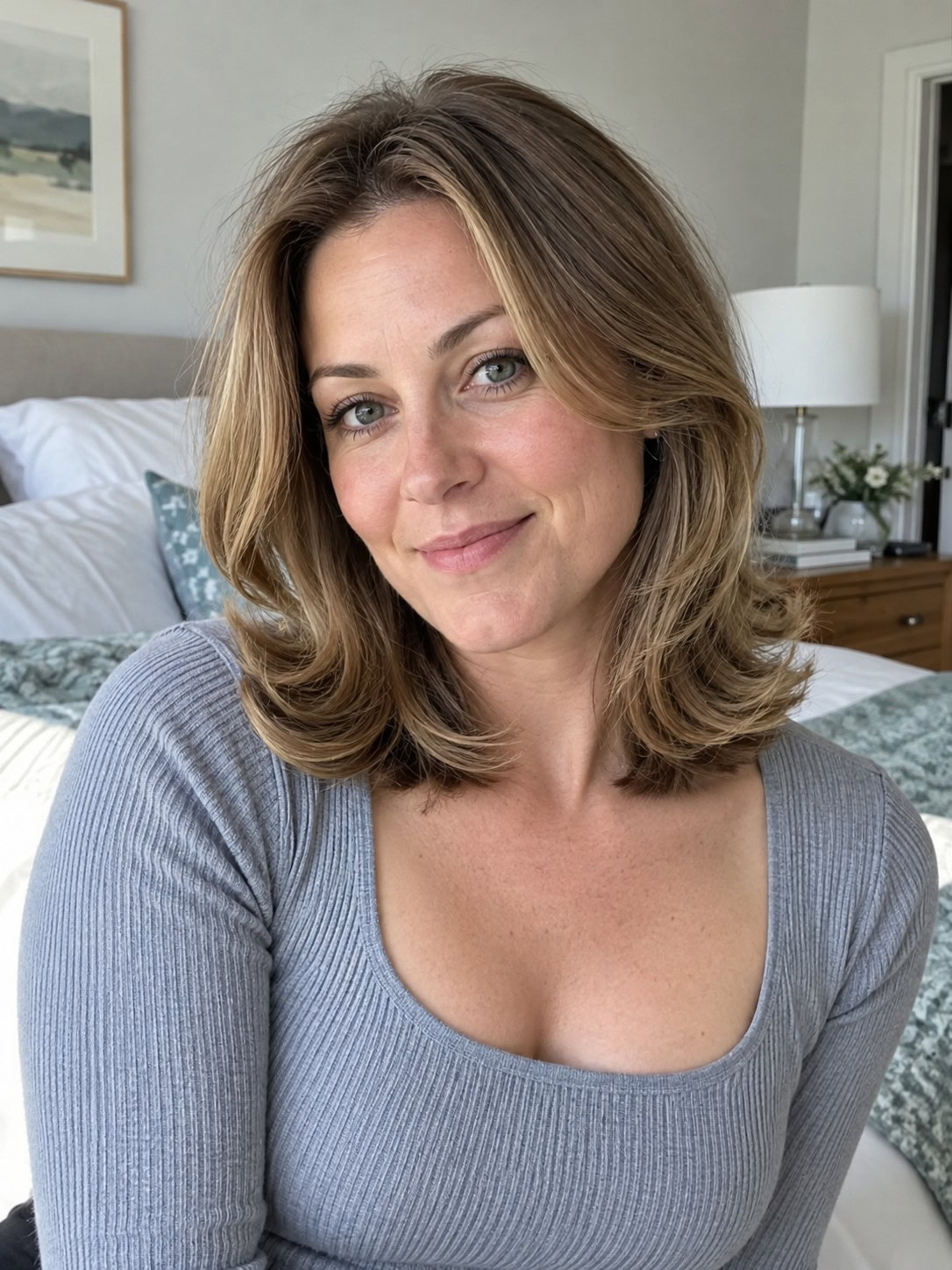
Sometimes the flip is the feature, not the flaw. Rather than fighting shoulder-length hair's tendency to kick out, this look leans into it, flipping the layered ends outward on purpose for a playful, retro bounce. A flat iron or a round brush turned out at the ends gets you there in minutes. It works best on blunter layers with enough weight to hold the flip. Very wispy ends tend to fall limp instead.
Invisible Layers

Invisible layers, sometimes called ghost layers, are for anyone who wants movement without looking layered at all. The stylist hides the layers underneath the top section, cutting them at angles so they add body and bounce while the surface still looks like one clean length. Fine hair loves this, since traditional layers can leave it looking thin and stringy. You get the swing of a layered cut with the fullness of a blunt one.
Layers for Fine Hair
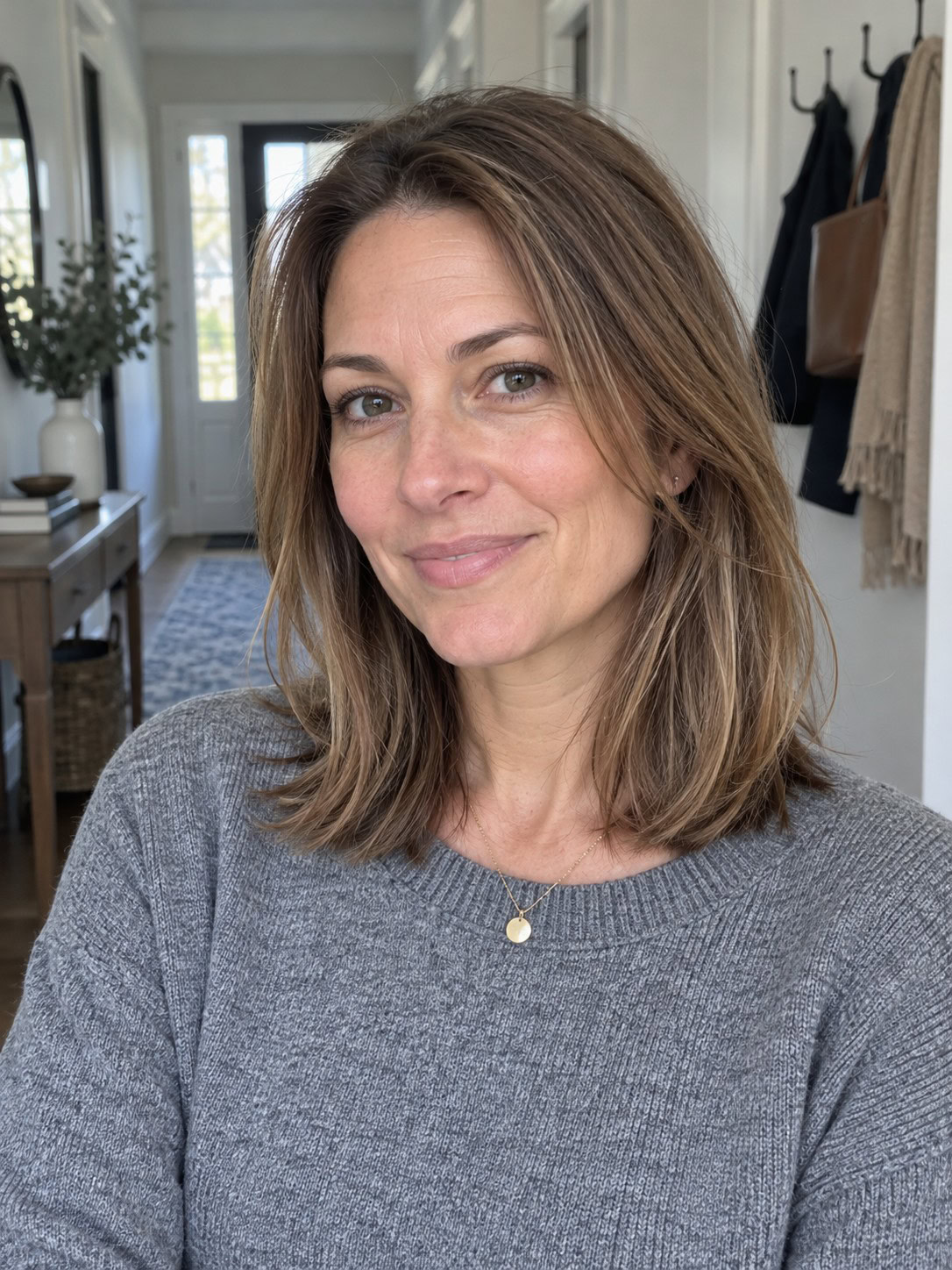
Fine hair and layers have a complicated relationship. Too many layers, especially near the ends, and the hair looks even thinner and wispier than it started. The trick is long, soft layers kept mostly through the top and mid-lengths, which build the illusion of fullness without sacrificing density at the bottom. A blunt-ish perimeter keeps the ends looking thick. Skip the heavy razoring here and ask for point-cutting instead.
Layers for Thick Hair
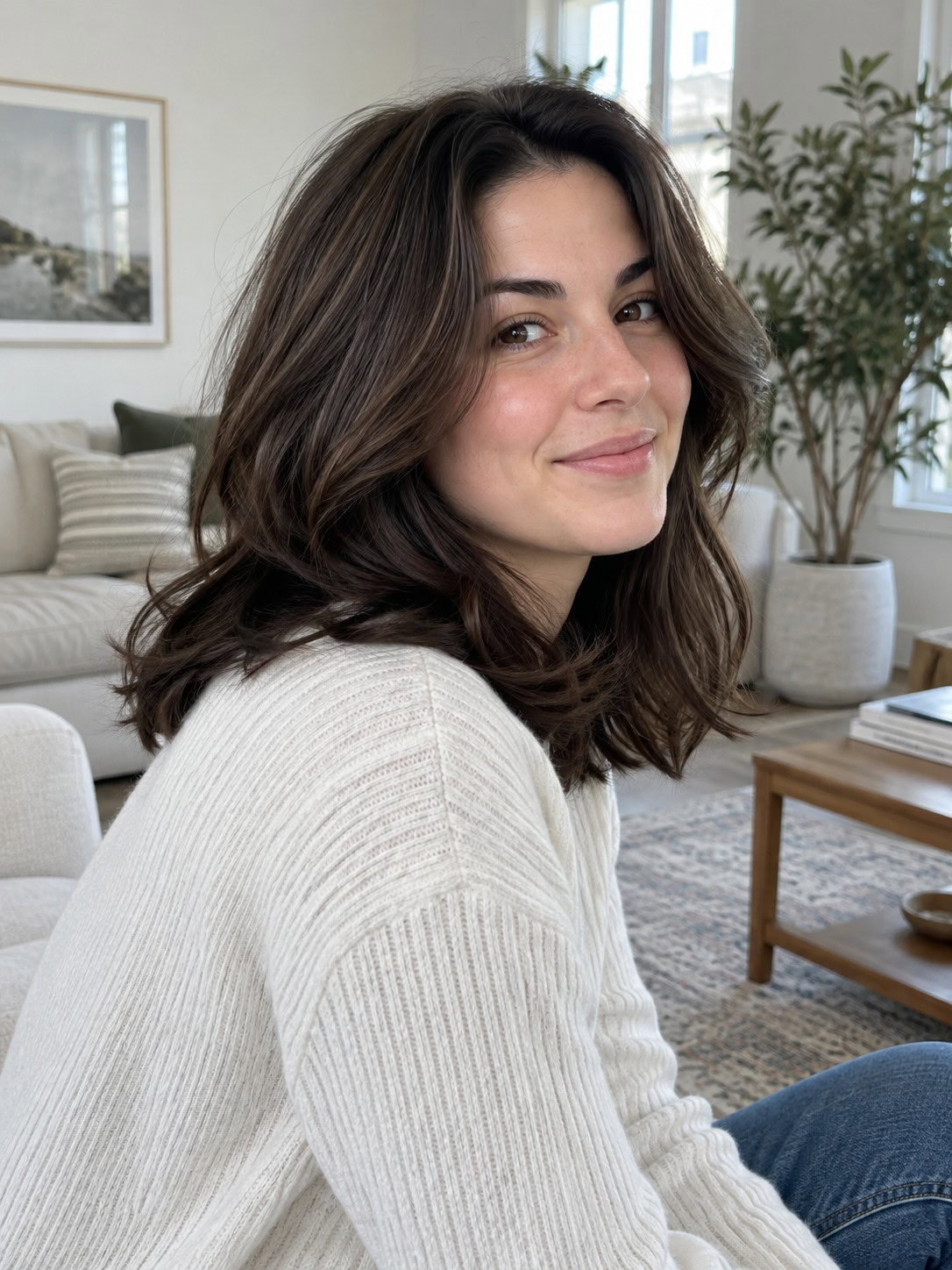
Thick hair has the opposite problem, too much weight and bulk, and layers are the release valve. Cutting layers throughout removes some of that density so the hair moves instead of sitting like a heavy curtain. It also cuts down drying time, which anyone with thick hair will appreciate. The risk is over-layering, which can create a poofy, pyramid-shaped result. A good stylist layers thick hair from underneath to thin it out where it does not show.
Balayage on Layered Hair
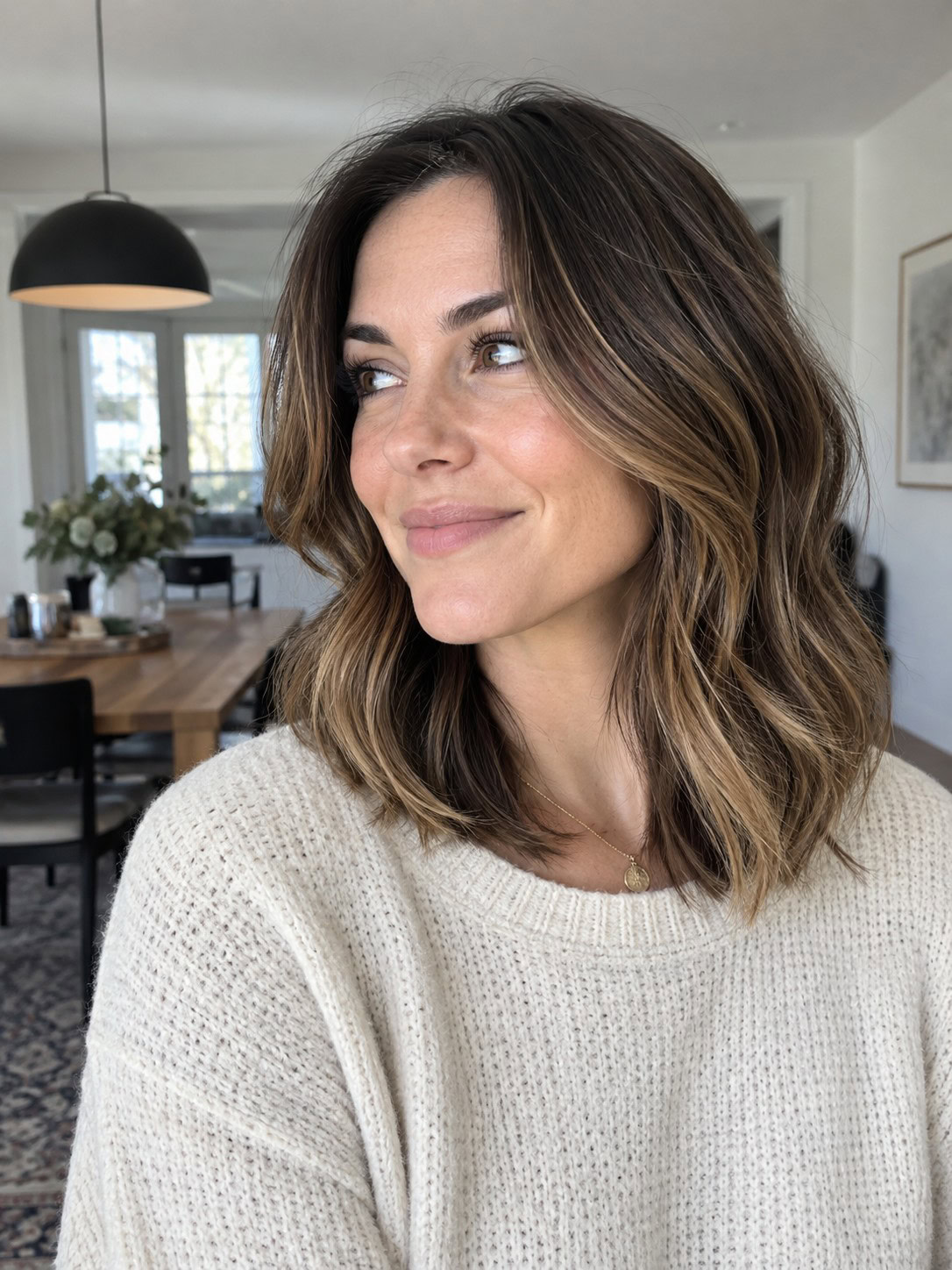
Balayage and layers play off each other nicely, because the hand-painted color catches on the layered pieces and lights up all that movement. Sweeping lighter tones through the mid-lengths and ends makes the layers stand out and adds dimension a single color cannot. The upkeep is refreshingly low as far as color goes, since balayage grows out softly with no harsh regrowth line. A gloss every couple of months keeps the tone from going brassy.
Money-Piece With Layers
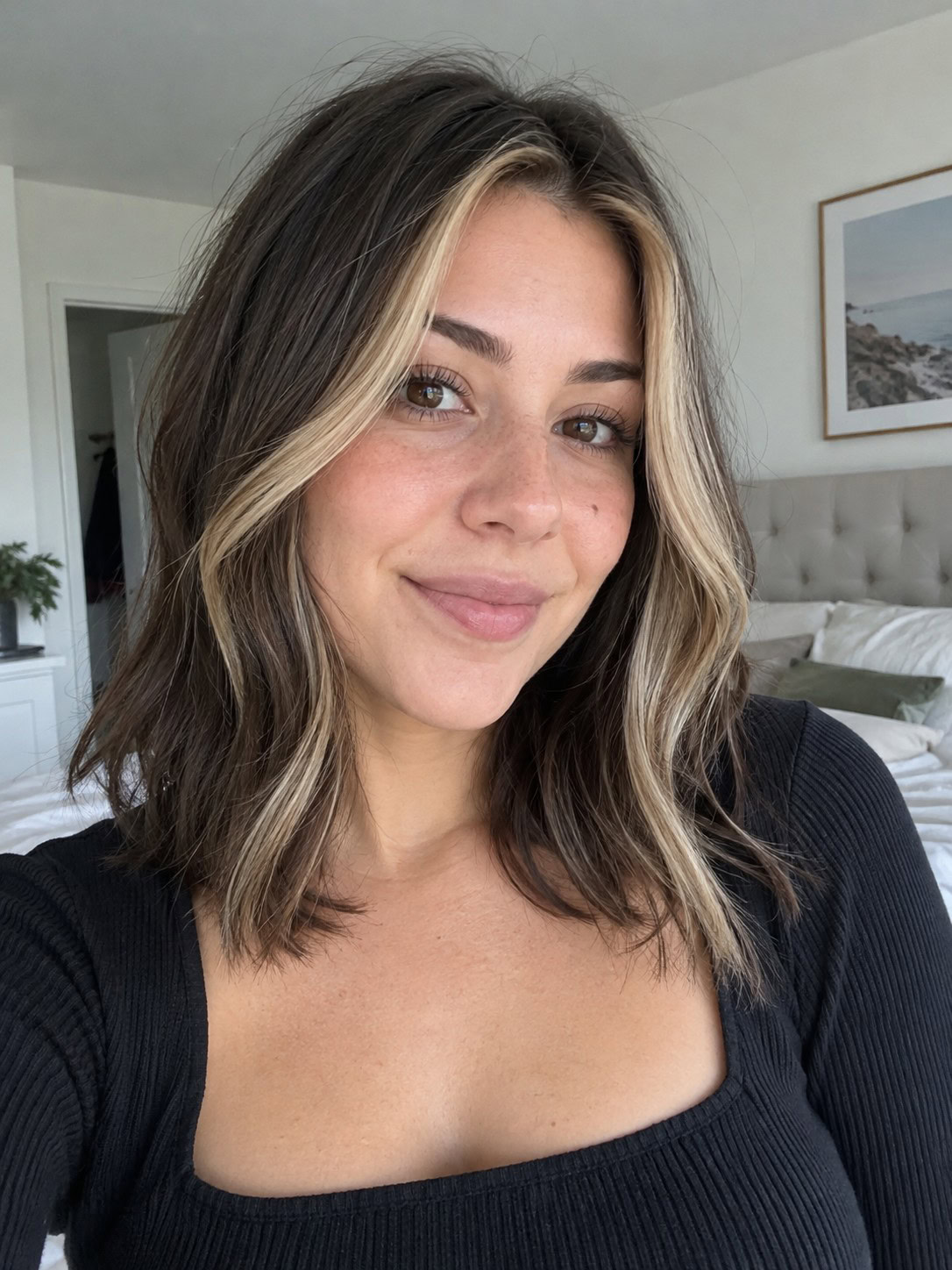
A money piece brightens just the two sections framing your face, and on layered hair it catches the front pieces that fall along your cheekbones. It is a small amount of color for a big effect, drawing the eye straight to your features. Because it sits right at the front, though, regrowth shows faster than all-over color, so plan on a touch-up every couple of months. Toning keeps a blonde money piece from turning warm between visits.