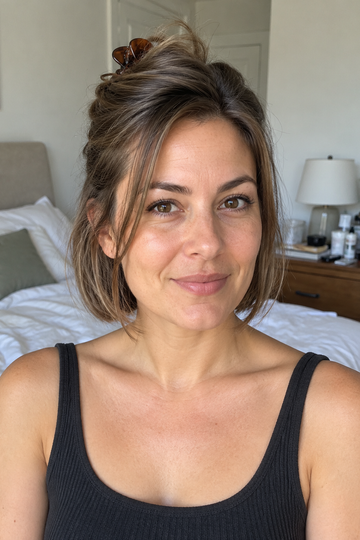
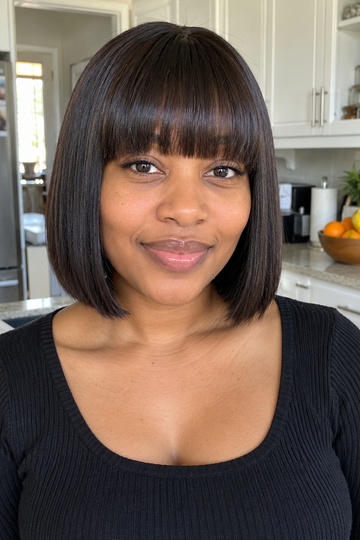
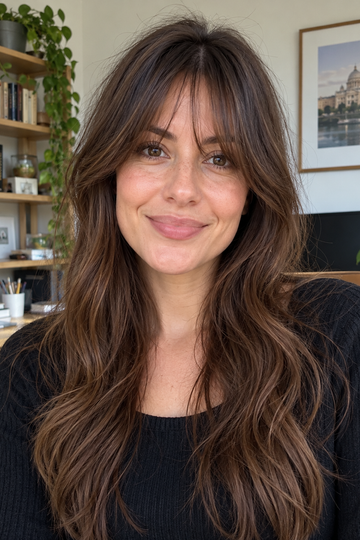
Fine hair does its best impression of thick hair when it is short and blunt.
A heavy, even edge gathers thin strands into a dense line, while length and over-layering only drag it flat and sheer.
That is why the bob is such a gift here, the shorter length keeps it from falling limp, and the right shape builds the body fine hair cannot grow on its own.
The rule is simple, keep the perimeter strong and the layers soft, and let dimension and a little crown lift do the rest. The blunt bob proves it best.
Jump to:
- Blunt Bob
- French Bob
- Textured Choppy Bob
- Stacked Bob
- A-Line Bob
- Rounded Bob
- Box Bob
- Micro Bob
- Italian Bob
- C-Curl Bob
- Wavy Bob
- Bob with Soft Face-Framing Layers
- Bob with Curtain Bangs
- Bob with Side-Swept Bangs
- Bob with Wispy Bangs
- Deep Side Part Bob
- Babylights Bob
- Shadow Root Bob
- Money-Piece Bob
- Silver Bob
- Feathered Bob
- Silk-Press Blunt Bob
Blunt Bob
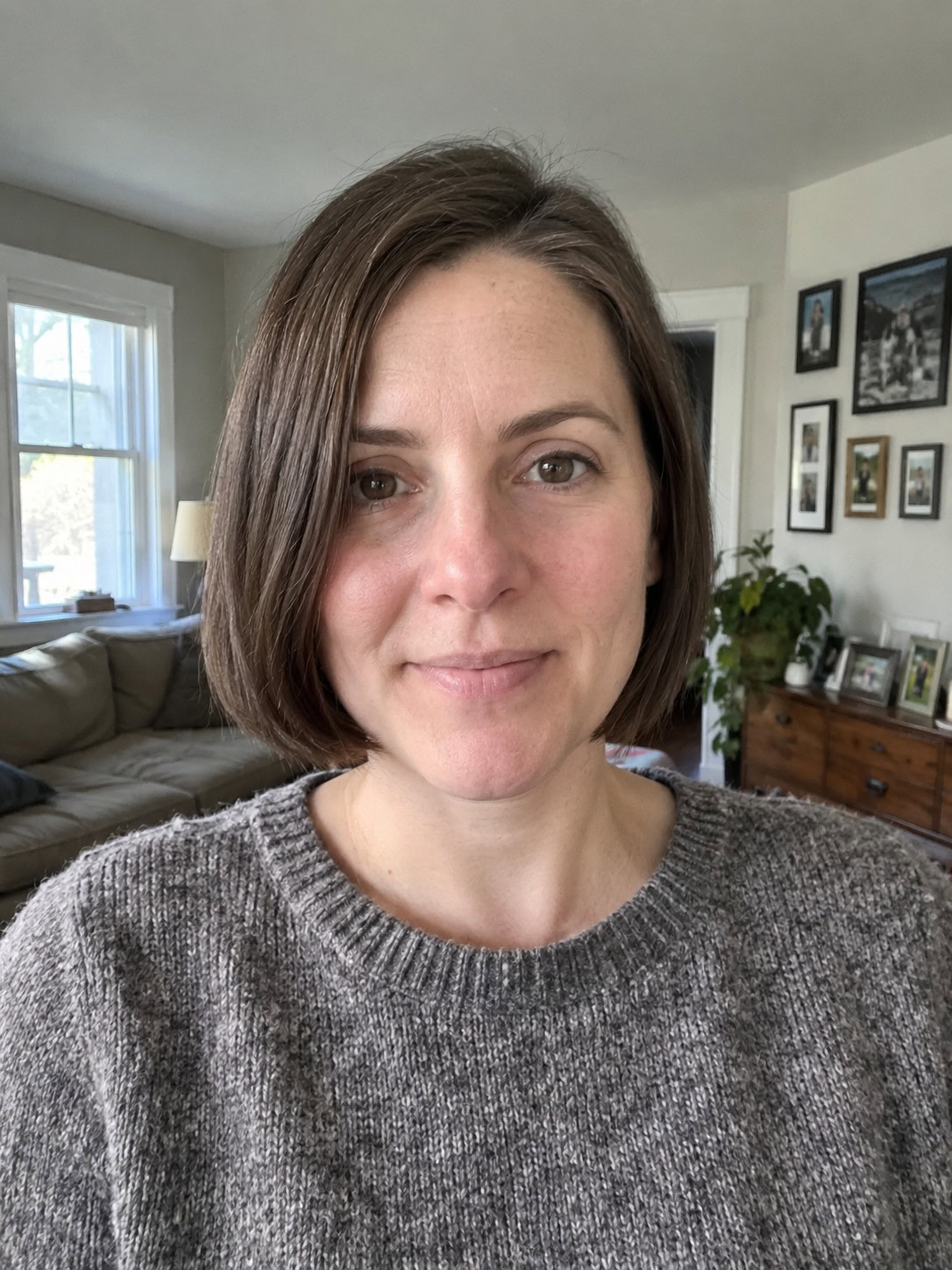
Sleek, strong, and the gold standard for fine hair, the blunt bob cuts every strand to one clean, heavy line. That solid edge gathers thin hair into a dense-looking perimeter that looks far fuller than any tapered cut. Keep it at the jaw or just above so it never drags flat. Resist the urge to thin it out, since the bluntness is doing all the work, and a smoothing serum keeps the line sharp and glossy.
French Bob
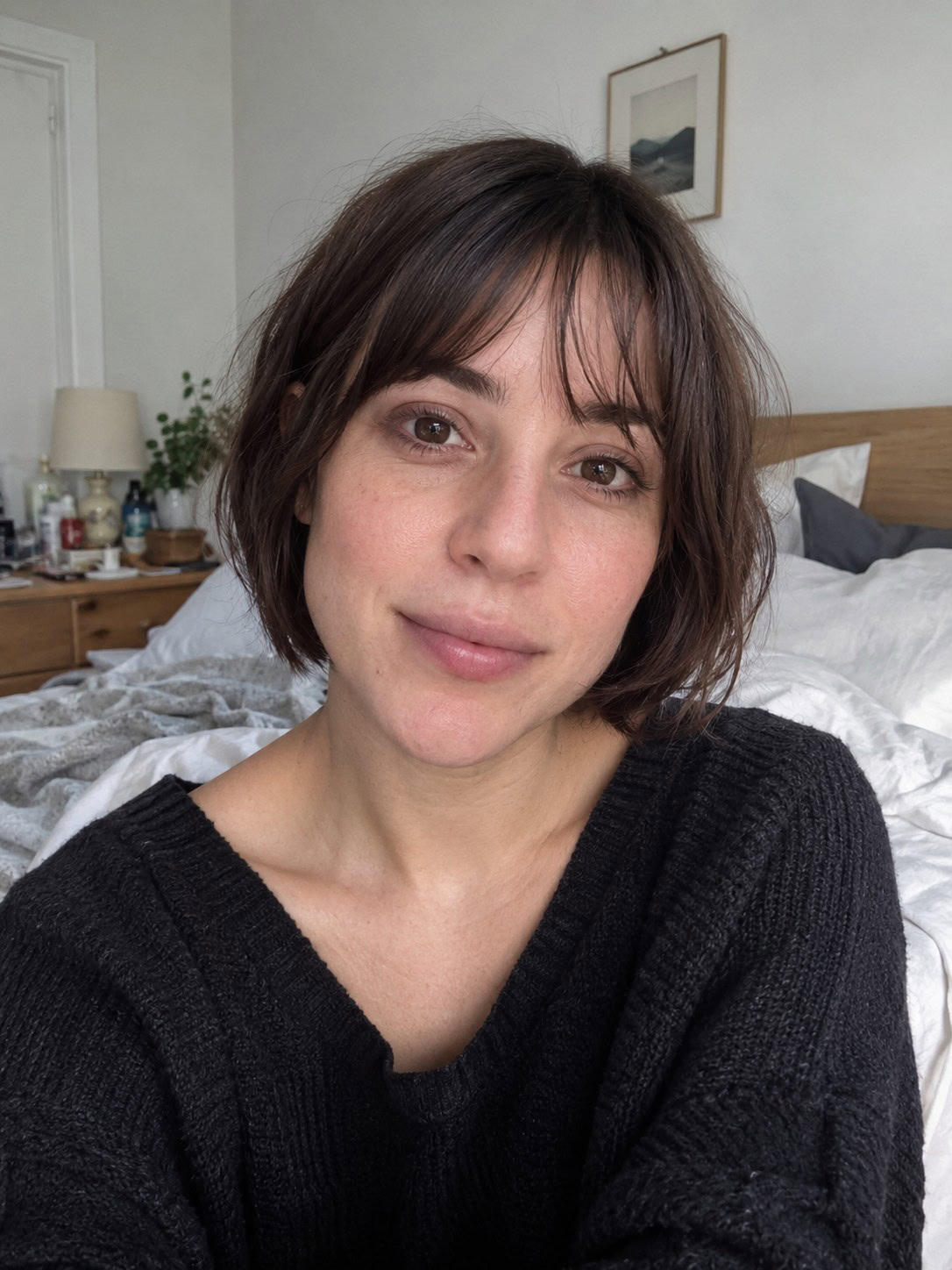
Short, Parisian, and endlessly wearable, the French bob sits at the chin with blunt ends and a soft fringe. The clean baseline gives fine hair a fuller edge while the subtle texture keeps it from looking heavy, and it suits straight and slightly wavy hair alike. A little texturizing cream and an air-dry give that carefree finish. Skip the sleek blow-out, since a touch of bend makes fine hair look thicker here.
Textured Choppy Bob
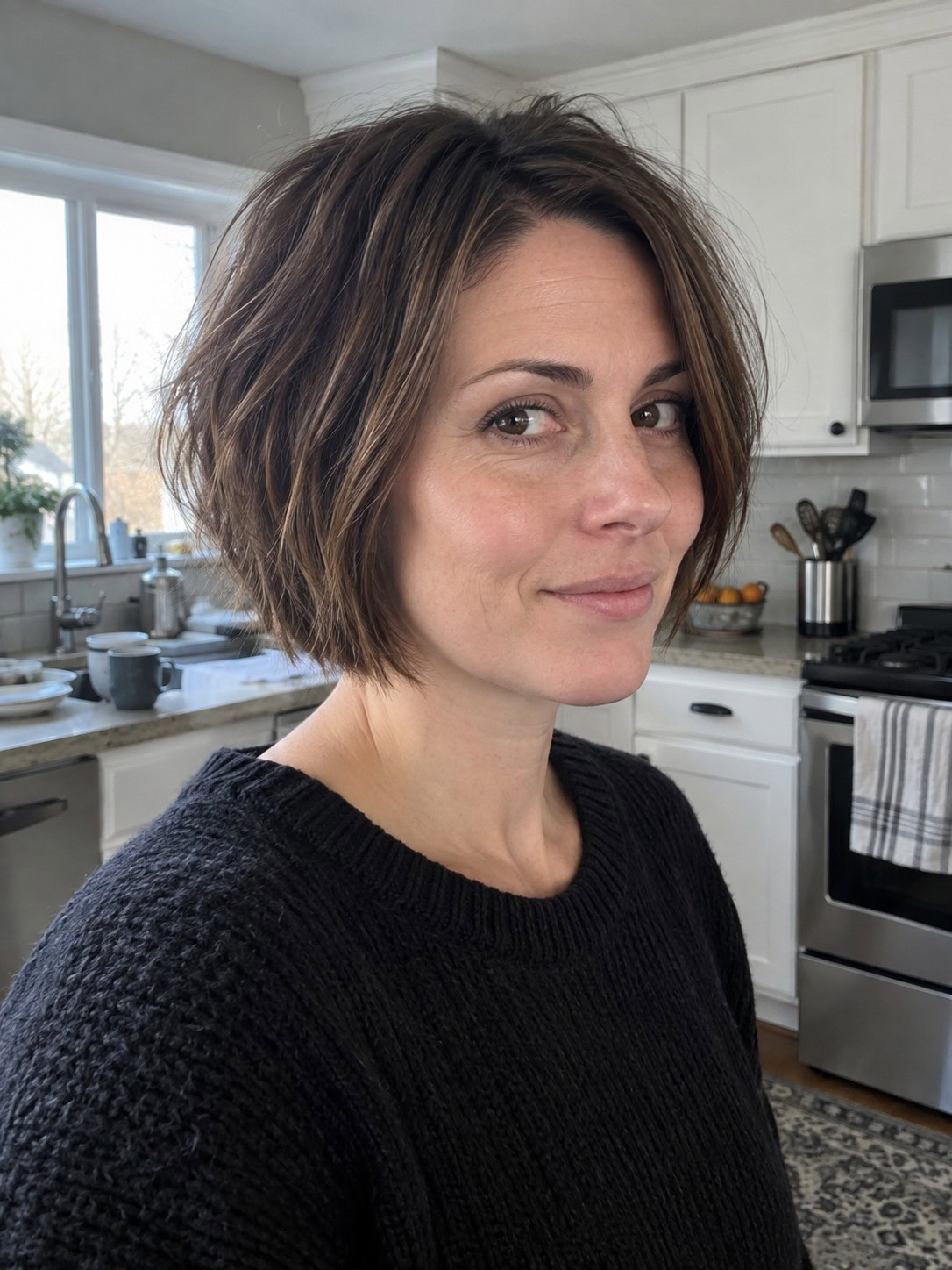
Chunky, piecey, and full of movement, a textured bob fakes fullness better than almost any cut. Point-cut, choppy layers create a sense of chunkiness that tricks the eye into seeing density on fine hair. The trick is point-cutting, not thinning shears, which would strip out what little you have. Scrunch a texturizing spray through dry hair to define the pieces, and keep the perimeter fairly blunt so the ends still look full.
Stacked Bob
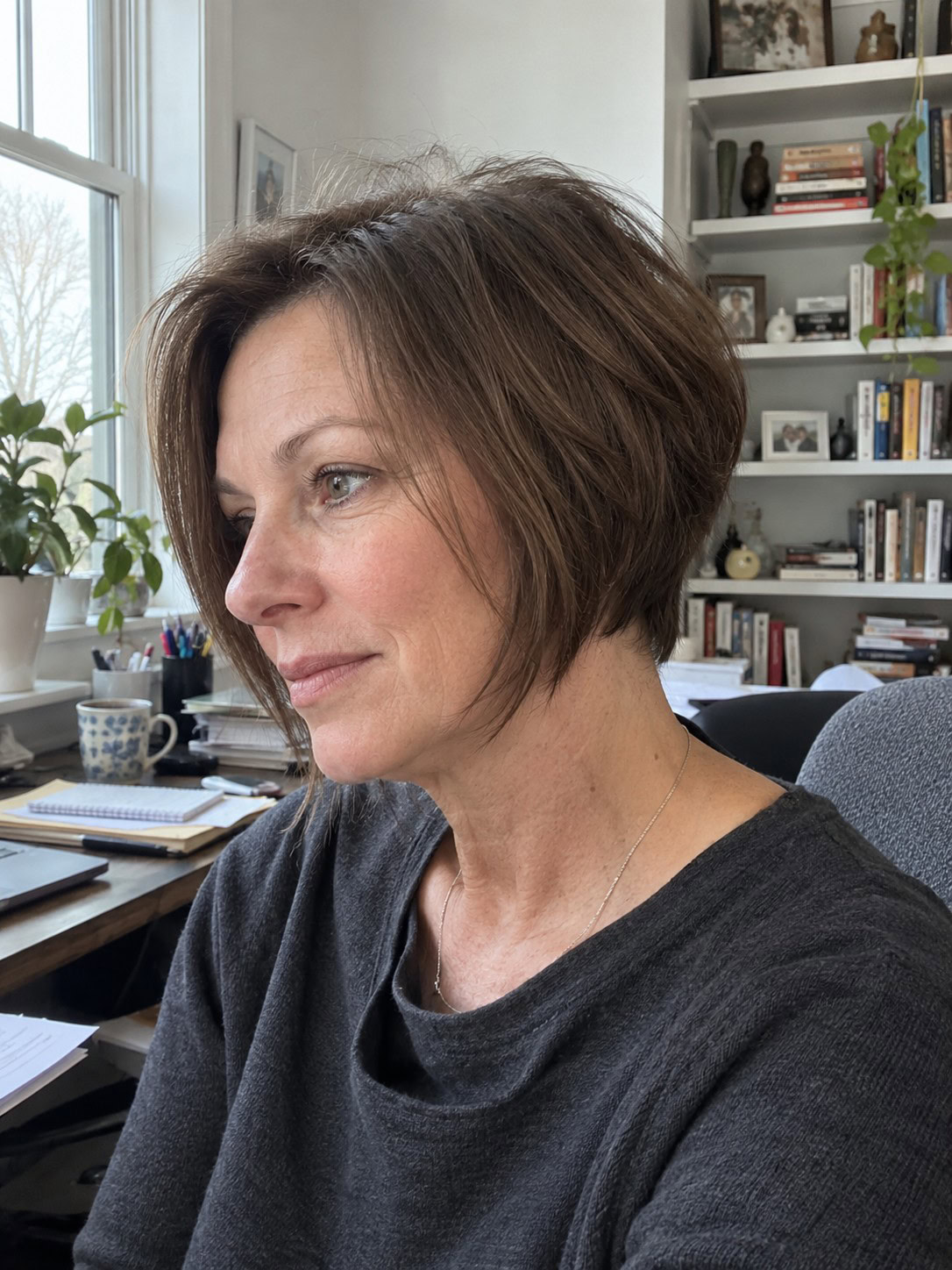
Engineered for hair that falls flat on top, the stacked bob builds volume exactly where fine hair needs it. Short, graduated layers at the back pile up to lift the crown, while the front angles longer for a clean line. Stylists name it a top pick for thin hair for that reason. A round brush under the back brings the stack to life, and regular trims keep the graduation sharp rather than blurring into a plain bob.
A-Line Bob
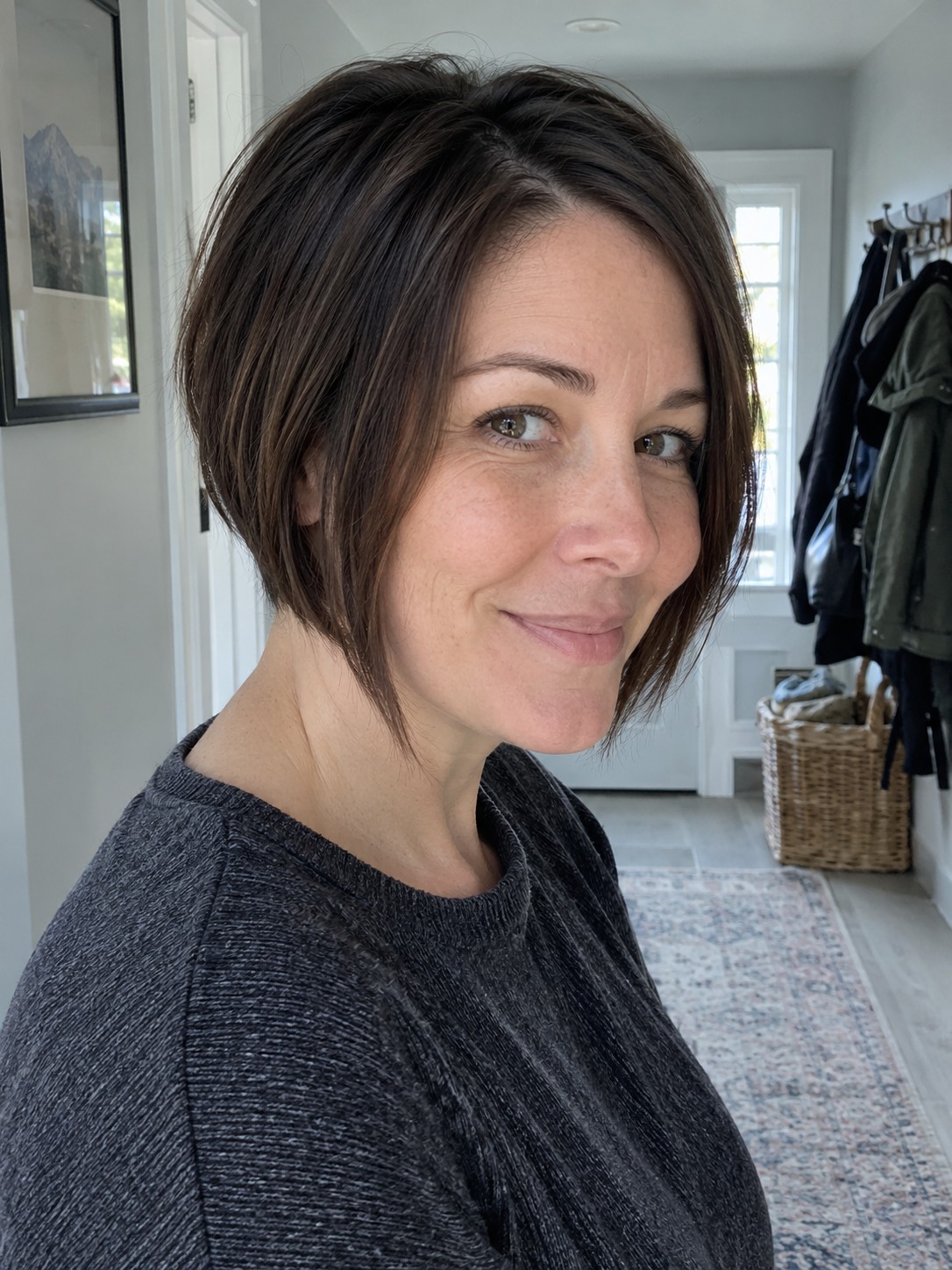
The slope from a shorter back to a longer front gives this bob its angle, and soft layers through it keep fine hair from looking thin along that line. The diagonal draws the eye across for width, while a little back graduation lifts the crown. It flatters most faces. Keep the front at or above the chin so it stays short, and a texturizing spray plus root lift sells the fullness.
Rounded Bob
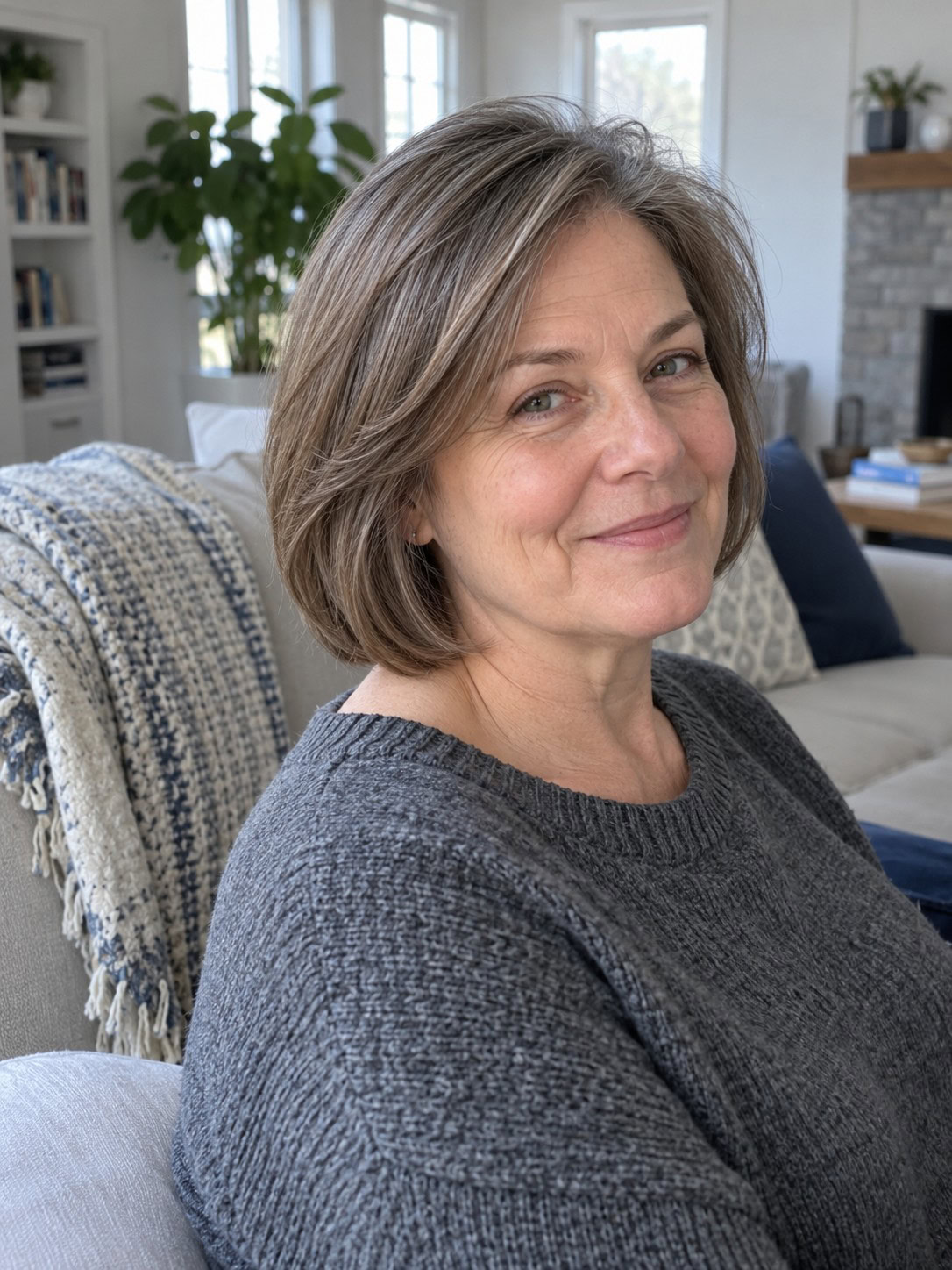
Curved into a soft dome, the rounded bob is the 2026 cut for fine hair that has thinned with age. Soft graduation builds a gentle fullness all around the head, with weight kept low and a little crown lift, nothing severe. It flatters most faces and needs no hot tools for shape. A round brush curves the ends under, and airy, soft layers keep the dome full without thinning the hair out.
Box Bob

Sharp, graphic, and one of the biggest trends of the year, the box bob squares the shape into clean, architectural lines. That heavy, structured perimeter gathers fine hair into a dense edge, which is exactly what thin hair needs. It works best on straight hair worn sleek. Keep the lines precise with a flat-iron, and a smoothing serum holds the shine, since any frizz softens the sharp box shape that does the work.
Micro Bob
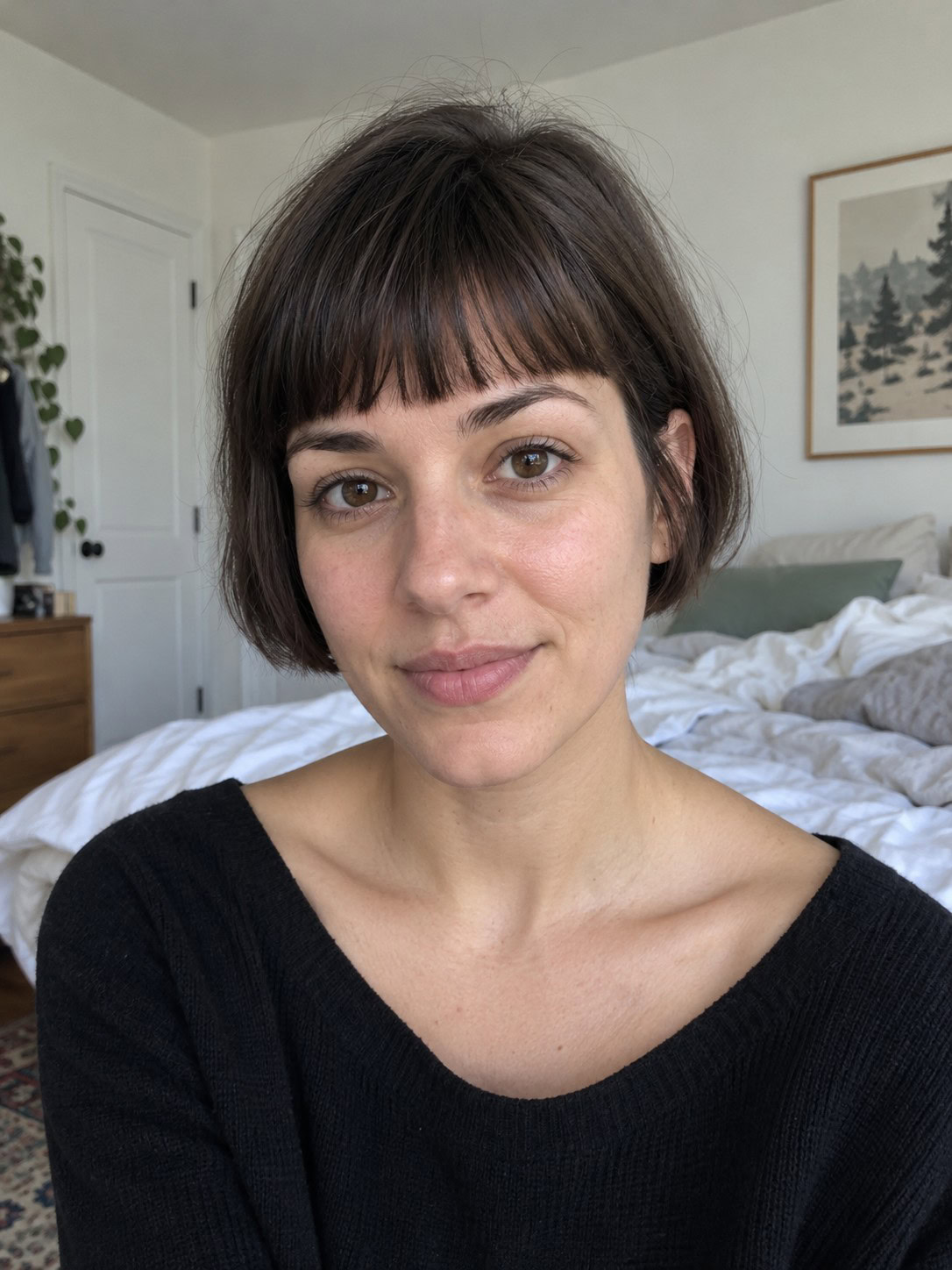
Cut up around the ears, the micro bob is the shortest bob going and a quiet trick for very fine hair. At that length there is almost nothing to drag the hair down, so it looks thick and full. A blunt edge keeps it dense rather than wispy. It is bold and commits you to frequent trims to hold the precise length, but the payoff in fullness for thin hair is hard to beat.
Italian Bob
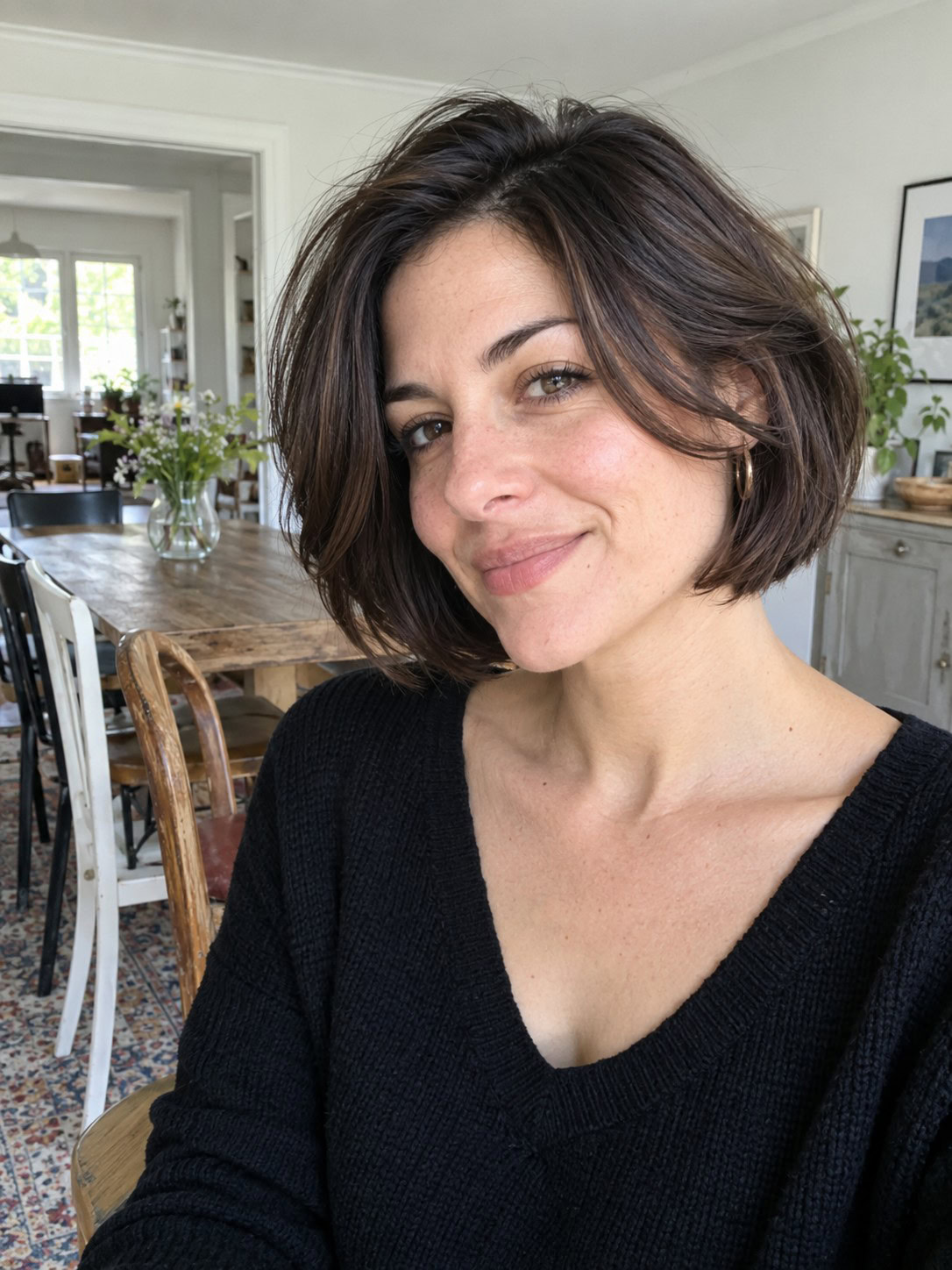
Bouncy, glossy, and full of body, the Italian bob brings movement fine hair struggles to hold. It sits around the chin with soft layers built for volume rather than sharp lines, so it looks full and lively. A round-brush blow-dry gives it that signature bounce. Keep the layers light and the ends fairly blunt, and a volumizing mousse at the roots helps the body last through the day on finer hair.
C-Curl Bob
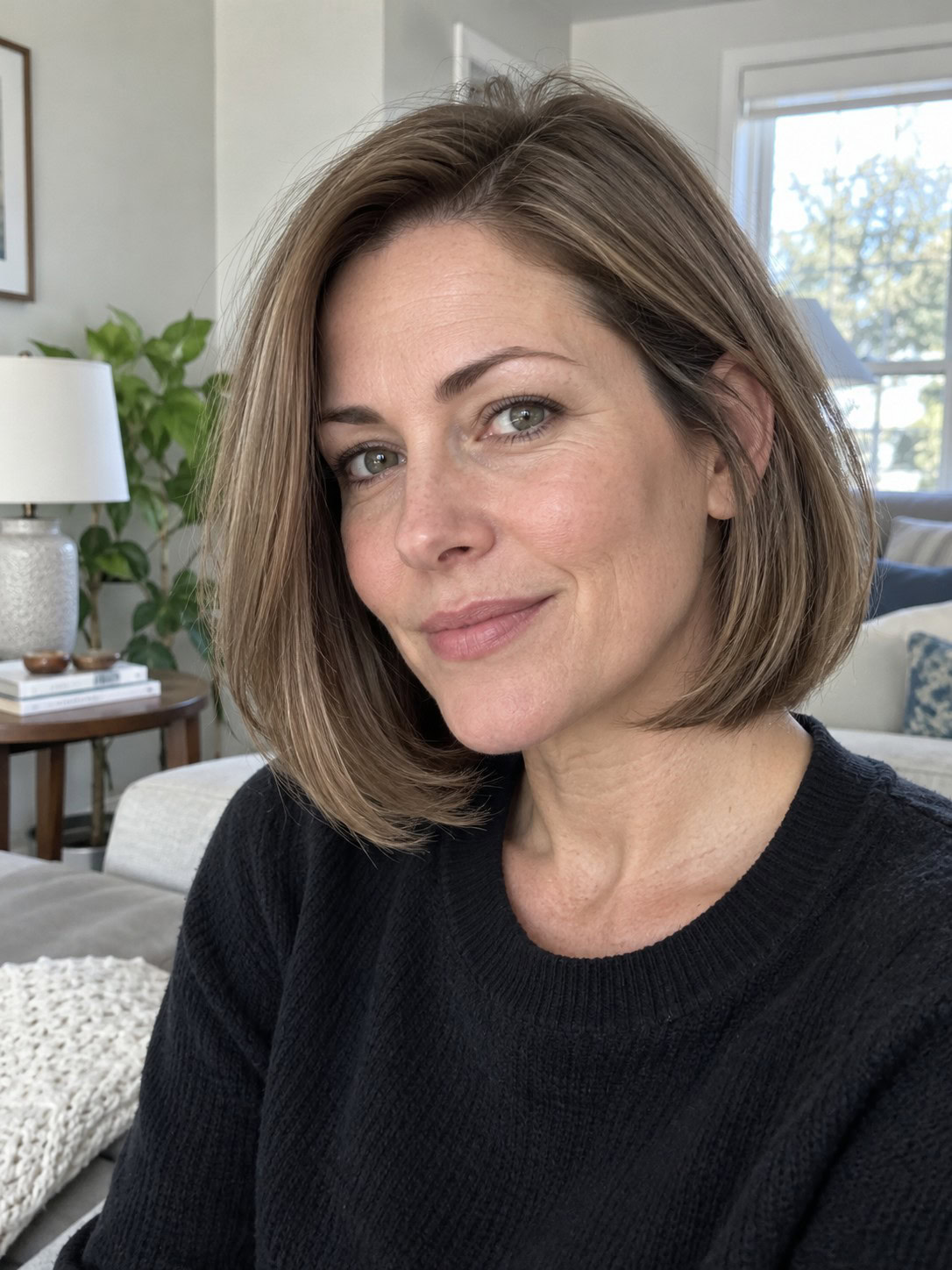
Ends that curl gently under in a soft C give this bob a clean, retro finish with built-in body. The inward curve adds roundness and fullness at the bottom, which flatters fine hair that falls limp and straight. Soft internal layers keep it from looking too set. A round brush turned under creates the C, and a light hairspray holds the curve without the crunch that would flatten finer strands.
Wavy Bob
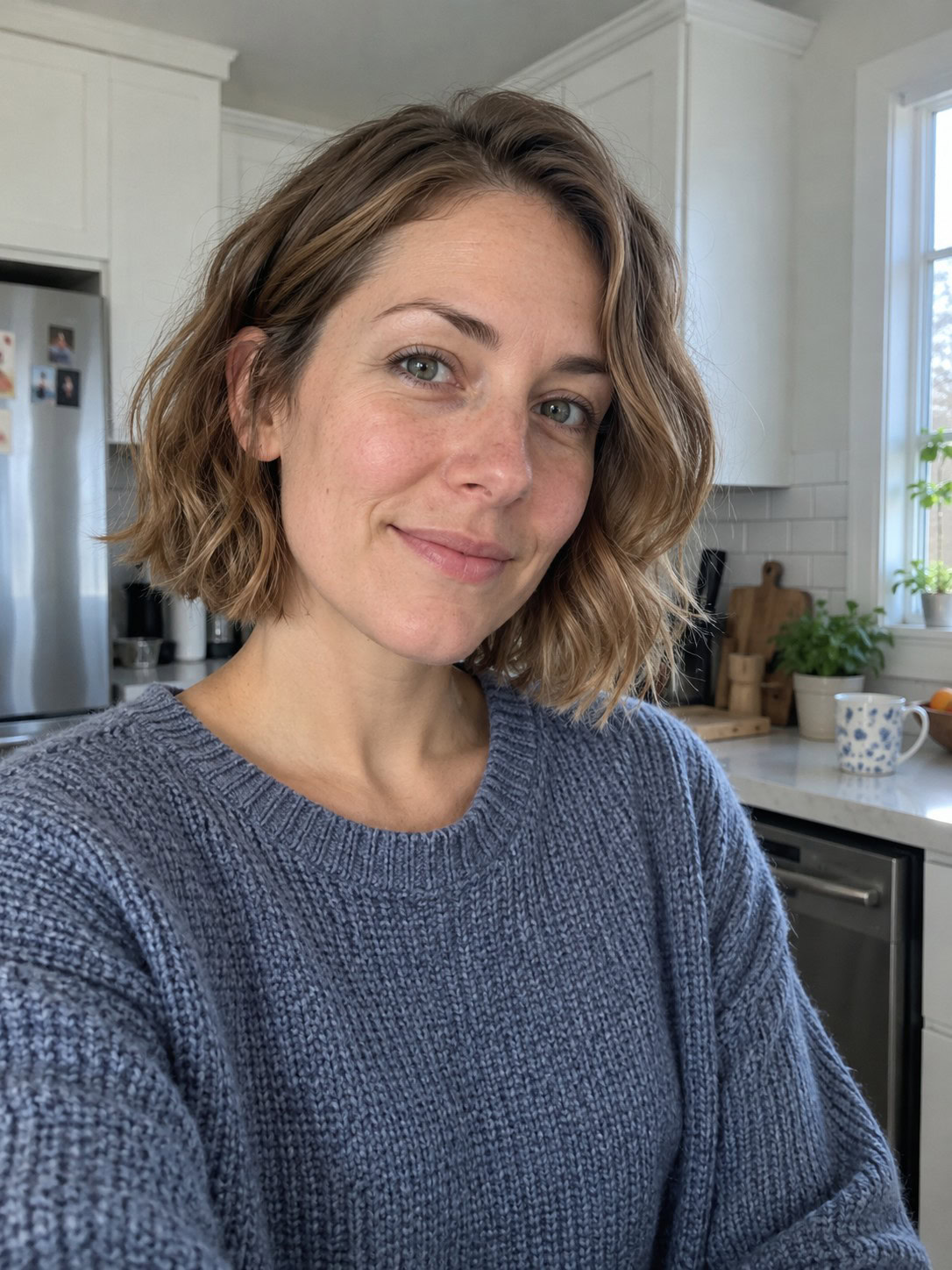
Soft waves are one of the quickest ways to fake fullness on a fine bob. The bends take up more space than flat strands, so thin hair instantly looks thicker, and the wave hides the flatness a straight finish shows. Keep the ends blunt so the length still looks full. Scrunch a texture spray through damp hair and twist a few pieces, and set the wave loose rather than tight for the fullest effect.
Bob with Soft Face-Framing Layers
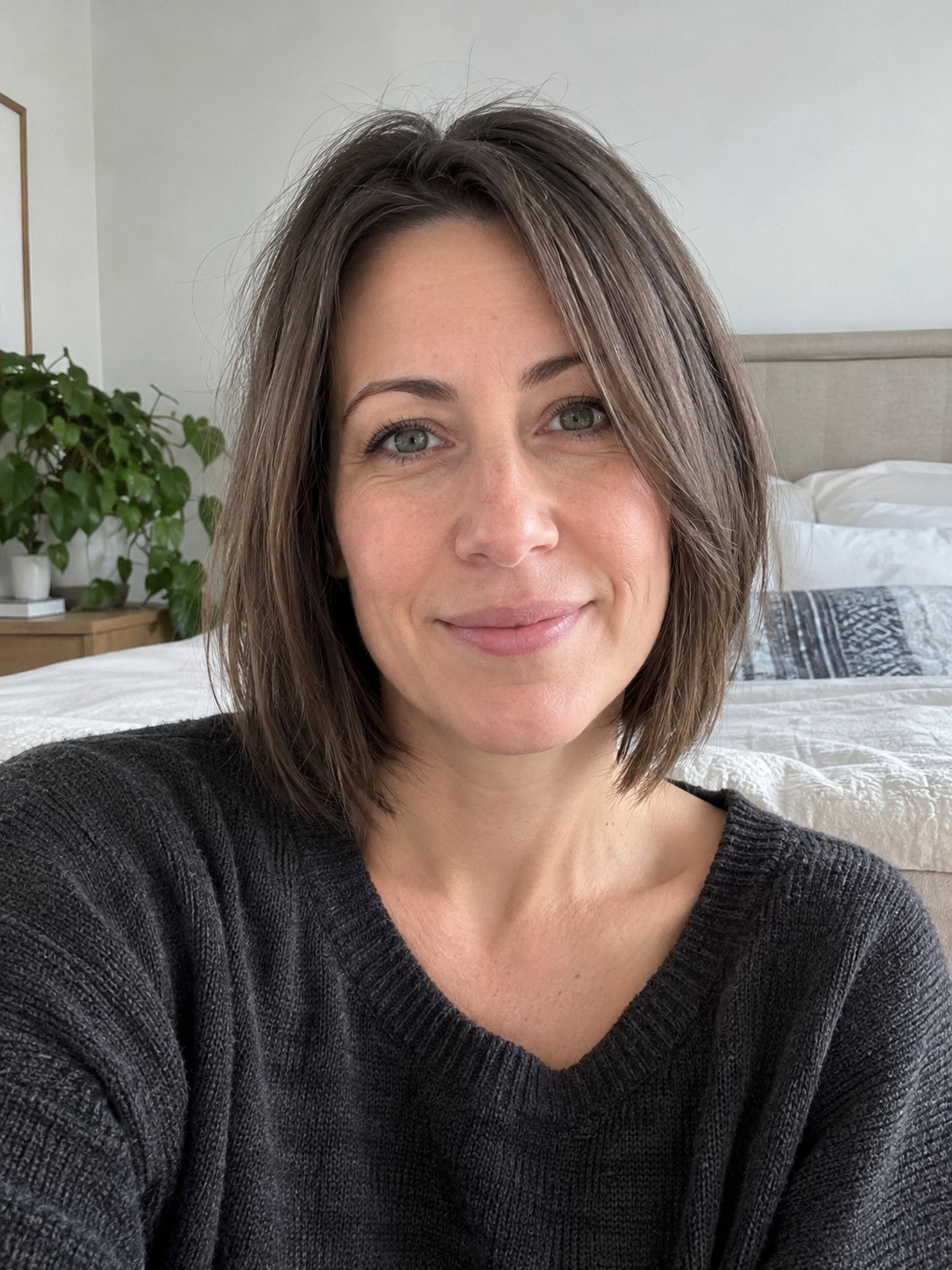
A few soft layers around the face are the gentlest way to shape a fine bob without thinning it. Kept long and left only at the front, they frame the cheeks and add a little movement while the rest of the bob stays full and blunt. It suits anyone who wants softness without losing density. Ask for them long and point-cut, and skip heavy layering deeper in, which quickly works against fine hair.
Bob with Curtain Bangs
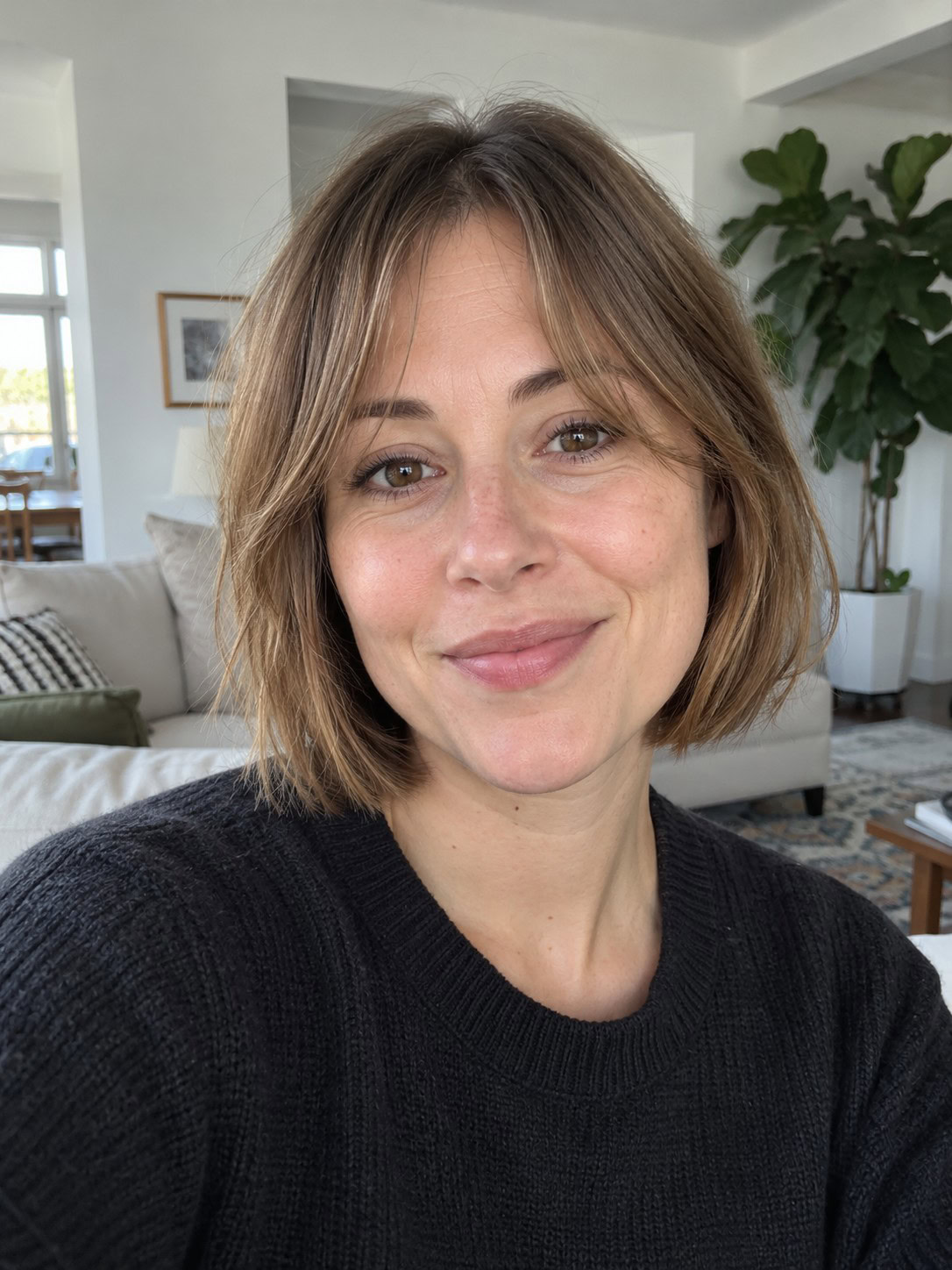
Curtain bangs frame a fine bob with soft pieces parted down the middle and swept open. They pull a little fullness forward to the front and draw the eye to the face, blending into the bob as they go. Keep them soft and slightly wispy rather than heavy, so they do not borrow too much from an already-fine top. A round brush gives them volume, and they grow out with no awkward stage.
Bob with Side-Swept Bangs
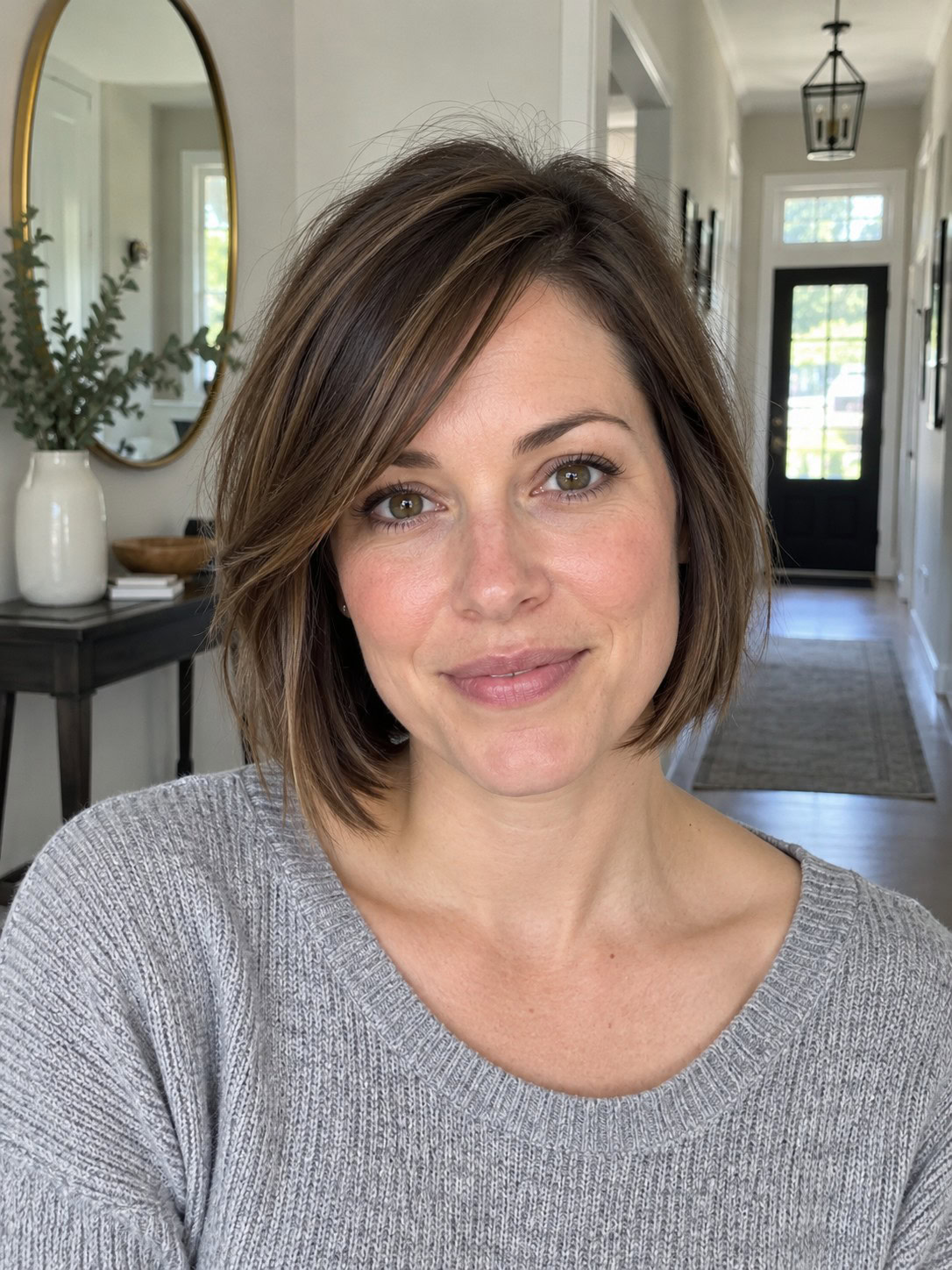
A flattering pick for fine hair and most faces, side-swept bangs sweep across the forehead at a soft diagonal. They add a little lift at the root where the fringe starts and frame the face without the weight of a straight fringe, blending into the bob. The angle uses less hair than a full fringe, so it suits finer hair. Blow-dry them across with a round brush and keep them long enough to tuck away.
Bob with Wispy Bangs

Fine, see-through bangs grazing the brows give a bob a soft, youthful frame. The airy fringe suits fine hair especially, since it needs almost no density to look right and the gappy quality is the point. It blends into the blunt bob without stealing fullness. Keep the bangs feathery rather than full, and trim them often, since a wispy fringe drifts into your eyes faster than you expect at this length.
Deep Side Part Bob

A deep side part is the fastest volume trick a fine bob can borrow. Parting low on one side forces the hair up and over, building instant lift at the root and a sweep of fullness on the heavier side. It works with no scissors, just a comb and a few days of retraining. A deep part can expose the scalp along the line, so if yours shows, a soft zigzag part hides it while keeping the lift.
Babylights Bob
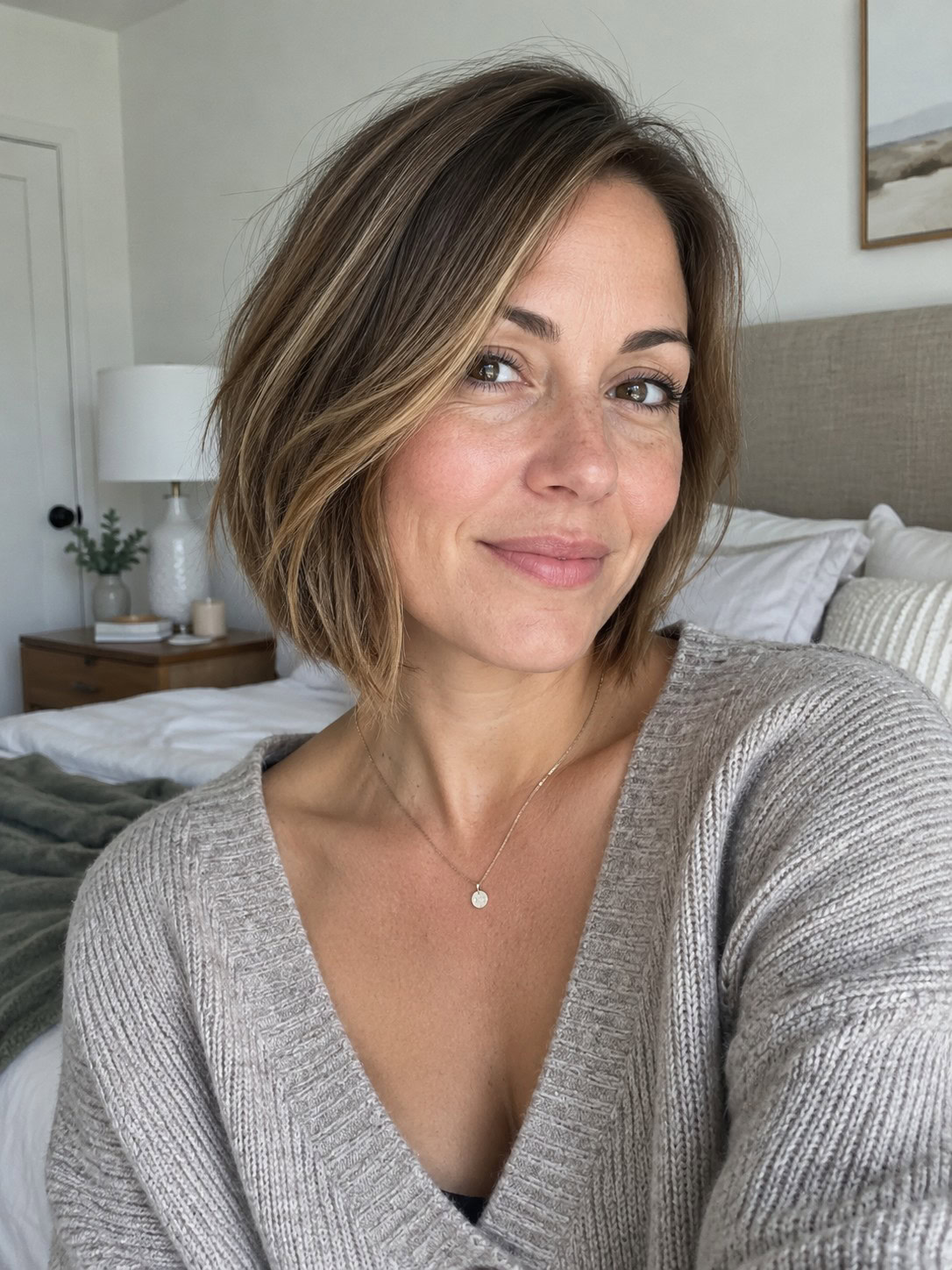
Fine, subtle highlights woven through a bob do something sneaky for thin hair, they make it look denser. The soft dimension of babylights tricks the eye into seeing more strands than are there, and the color scatters light across the cut for depth. The upkeep is gentle, since babylights grow out soft with no harsh line. A gloss every couple of months keeps the tone fresh and the fullness convincing.
Shadow Root Bob
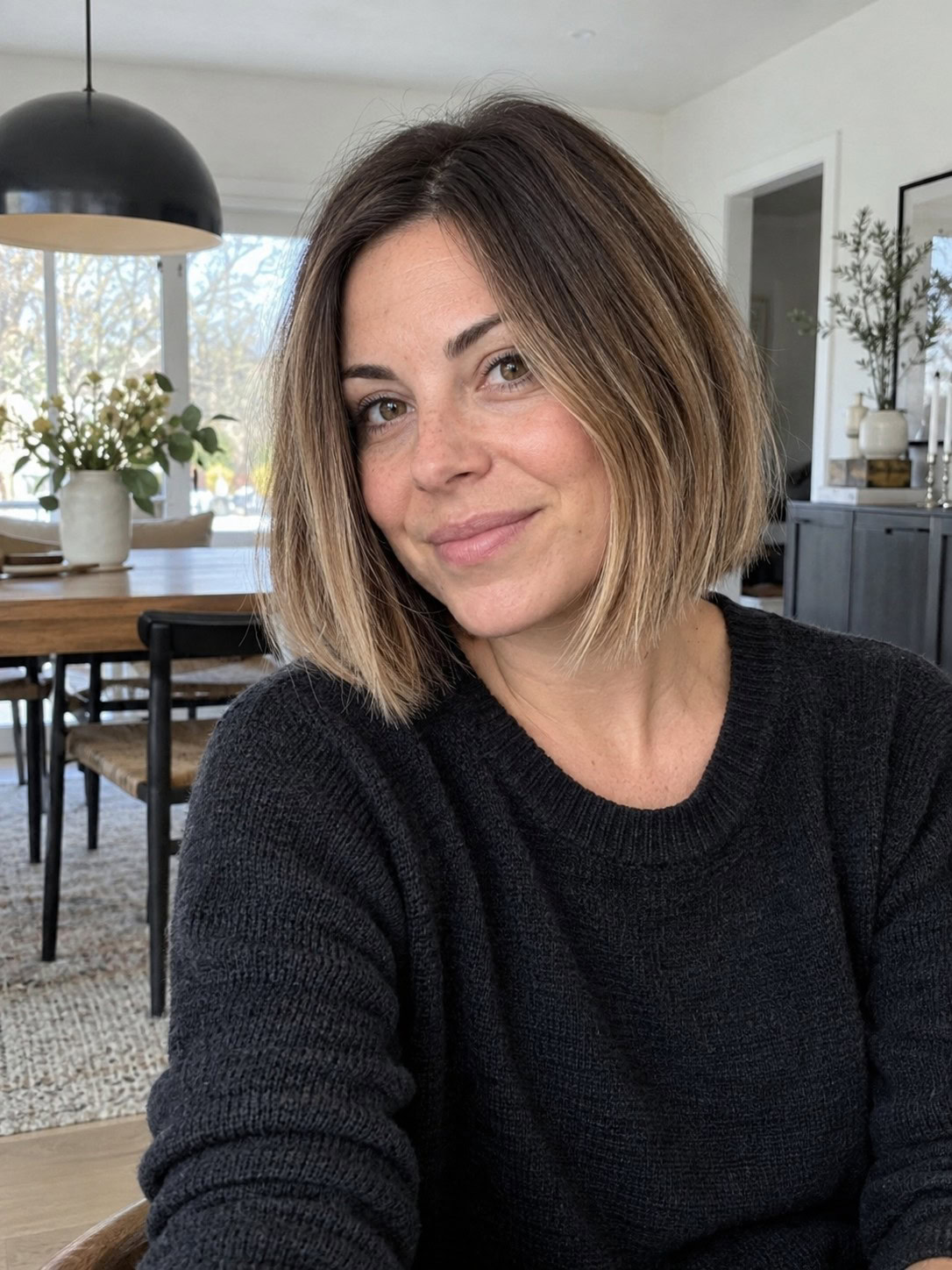
A low-maintenance pick for anyone who hates frequent root touch-ups, the shadow root keeps the base dark and blends it into lighter lengths. That built-in depth at the root makes fine hair look fuller, since darker roots look like density. It also grows out with almost no visible line. Pair it with a blunt or textured bob so the shape adds body too, and a gloss keeps the blend smooth between visits.
Money-Piece Bob
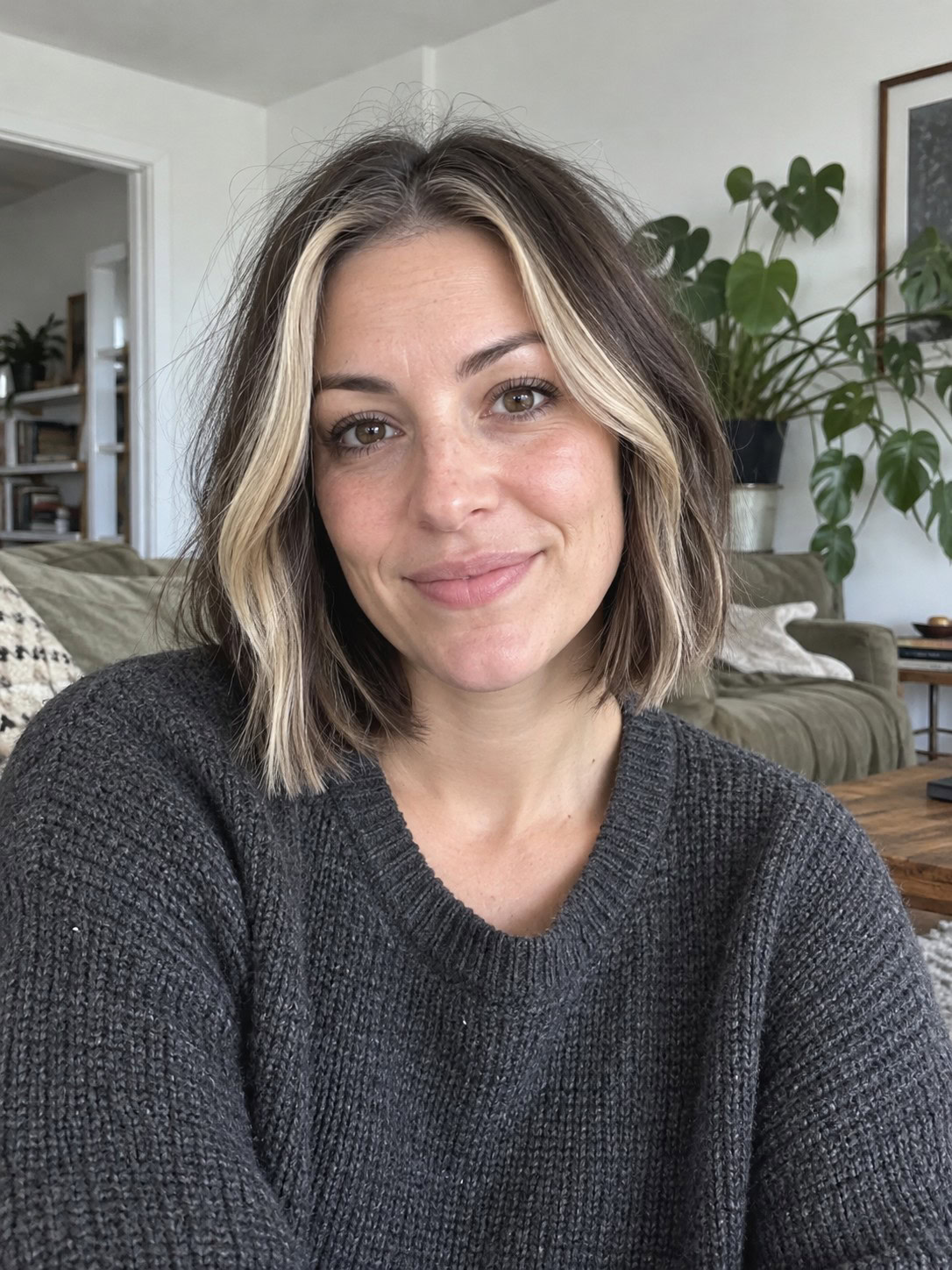
Two bright pieces framing the face light up the front of a fine bob and draw the eye to your features. It is a small amount of color for a big effect, and the brightness around the face adds the look of dimension without lightening the whole head. Because it sits at the front, regrowth shows sooner, so plan a touch-up every couple of months, and tone a blonde money-piece to keep it cool rather than warm.
Silver Bob
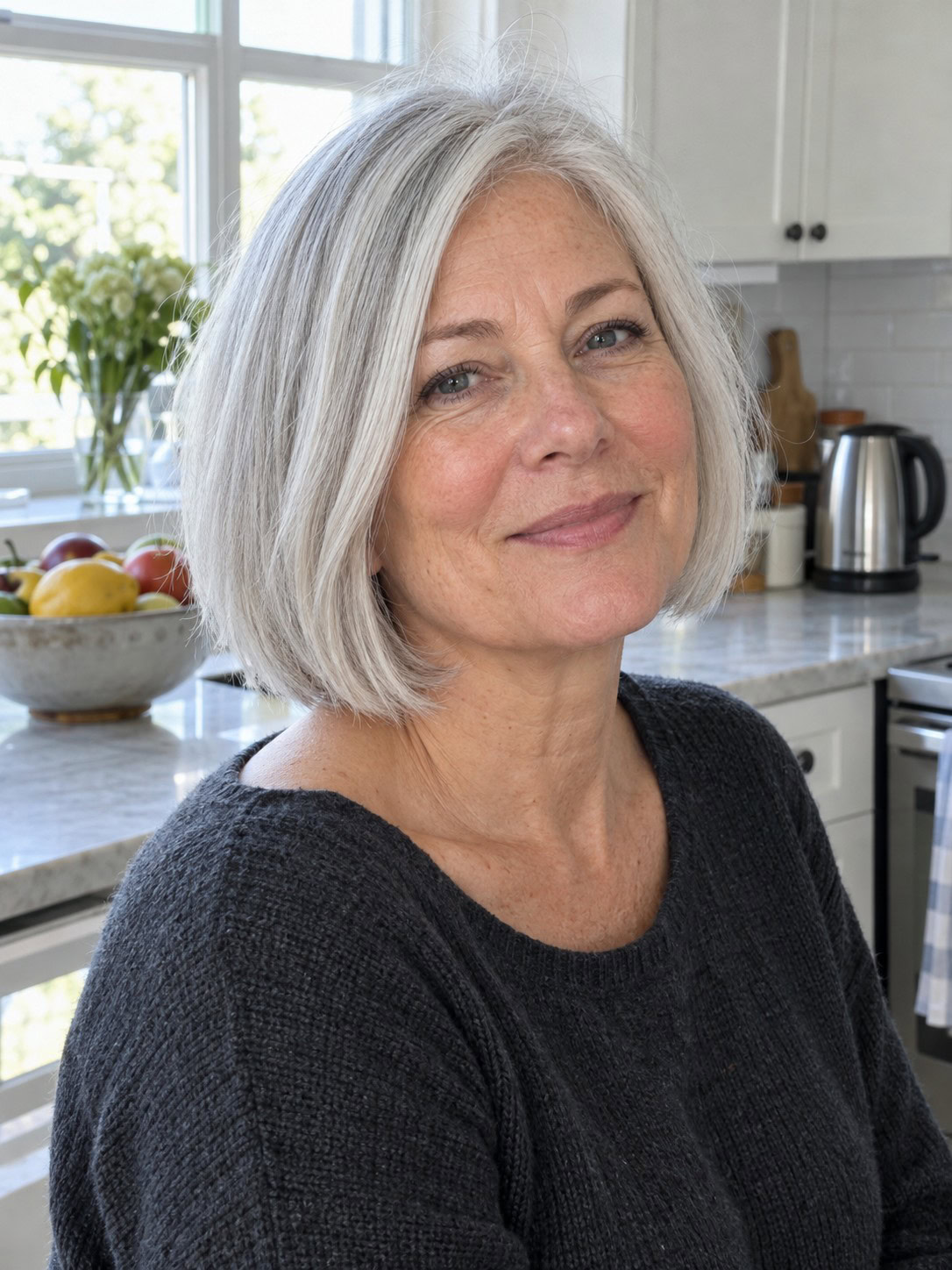
Cool, sharp, and quietly confident, a silver bob makes gray the point rather than something to cover. Texture and a blunt edge keep the silver looking full rather than flat, since fine silver hair can go sheer. If your gray is natural, color upkeep is low. A purple-toning shampoo keeps the silver bright instead of yellowed, and a volumizing mousse at the roots holds the body fine gray hair tends to lose.
Feathered Bob
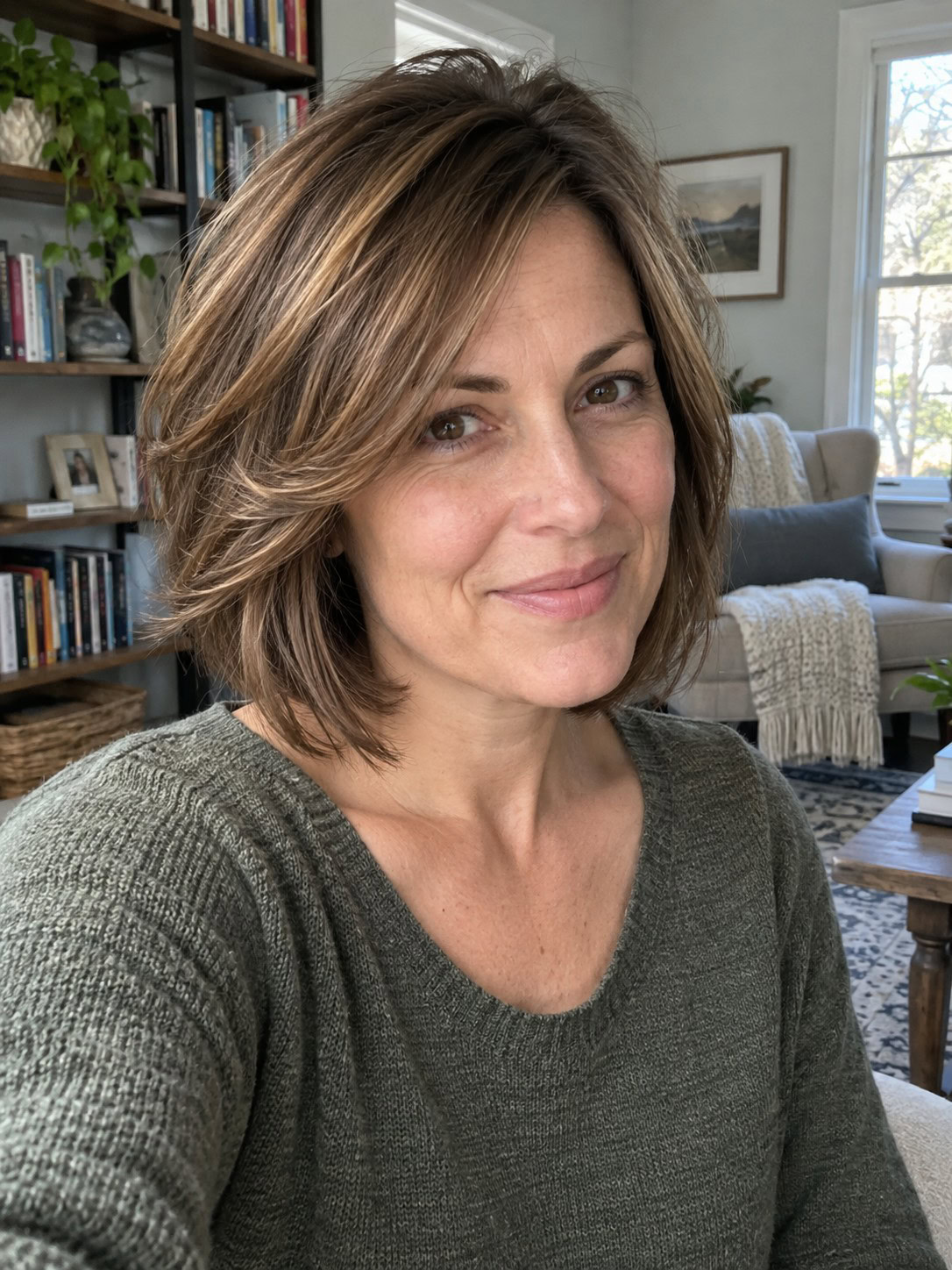
Soft, flicked layers give a bob a light, feathery body that fine hair rarely manages on its own. The feathering adds movement and the illusion of fullness without the weight that drags thin hair flat, with pieces that sweep away from the face. It suits straight to slightly wavy fine hair. A round brush flicks the layers out, and a light texture spray holds the feathering without stiffening it.
Silk-Press Blunt Bob
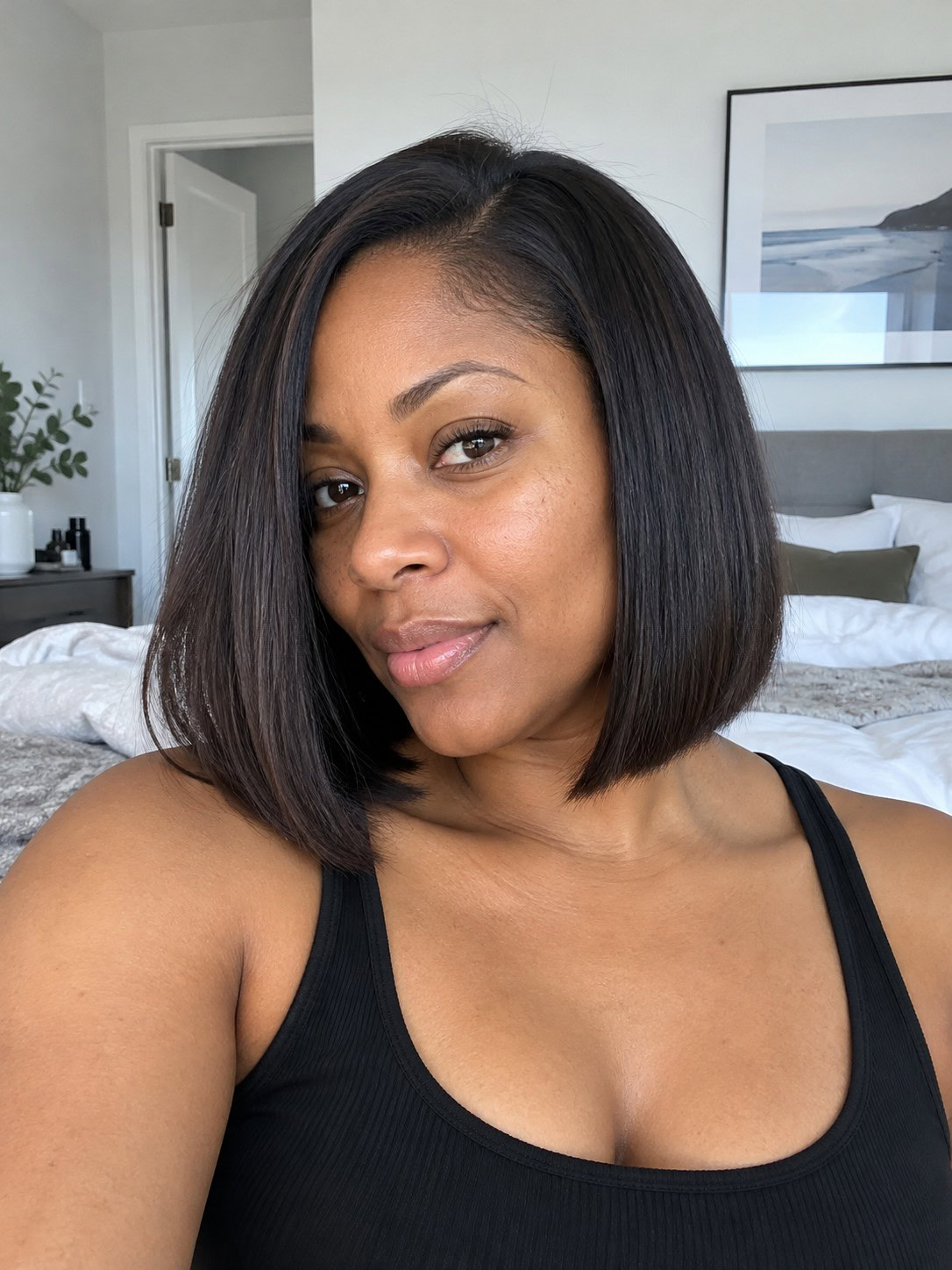
Sleek and glossy, a silk-pressed blunt bob gives fine natural hair a smooth, full-looking edge. Pressing the hair straight into a heavy, blunt line gathers finer strands into a dense perimeter that swings. It suits fine natural hair that presses well. Use a heat protectant and the lowest heat that works, since over-pressing fine hair leads to damage and lost curl, and wrap it at night to keep the bob smooth and full.